Reading guide
Content guideOverview
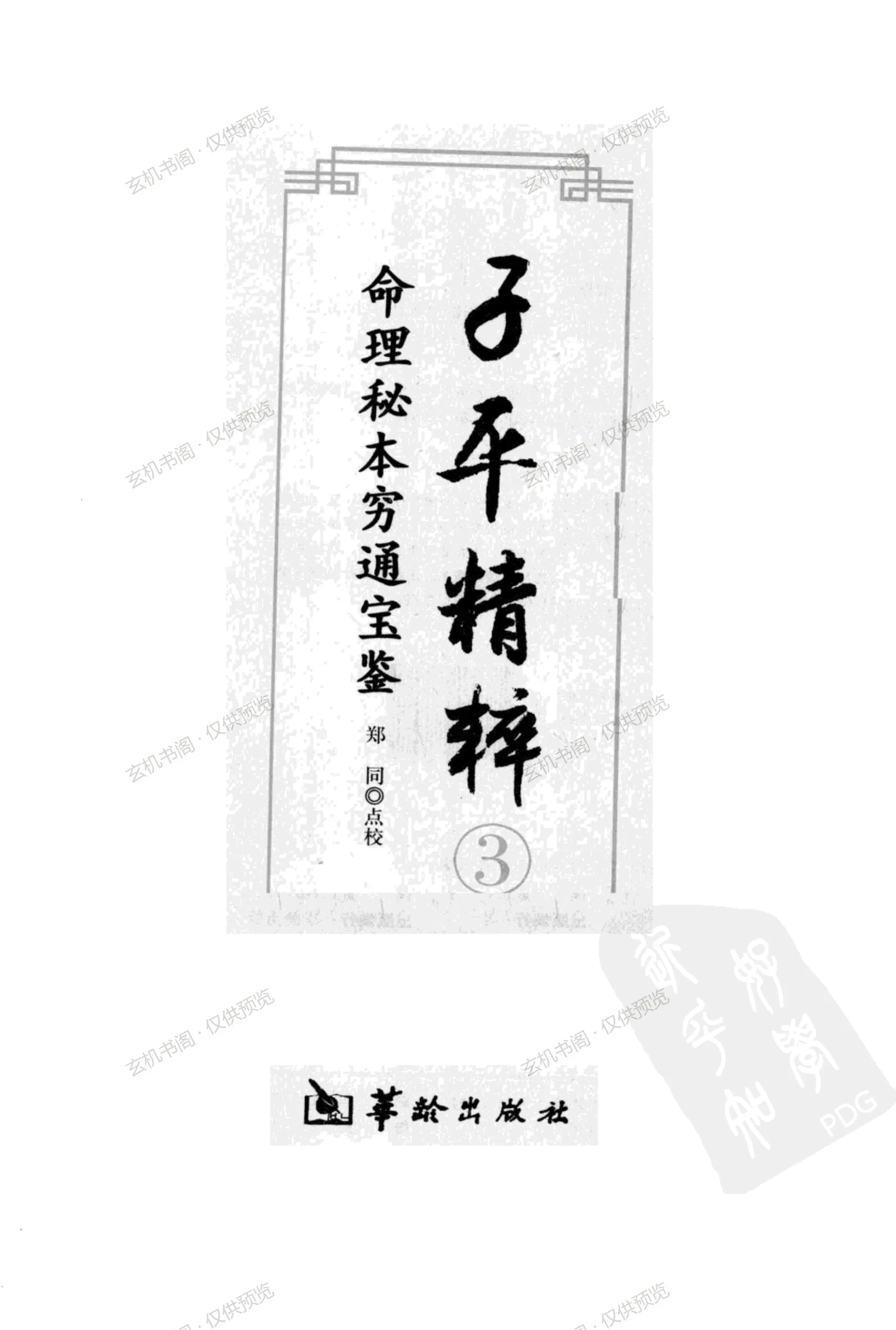
This is volume three of the Essence of Ziping series, presenting the classical destiny text Qiong Tong Bao Jian (originally Lan Jiang Wang, later renamed Zao Hua Yuan Yue, and finally Qiong Tong Bao Jian). The prefatory essays trace the work to an anonymous Ming author and explain how it survived through hand copies, was reprinted in the Qing, and was later annotated by Xu Lewu using a rare manuscript from the Wu family library, with hundreds of appended example charts. The main body pairs each of the ten heavenly stems with the twelve months, assessing strength and decline to establish rules for choosing useful gods, following the principle that the month pillar governs. The text stays within the five elements and the interactions of stems and branches, and it includes experimental charts with commentary. It is a core source for the seasonal-balancing (tiaohou) method in Ziping Bazi and suits readers comparing classical methods with practical chart analysis.
Contents
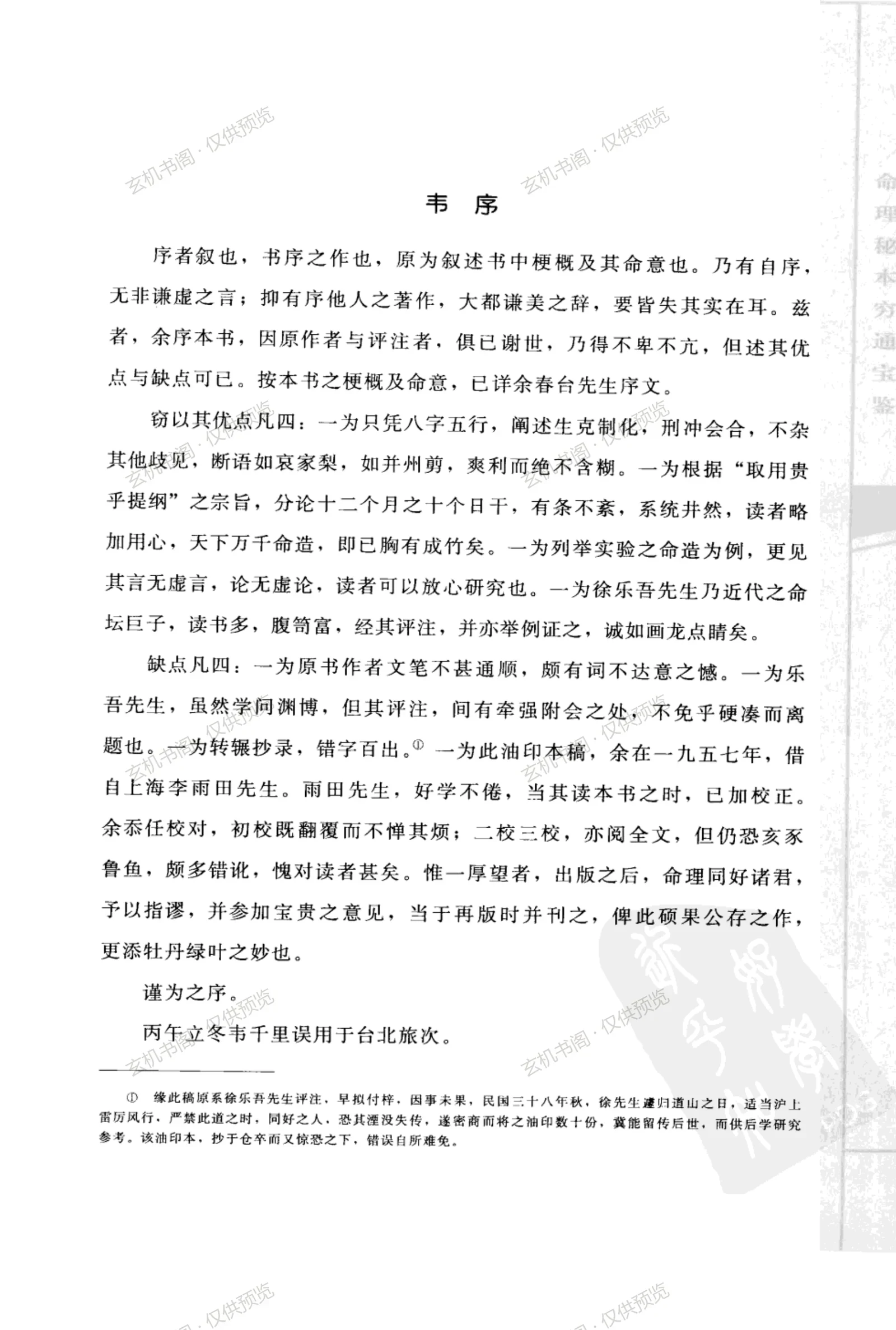
Preface by Wei: overview, strengths and weaknesses, collation history
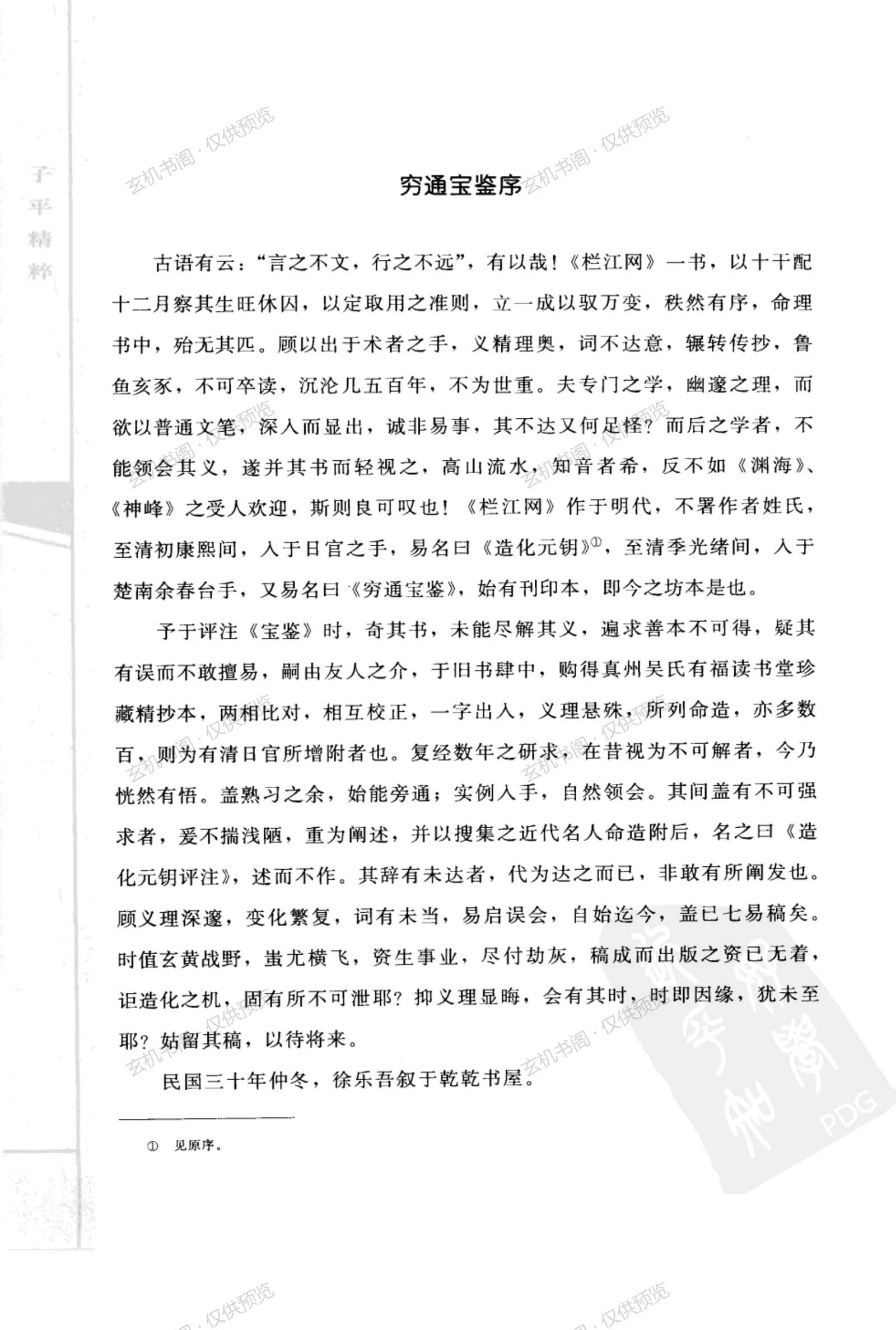
Preface to Qiong Tong Bao Jian: textual transmission from Lan Jiang Wang to Zao Hua Yuan Yue
Ten stems across twelve months: monthly assessment of each day stem
Rules for useful gods: taking the month pillar as the guiding framework
Example charts with Xu Lewu's commentary
Key Points
Core text for the seasonal-balancing (tiaohou) method in Ziping Bazi
Confines analysis to the five elements and stem-branch interactions, avoiding extraneous doctrines
Organizes commentary by the ten stems across the twelve months, following the month-pillar principle
Includes experimental charts and annotations by Xu Lewu and modern examples