Reading guide
Content guideOverview
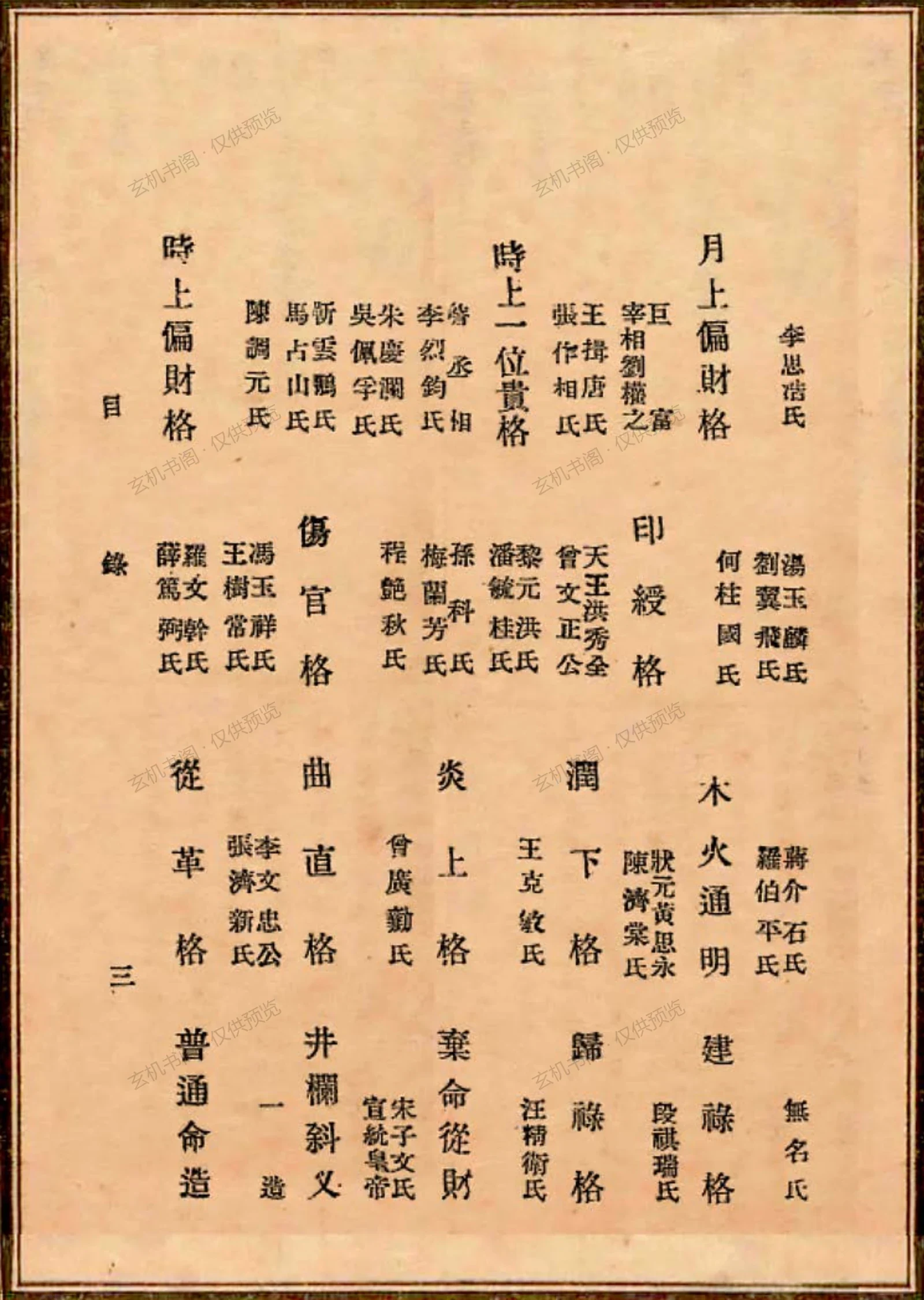
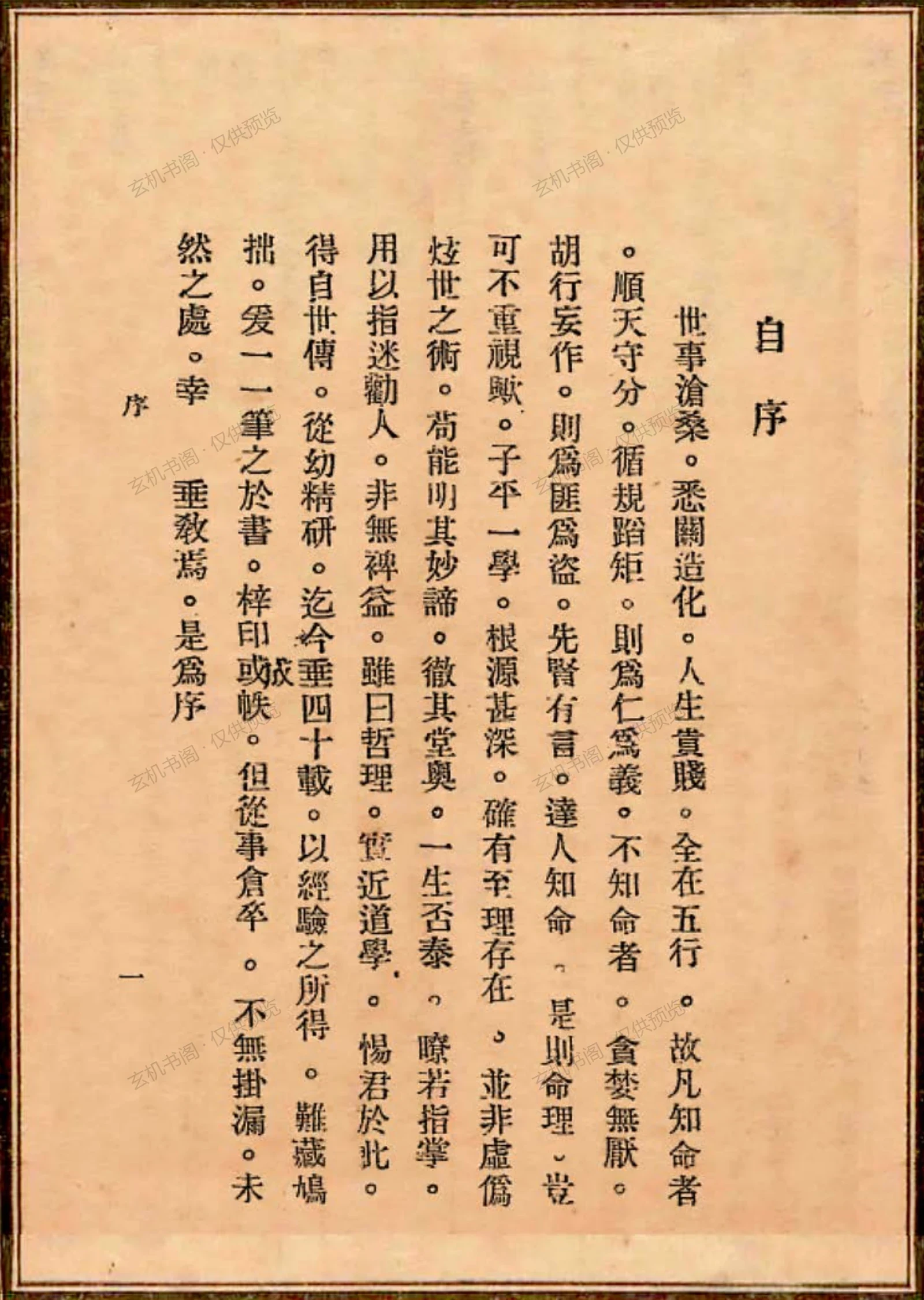
This book, titled Ziping Xuanli and attributed on the cover to Shi Tijun of Qianqian Studio, opens with a preface and a detailed table of contents. It organizes Ziping four-pillar destiny analysis: general remarks on the five phases, the life and death and transformation of the ten stems; the ten gods (wealth, officer, seal, peer, output) and the nature of the earthly branches; punishments, combinations, long life, travel horse, peach blossom, canopy, void, fetal origin, nayin, and tomb storage; pattern selection from the month, year, day, and hour; judgment of annual luck, relatives, women's charts, and children's taboos. The later sections give many pattern examples, including direct officer, indirect officer, month wealth, hour wealth, wounded officer, seal ribbon, and the five morphological patterns (wood, fire, water, metal, earth), plus harsh and poor fates. Appendices cover miscellaneous discussions, casting the four pillars, starting the month and hour, branch combinations and clashes, and rules for applying the five phases.
Contents
Preface, five-phase general remarks, ten stems
Ten gods, branch nature, clashes and combinations
Pattern selection by month, year, day, hour; luck and relatives
Pattern cases: officer, wealth, output, seal, etc.
Morphological patterns: wood, fire, water, metal, earth
Examples of harsh and poor fates
Miscellany and appendices on casting charts and luck cycles
Key Points
Explains the ten gods one by one with their meanings and uses
Emphasizes month-based pattern selection alongside other methods
Collects many patterns and cases for reference
Includes basic rules for casting charts and starting luck cycles
Adds negative examples of harsh and poor fates