Reading guide
Content guideOverview
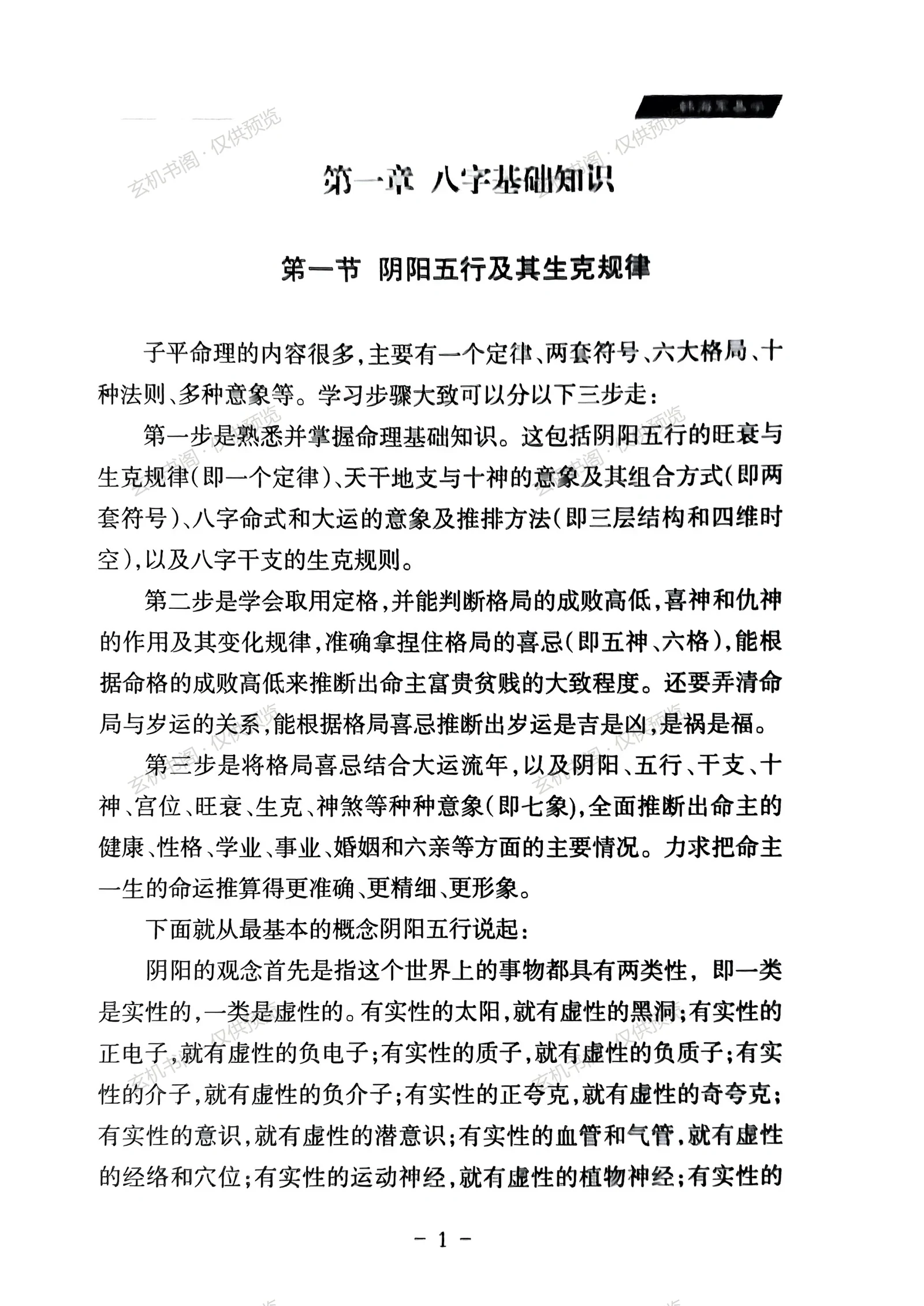
This is a structured textbook on Ziping (four-pillar) astrology. The cover reads Ziping Zhenyan with the subtitle Orthodox BaZi Textbook and the name Han Haijun. Chapter 1 lays out fundamentals: yin-yang and the five phases, heavenly stems and earthly branches, assessment of strength, construction of the chart and luck cycles, the ten gods and their imagery, and the rules of generation and control. Chapter 2 defines the roles within a pattern: useful god, supporting god, taboo god, favorable god and hostile god. Chapter 3 covers inner patterns, working through the Seven Killings, Direct Officer, Resource, Wealth, Eating God and Hurting Officer structures with specific sub-patterns such as kill-resource mutual generation, kill controlled by food, officer with resource, and wealth supporting a weak kill. Chapter 4 turns to outer patterns, including dominant-force, transformation, follow-kill, follow-wealth, inverted clash, well-railing, combined-lu, sunrise, punishment-combination and distant-combination patterns. Chapter 5 gives rules for interpretation: the relation of fate to luck cycles, and judgments on misfortune, temperament, career, marriage and relatives. The introduction divides study into three stages: fundamentals, pattern selection and evaluation, and comprehensive reading with luck cycles.
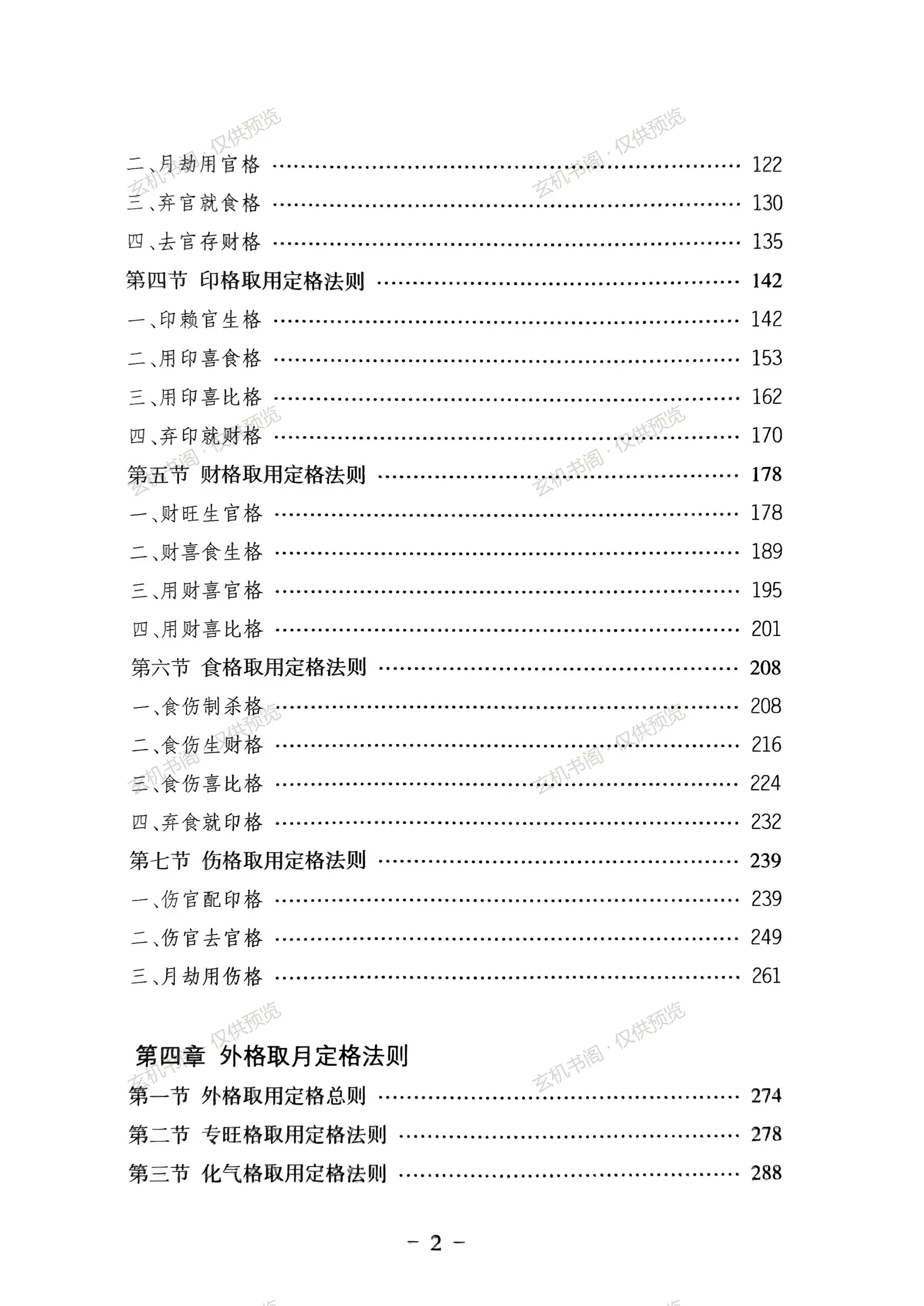
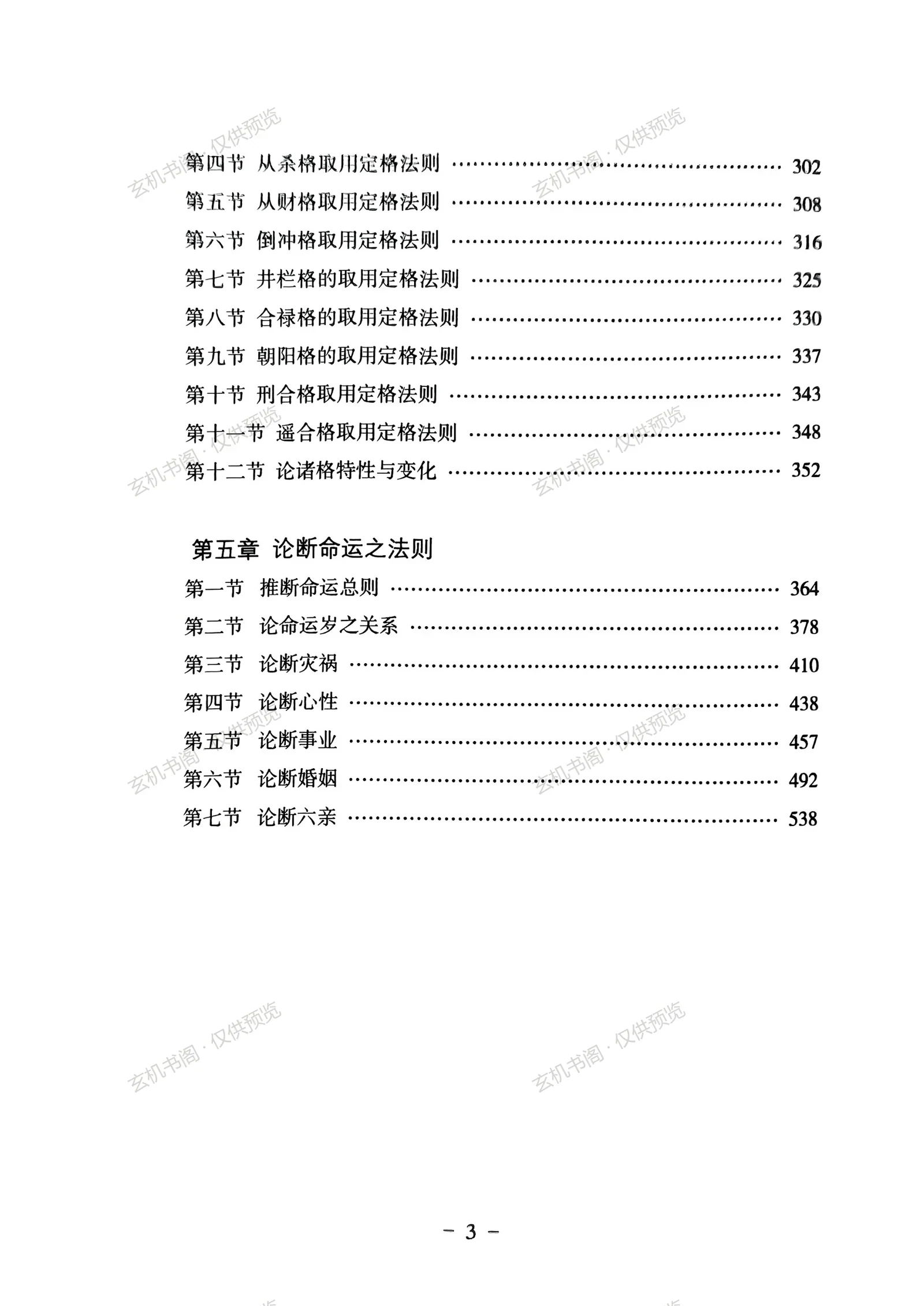
Contents
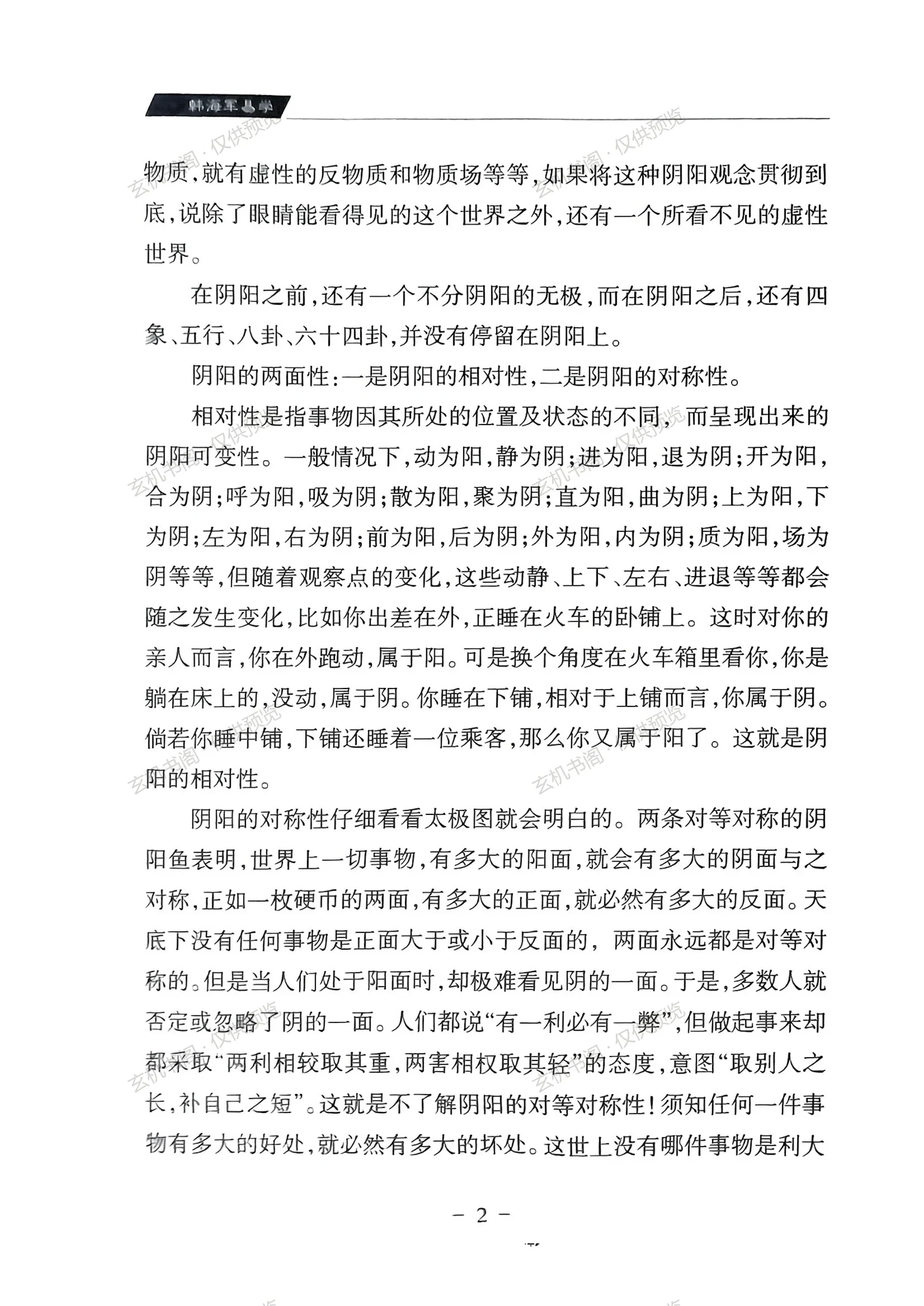
Ch.1 Fundamentals: yin-yang, five phases, stems, branches, ten gods
Ch.2 Defining pattern roles: useful, supporting, taboo, favorable, hostile gods
Ch.3 Inner patterns: kill, officer, resource, wealth, food, hurting officer
Ch.4 Outer patterns: dominant, transformation, follow, clash, well-railing
Ch.5 Interpretation: luck cycles, misfortune, temperament, career, marriage, relatives
Key Points
Pattern selection is central: fix useful and supporting gods, then judge success
Inner patterns divided by the ten gods with concrete selection rules
Outer patterns include dominant-force, transformation, follow patterns and variants
Interpretation covers luck cycles and judgments on career, marriage, relatives
The introduction proposes a three-stage learning path from basics to full readings