Reading guide
Content guideOverview
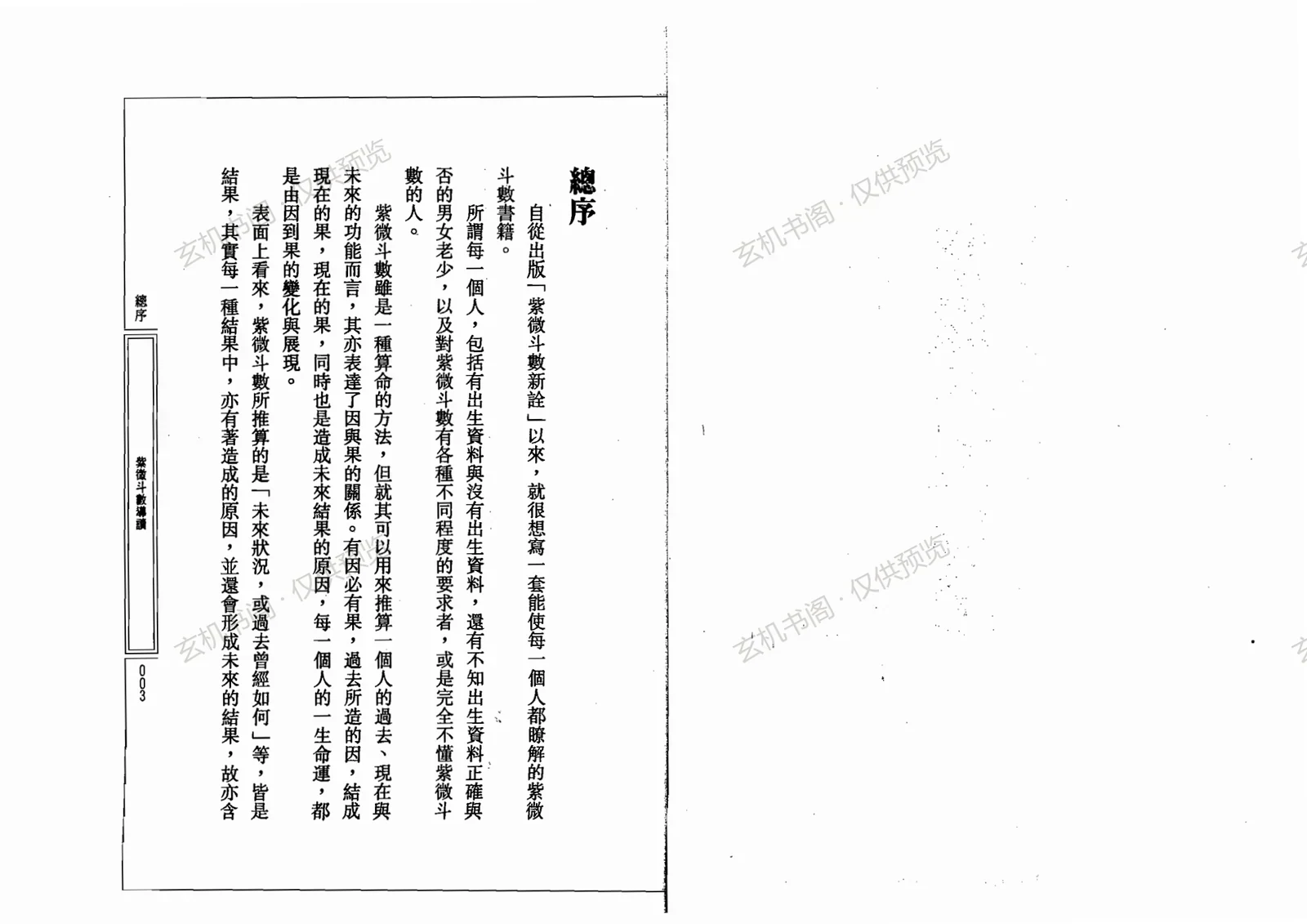
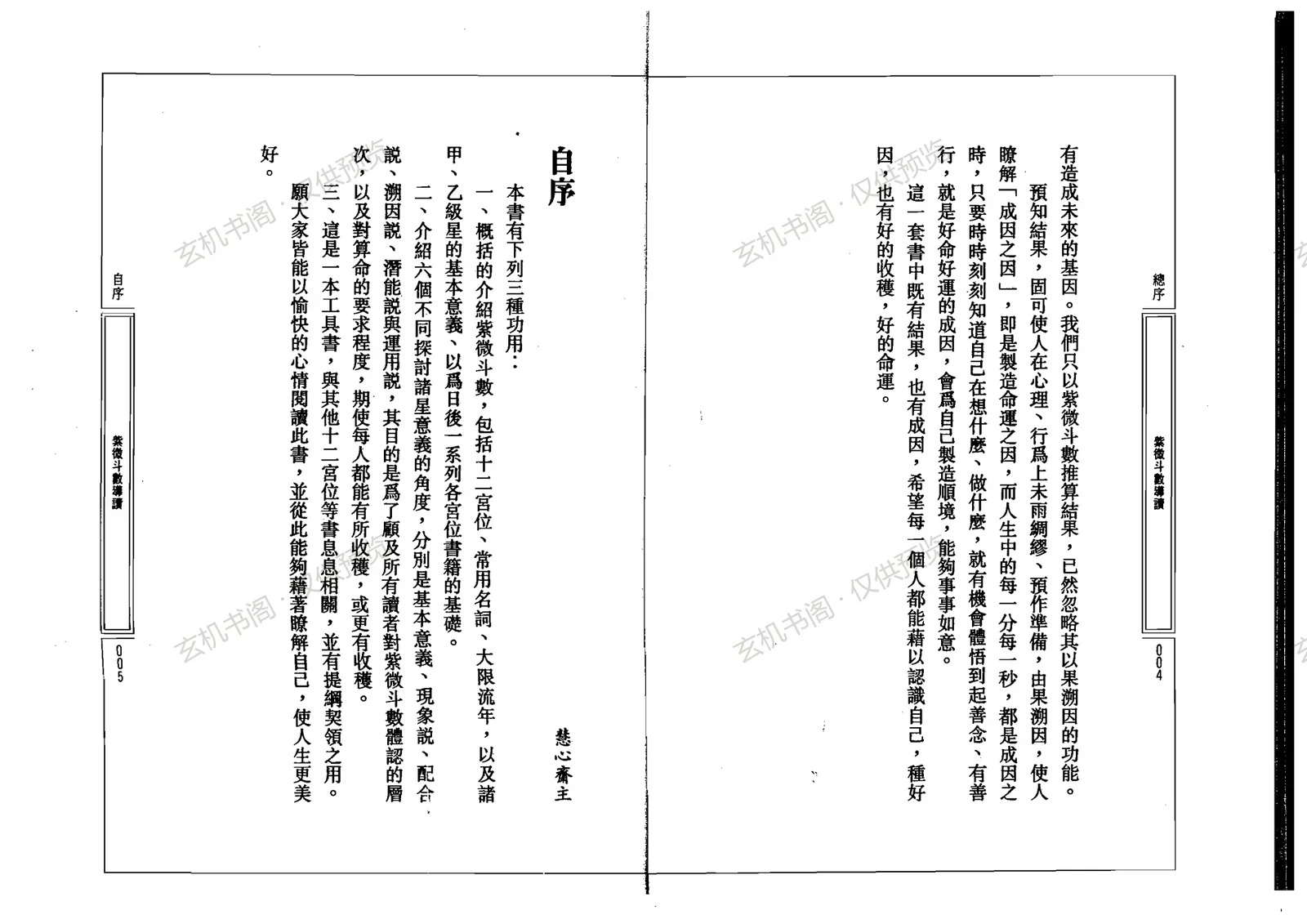
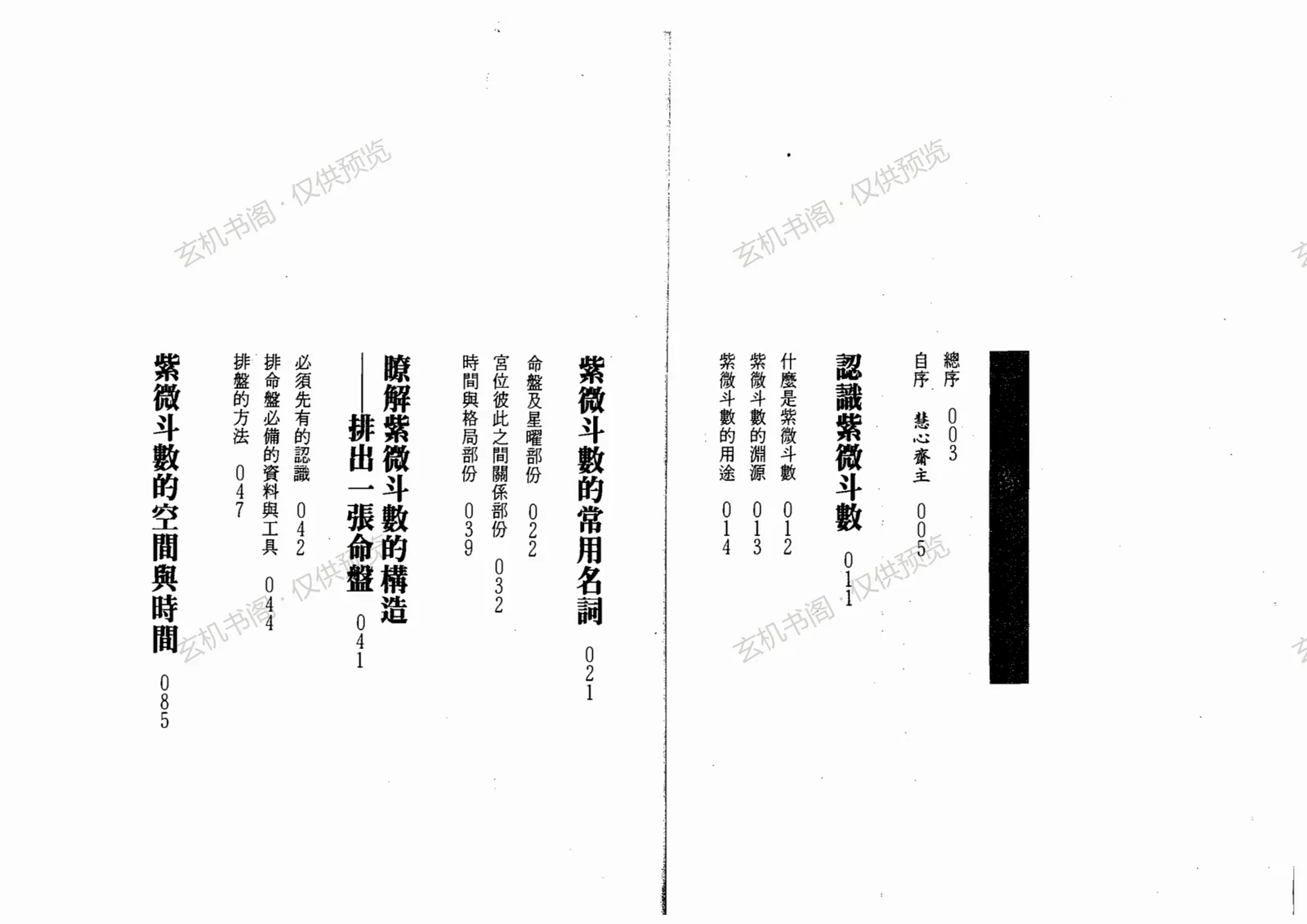
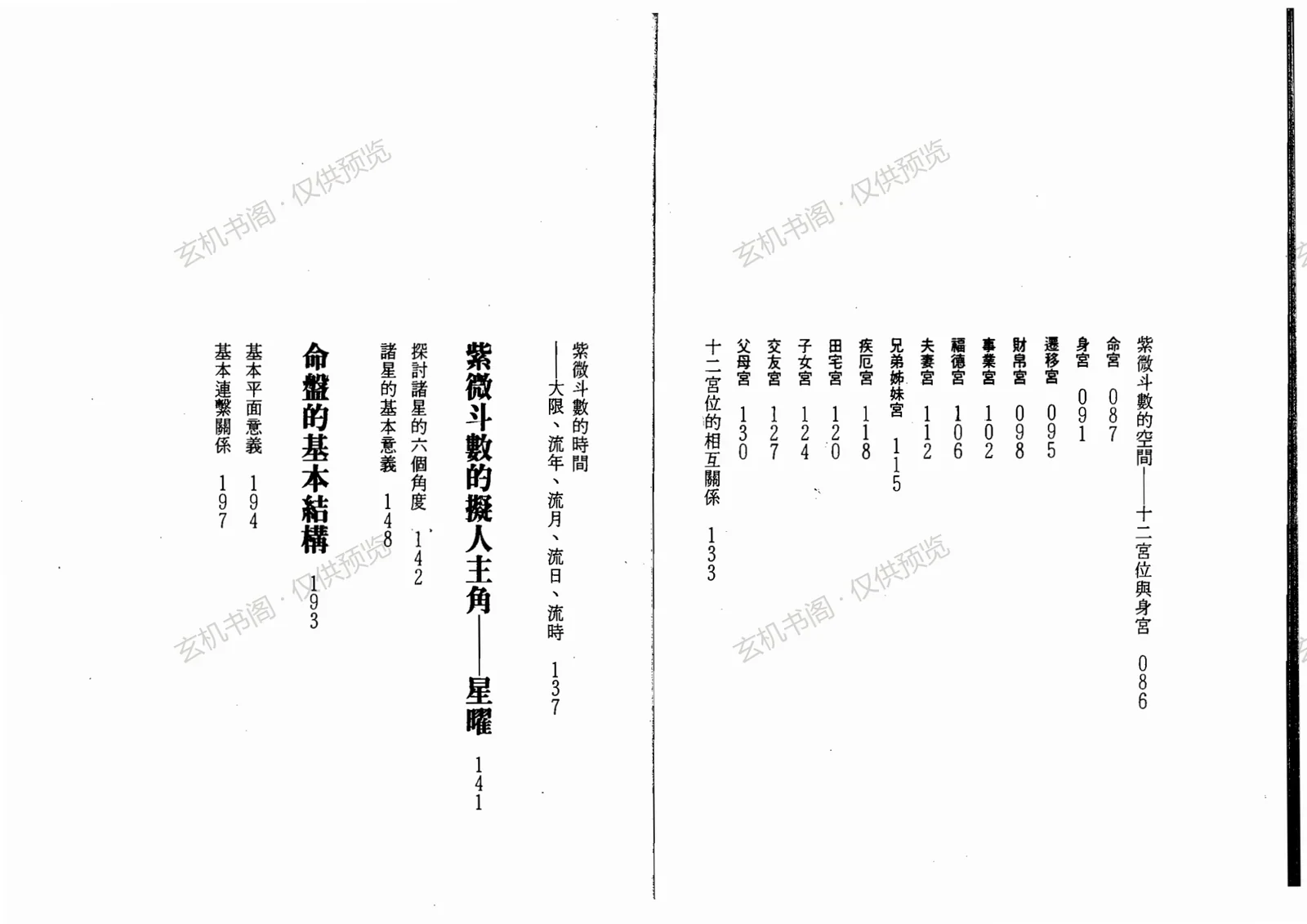
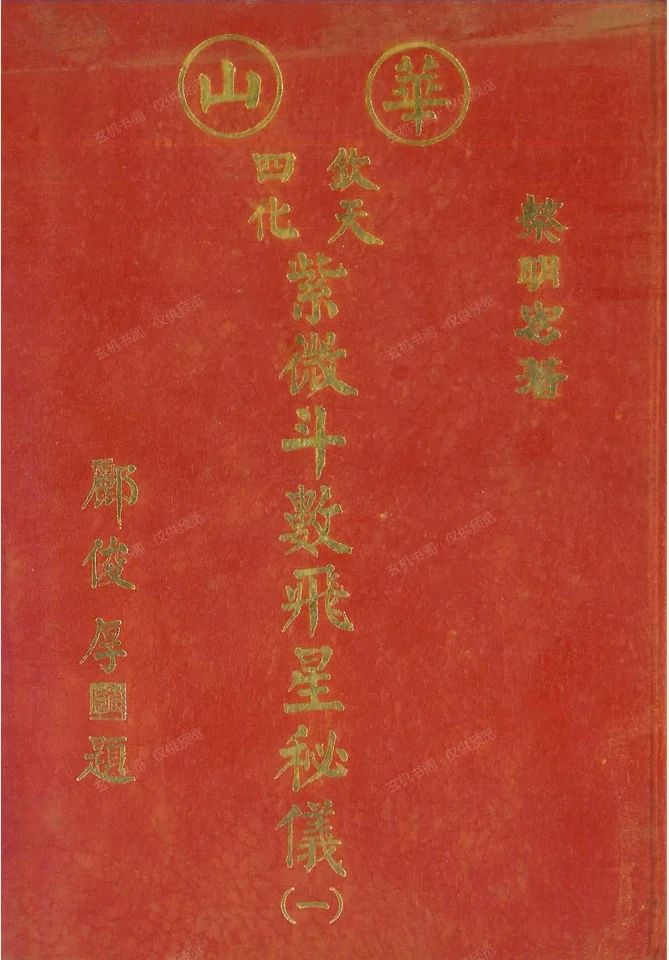
This is an introductory guide to Zi Wei Dou Shu by Hui Xin Zhai Zhu. The cover shows only the title and ISBN; the visible pages consist of a general preface, an author's preface, and the table of contents. In the general preface the author explains that after publishing Zi Wei Dou Shu Xin Quan, he wanted to write a set of books that anyone could understand, whether or not they have birth data or prior knowledge of the system. The author's preface lists three purposes: outlining the basic framework of Zi Wei Dou Shu, including the twelve palaces, common terms, major and annual cycles, and the basic meanings of the stars; discussing star meanings from six angles through causation, origins, and application; and serving as a reference tool to be used alongside books on the twelve palaces. The contents begin with 'Understanding Zi Wei Dou Shu'—what it is, its origins, and its uses—then move to the chart and star positions, palace relationships, time and configuration, common terms, chart construction, the twelve palaces and body palace, their interrelations, the time systems of major cycles, annual, monthly, daily and hourly cycles, and finally the basic structure of the chart and the basic meanings and connections of the stars. The structure progresses from shallow to deep and suits readers seeking a first systematic introduction.
Contents
General and author's prefaces: origins and three purposes
Understanding Zi Wei Dou Shu: definition, origins, uses
Chart and star positions, palace relations, configurations
Common terminology in Zi Wei Dou Shu
Constructing the chart: required data and method
The twelve palaces, body palace, and interrelations
Time systems: major, annual, monthly, daily, hourly cycles
Basic chart structure and basic star meanings
Key Points
Designed for complete beginners, stressing accessibility
Terms and palaces first, then chart construction and stars
Explains stars through causation, origins, and application
Doubles as a reference alongside palace-focused books
Covers major, annual, monthly, daily and hourly cycles