Reading guide
Content guideOverview
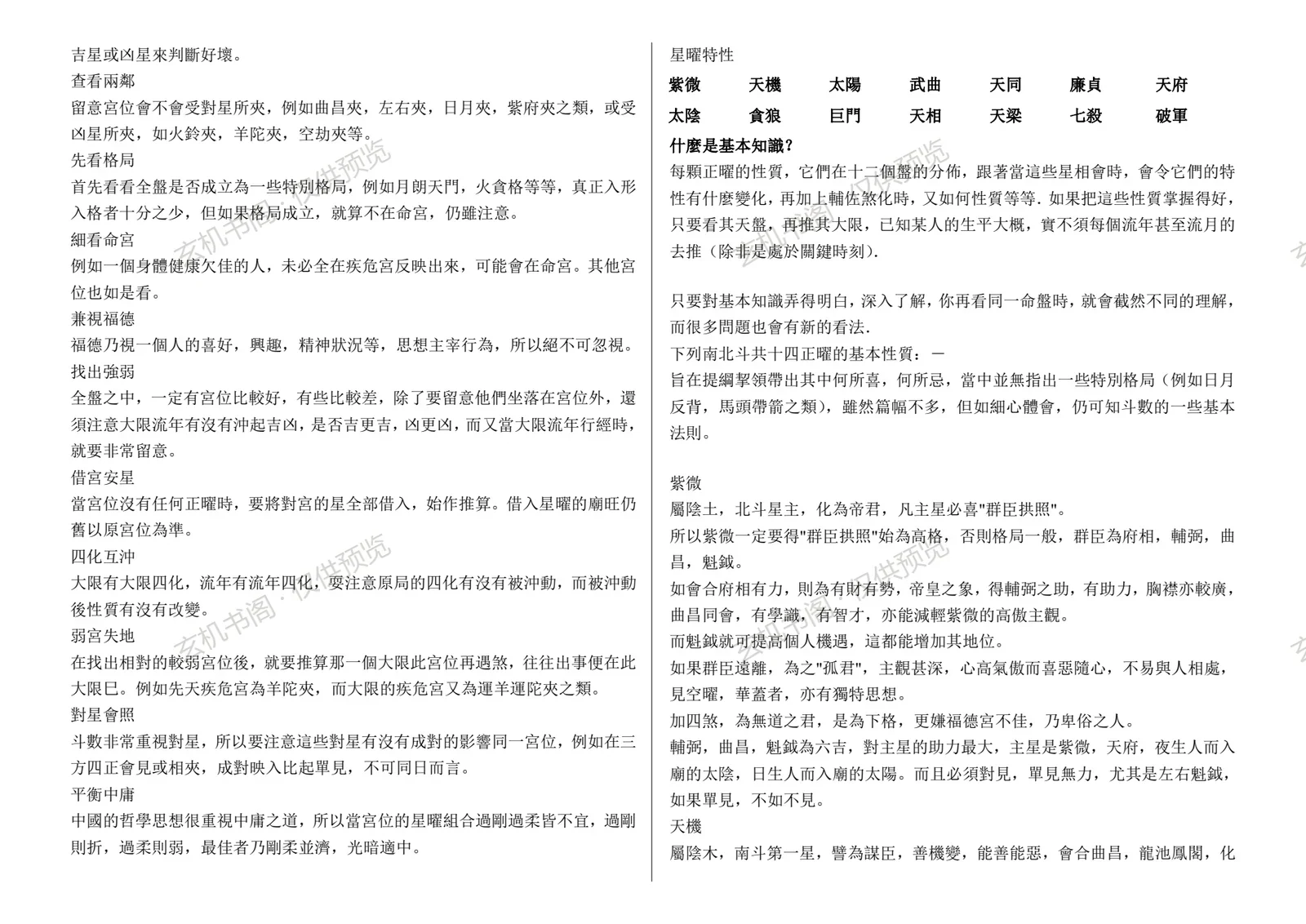
Zi Wei Dou Shu DNA is an introductory work on the fundamentals of Purple Star Astrology. It begins with the definition and Daoist origins of the system, then explains its practical uses in decision-making and self-understanding. The book details chart construction, the twelve palaces, and the placement of major and minor stars, along with concepts such as the Life Master, Body Master, Dou Jun, and annual/monthly cycles. Stars are classified by influence (Grades A, B, C), by nature (primary, auxiliary, assistant, malefic, miscellaneous), by northern/southern dippers, and by brightness levels. Each of the twelve palaces is explained, followed by methods for reading innate fortune, decade cycles, and annual cycles. The Four Transformations (Lu, Quan, Ke, Ji) are emphasized as central to chart analysis. Finally, the basic qualities of the fourteen primary stars are listed. The book is clear and detailed, suitable for beginners building a foundational framework.
Contents
What is Zi Wei Dou Shu: definition and origins
Uses of Zi Wei Dou Shu: practical applications
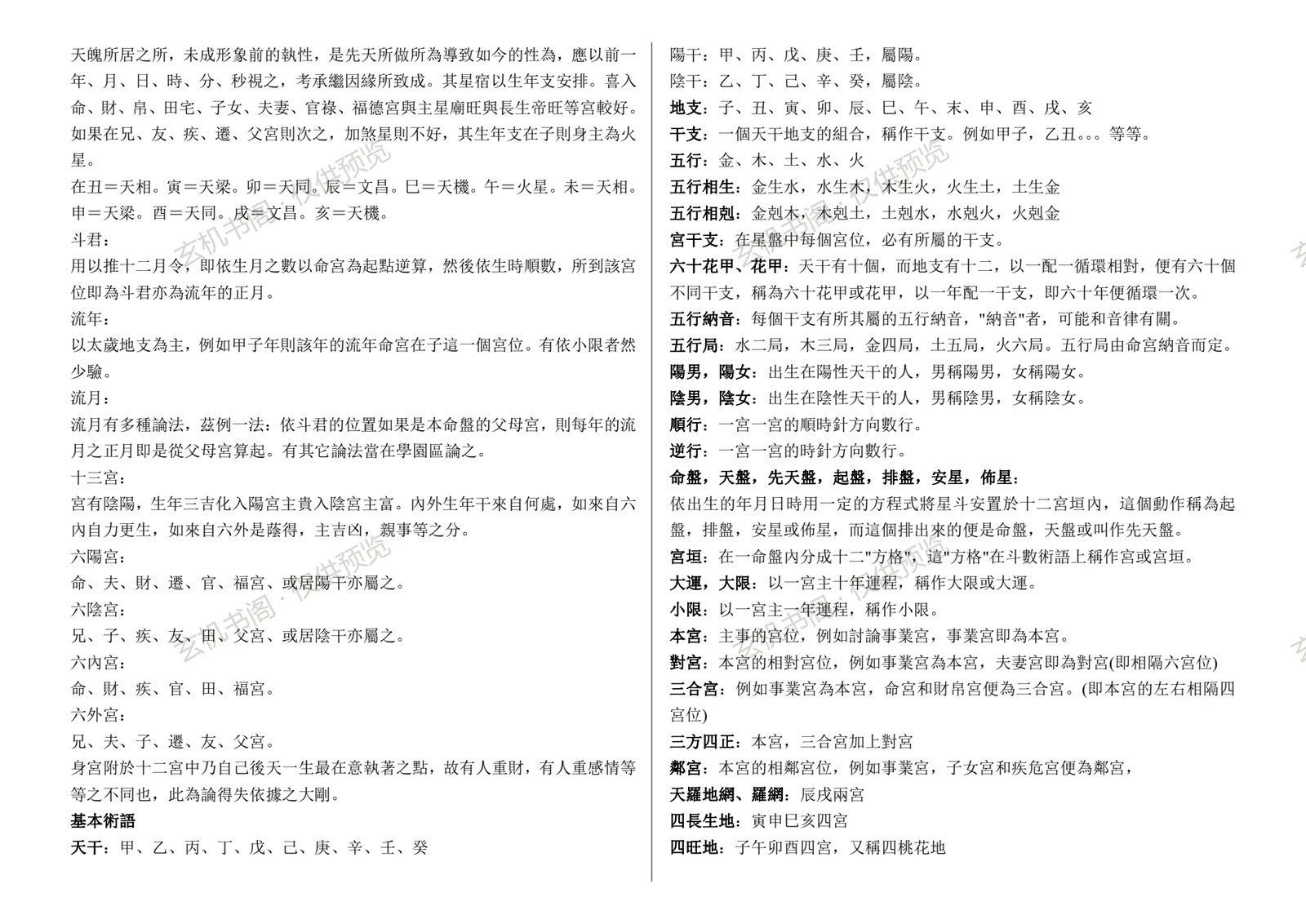
Basic structure: chart, twelve palaces, star placement
Life Master, Body Master, Dou Jun, annual/monthly cycles
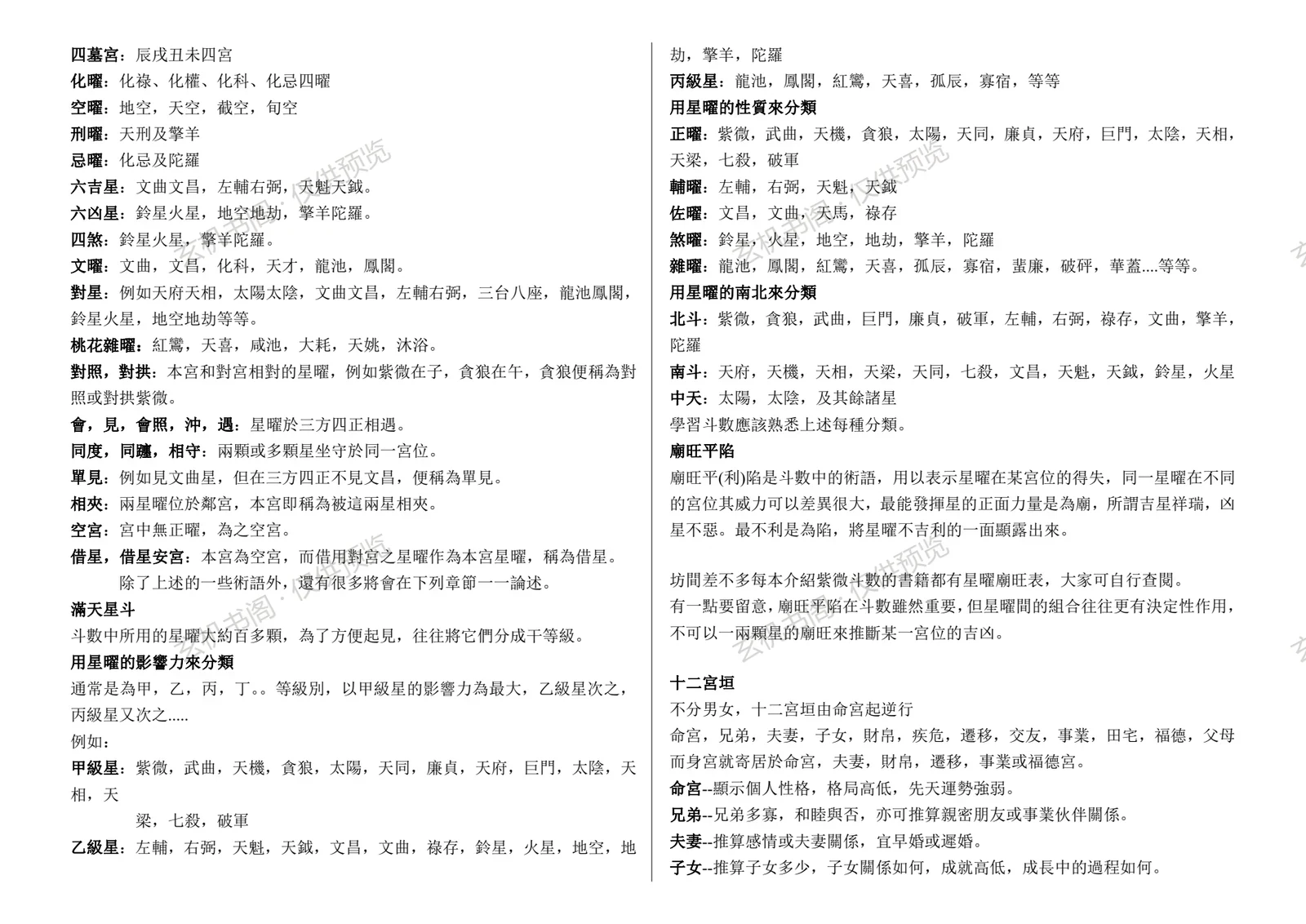
Star classification: grades and categories
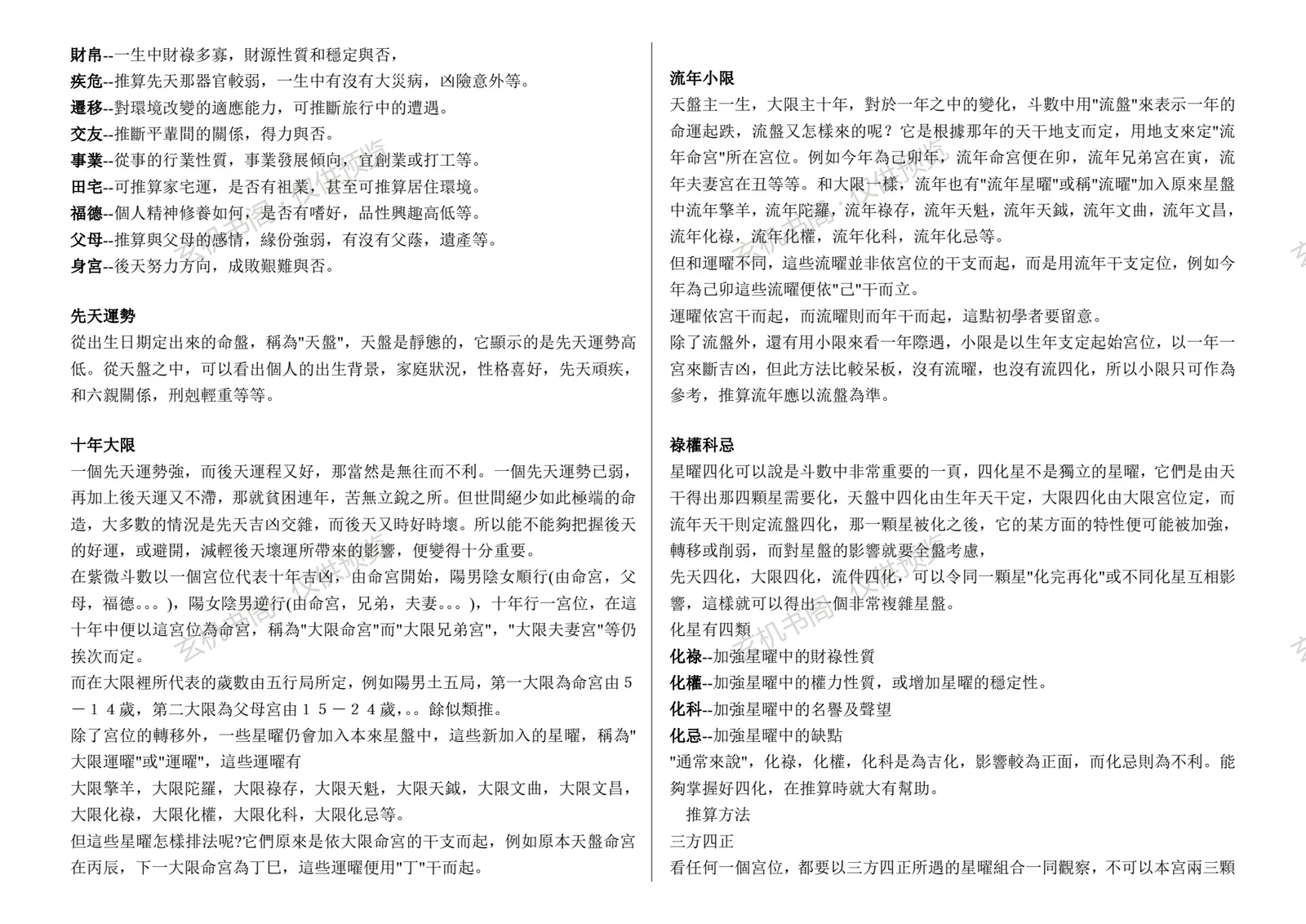
Twelve palaces: meanings explained
Innate fortune, decade cycles, and annual cycles
Four Transformations and qualities of the fourteen primary stars
Key Points
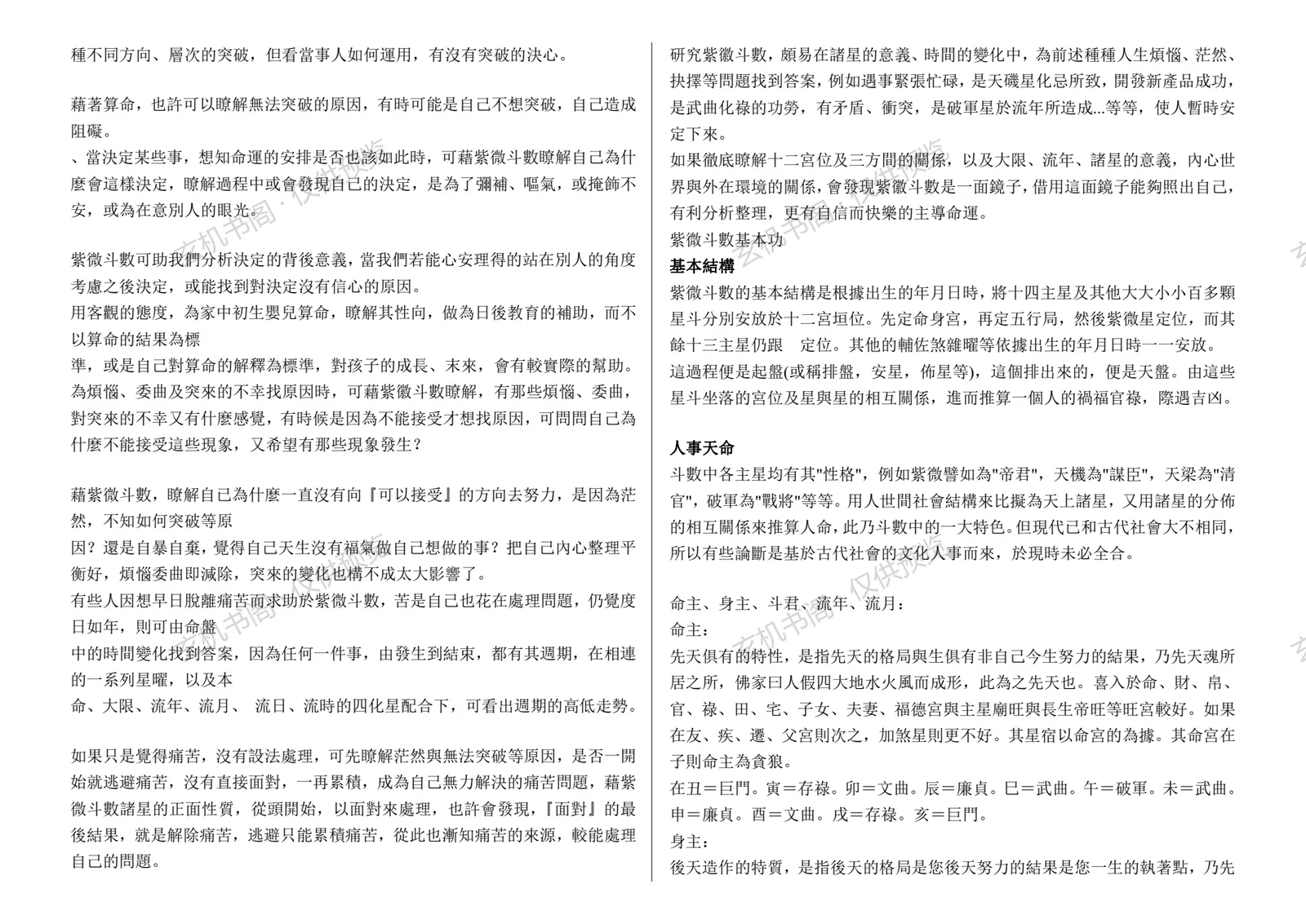
Zi Wei Dou Shu originates from Daoism and uses lunar birth data to construct a chart with twelve palaces.
Stars are graded by influence (A, B, C) and classified by nature (primary, auxiliary, assistant, malefic, miscellaneous).
Each of the twelve palaces governs specific life areas; the Life Palace shows character, the Body Palace shows后天 effort.
Decade and annual cycles combined with the Four Transformations reveal fortune trends.
The fourteen primary stars each have basic qualities, e.g., Zi Wei is the emperor, Tian Ji the strategist.