Reading guide
Content guideOverview
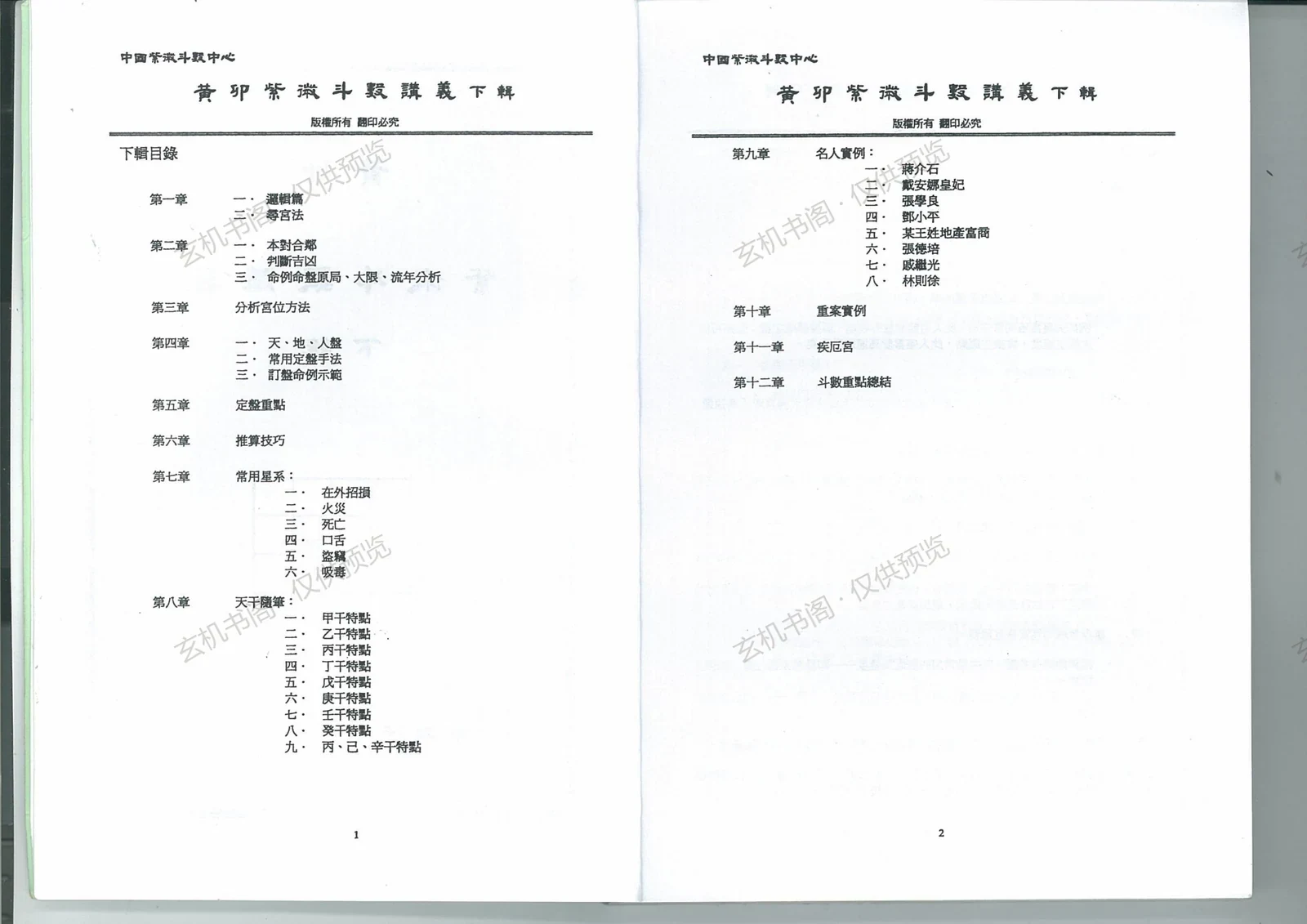
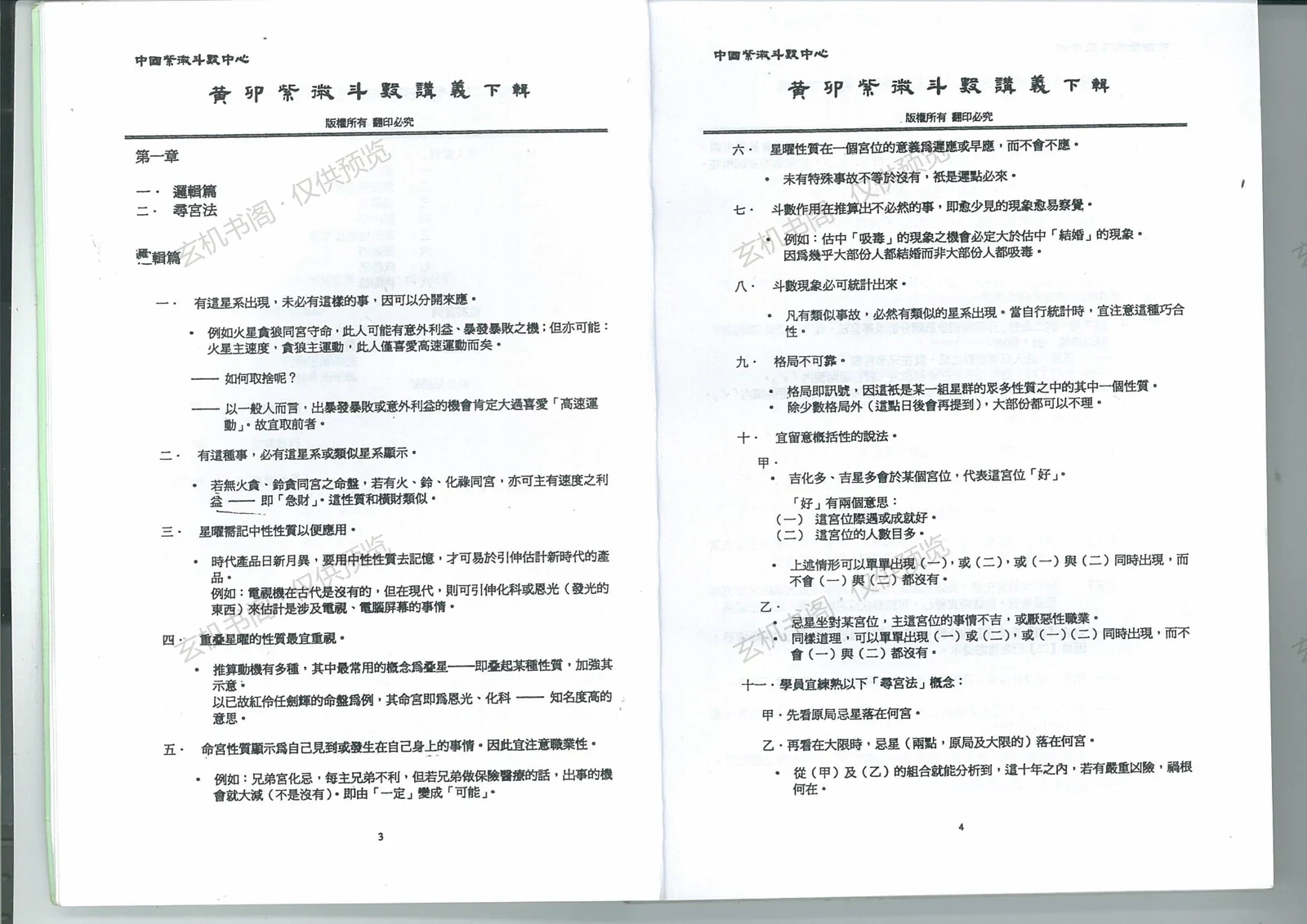
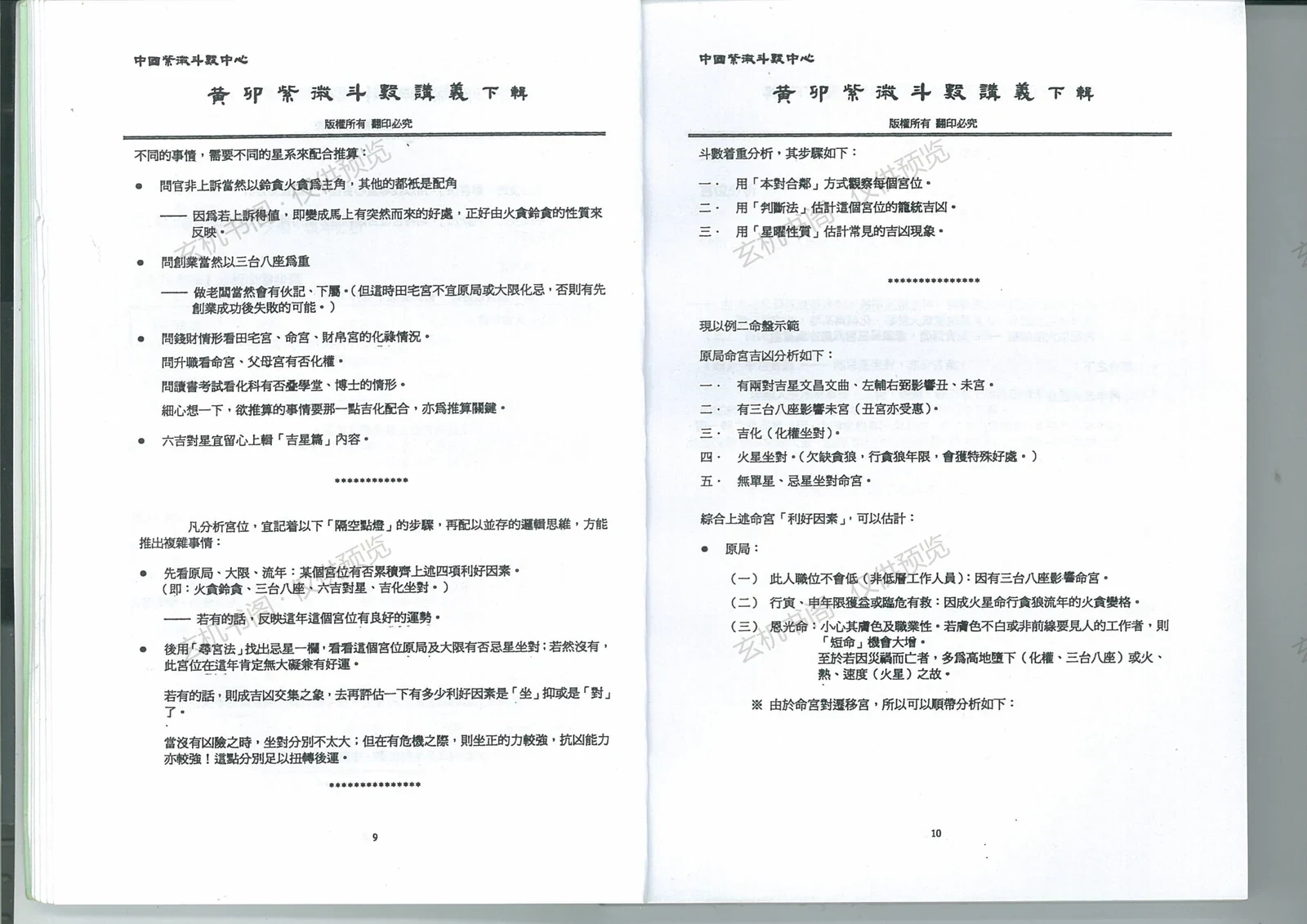
This is the second volume of Huang Mao's lecture notes on Zi Wei Dou Shu (Purple Star Astrology), published by the Chinese Zi Wei Dou Shu Center. The table of contents lists twelve chapters: logic and the palace-search method; the 'self-opposite-trine-adjacent' framework for judging fortune; methods of analyzing palaces; heaven-earth-human plates and chart-setting techniques; key points of chart-setting; calculation skills; common star combinations (loss abroad, fire, death, disputes, theft, addiction); characteristics of the ten heavenly stems; famous case studies (Chiang Kai-shek, Princess Diana, Zhang Xueliang, Deng Xiaoping, etc.); serious case studies; the illness palace; and a summary of key points. The visible text explains the palace-search concept, the meaning of star qualities in different palaces, and steps for determining auspicious and inauspicious signs. It is intended for readers who already know the basics of Zi Wei Dou Shu chart construction and star meanings.
Contents
Ch.1 Logic and the palace-search method
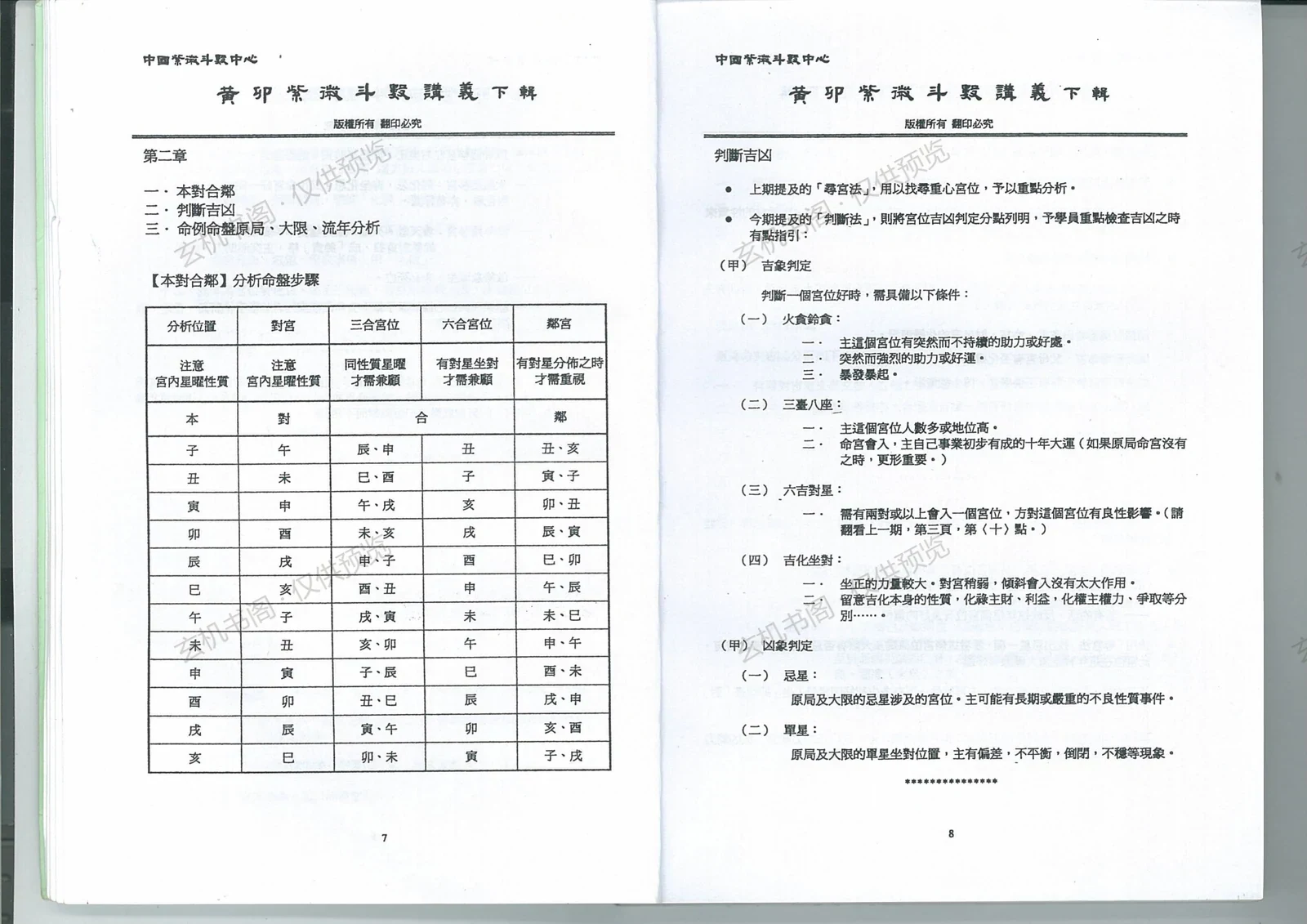
Ch.2 Self-opposite-trine-adjacent and fortune judgment
Ch.3 Methods of analyzing palaces
Ch.4 Heaven-earth-human plates and chart-setting
Ch.5 Key points of chart-setting
Ch.6 Calculation skills
Ch.7 Common star combinations and inauspicious signs
Ch.8 Characteristics of the ten heavenly stems
Ch.9 Famous case studies
Ch.10 Serious case studies
Ch.11 The illness palace
Ch.12 Summary of key points
Key Points
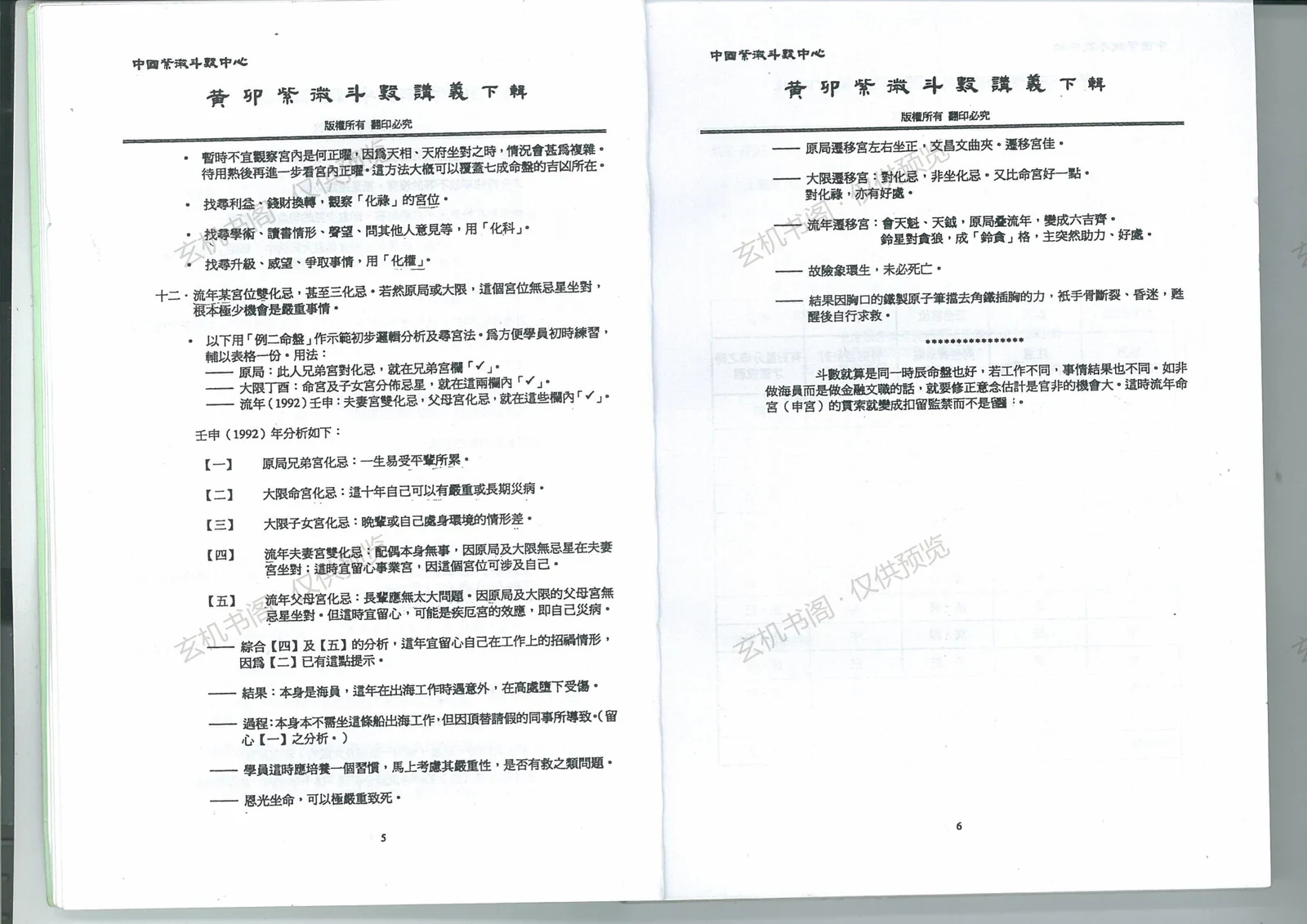
Introduces the palace-search method, tracing the original-chart忌 star and then the major limit.
Uses a self-opposite-trine-adjacent table to organize judgments across opposite, trine, six-harmony, and adjacent palaces.
Classifies auspicious signs into four types: fire-greed/bell-greed, three platforms/eight seats, six auspicious pairs, and favorable transformations.
Inauspicious signs center on 忌 stars and lone stars, with original and major-limit charts layered.
Demonstrates the inference process through famous and serious case studies.