Reading guide
Content guideOverview
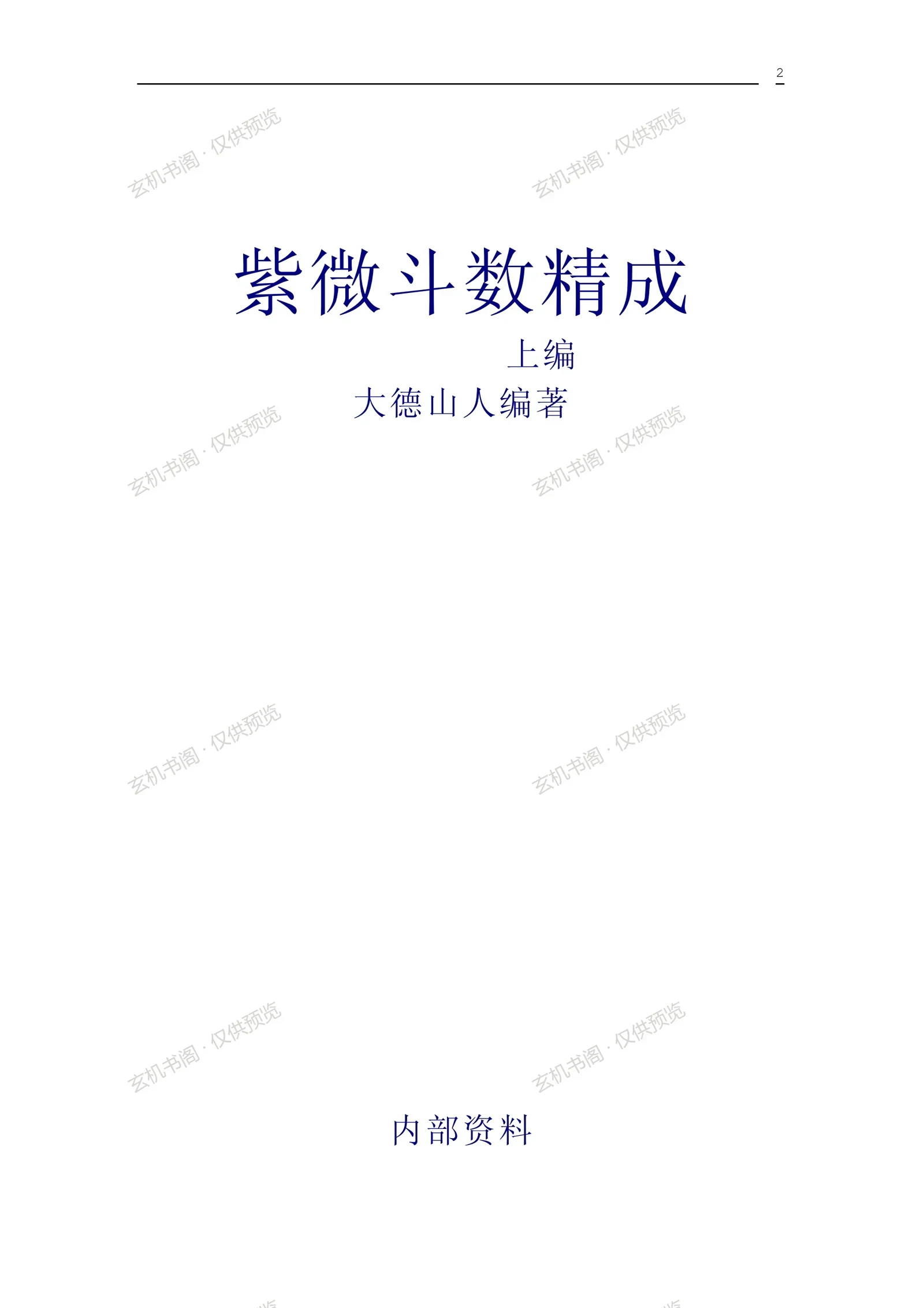
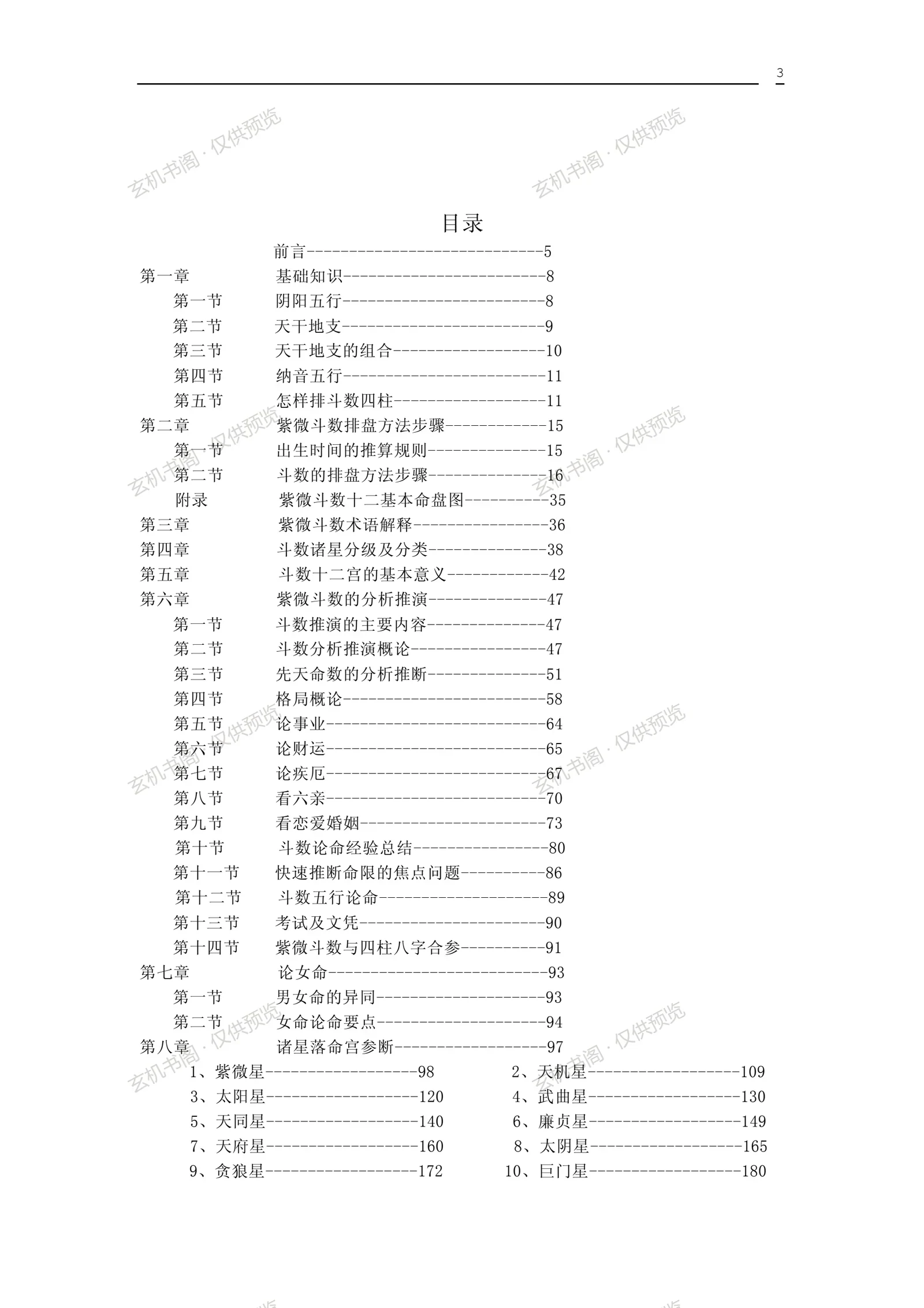
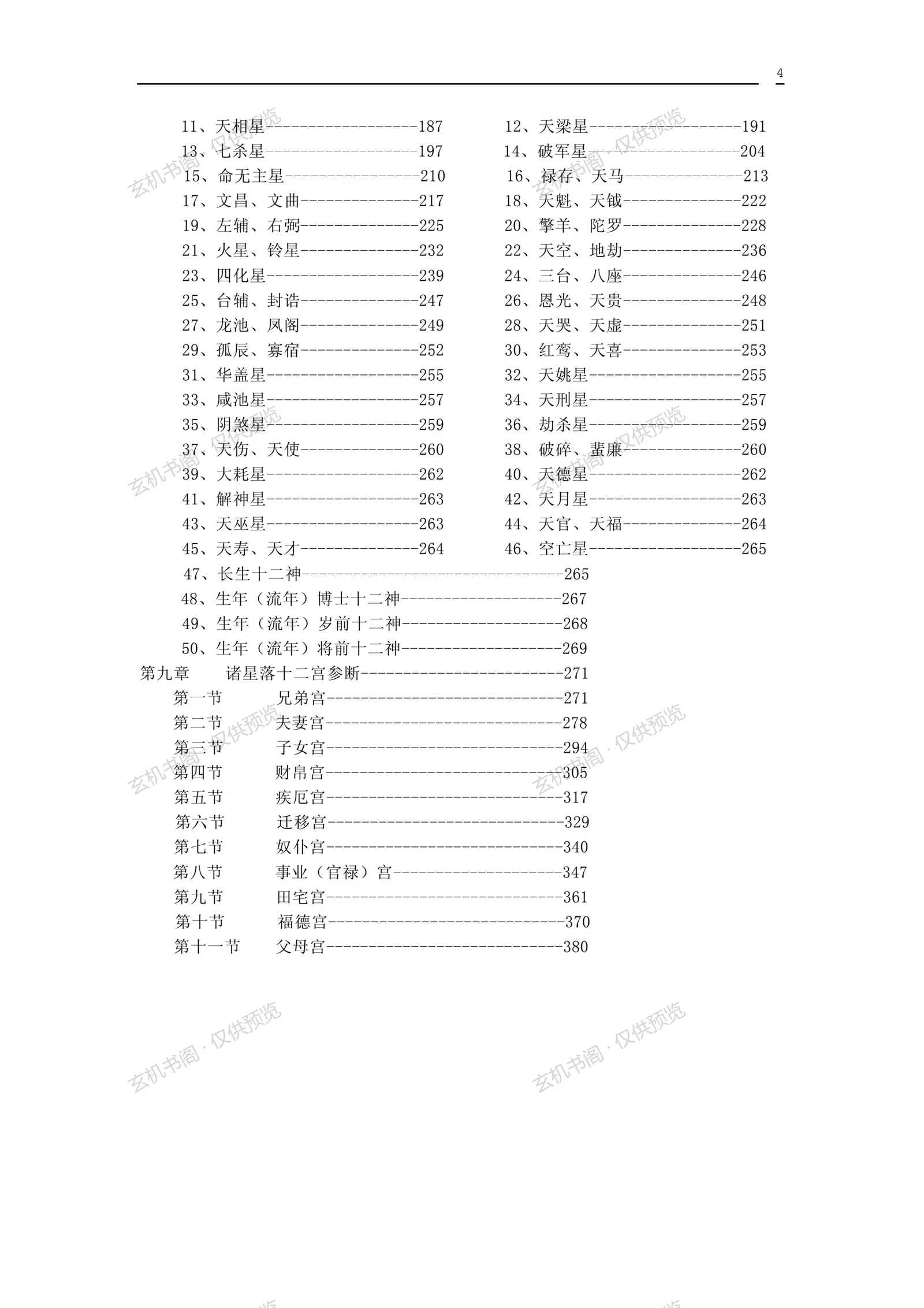
Essentials of Zi Wei Dou Shu (Part One) is a teaching text compiled by Dade Shanren, marked as internal material on the title page. The author states that it is based on his lineage's 1998 class materials and on the old classic Zi Wei Dou Shu Quan Shu, supplemented by several other famous works, aiming at a systematic and detailed presentation. The book opens with foundational knowledge: yin-yang and the five elements, heavenly stems and earthly branches, nayin, and the method of deriving the four pillars for Dou Shu. Chapter Two covers the rules for calculating birth time and the steps of casting a Zi Wei Dou Shu chart, with twelve basic chart diagrams. Chapter Three explains terminology, Chapter Four classifies the stars, and Chapter Five explains the basic meaning of the twelve palaces. Chapter Six turns to analysis and interpretation, including innate fate, chart patterns, career, wealth, illness, relatives, marriage, examinations, and combined reading with the four pillars. Chapter Seven treats female charts. Chapter Eight discusses each star falling in the life palace, and Chapter Nine treats the stars in each of the twelve palaces, from siblings and spouse through property, happiness and parents. The lookup-style arrangement makes it convenient to consult after casting a chart, suitable both for beginners and for readers with some background.
Contents
Ch.1 Foundations: yin-yang, five elements, stems and branches
Ch.2 Steps of casting a Zi Wei Dou Shu chart
Ch.3-5 Terminology, star classification, twelve palaces
Ch.6 Interpretation: patterns, career, wealth, relatives
Ch.7 Reading female charts
Ch.8 Stars in the life palace
Ch.9 Stars in each of the twelve palaces
Key Points
Compiled from 1998 lineage materials and the classic Zi Wei Dou Shu Quan Shu
Starts with stems, branches and elements, then chart casting
Lookup-style sections for star meanings, relatives and yearly limits
Chapter 8 treats stars in the life palace; Chapter 9 treats each palace
Emphasizes cross-reading with the four pillars method