Reading guide
Content guideOverview
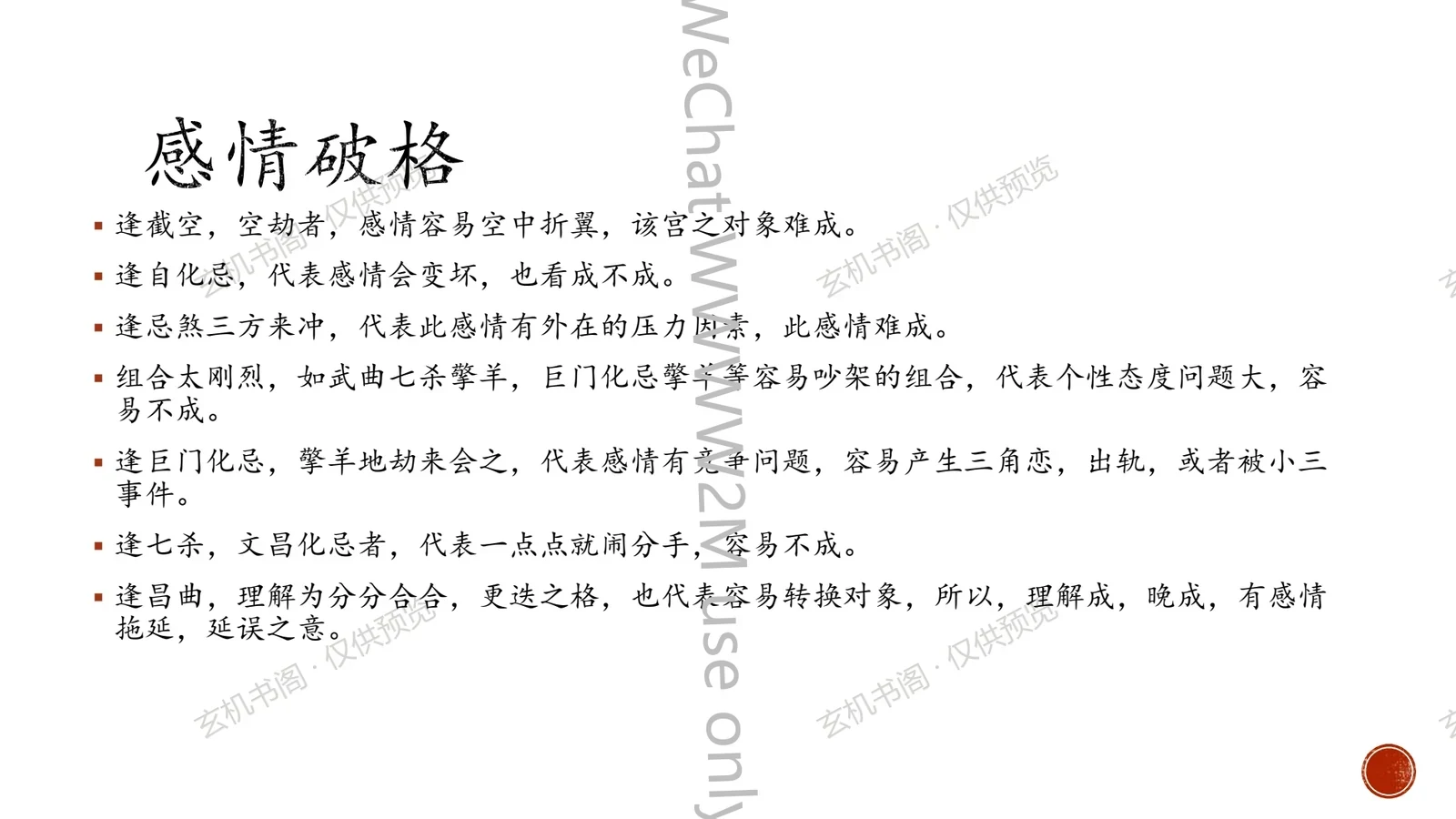
This slide-based lecture focuses on love and marriage in Zi Wei Dou Shu. The table of contents lists the meaning of the palace positions, a partner's temperament and appearance, relationship breakdowns and marriage objects, the Tai Sui entering-palace method, star combinations, the Ge Jiao Sha, divorce indicators, and a short demonstration. The main text first explains setting the Spouse Palace as the Taiji point: its opposite palace indicates the partner's looks and temperament, while its trine palaces correspond to the partner's wealth and career. It then presents a modern method for multiple relationships, treating the Spouse Palace as basic preference and first love, with the Children, Wealth, and Health palaces as the second, third, and fourth partners in turn. The appearance section lists star combinations such as Seven Killings, Po Jun, Wu Qu, Tai Yang with Hua Lu, Tai Yin with Hua Ji, Tan Lang with Hua Lu, Di Kong, Tian Ji, Tian Tong with Hua Lu, and Chang Qu, explaining the types of appearance and personality favored under each. The breakdown section covers void or hollow stars, self-transform Hua Ji, clashes from Ji and Sha, rigid combinations, Ju Men with Hua Ji plus Qing Yang and Di Jie, Seven Killings with Wen Chang Hua Ji, and Chang Qu, which indicate relationships that are hard to form, competitive, delayed, or repeatedly separated and reunited. The structure is clear and topic-based, suitable for readers with some Zi Wei Dou Shu background who want a concentrated look at relationship analysis.
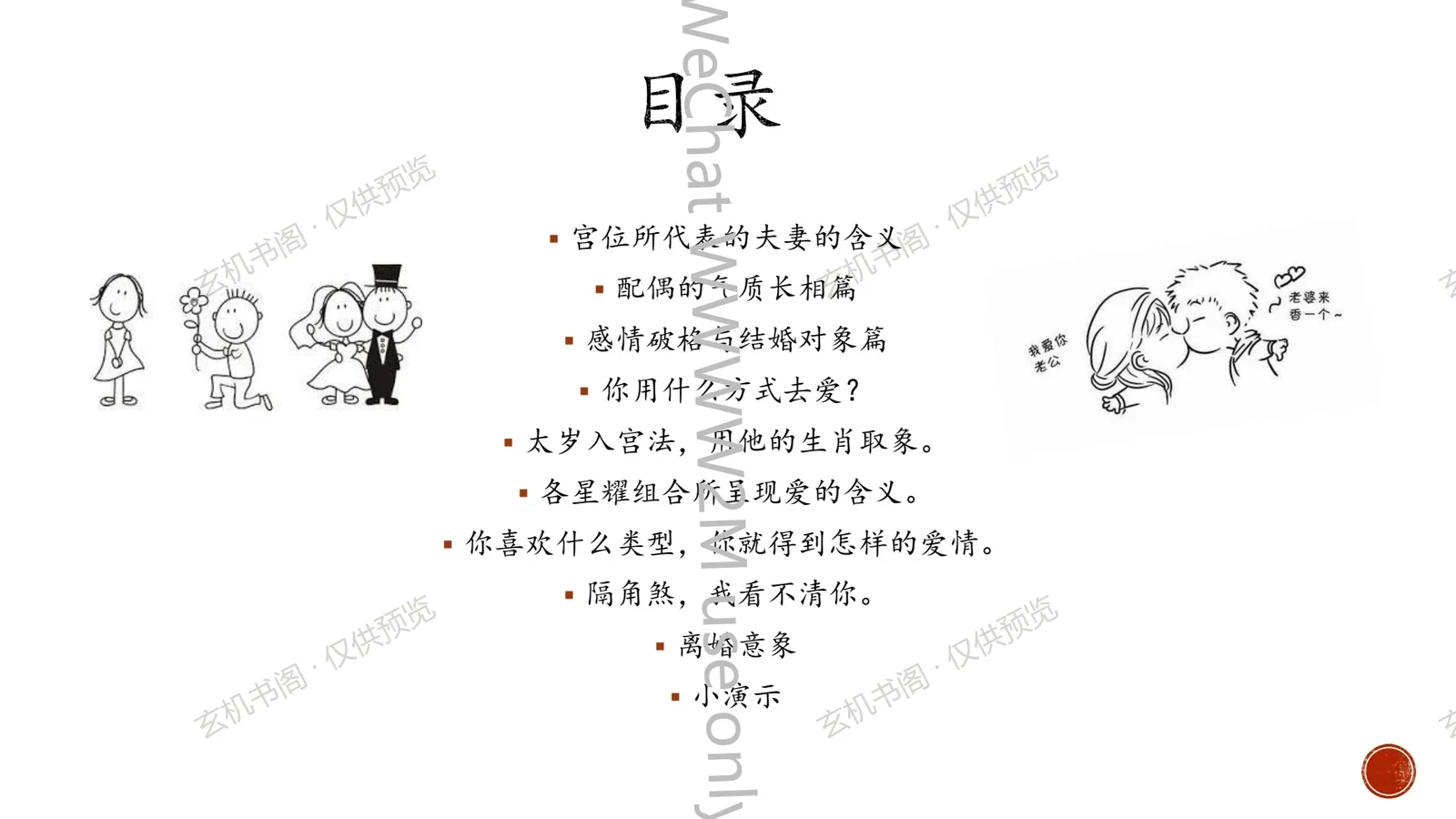
Contents
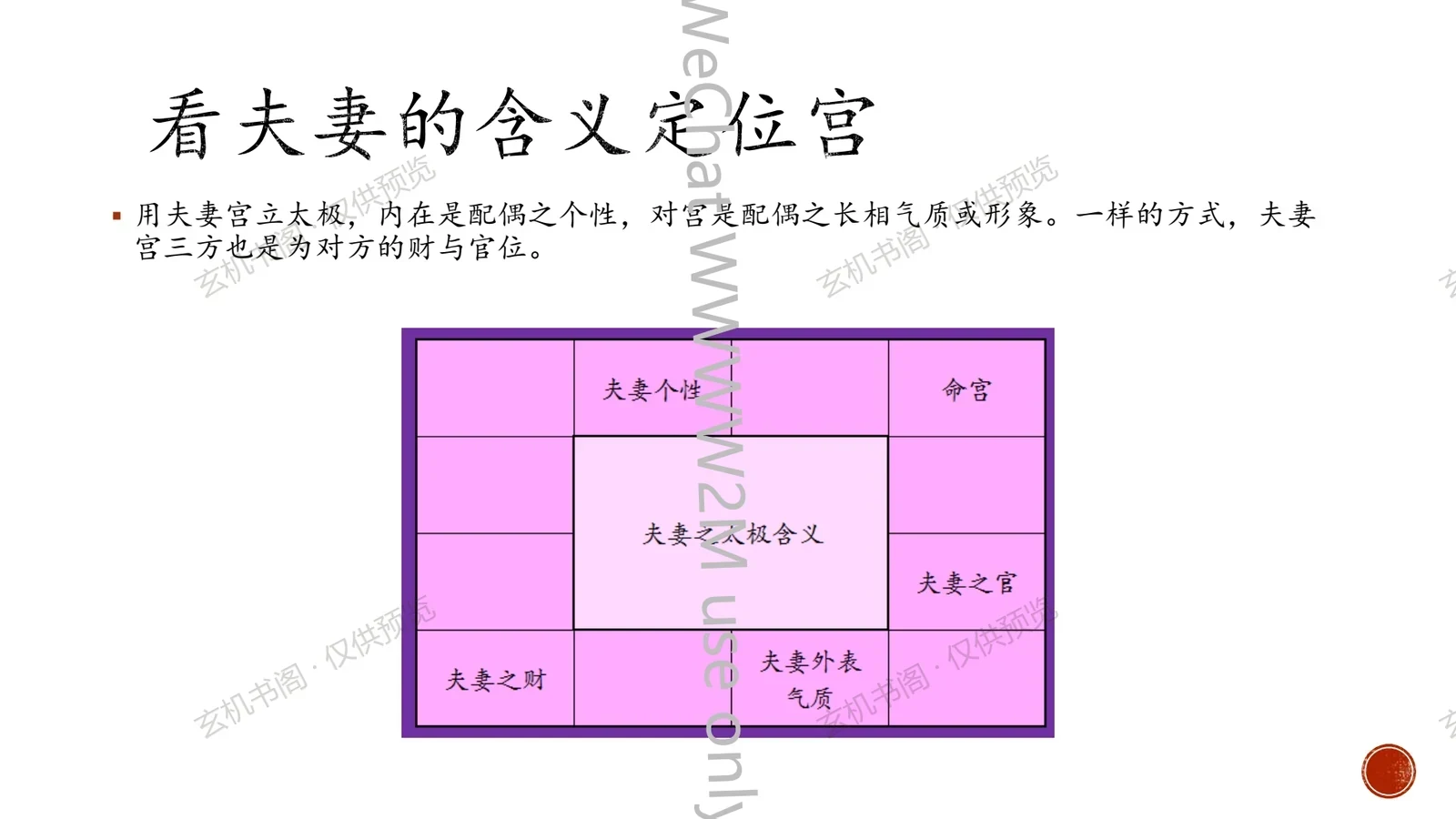
Spouse Palace as Taiji: locating partner's character and looks
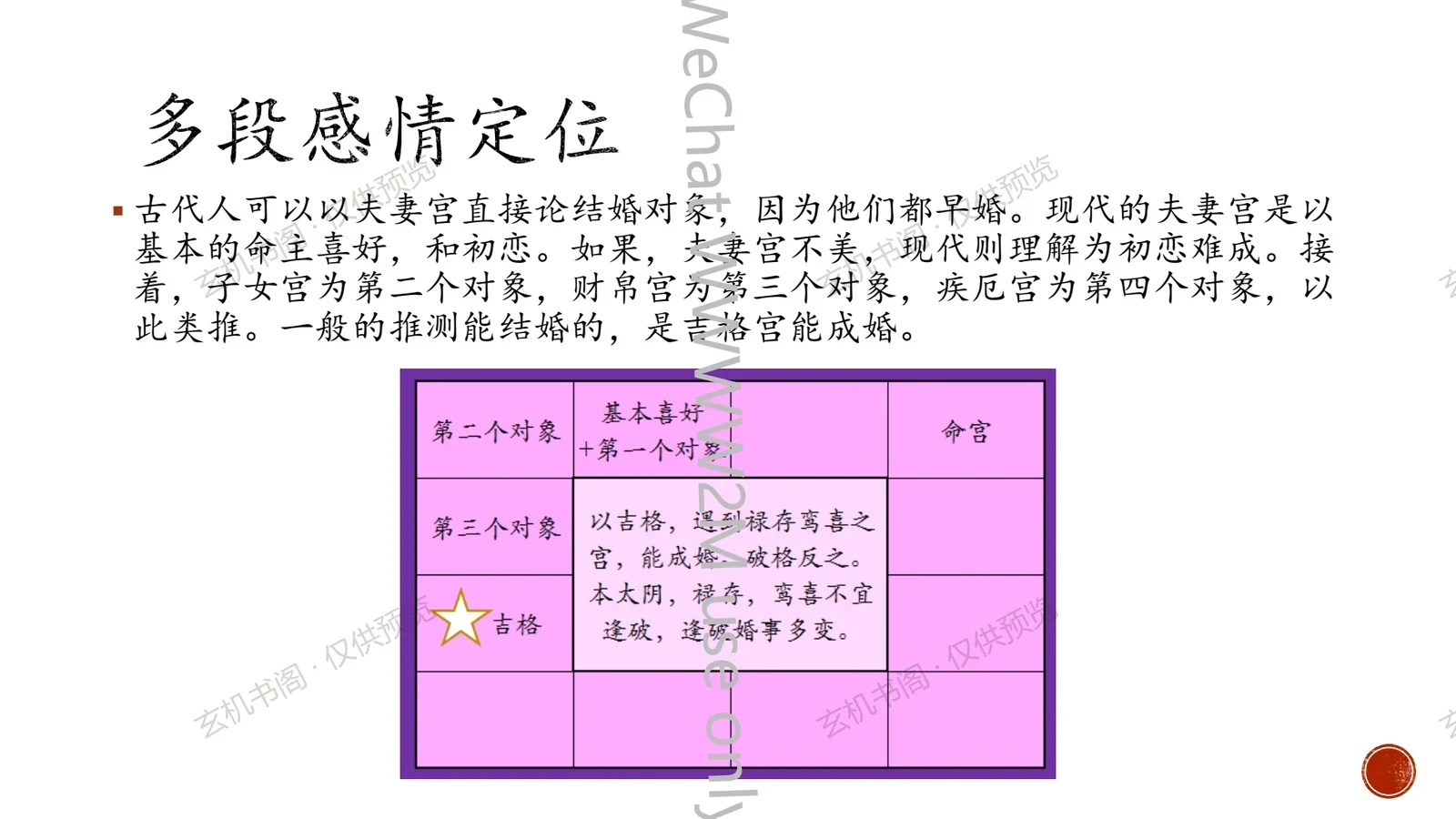
Multiple relationship positions and marriage-favorable patterns
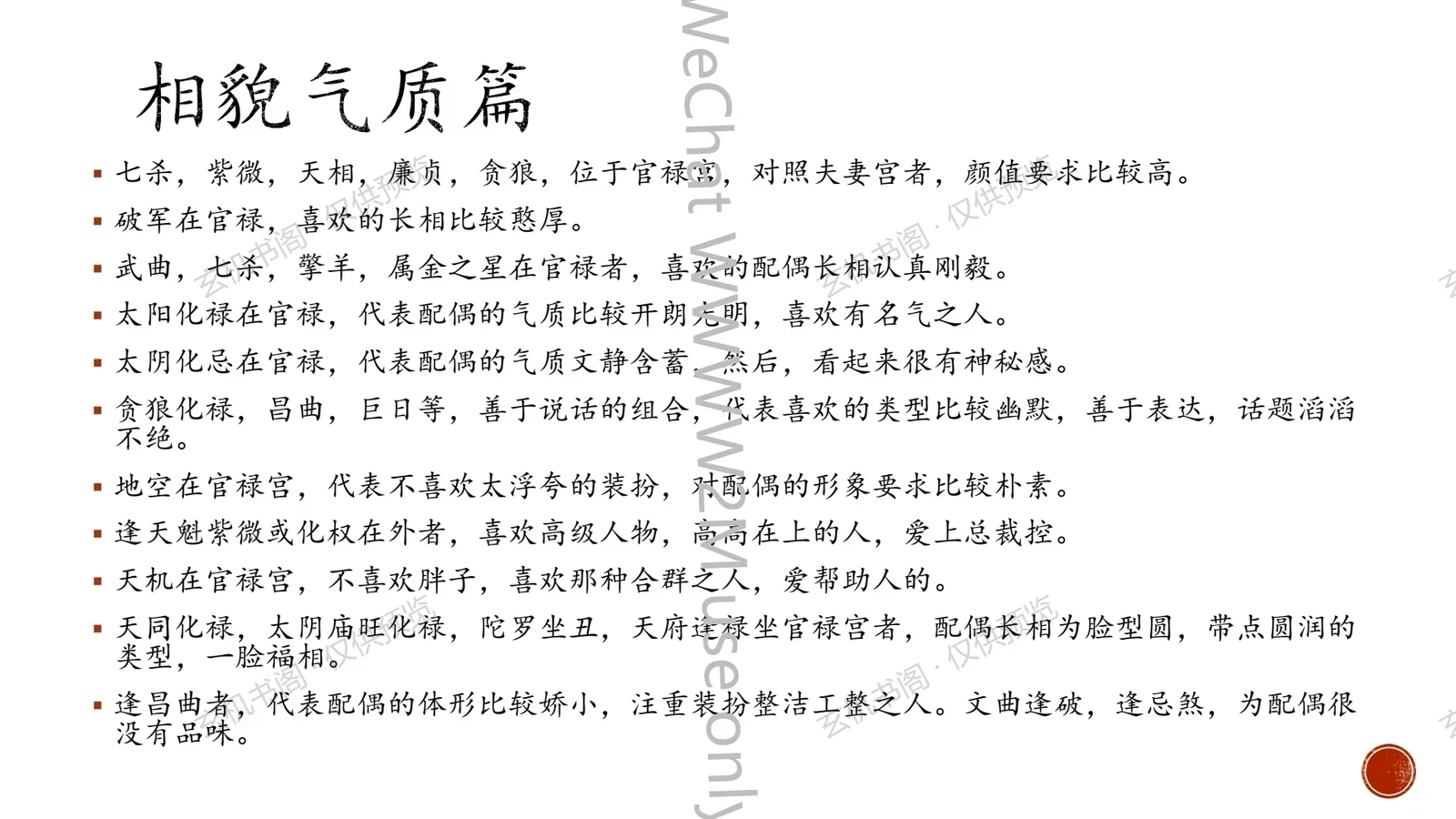
Appearance section: star combinations and preferred types
Relationship breakdowns: voids, Ji-Sha, rigid combinations
Ge Jiao Sha and divorce indicators
Short demonstration
Key Points
Set the Spouse Palace as Taiji; its opposite palace shows looks and temperament, its trine shows the partner's wealth and career
In modern readings the Spouse Palace can indicate first love, with later partners from the Children Palace onward
Favorable patterns with Lu Cun, Luan, and Xi support marriage; broken patterns make marriage changeable
Seven Killings, Zi Wei, Tian Xiang, Lian Zhen, and Tan Lang in Career opposite the Spouse Palace suggest high demands for appearance
Ju Men Hua Ji with Qing Yang and Di Jie suggests competition, love triangles, or affairs
Chang Qu in relationship contexts often means separations and reunions, changing partners, or delay