Reading guide
Content guideOverview
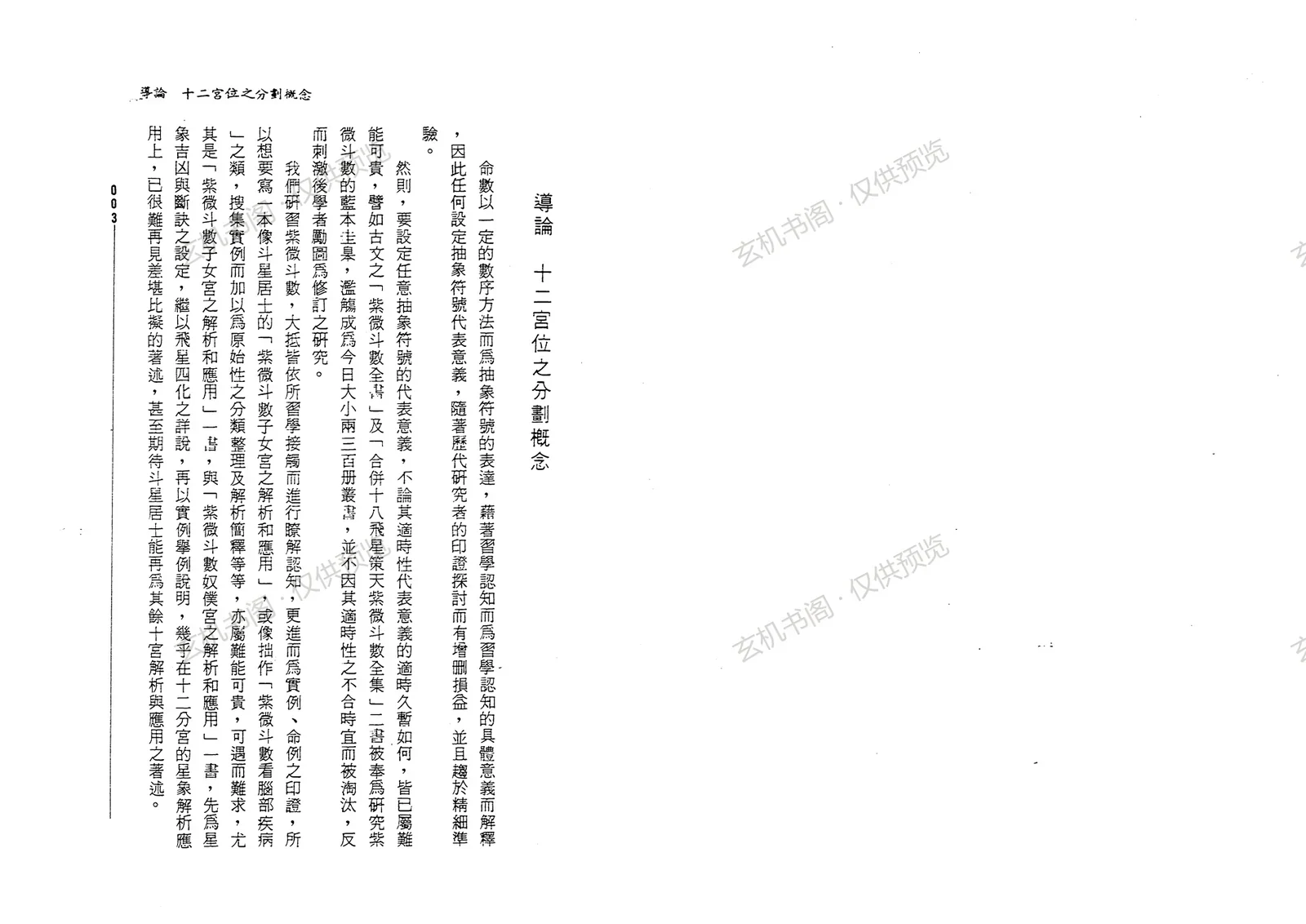
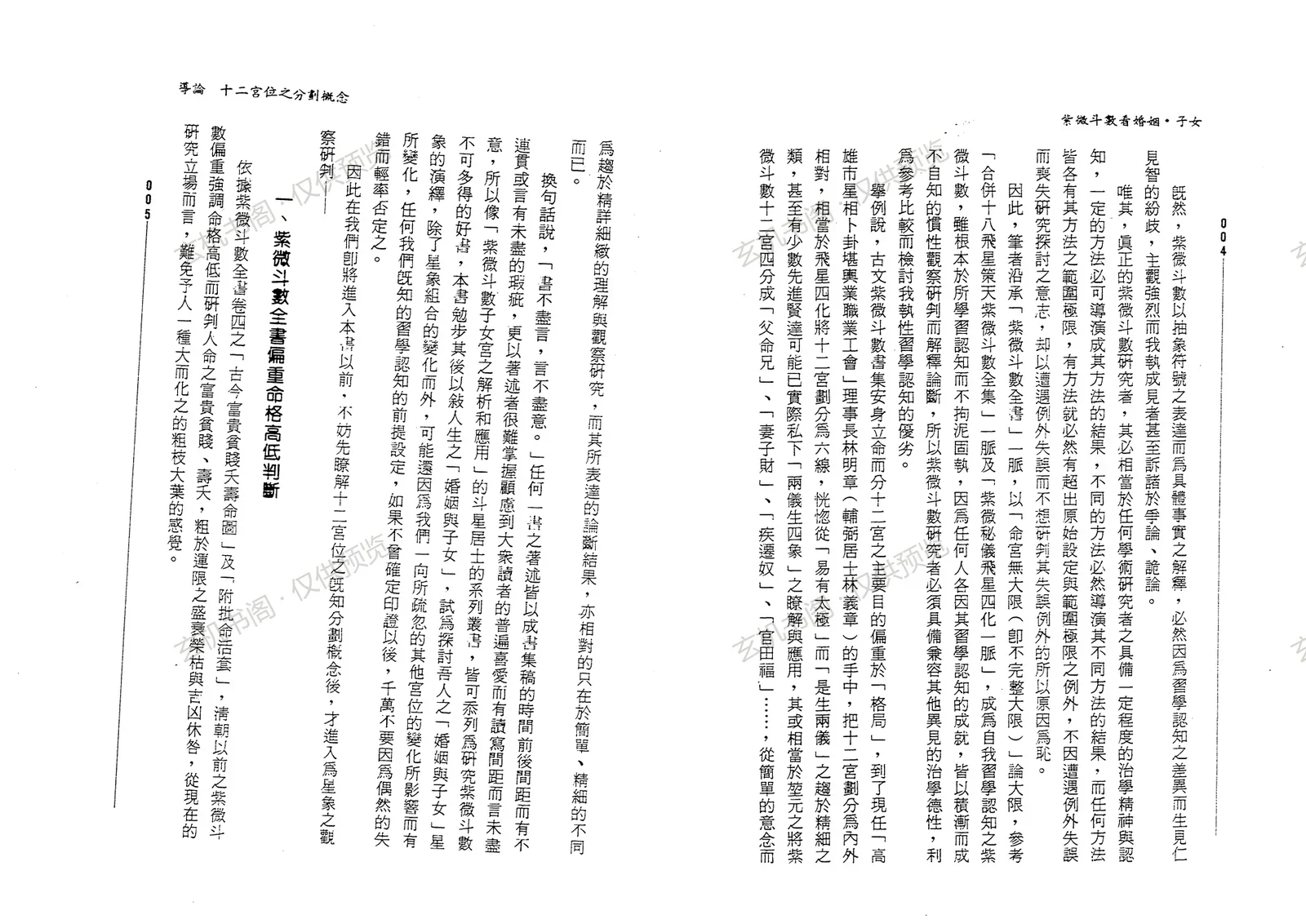
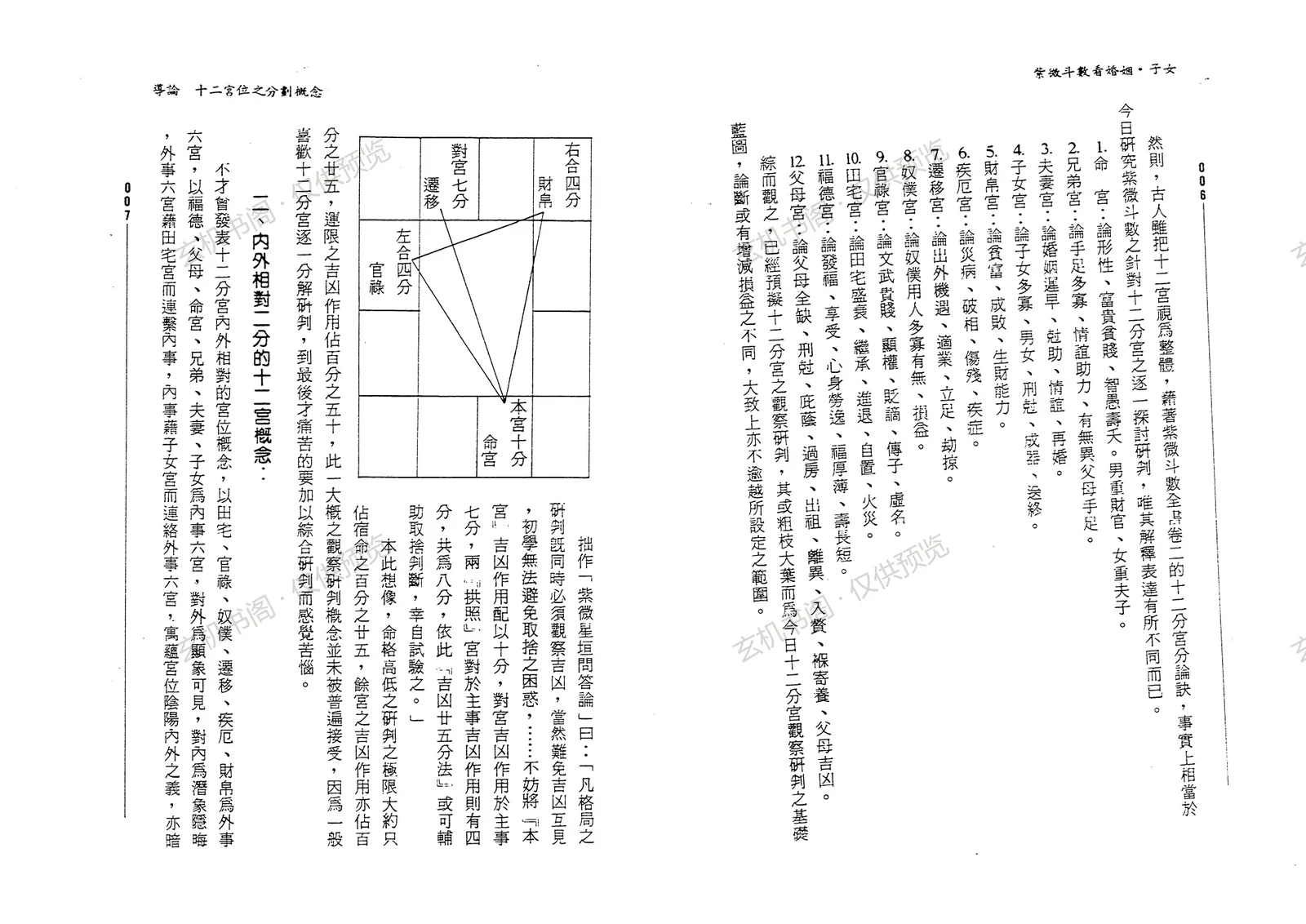
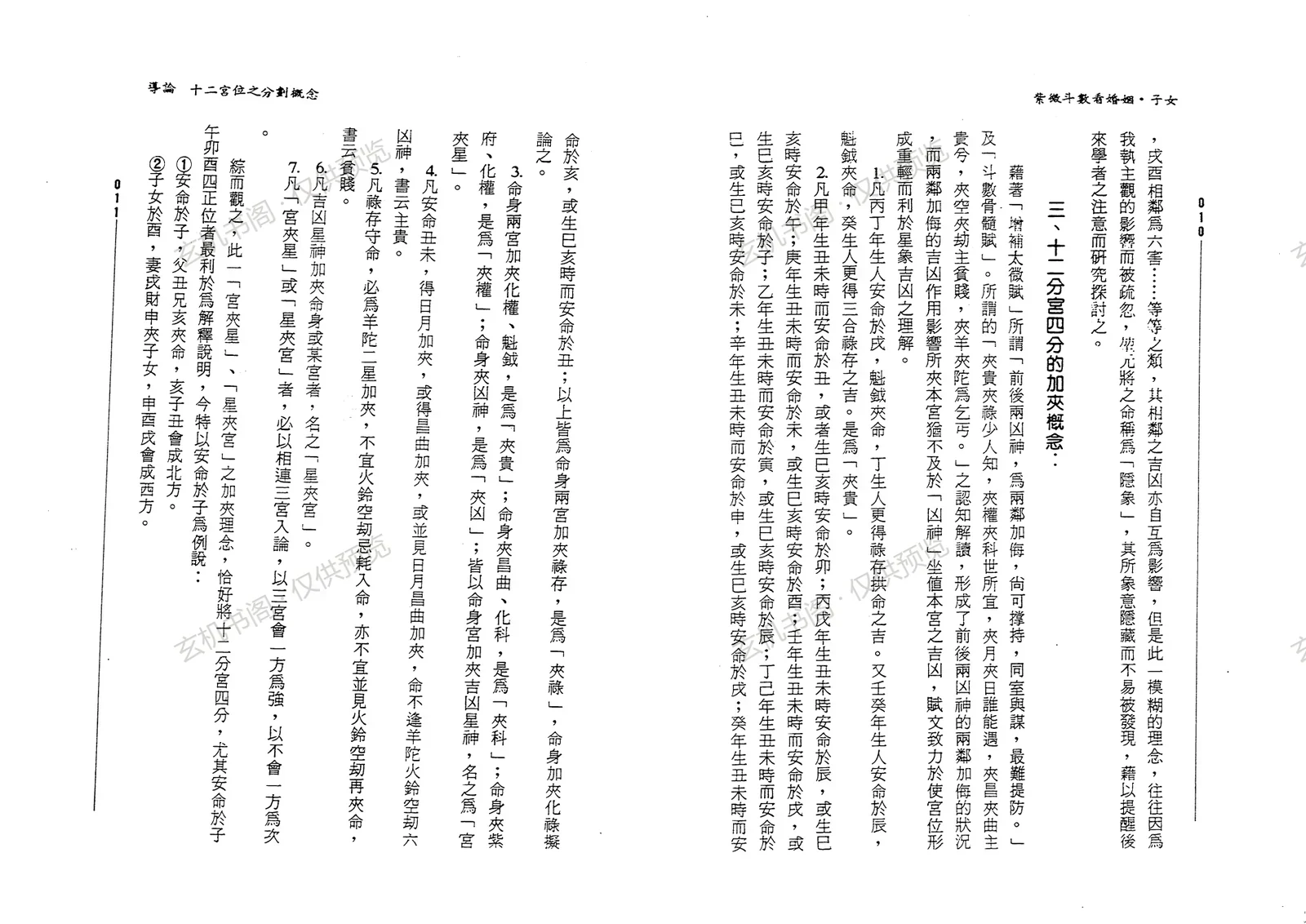
This first volume of Zi Wei Dou Shu on Marriage and Children uses the Zi Wei Dou Shu chart as a tool to analyze marriage and offspring. Based on the visible introduction and main text, it begins with the symbolic system of Zi Wei Dou Shu and the division of the twelve palaces, discussing the meaning and interrelation of each palace. The author stresses that the twelve palaces form a whole and should not be read in isolation, and compares classical texts such as the Complete Book of Zi Wei Dou Shu and related eighteenth flying-star compendia. The book presents different methods of palace division, including six-part and four-part schemes, and focuses on defining the Life Palace, Spouse Palace, and Children Palace in relation to marriage and children. It is suited to readers with basic Zi Wei Dou Shu knowledge who want a deeper understanding of the reasoning behind marriage and children judgments, rather than simple formulaic conclusions.
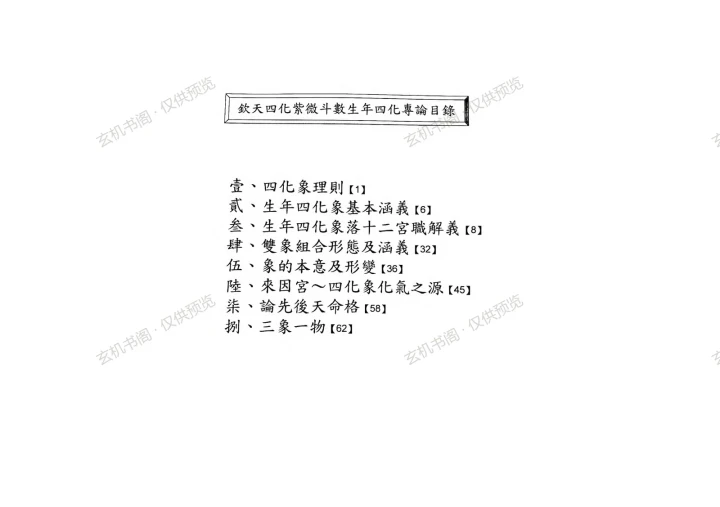
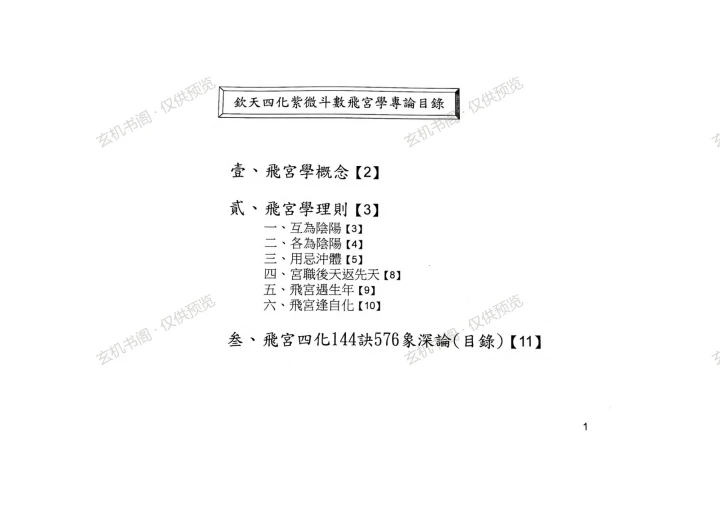
Contents
Introduction: concept of twelve-palace division
Symbolic system and comparison of classics
Meaning of the twelve palaces in the chart
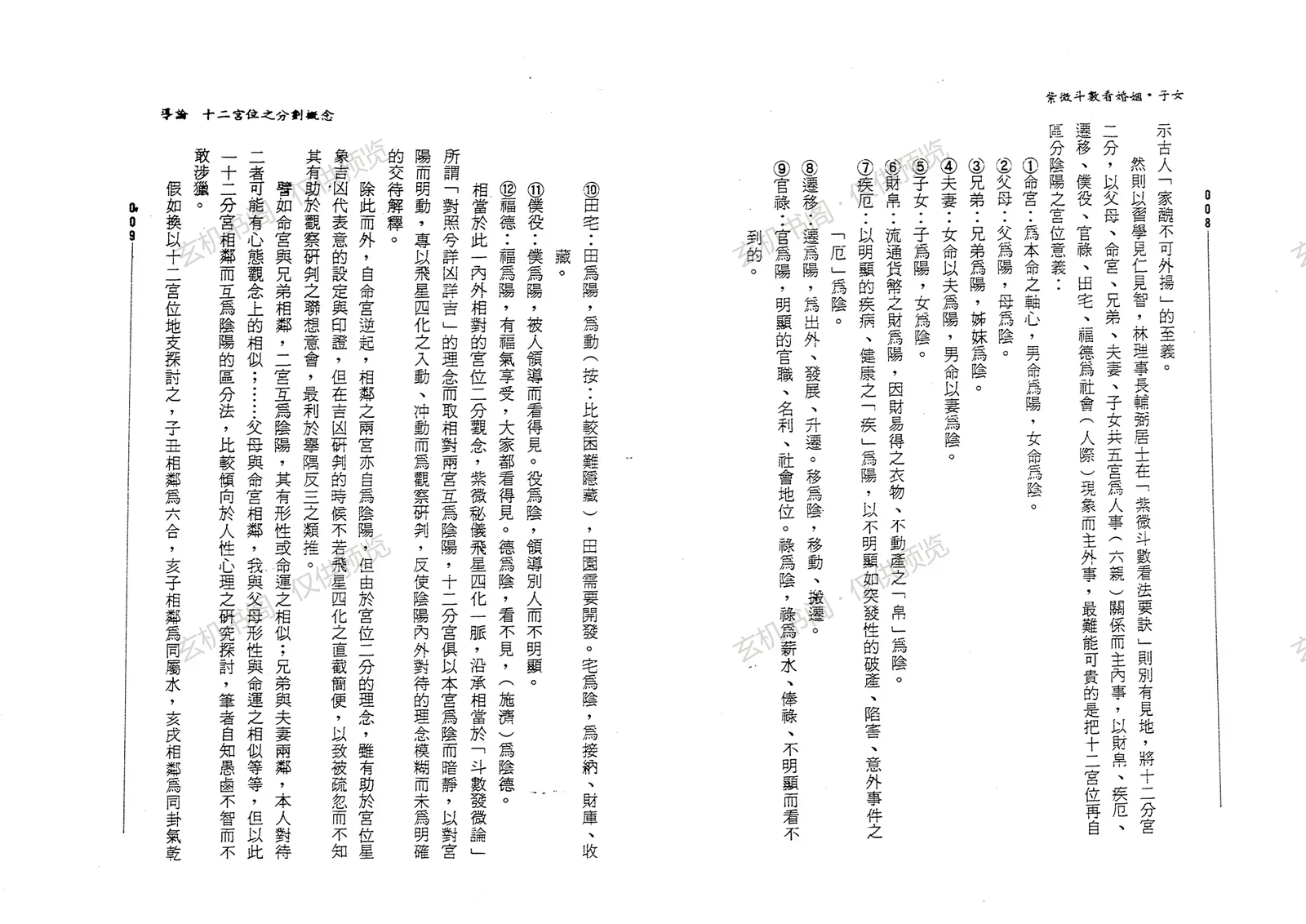
Inner-outer correspondence and yin-yang attributes
Four-part division and additional concepts
Key Points
The twelve palaces should be read as a whole
Zi Wei symbols carry both abstract and concrete meanings
Classical texts differ on palace division
Marriage and children require combined palace analysis
Palaces have yin-yang and inner-outer relations