Reading guide
Content guideOverview
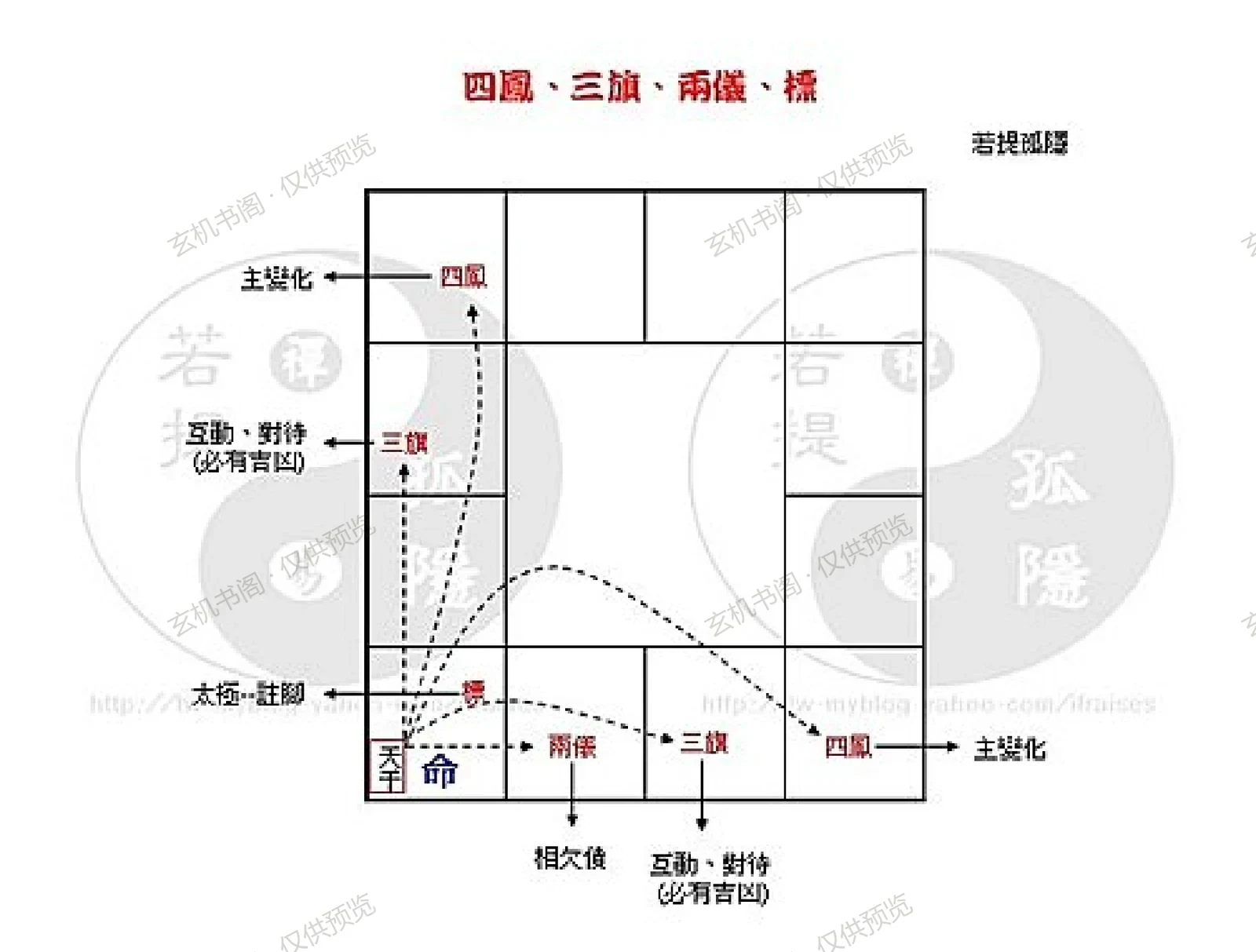
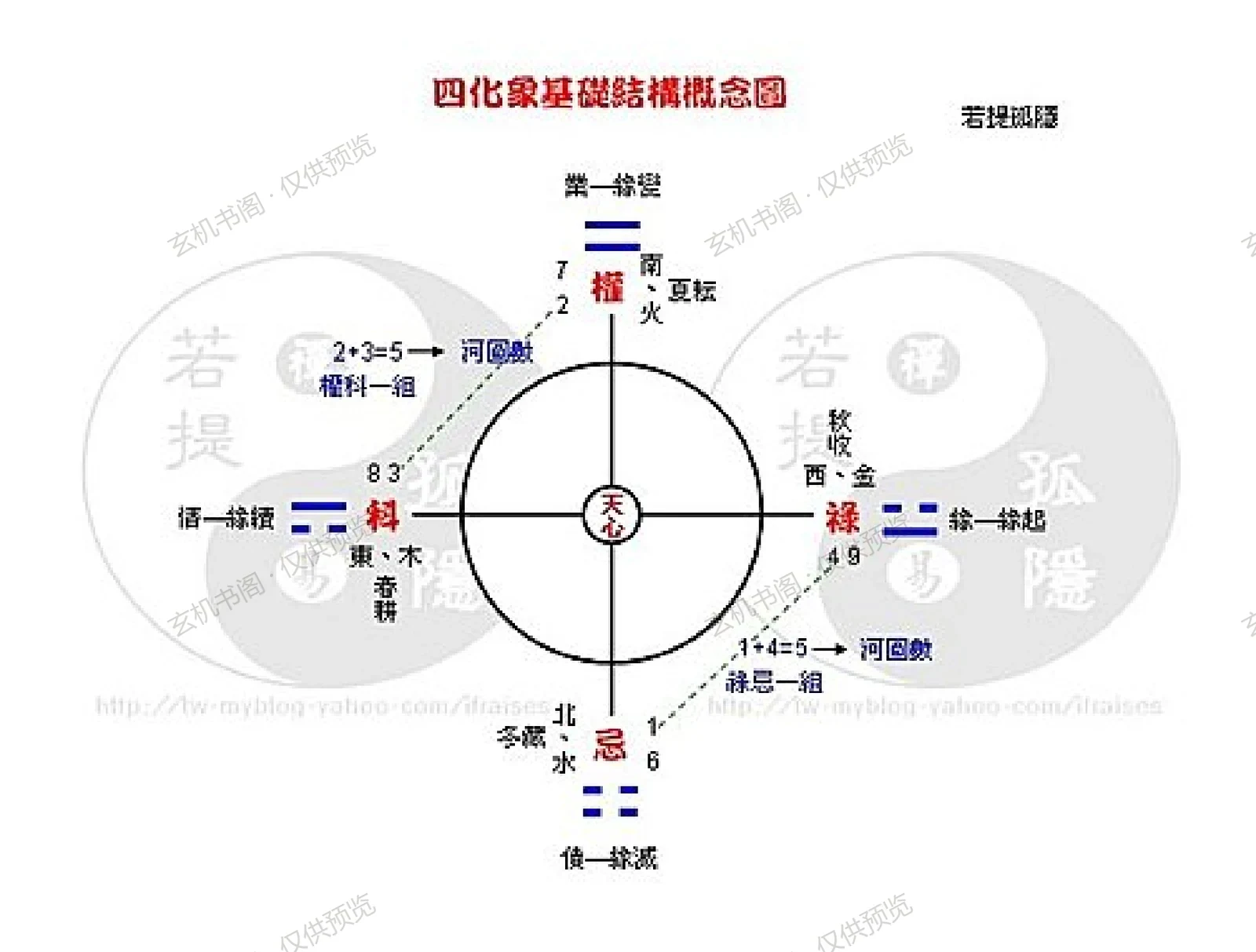
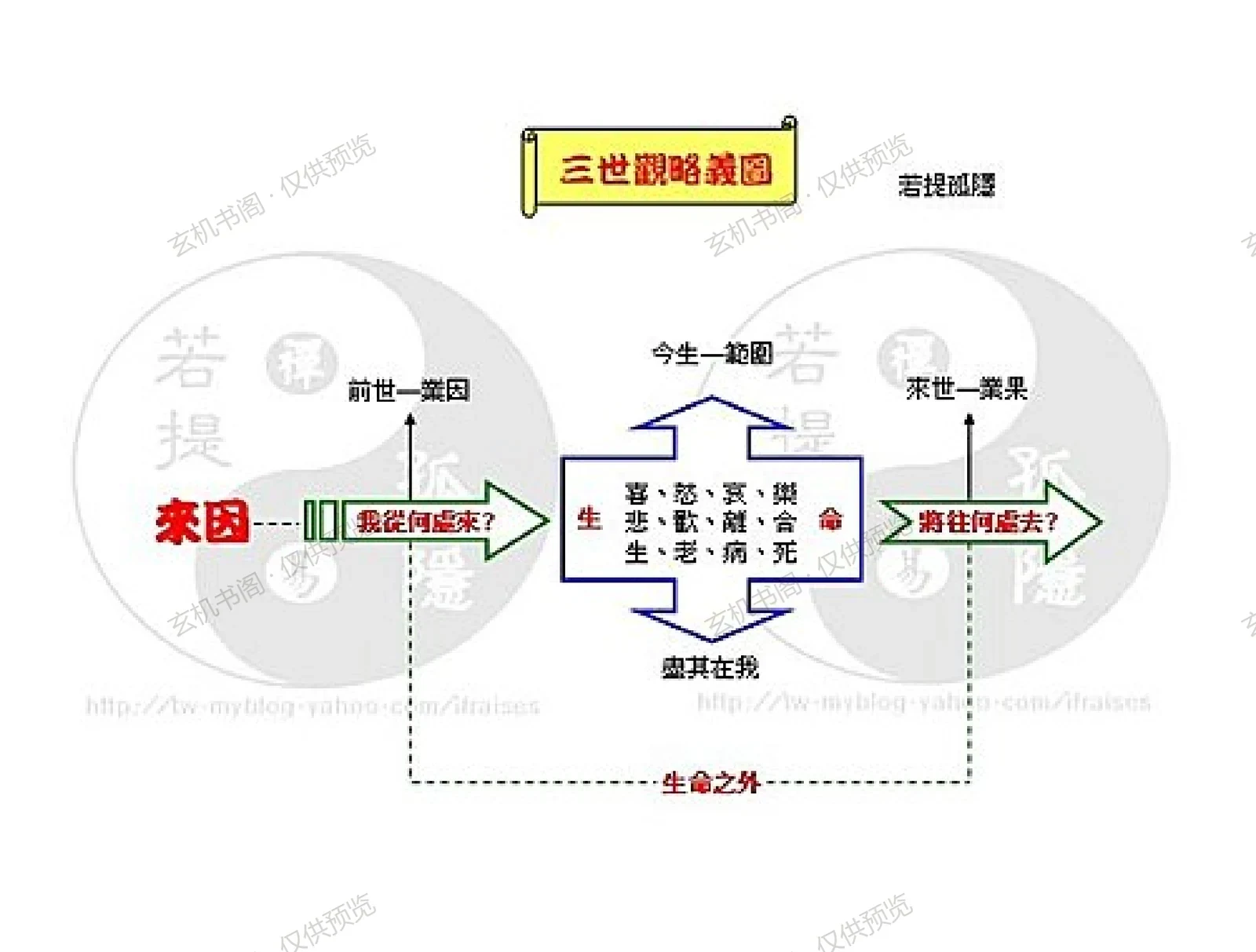
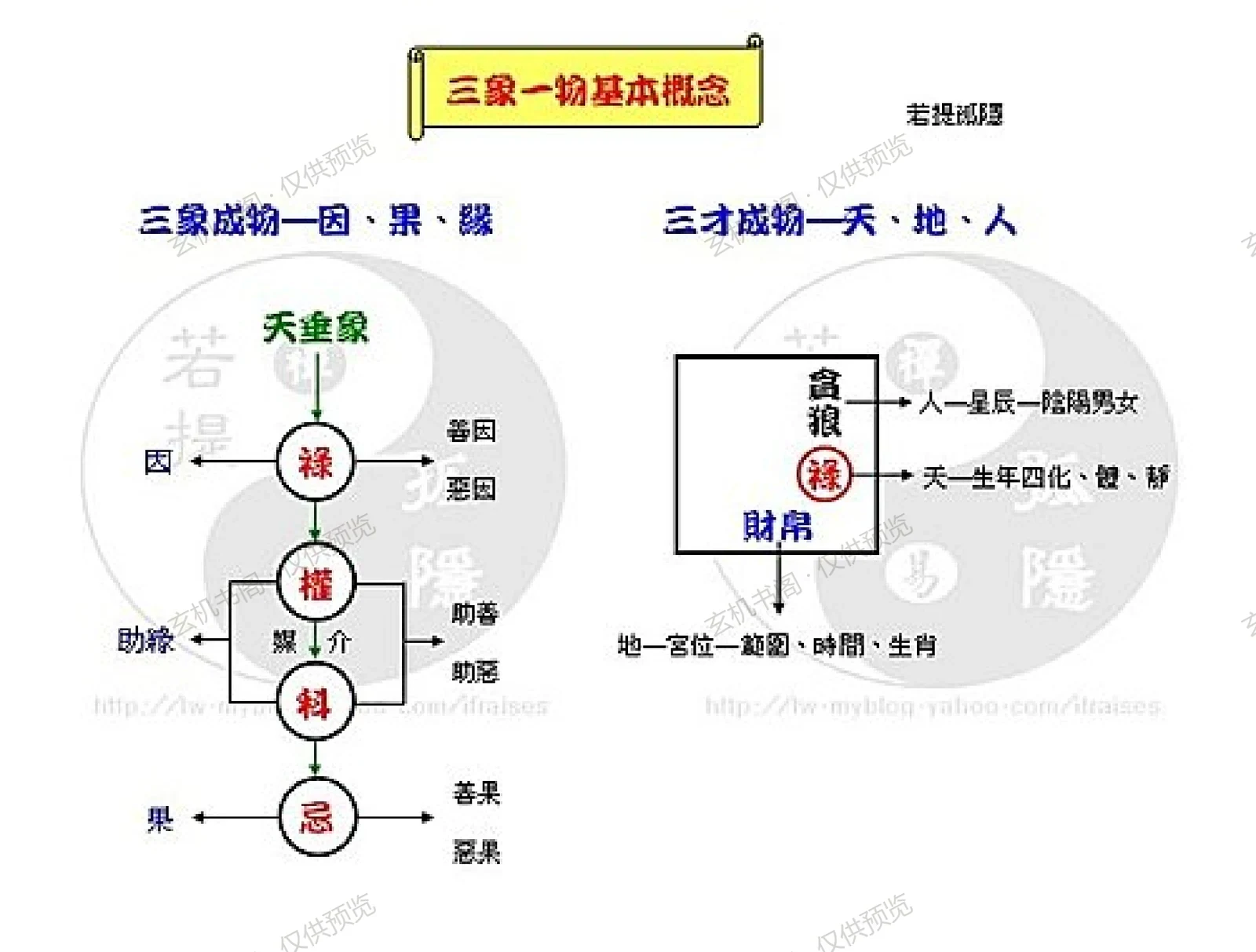
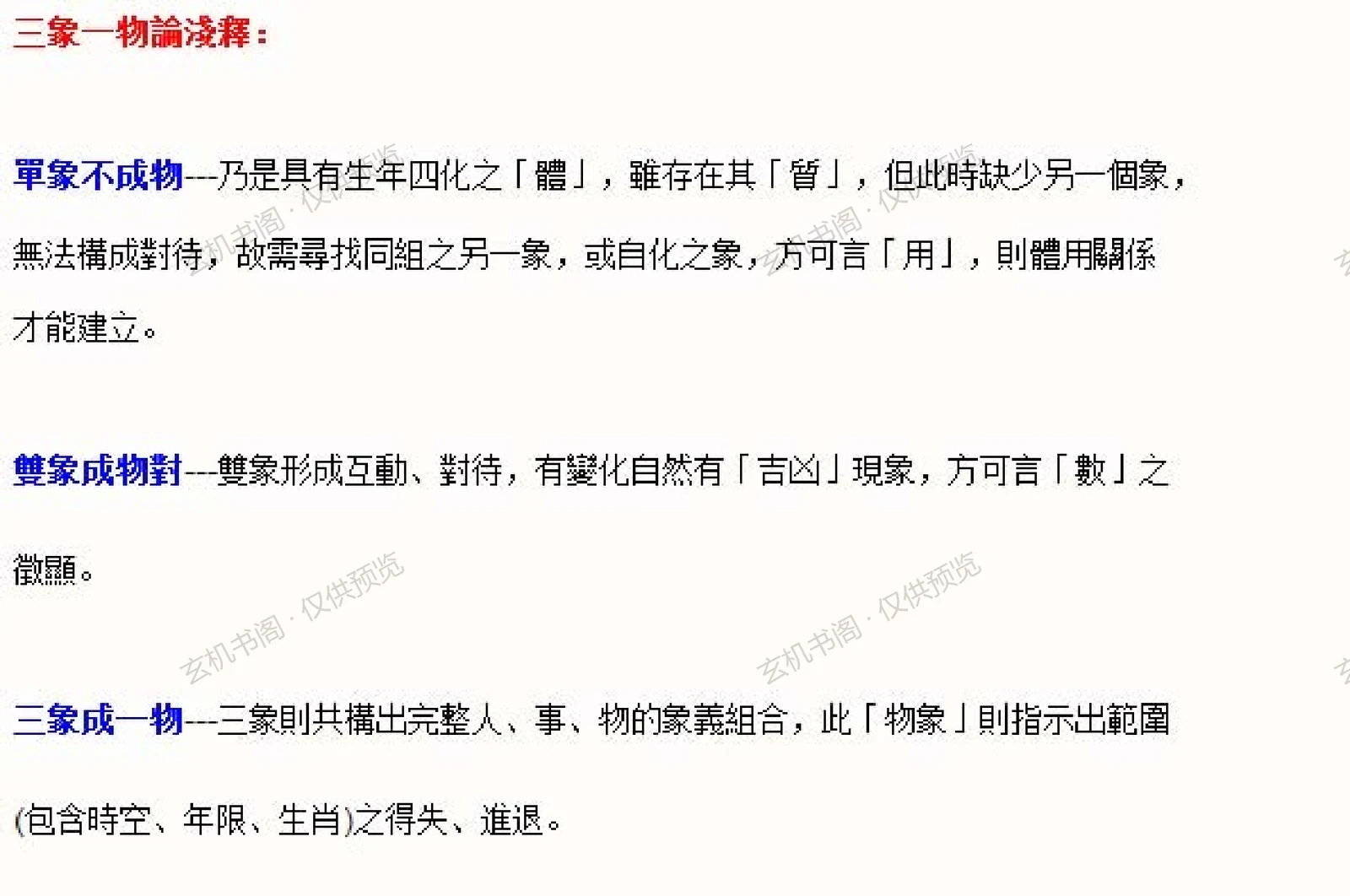
This is the second volume of Ruo Ti Gu Yin's advanced notes on Qintian-style Zi Wei Dou Shu. The visible pages use diagrams to explain core theoretical frameworks: how the birth-year four transformations descend from heavenly emblems into palace positions and time; how the four transformations unfold from taiji through two modes, three circles, and four circles, with interaction, opposition, fortune and misfortune, and principal transformation marked at each level. A basic structural diagram pairs quan and ke as one group, lu and ji as another, linking them to south-fire, east-wood, west-metal, north-water and Hetu numbers. Later sections present a three-lives strategic diagram and the doctrine of three images forming one object, using cause, effect and condition with lu, quan, ke and ji to explain why a single image cannot form an object, two images form a pair, and three images complete a full configuration of person, event and object, also correlated with heaven, earth and humanity. The material is theoretical and suited to readers who already know Zi Wei Dou Shu and want to study Qintian four-transformation imagery in depth.
Contents
Heavenly emblems and earthly forms: birth-year transformations, palaces and time
Four circles, three circles, two modes, taiji: levels of transformation
Basic structure of four transformations: quan, ke, lu, ji with five phases and Hetu
Three-lives strategic diagram: cause and effect across lives
Three images, one object: cause, effect, condition and the three powers
Explaining three images and one object: single, paired and complete images
Key Points
Transformations descend from heavenly emblems to earthly forms, mapped to palaces and time.
Taiji, two modes, three circles and four circles describe the unfolding from essence to function.
Quan-ke form one group and lu-ji another, keyed to Hetu numbers and five-phase directions.
A single image cannot form an object; another image in the same group or a self-transformation is needed.
Two images form a pair with fortune and misfortune; three images complete the meaning of a person, event or object.