Reading guide
Content guideOverview
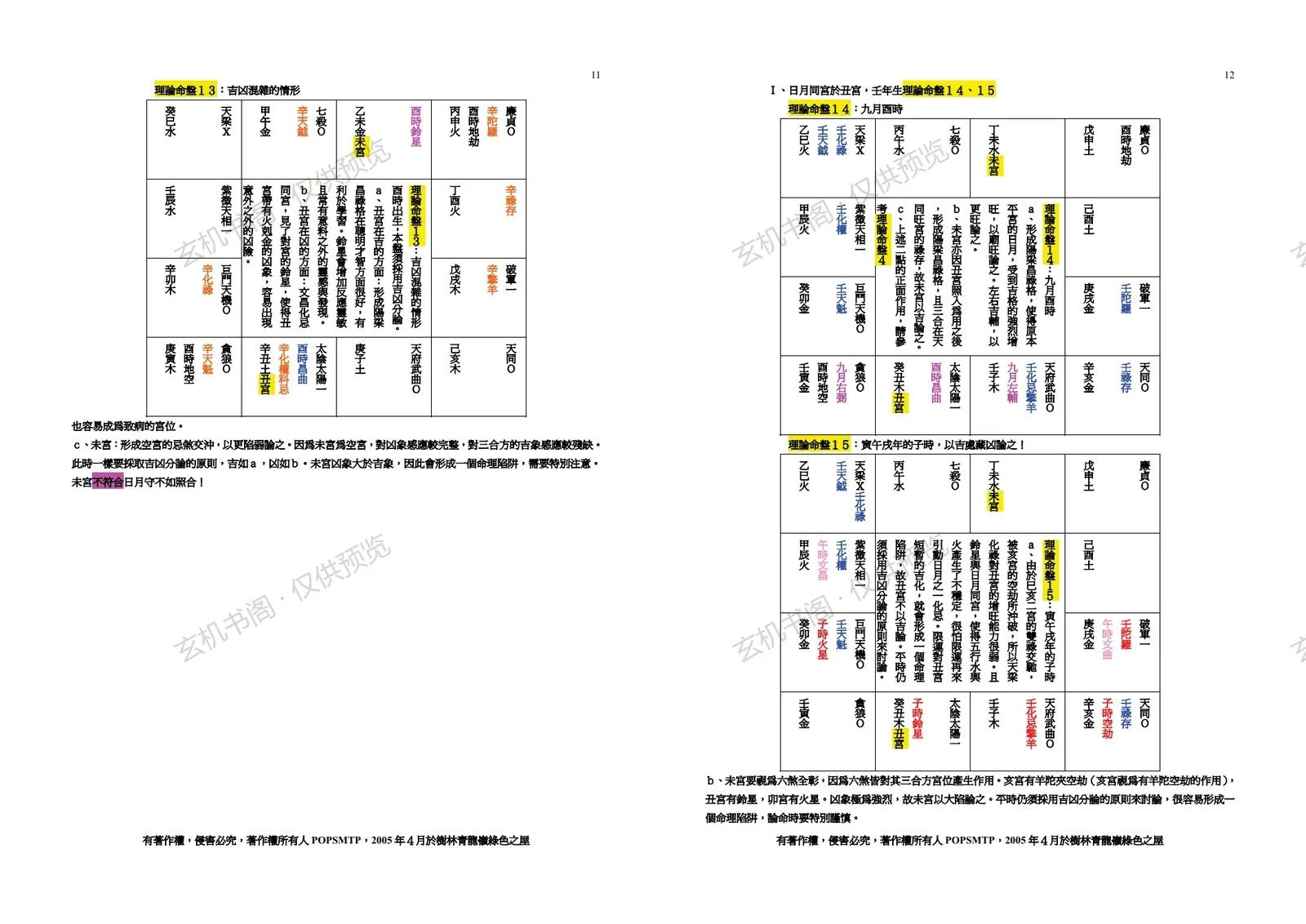
This is a set of study notes compiled by a student of Zi Wei Dou Shu teacher Zi Yun. The text, titled 'On the Strength and Weakness of the Sun and Moon Stars (with Notes on Empty Palaces),' examines how the Sun and Moon stars gain or lose strength in different configurations. It first establishes four basic patterns—same palace, trine, opposition and夹午—then discusses how season, day/night and earthly branch position affect the two stars. The middle sections work through the Sun and Moon sharing the chou-wei, mao-you, chen-xu, si-hai and zi-wu palaces, combining natal charts, annual and monthly cycles, the trine-four sectors and transformations of lu and ji to show how judgments are made. The latter part focuses on empty palaces, borrowed stars, clashes of sha and ji, auspicious transformations in empty palaces and the so-called 'fate trap.' The book is table- and chart-heavy and suits readers who already know the basics of Zi Wei Dou Shu and want to deepen their understanding of the Sun-Moon pair and empty-palace judgment.
Contents
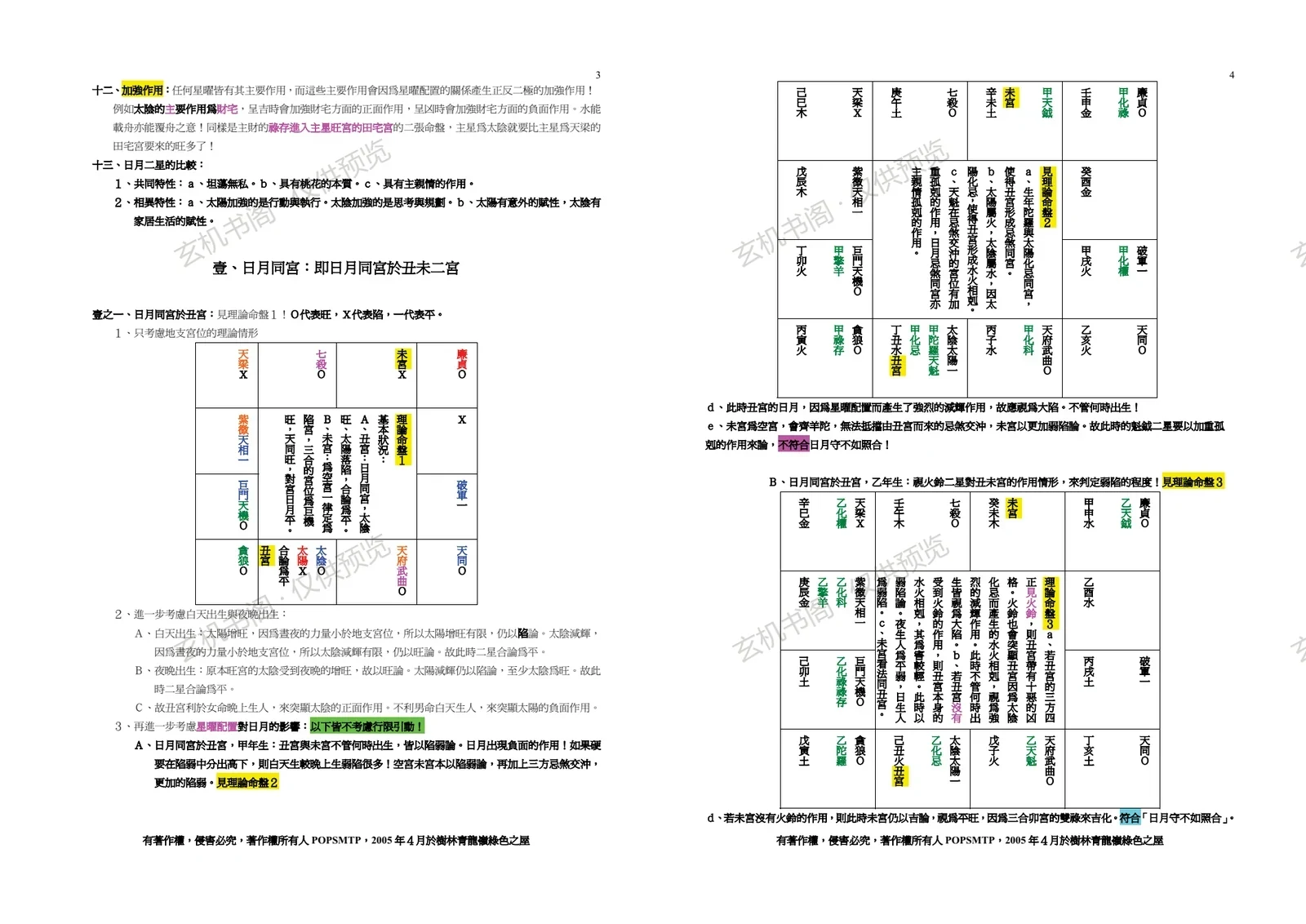
1. General survey: same-palace, trine, opposition and jia-wu patterns
2. Effects of season, day/night and palace position on Sun-Moon strength
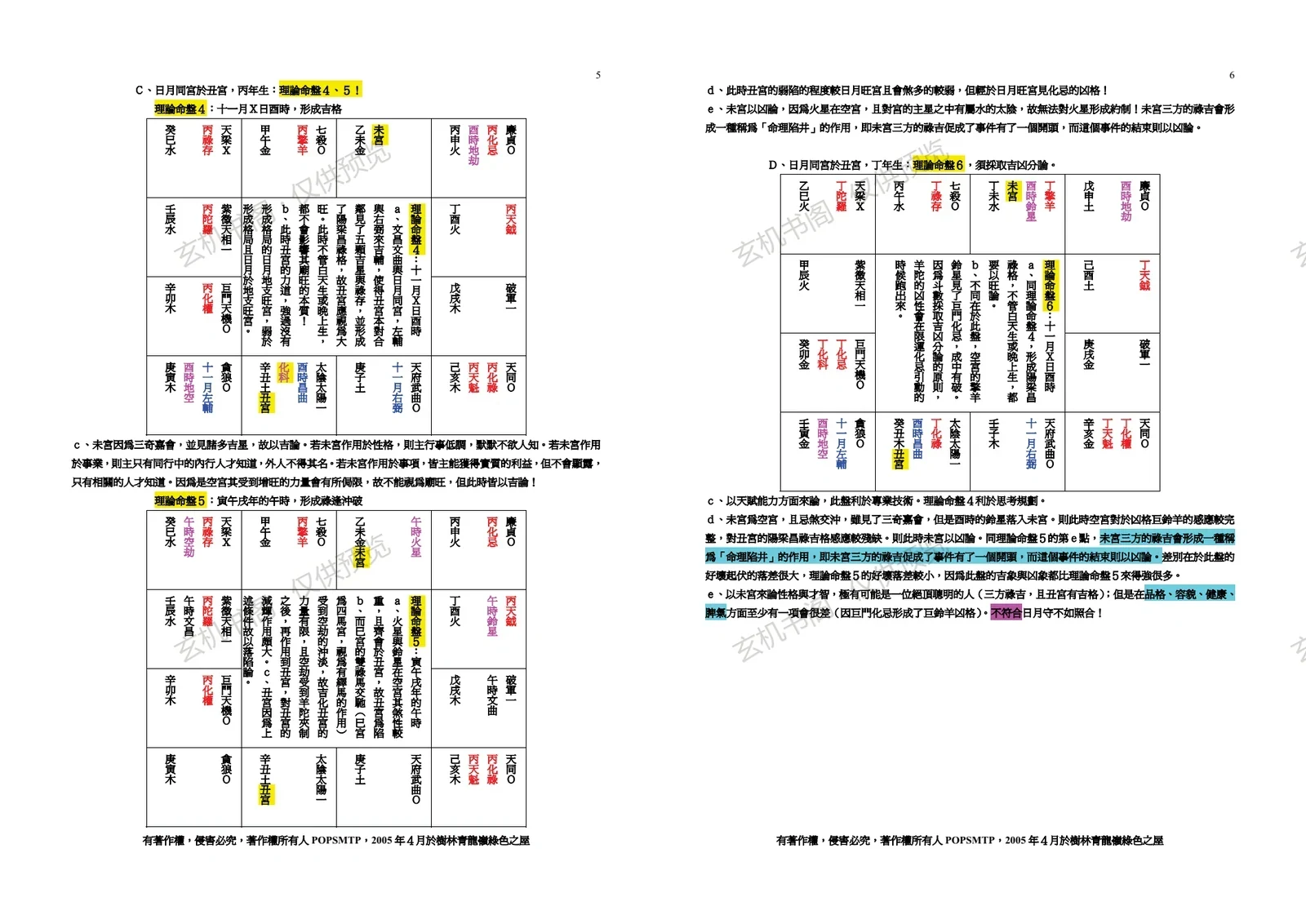
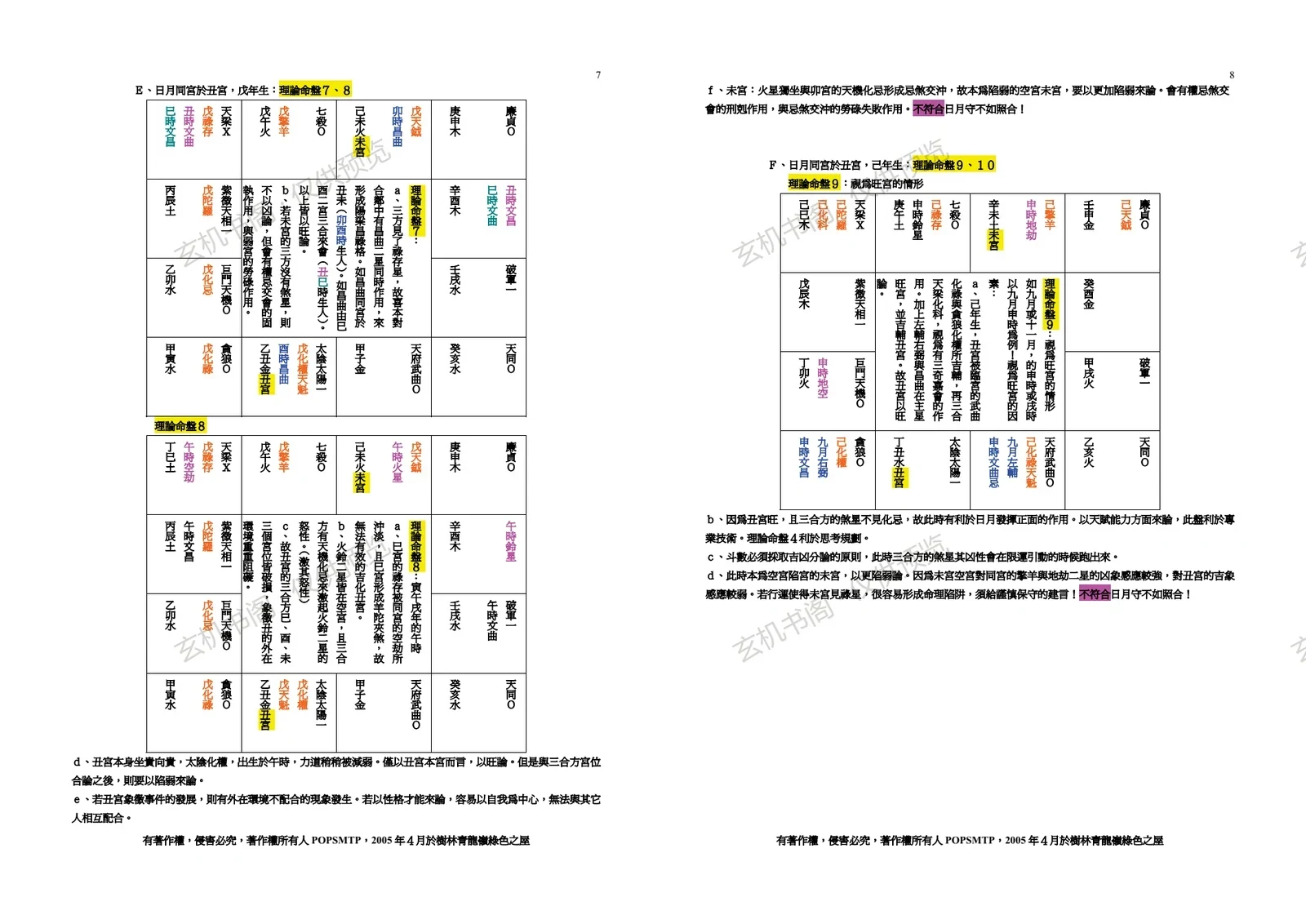
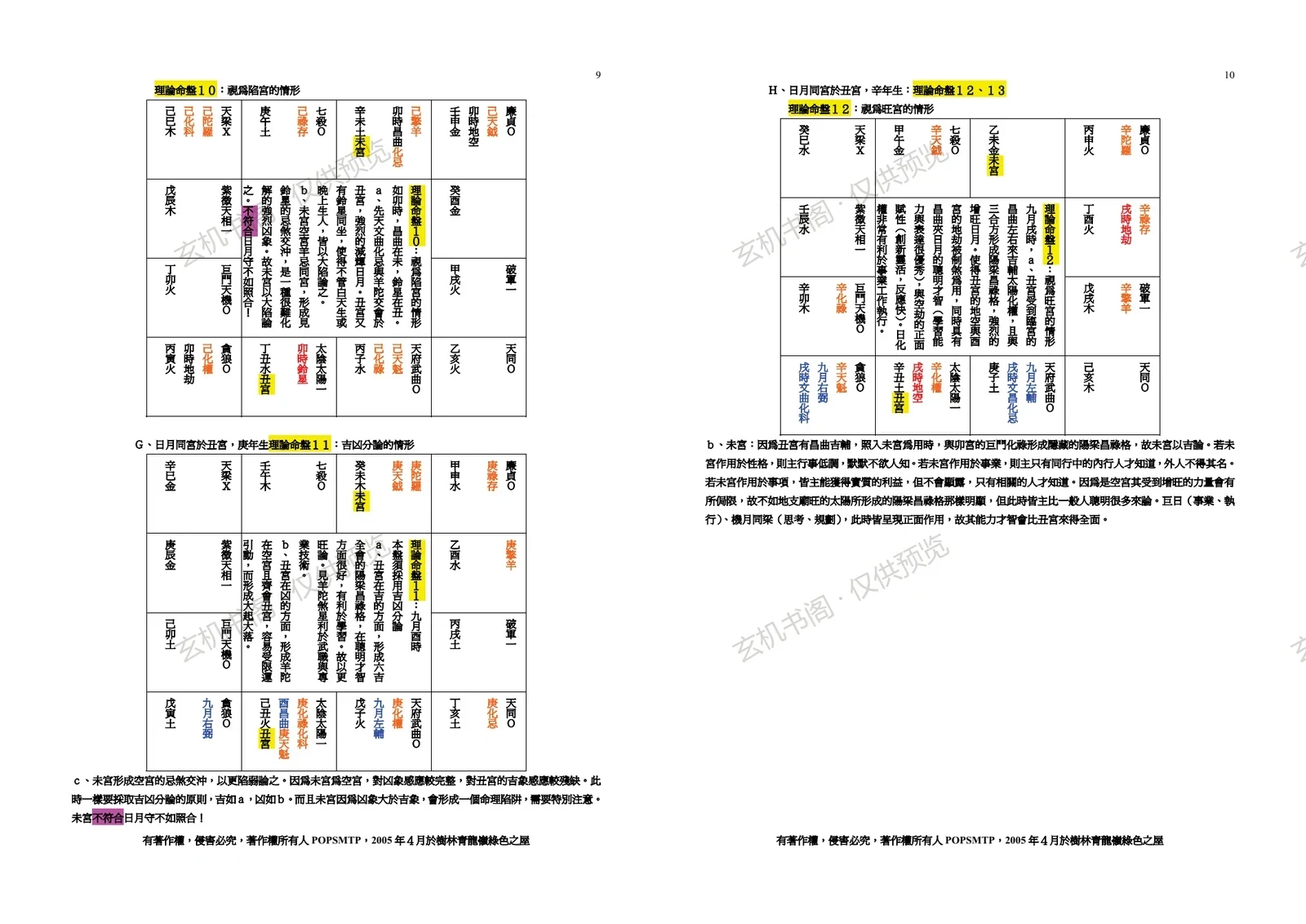
3. Sun and Moon in chou-wei, mao-you, chen-xu, si-hai and zi-wu
4. Basic attributes and auspicious/inauspicious patterns of the two stars
5. Borrowed stars in empty palaces and transformations of lu and ji
6. Clashes of sha and ji, empty palaces and fate traps
7. Chart examples: annual, monthly and trine-four-sector judgments
Key Points
Sun-Moon strength depends on season, day/night and earthly branch position.
Even after borrowing stars, an empty palace must be read through the trine-four sectors and transformations.
Same-palace Sun-Moon requires separate natal and annual/monthly readings.
Auspicious transformations in empty palaces can form a 'fate trap' and need careful verification.
Numerous chart examples illustrate how to weigh auspicious and inauspicious signs.