Reading guide
Content guideOverview
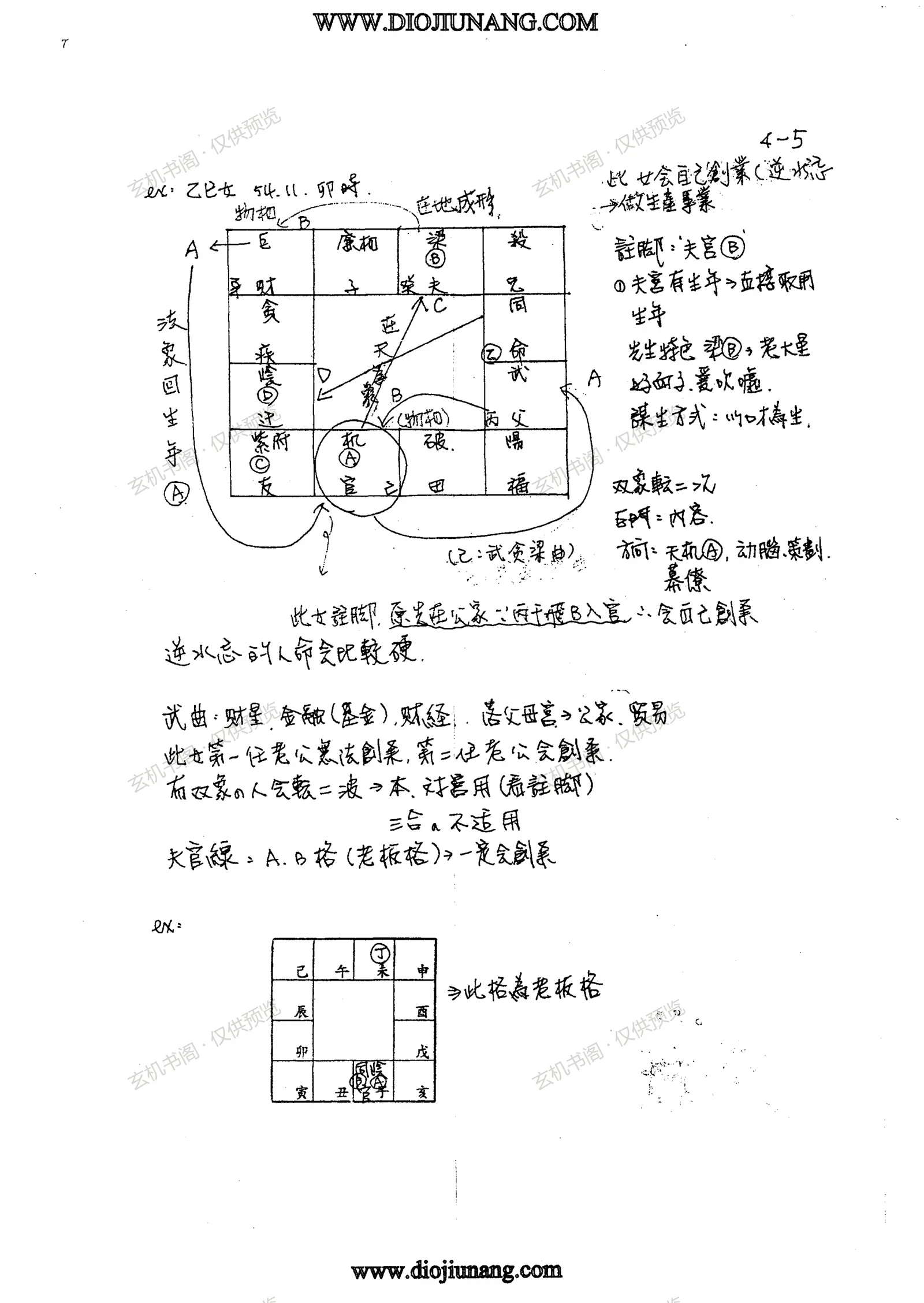
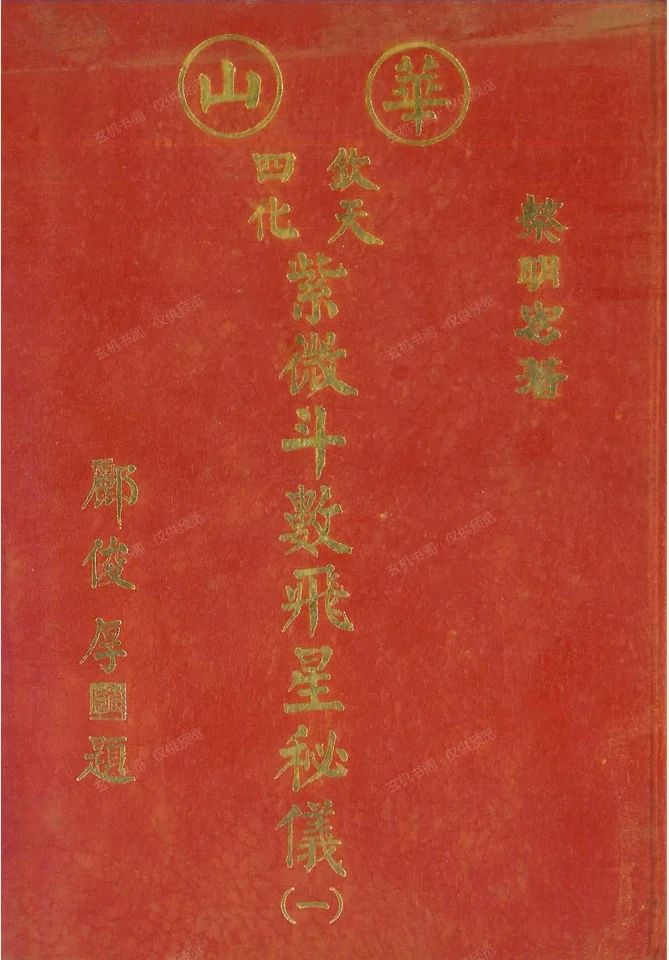
The cover reads 'Zi Wei Dou Shu: Qintian Four Transformations' and is attributed to Cai Minghong, with a note identifying it as a VIP-6 advanced handwritten lecture set dated to the Republic of China year 91. The five following pages are scanned handwritten notes built around twelve-palace grids and brief annotations. The content centers on dual-image charts and the balance between centripetal and centrifugal transformations, the role of the originating palace, and judgments tied to the life, wealth, and career palaces. It also applies star combinations such as Wu Qu, Tian Ji, and Zi Fu to occupations, marriage, and wealth, with concrete verdicts like 'this chart suits the food business' or 'boss chart.' The style is that of classroom handouts: diagram-heavy, terse in terminology, and suited to readers who already know basic Zi Wei Dou Shu and want to go deeper into Qintian flying-star methods.
Contents
Cover: title, author, and lecture version
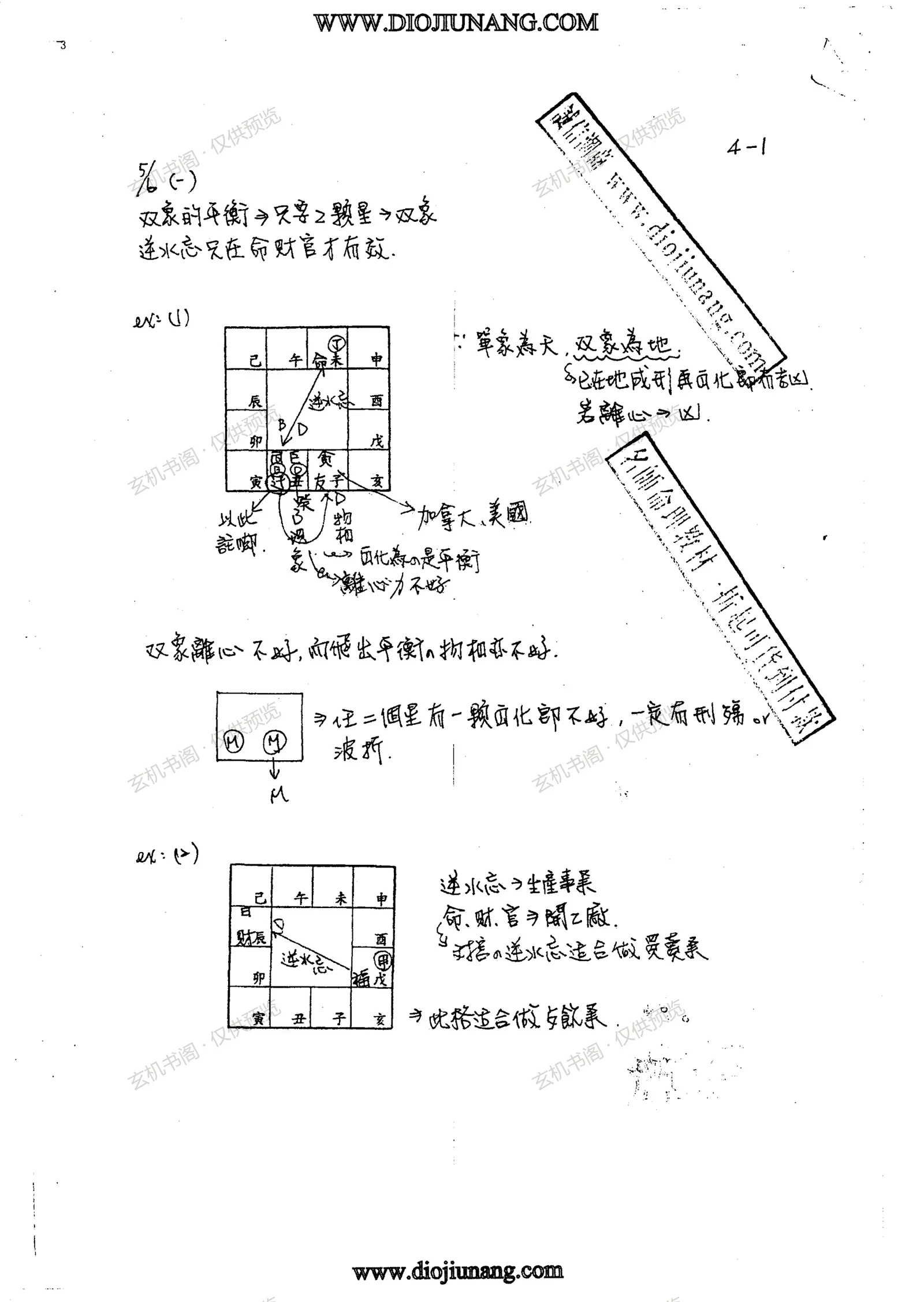
Balance of dual images: centrifugal and centripetal
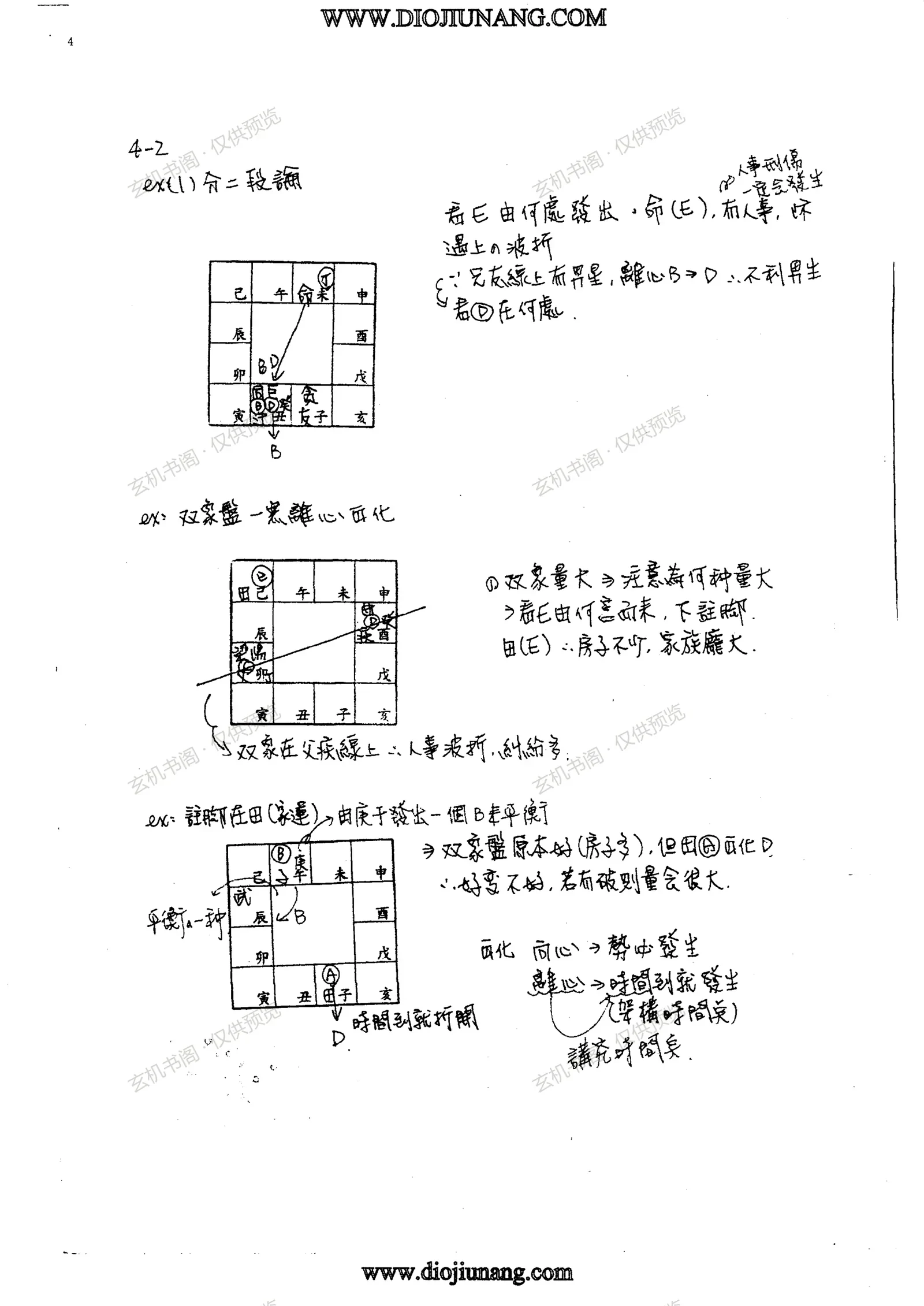
Originating palace and the life-wealth-career triad
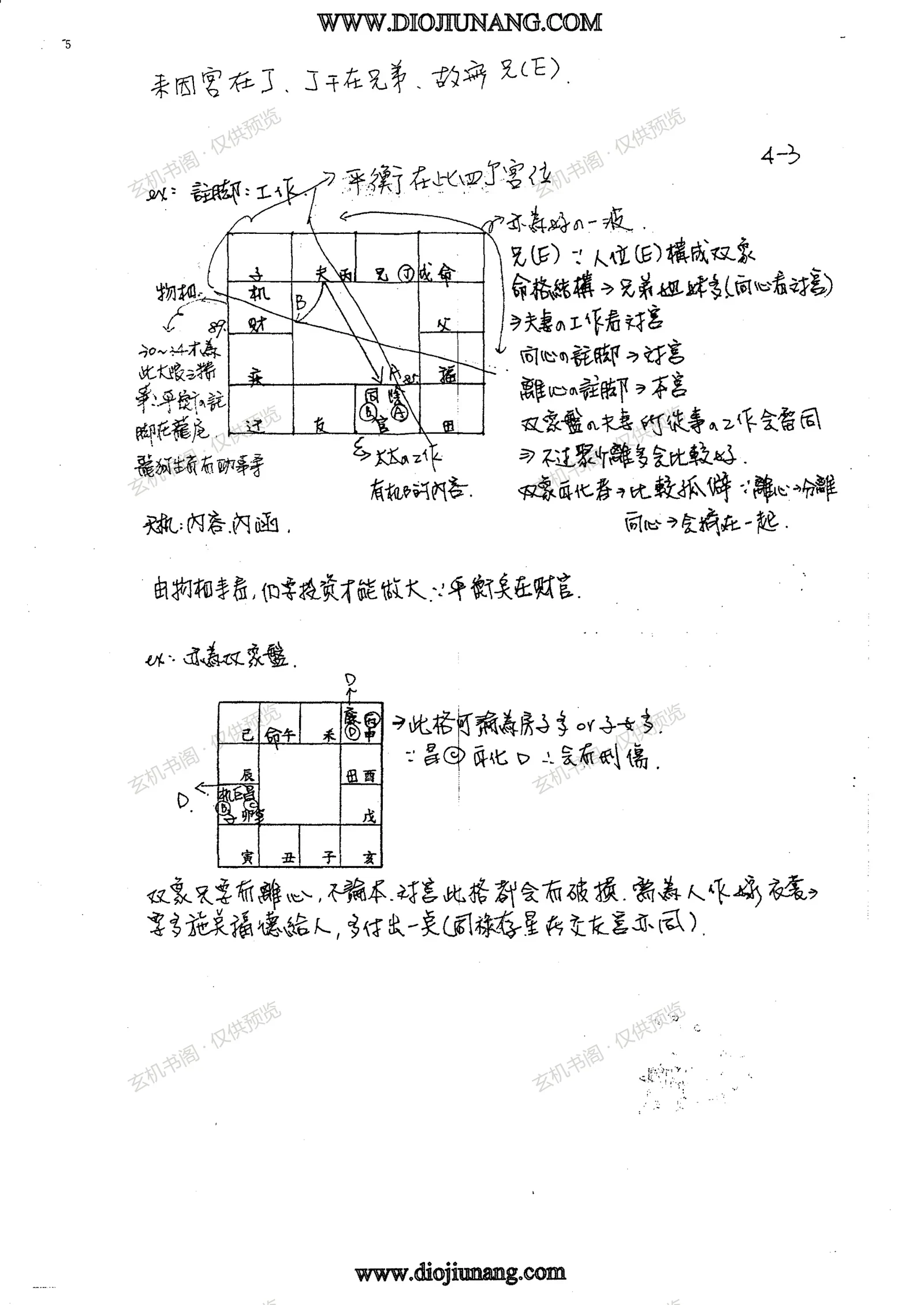
Dual-image symbolism: objects, careers, marriage
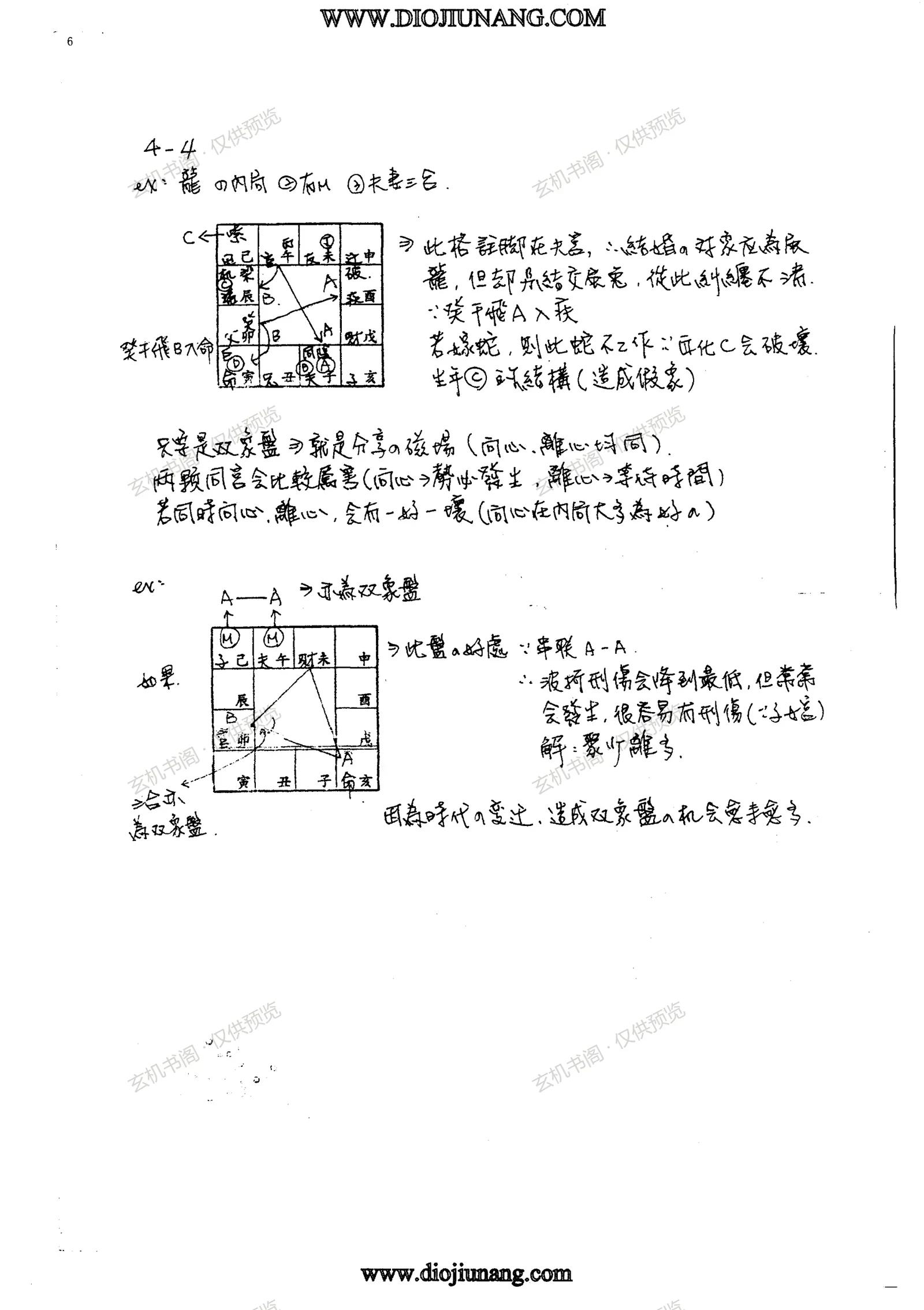
Applying the four transformations across the twelve palaces
Key Points
Dual-image charts are central, stressing centripetal and centrifugal relations between stars and transformations.
The originating palace determines where events manifest; the life-wealth-career triad is key.
It distinguishes a single transformed star from two stars sharing a transformation when judging chart damage.
Star nature and palace position are combined into concrete images, e.g. Wu Qu for wealth, Tian Ji for change.
Balance in dual-image charts decides fortune, with centripetal and centrifugal patterns indicating union or separation.