Reading guide
Content guideOverview
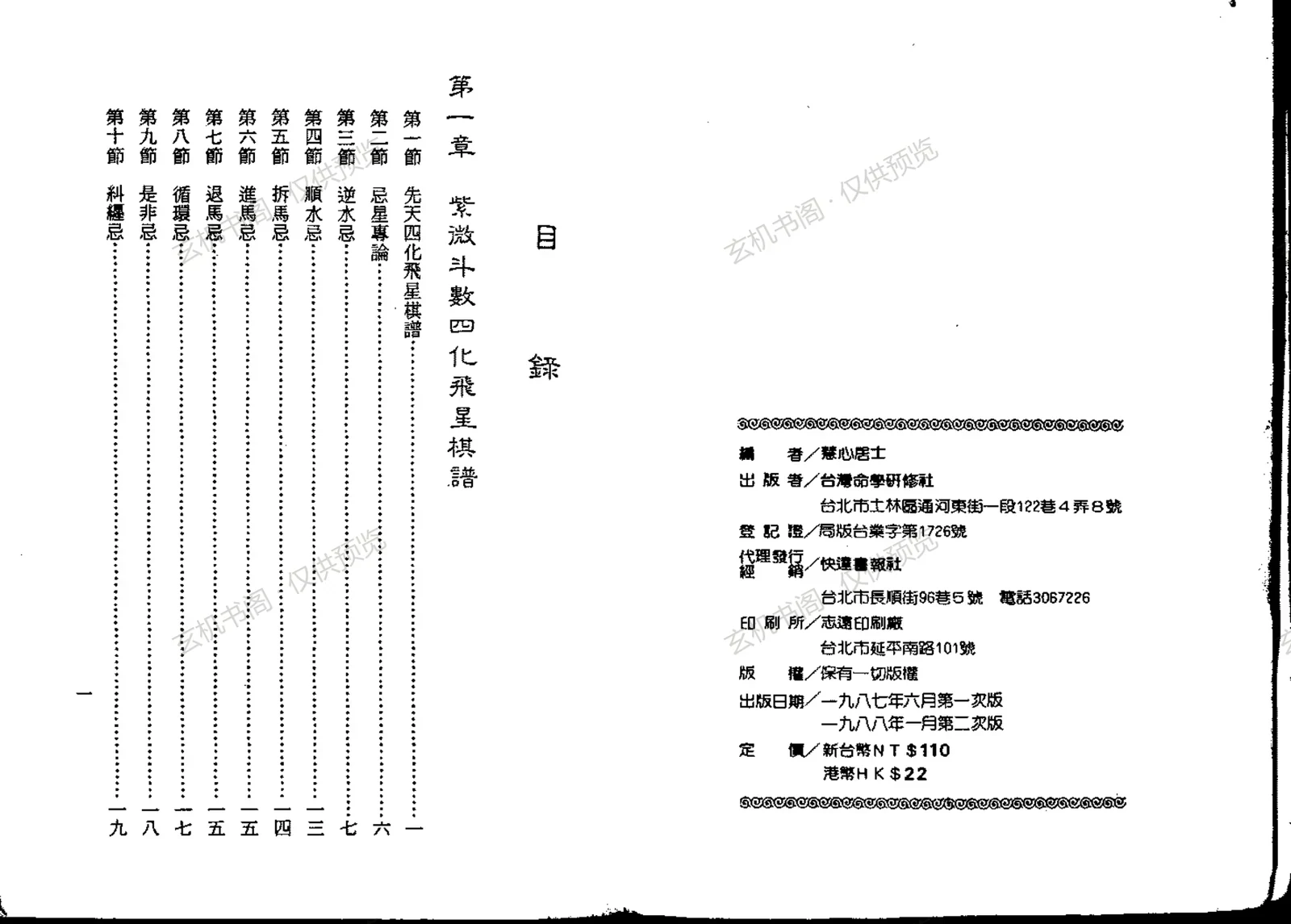
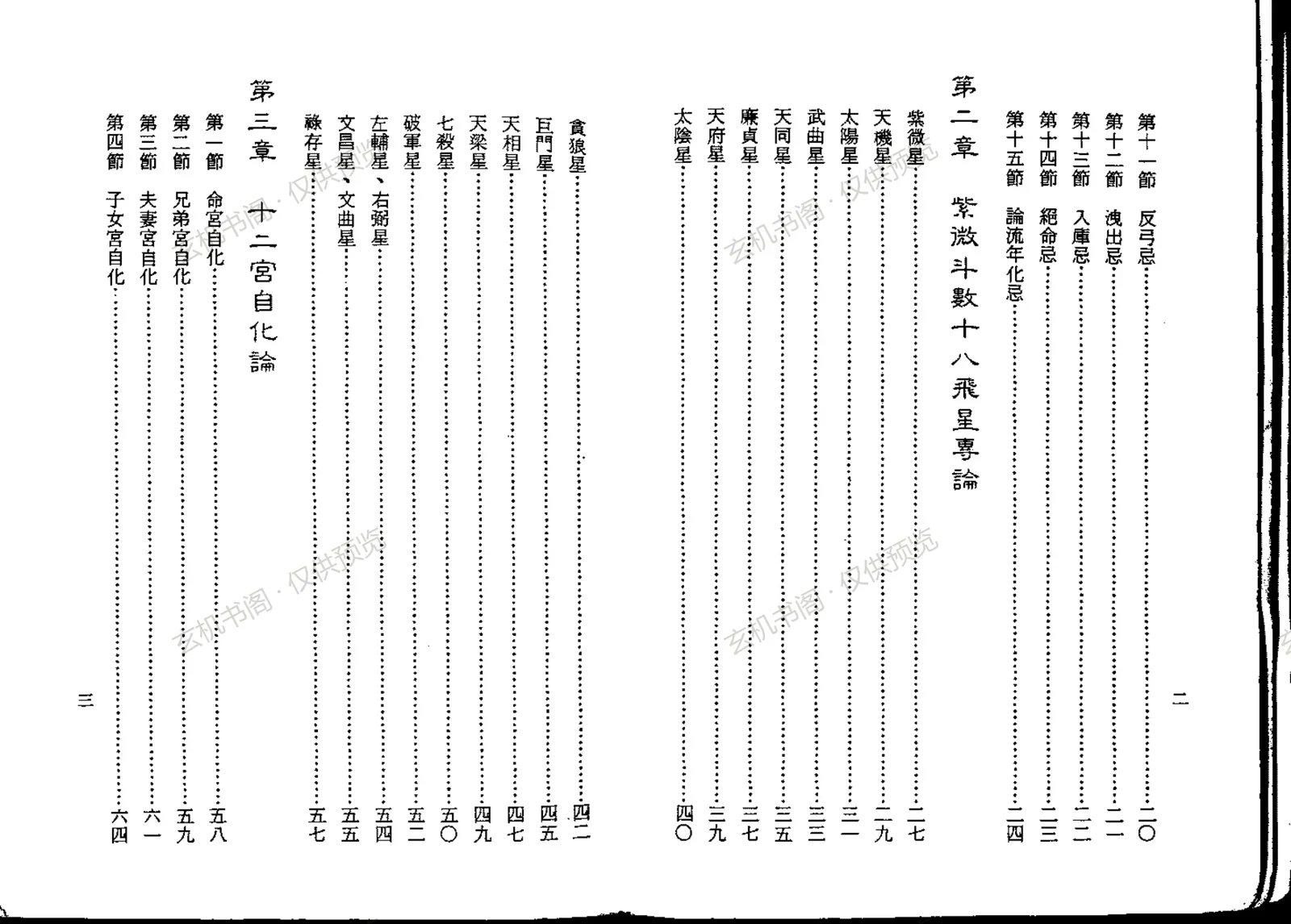
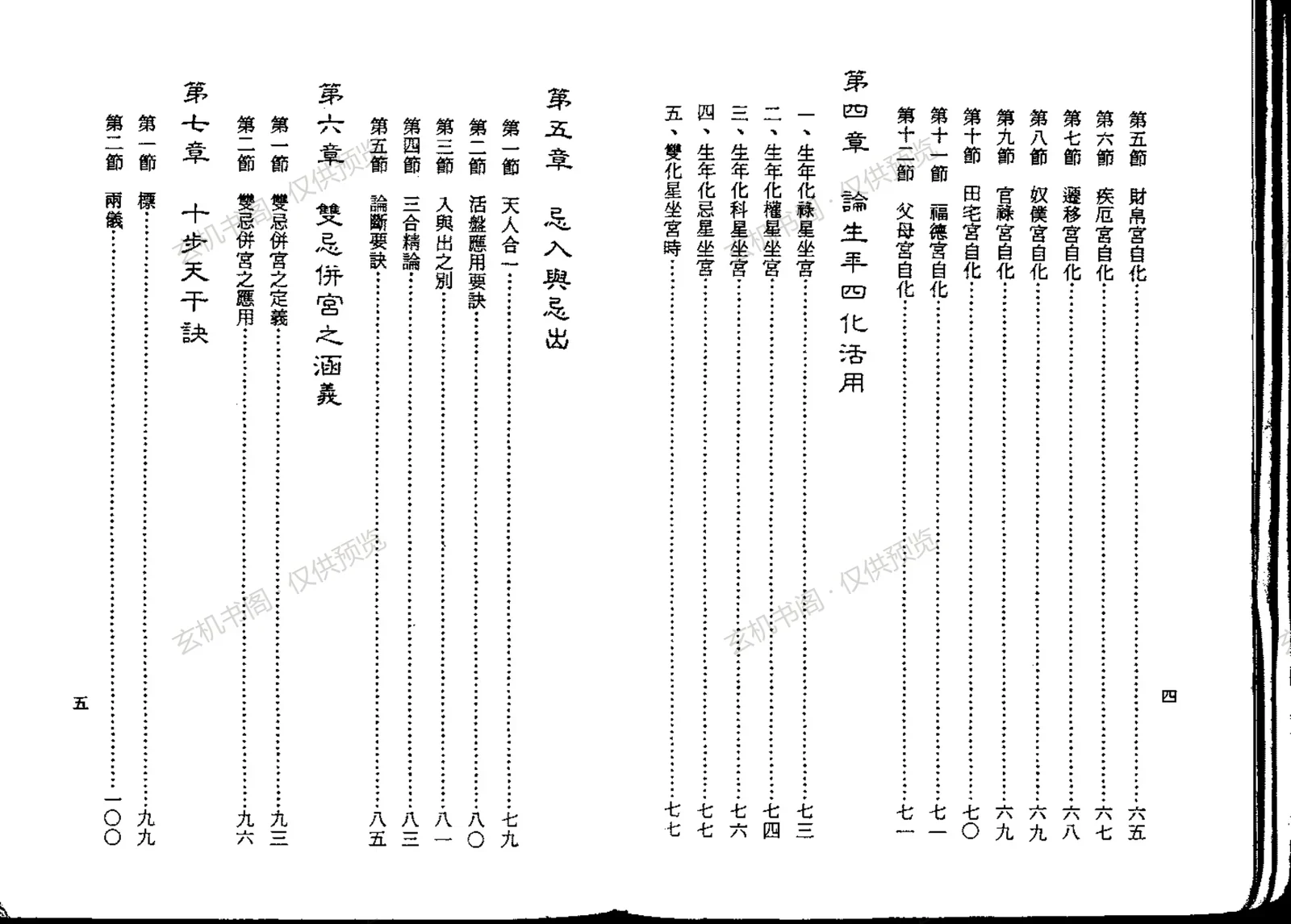
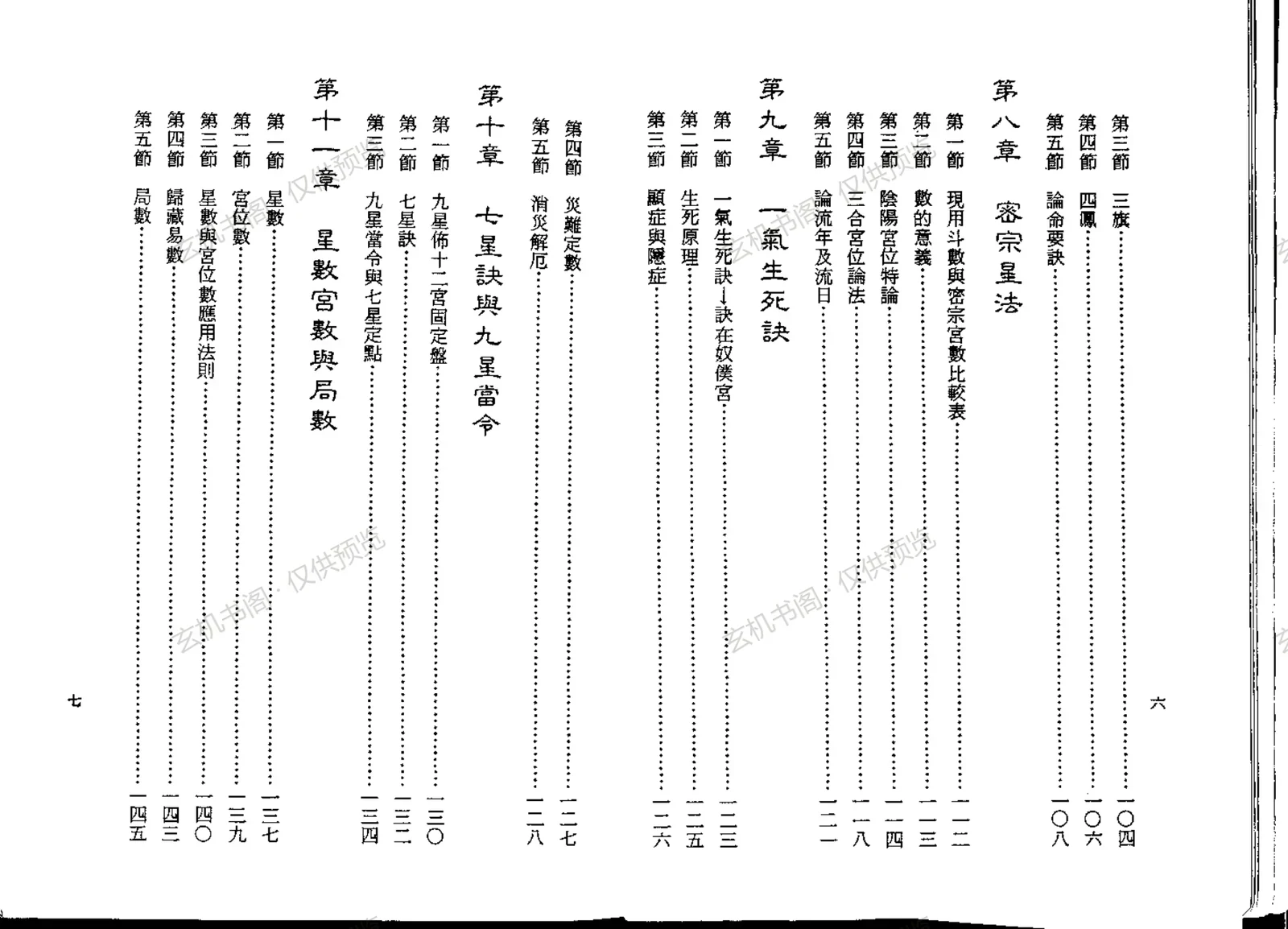
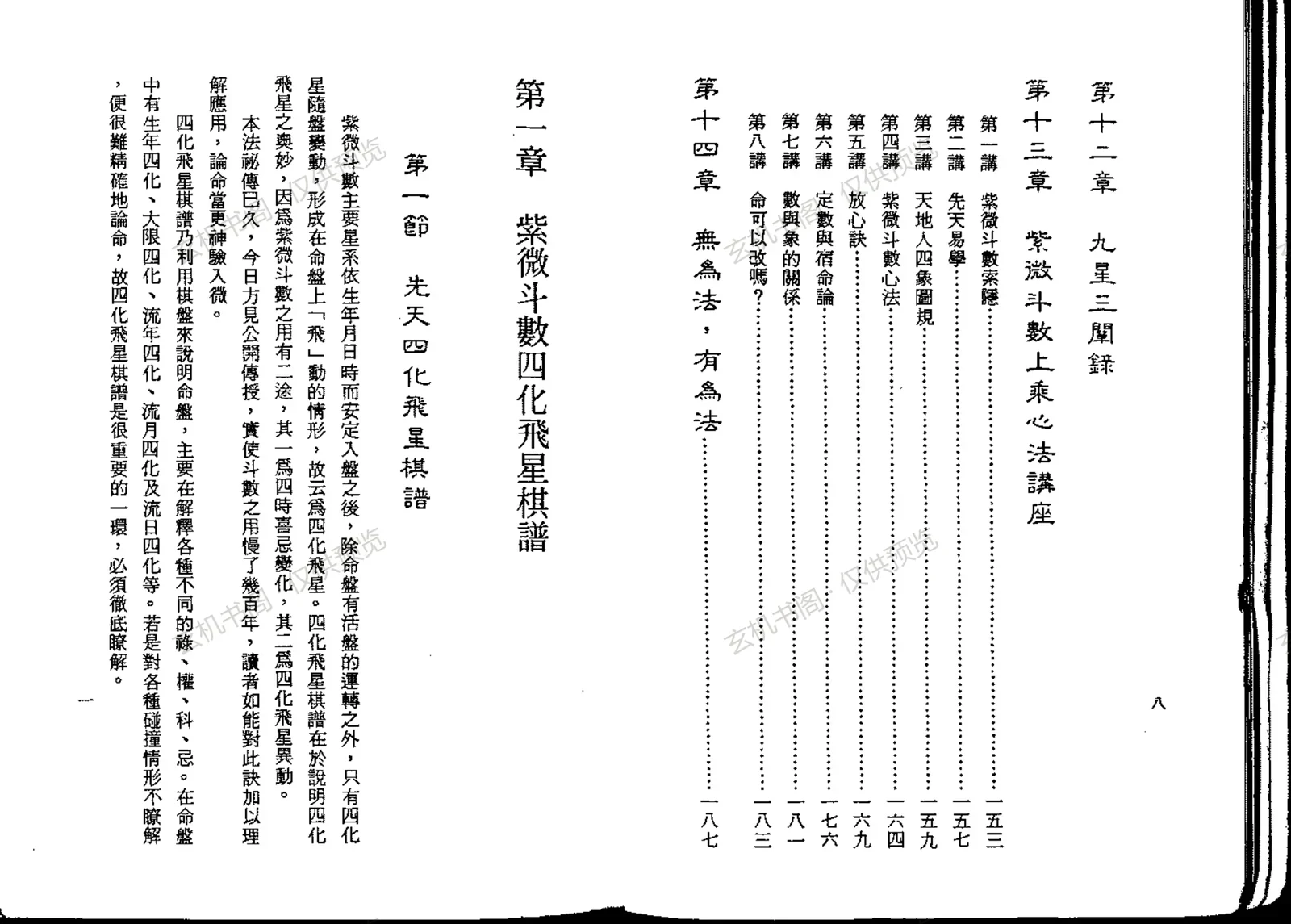
Compiled by Hui Xin Ju Shi and first published in 1987 by Taiwan Ming Xue Yan Xiu She, this book takes the Four Transformations and Flying Stars as its main thread and systematically explains the method of deducing the flying-star chessboard in Zi Wei Dou Shu. Chapters 1 to 3 detail the charting rules of the flying-star chessboard, the characteristics of the eighteen flying stars, and the self-transformation of the twelve palaces. Chapters 4 to 7 focus on core Four Transformations techniques such as 'the entry and exit of Ji' and 'double Ji in the same palace.' Chapters 8 to 11 explore advanced topics including secret-school star methods, the one-qi life-and-death formula, the seven-star formula, and the numbers of stars, palaces, and configurations. Chapters 12 to 14 present lectures on the supreme heart method, covering earlier and later heaven Yi studies, fate and determinism, and whether destiny can be changed. The book progresses from basic charting to advanced judgment and suits readers with a foundation in Zi Wei Dou Shu who wish to deepen their study of the Four Transformations and Flying Stars system.
Contents
Ch.1 Flying-Star Chessboard of Zi Wei Dou Shu
Ch.2 Treatise on the Eighteen Flying Stars
Ch.3 Self-Transformation of the Twelve Palaces
Ch.4 Applications of Birth-Year Four Transformations
Ch.5 Entry and Exit of Ji
Ch.6 Meaning of Double Ji in the Same Palace
Ch.7 Ten-Step Heavenly Stems Formula
Ch.8-14 Secret-School Star Method, One-Qi Formula, Seven-Star Formula, and Lectures
Key Points
Uses the flying-star chessboard as the core tool to deduce the movement of Four Transformations in a chart
Details the flying-star characteristics of the fourteen main stars and auxiliary stars such as Zuo Fu, You Bi, Wen Chang, and Wen Qu
Analyzes each of the twelve palaces' self-transformation one by one
Devotes chapters to unfavorable Four Transformations patterns such as Ji entry and exit, double Ji, and reverse-bow Ji
Includes lectures on the supreme heart method, touching on Yi studies and philosophical questions of fate