Reading guide
Content guideOverview
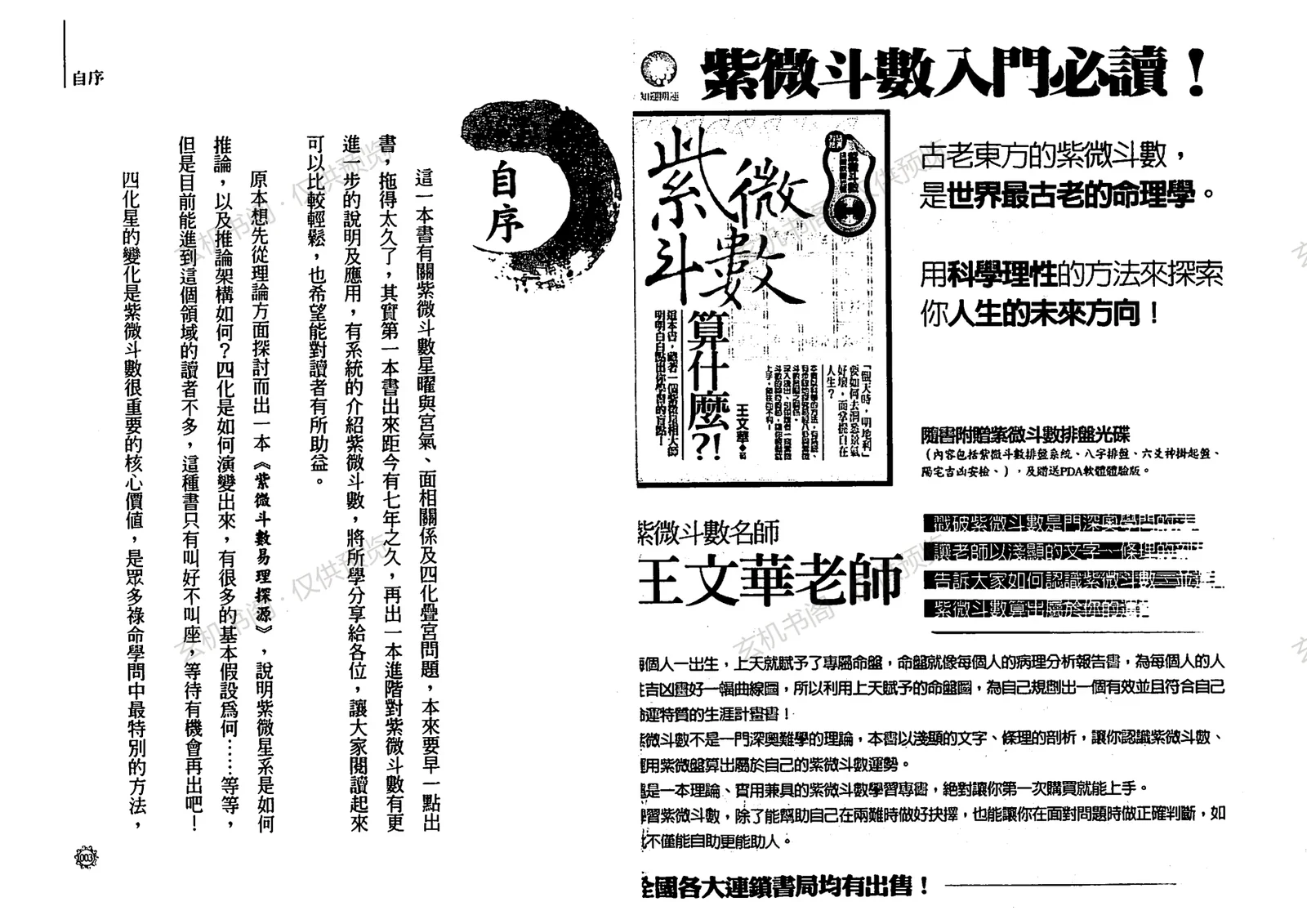
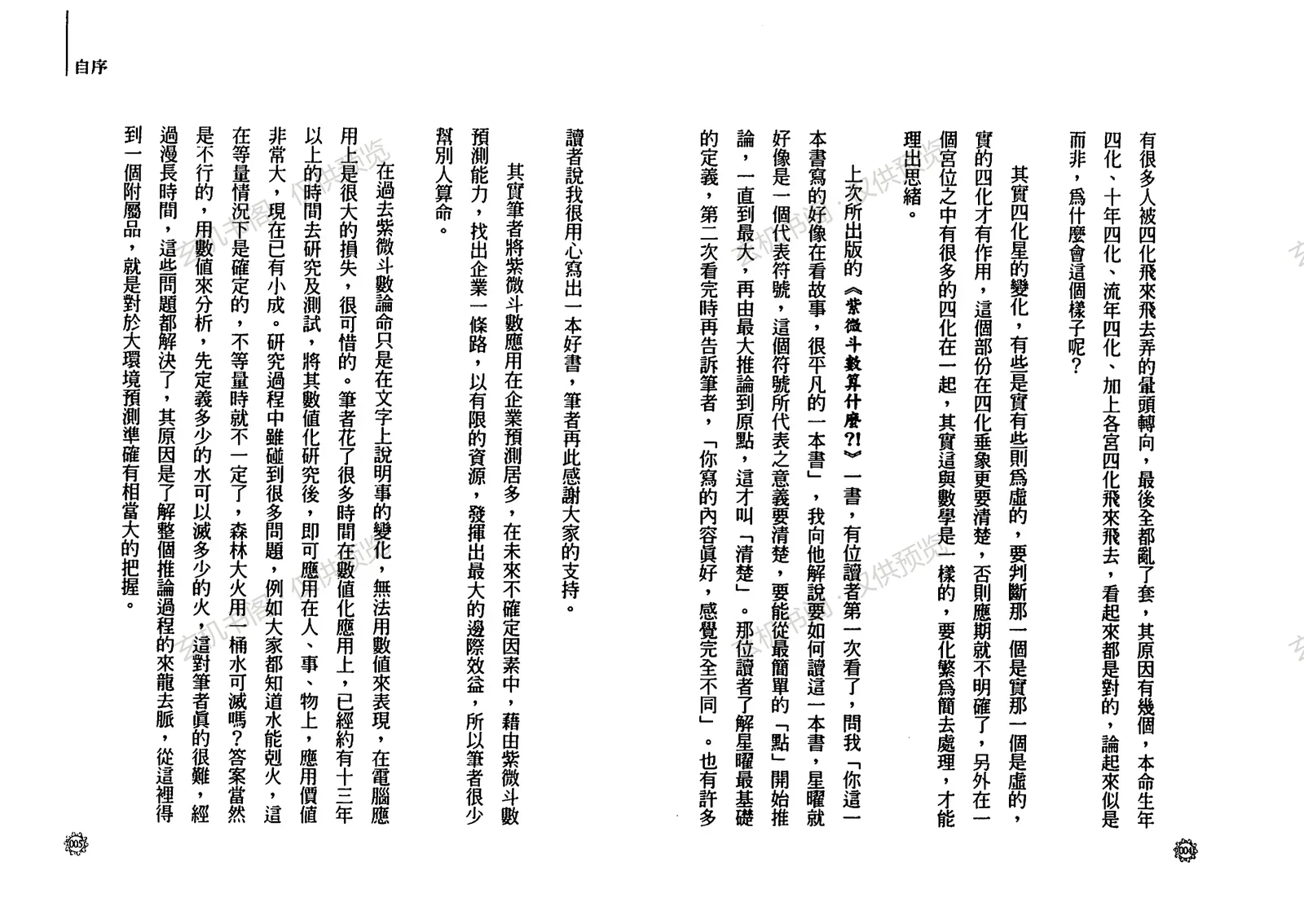
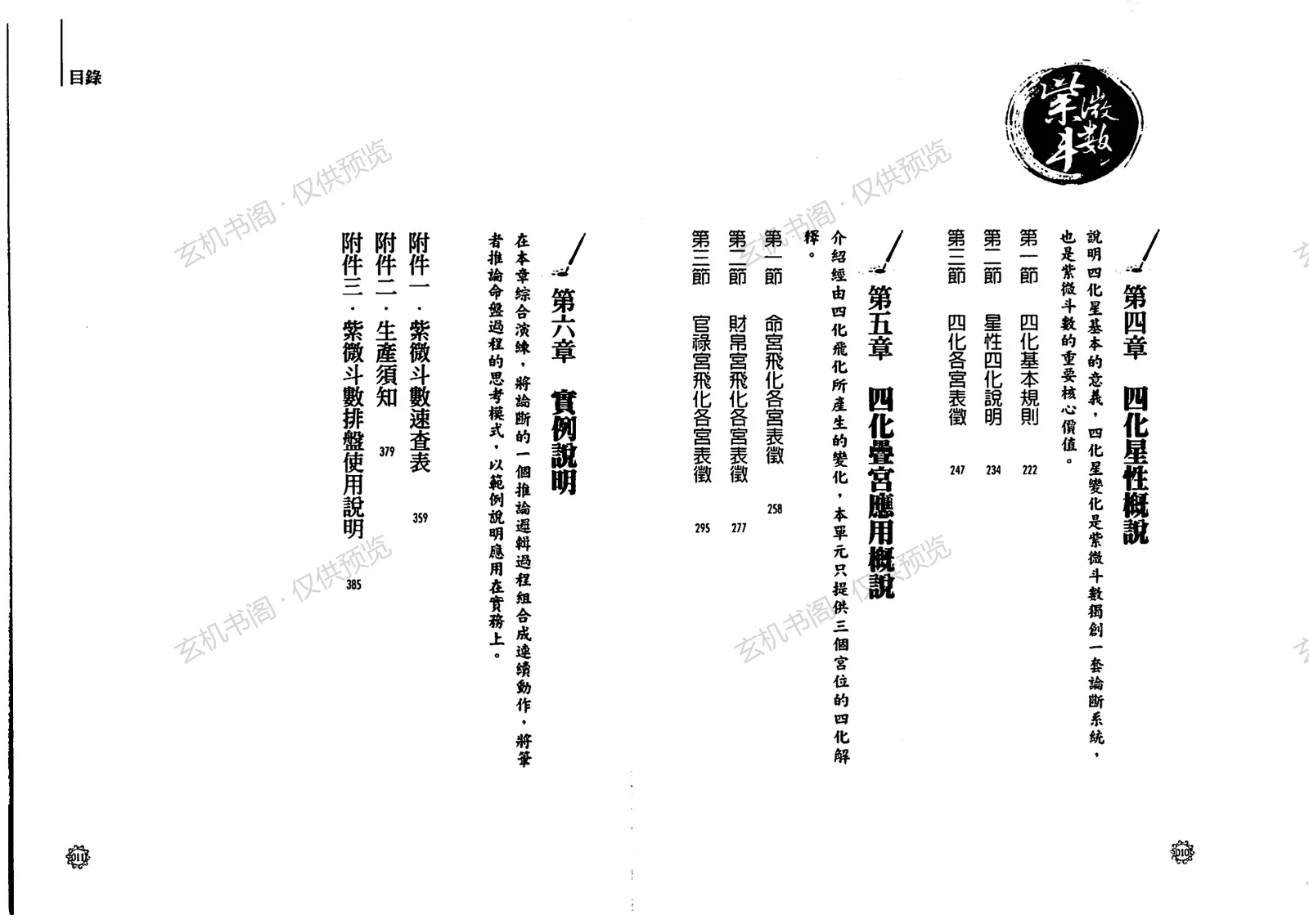
This is Wang Wenhua's introductory guide to Zi Wei Dou Shu, subtitled 'Palace Qi and Four Transformations.' In the preface the author explains that his earlier work was more theoretical, while this book starts from the relationship between stars, palace qi, and physiognomy, then works through how the four transformations change across palaces. The six chapters cover: an introduction to the book's structure, the basic assumptions of fate calculation, and why birth time is used as the foundation; the use of palace qi, including the five phases, substance and function, and learning tools; stars, palace qi, and physiognomy, with definitions of the twelve palaces and star-by-star explanations; an overview of the four transformations and their meanings in each palace; applied transformation stacking with examples from the life, wealth, and career palaces; and worked case studies, plus appendices with quick-reference tables and charting software instructions. It suits readers who already know basic chart construction and want to go deeper into transformation and palace-qi judgment.
Contents
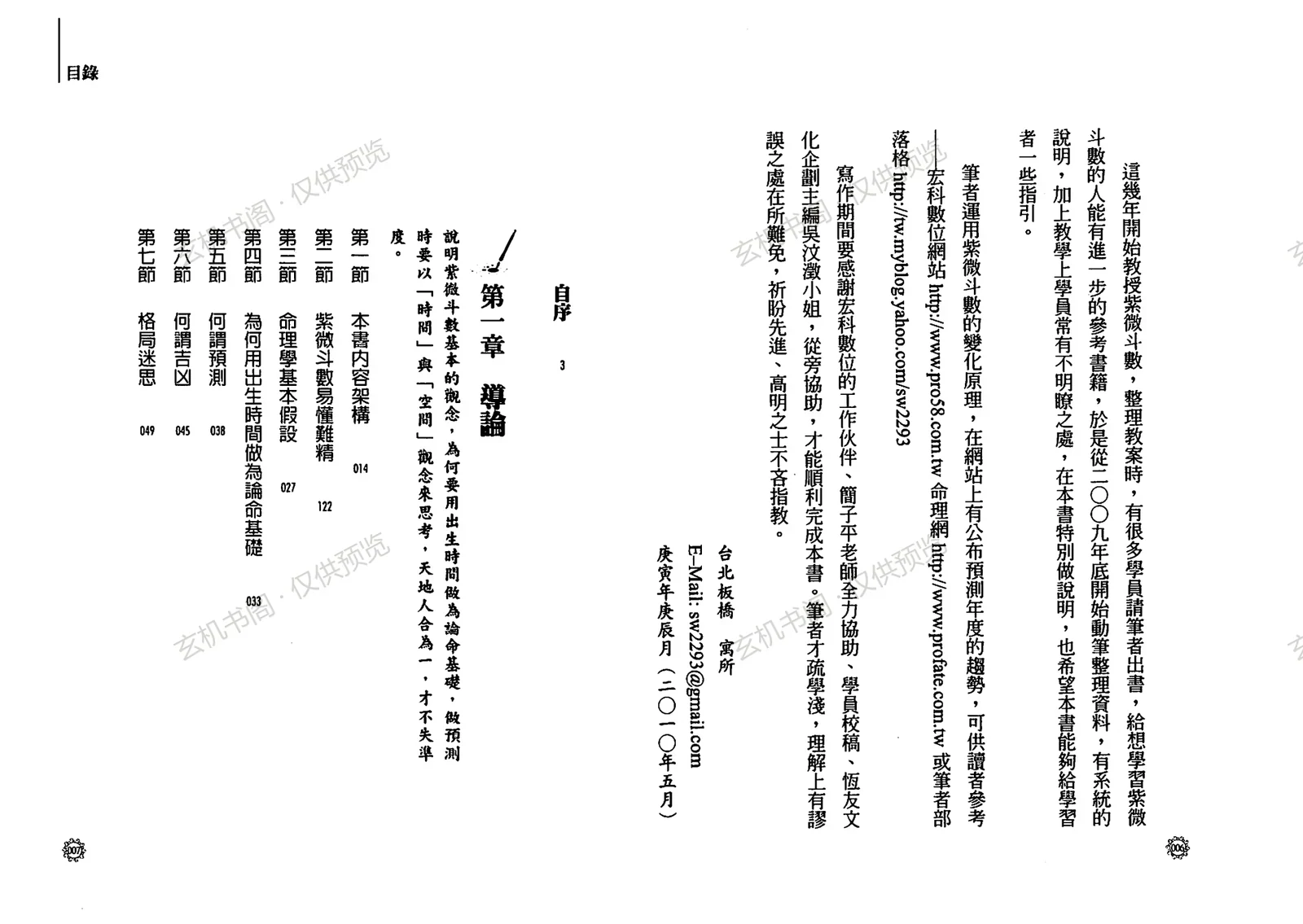
Ch.1 Introduction: structure, assumptions, and the basis of fate reading
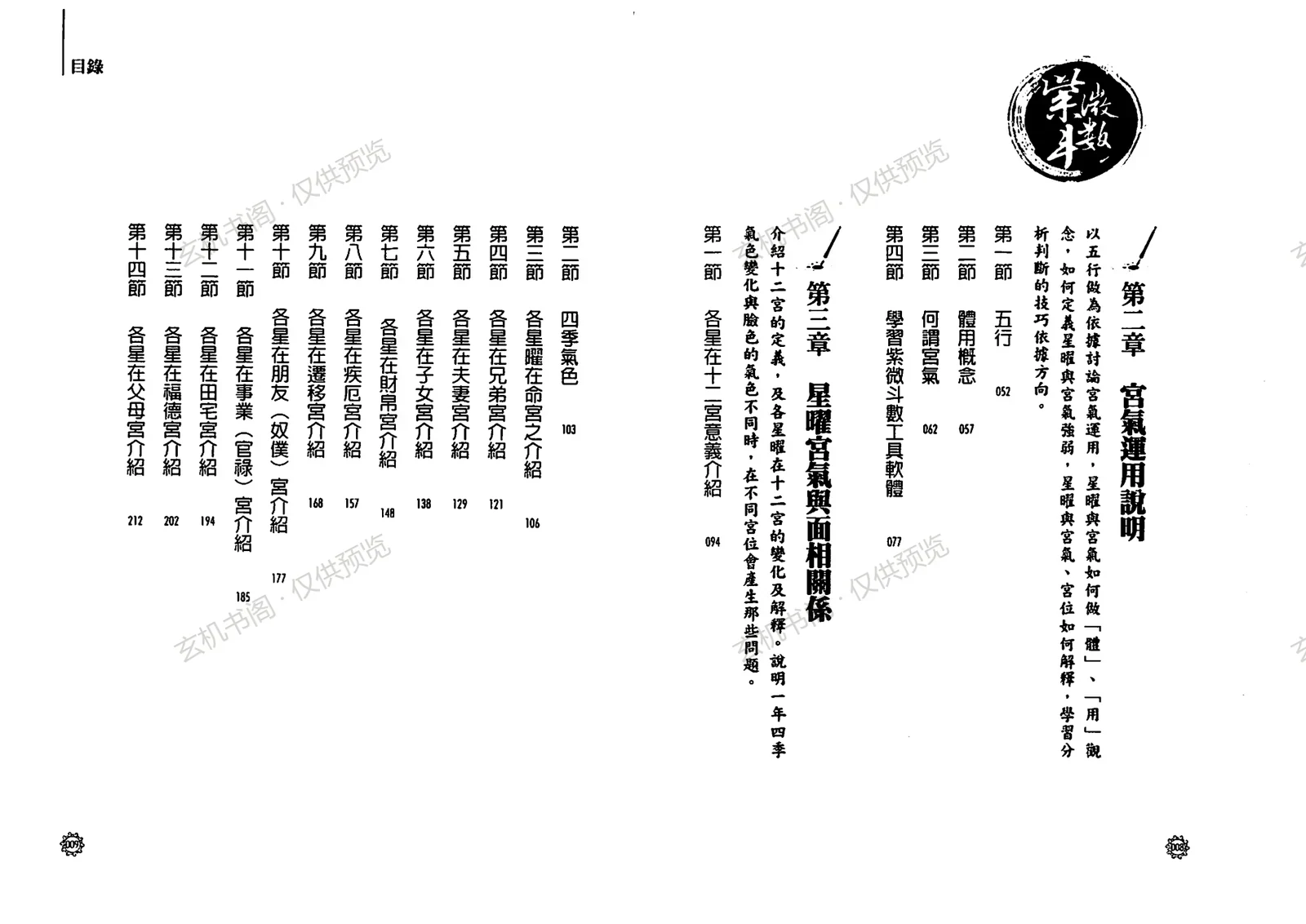
Ch.2 Using palace qi: five phases, substance and function
Ch.3 Stars, palace qi, and physiognomy: the twelve palaces
Ch.4 Overview of the four transformations: rules and palace meanings
Ch.5 Transformation stacking: examples from life, wealth, and career palaces
Ch.6 Case studies: reasoning logic and practical application
Appendix: quick-reference tables, birth data notes, charting instructions
Key Points
Palace qi and the four transformations are the two main threads, with the transformations treated as a core value of the system.
The book first sets out basic assumptions of fate calculation, then explains why birth time is the foundation.
It goes palace by palace through star changes in the twelve palaces and links them to facial color and palace meaning.
Three transformation-flight examples—life, wealth, and career palaces—illustrate transformation stacking.
Quick-reference tables and charting software notes support hands-on practice.