Reading guide
Content guideOverview
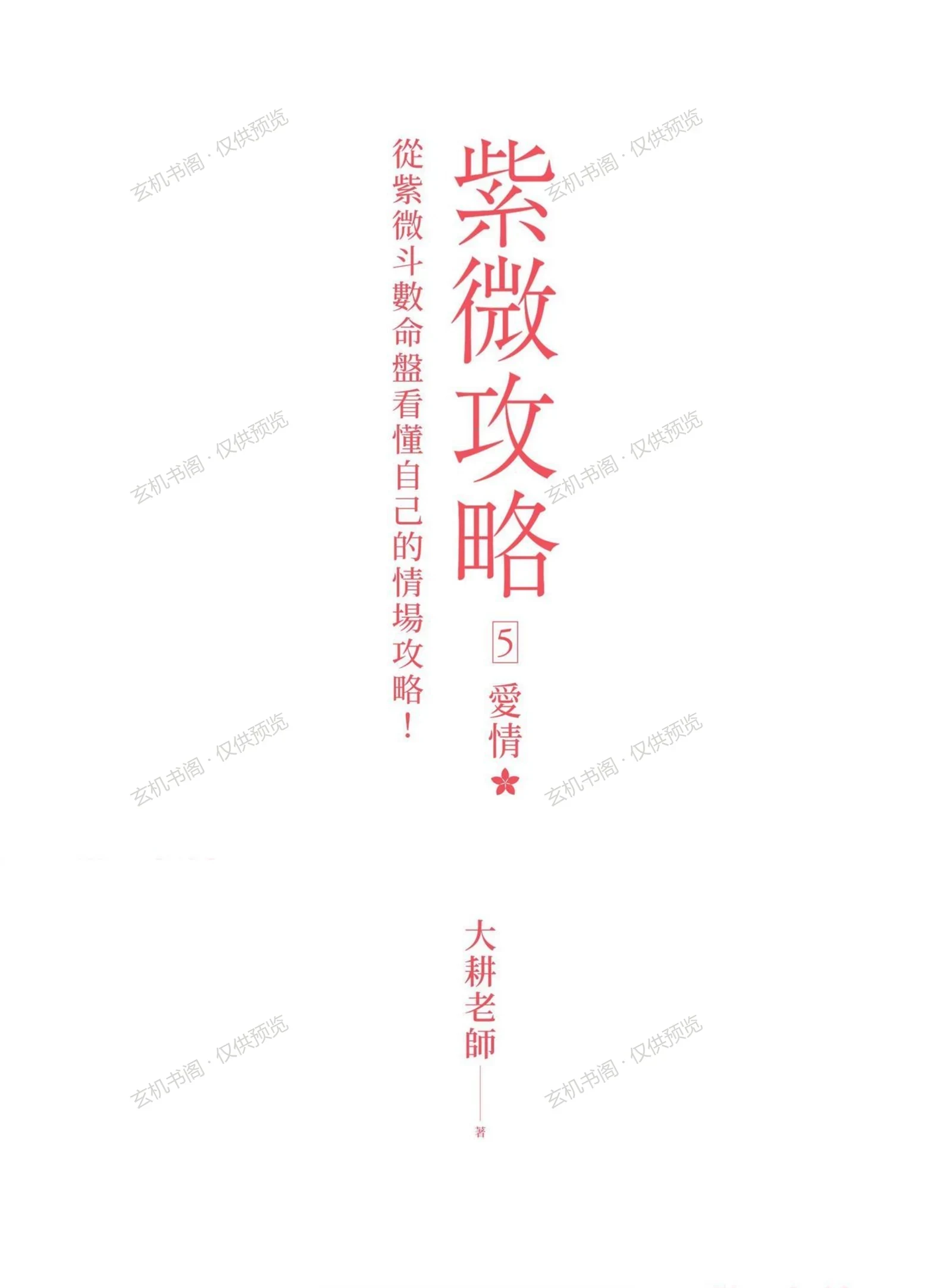
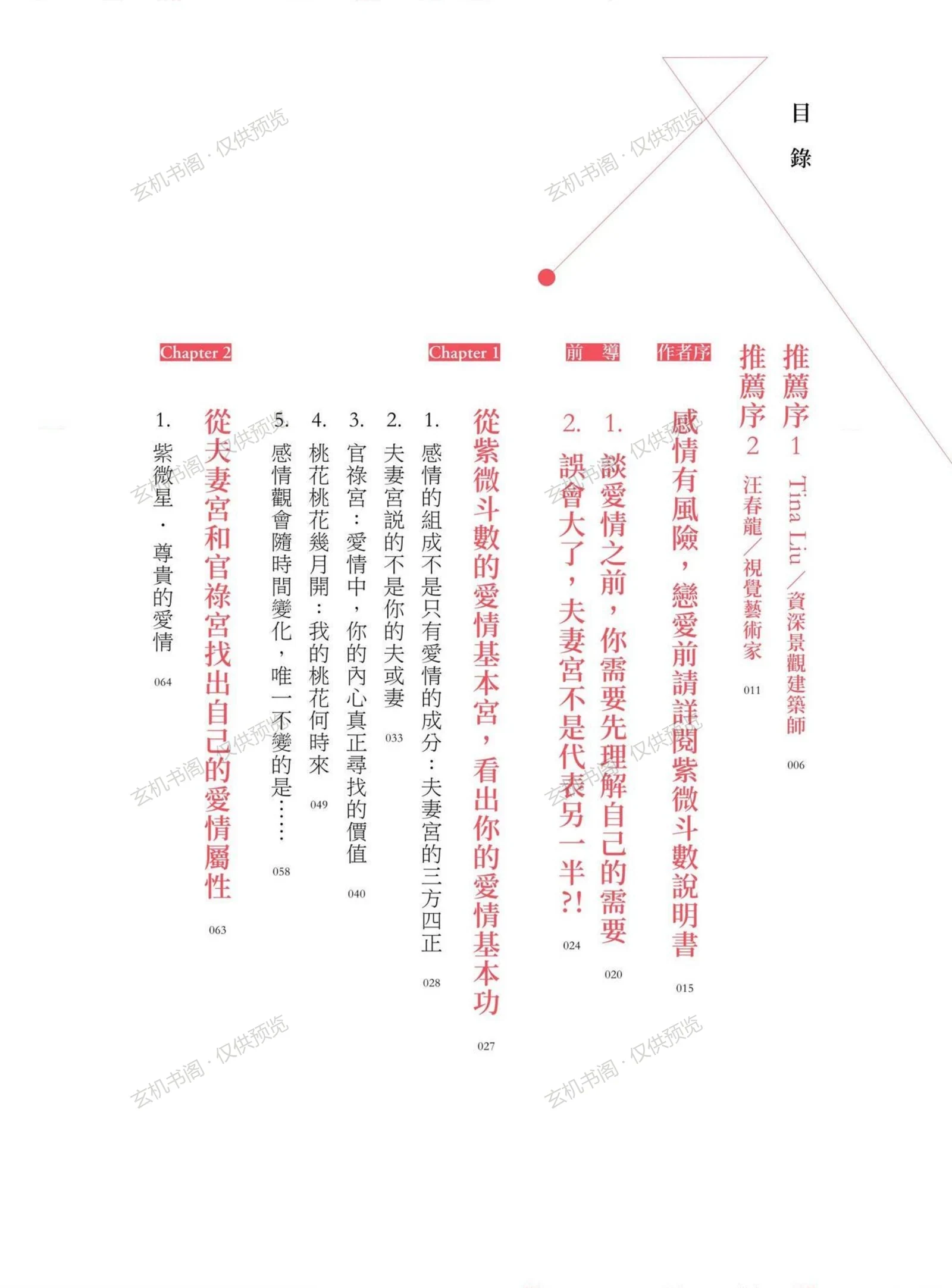
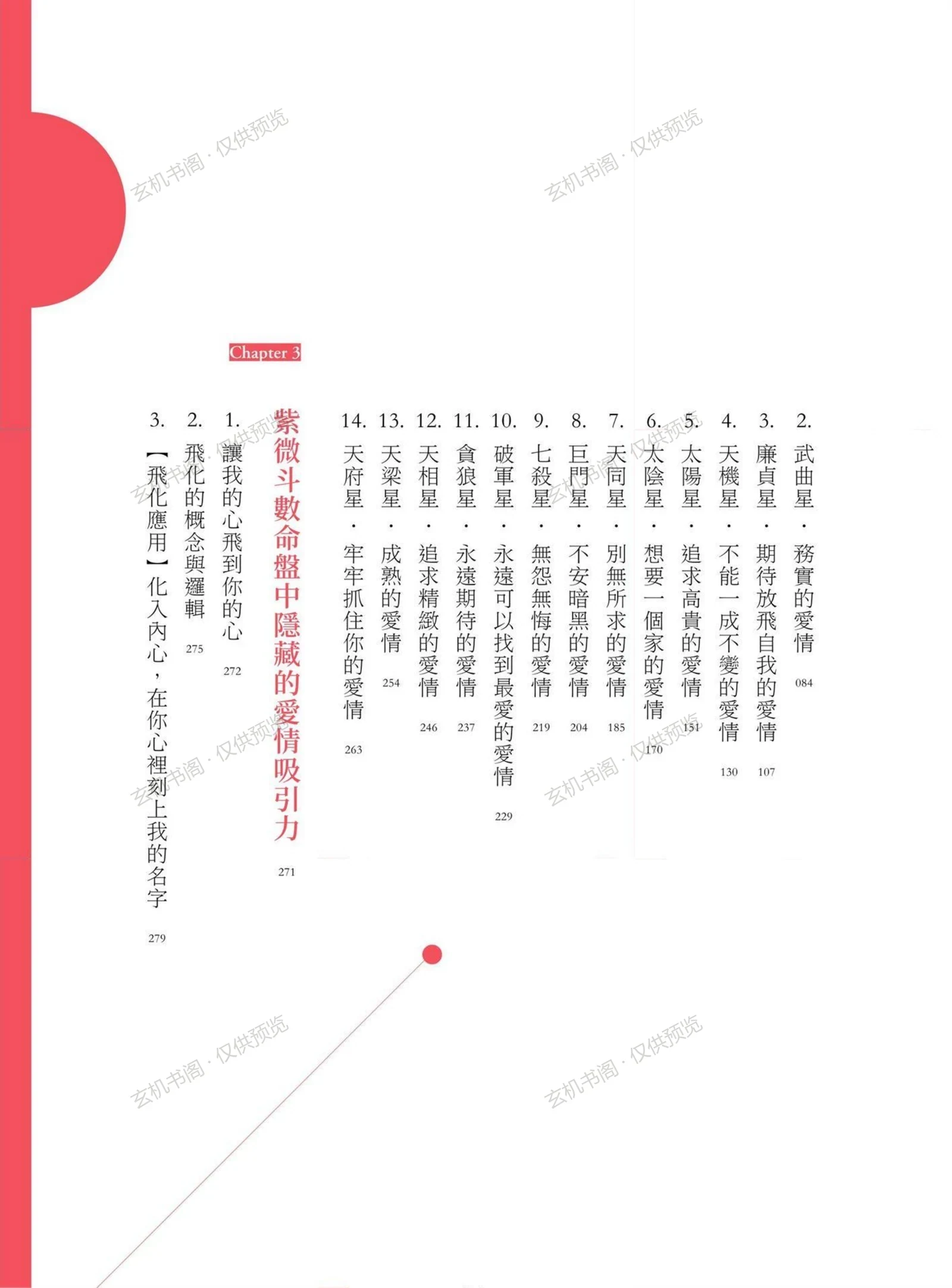
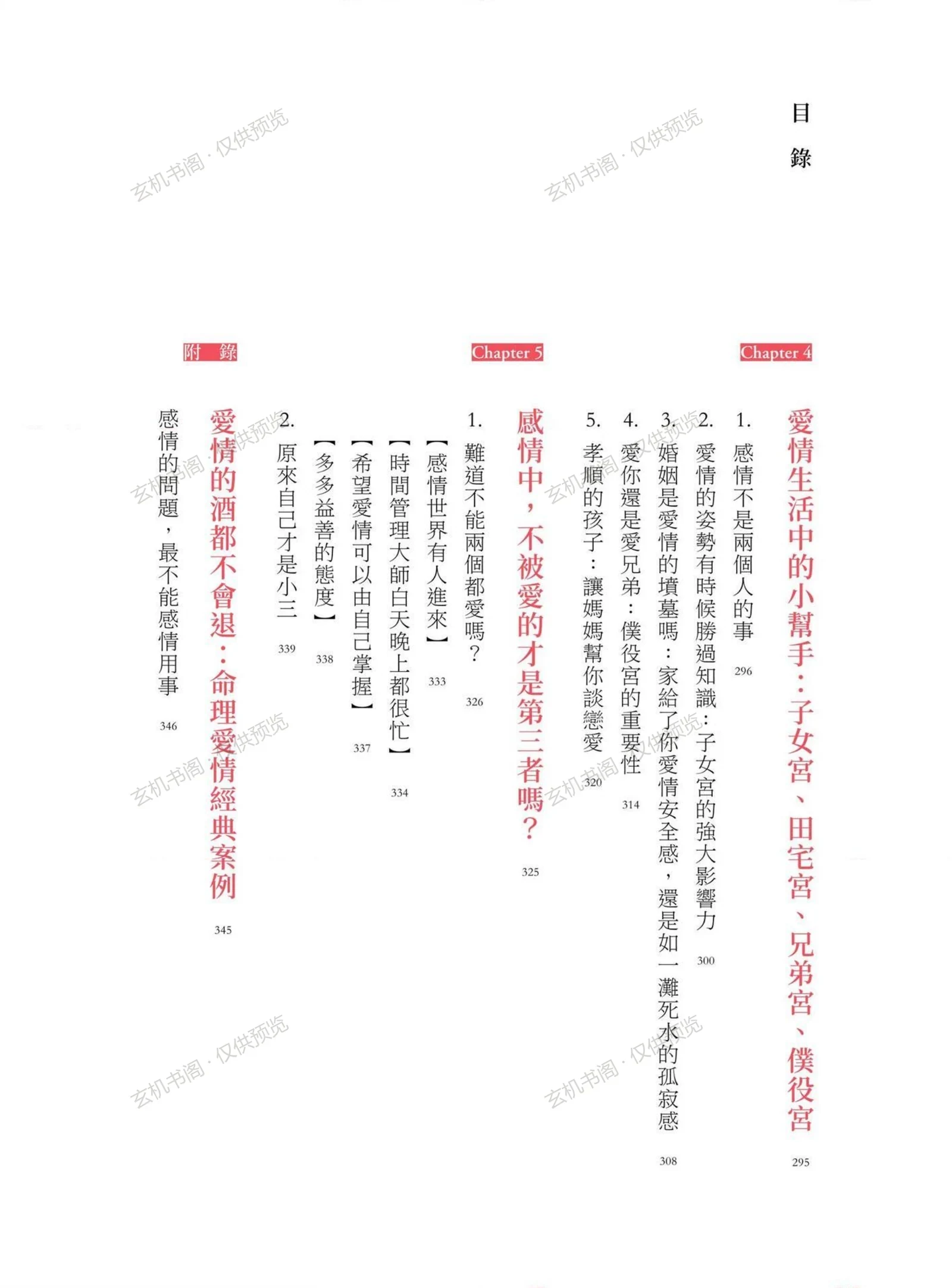
This is the fifth volume in the Zi Wei Strategy series, focusing on love. It opens with prefaces and an introduction explaining why readers should understand their own emotional needs before falling in love, and why the spouse palace does not simply equal one's partner. Chapter 1 lays out the basic love palaces in Zi Wei Dou Shu, including the components of a relationship, the spouse palace and its three directions and four positions, and peach blossom months and stars. Chapter 2 looks at the spouse and career palaces to identify one's love attributes and how attitudes toward love change over time. Chapter 3 examines fourteen major stars in love, such as Wu Qu's practicality, Lian Zhen's high expectations, Tian Ji's desire for freedom, Tai Yang's pursuit of nobility, Tai Yin's wish for a home, Tian Tong's lack of demands, Ju Men's dark insecurity, Qi Sha's regret-free love, Po Jun's search for the greatest love, Tan Lang's eternal expectation, Tian Xiang's refined love, Tian Liang's mature love, and Tian Fu's firm grip on love. Chapter 4 brings in the children, property, siblings, and servants palaces to discuss whether marriage is the tomb of love, emotional security, and the role of a filial child. Chapter 5 answers real-world questions about third parties, loving two people at once, time management, and self-mastery in love. The appendix presents classic relationship cases and closes with reflections after the love wine fades. Overall, it is a practical Zi Wei Dou Shu book for readers who already know basic chart structure and want to understand love through palaces and stars.
Contents
Prefaces: understand yourself before love
Introduction: the spouse palace is not simply your partner
Chapter 1: basic love palaces and the spouse palace's three directions and four positions
Chapter 2: finding love attributes through spouse and career palaces
Chapter 3: fourteen major stars in love
Chapter 4: children, property, siblings, and servants palaces in love life
Chapter 5: real relationship questions and time management
Appendix: classic love cases and closing reflections
Key Points
Uses the spouse palace, career palace, and their three directions and four positions as the core love framework
Explains each major star's love style, from Wu Qu's practicality to Tan Lang's endless expectation
Includes peach blossom months, romance stars, and changing attitudes toward love
Brings children, property, siblings, and servants palaces into the picture of love life
Uses cases and Q&A to address third parties, multiple relationships, and other real issues