Reading guide
Content guideOverview
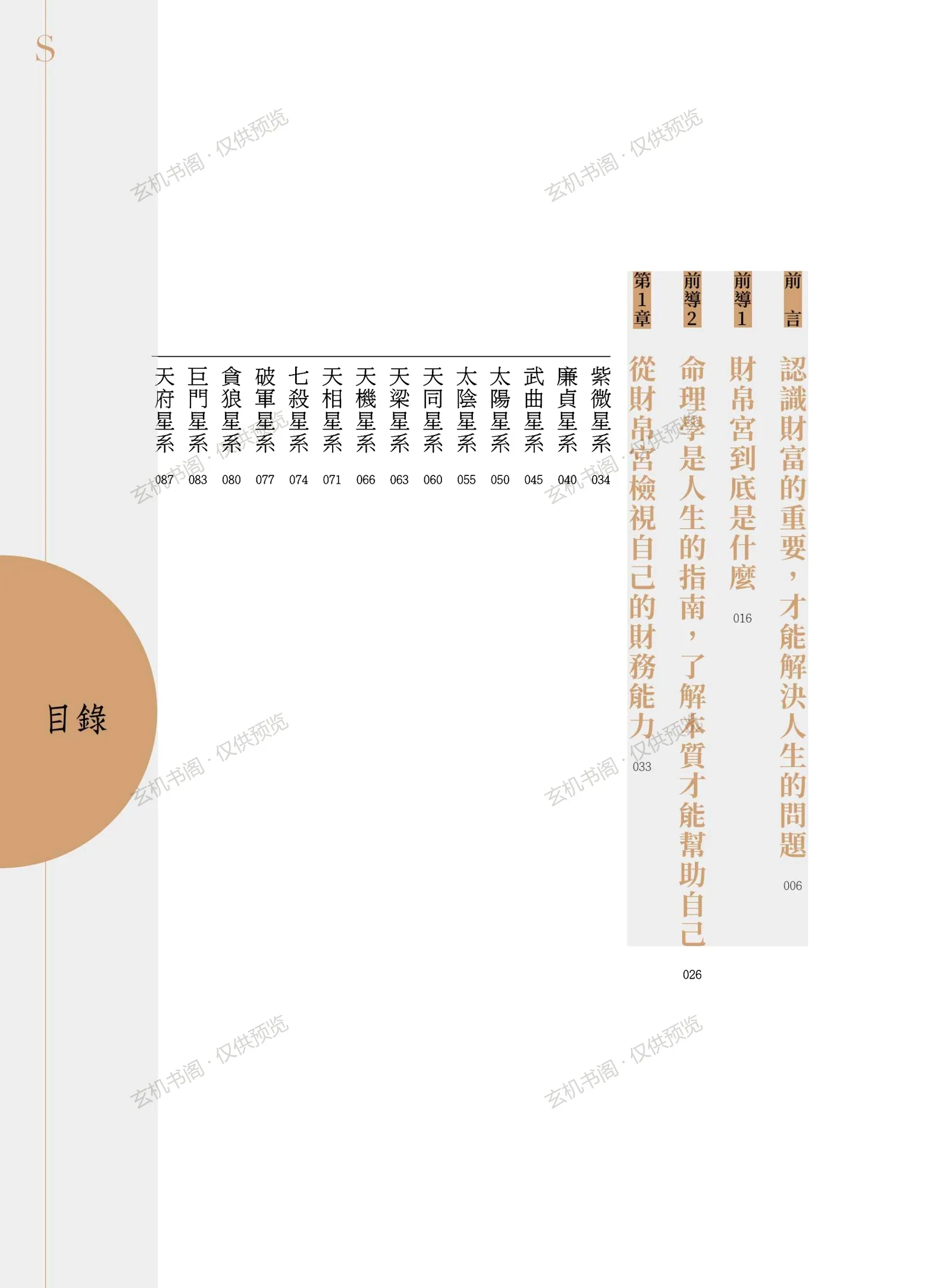
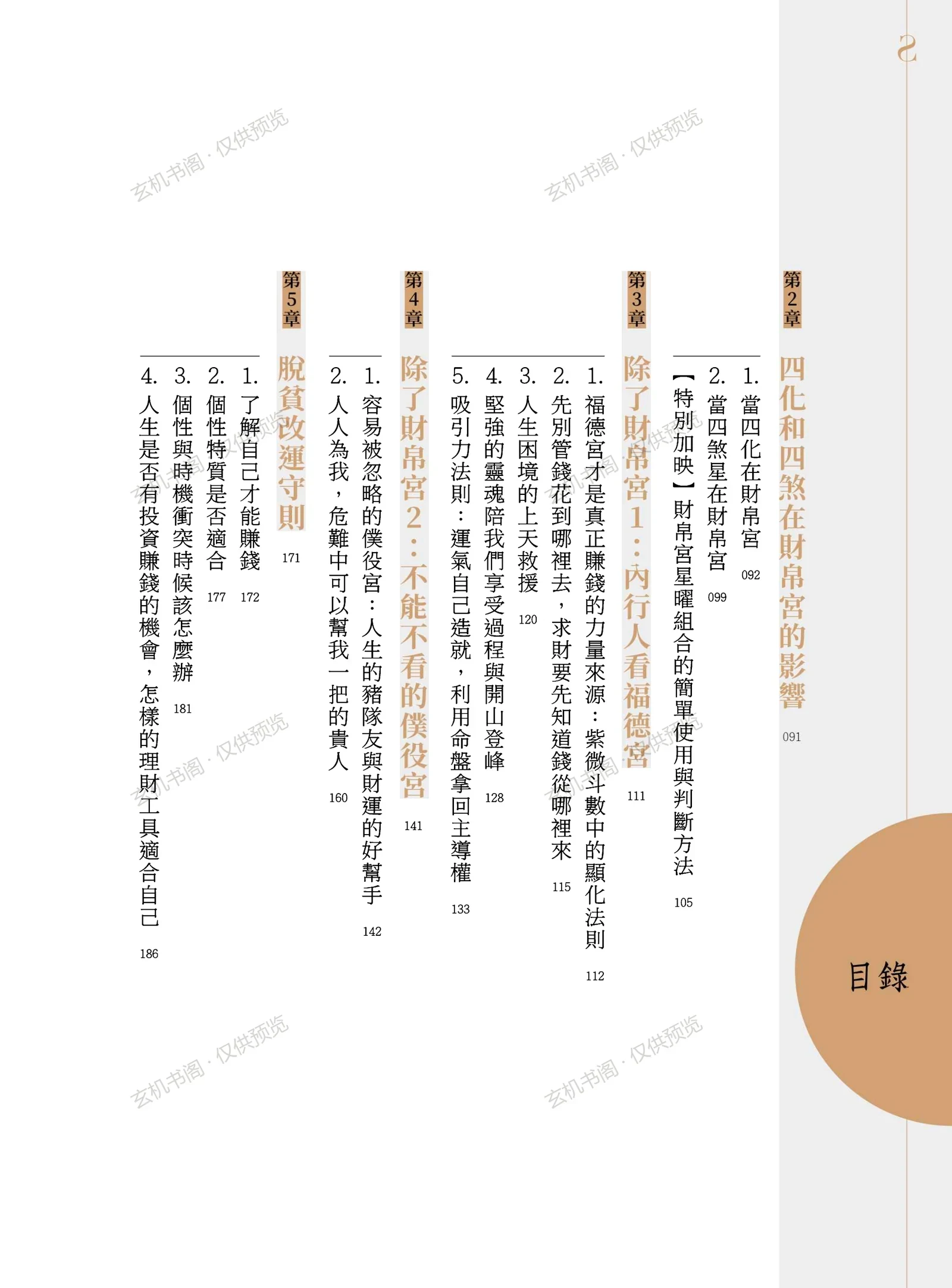
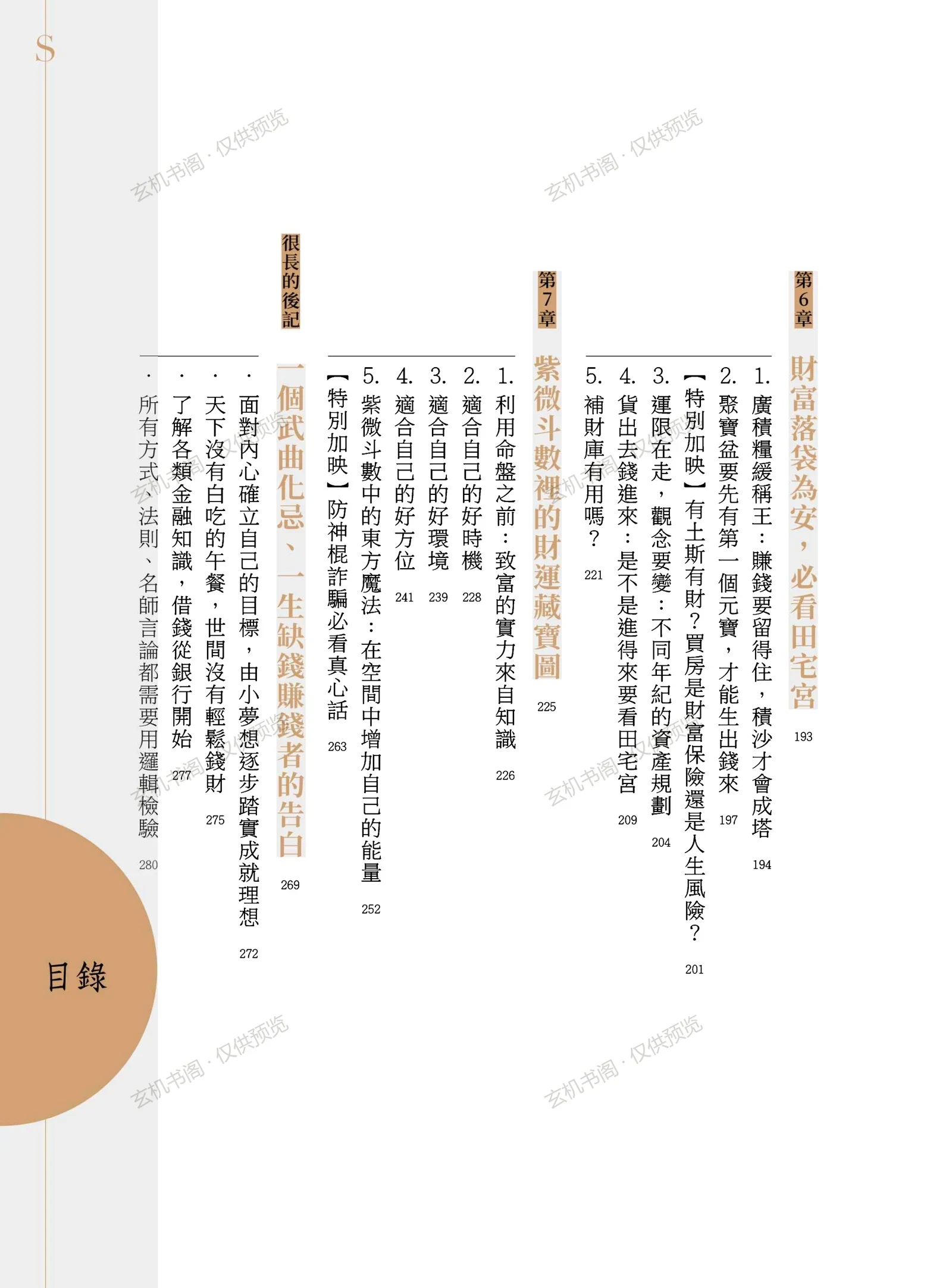
This is the fourth volume of Da Geng's Zi Wei Strategy series, centered on wealth and personal finance. The cover subtitle asks how life can go smoothly when wealth does not, and the book begins by stressing the importance of understanding money before examining one's financial capacity through the Zi Wei chart. The table of contents shows a preface and seven chapters: checking financial ability from the Wealth Palace; the influence of the Four Transformations and Four Sha in the Wealth Palace; the Fortune Palace as the inner source of earning power; the Servants Palace as either bad teammates or benefactors; rules for escaping poverty, including personality, timing and choosing investment tools; the Property Palace as the key to keeping wealth, with discussion of real estate and asset planning; and a treasure map of wealth in Zi Wei Dou Shu covering timing, environment, direction and wealth-replenishment practices. A long afterword presents a confession from someone with Wu Qu transforming into Ji, a life of money shortage. The book turns stars, palaces and transformations into practical financial judgment, and suits readers who already know basic Zi Wei Dou Shu and want to apply it to money planning.
Contents
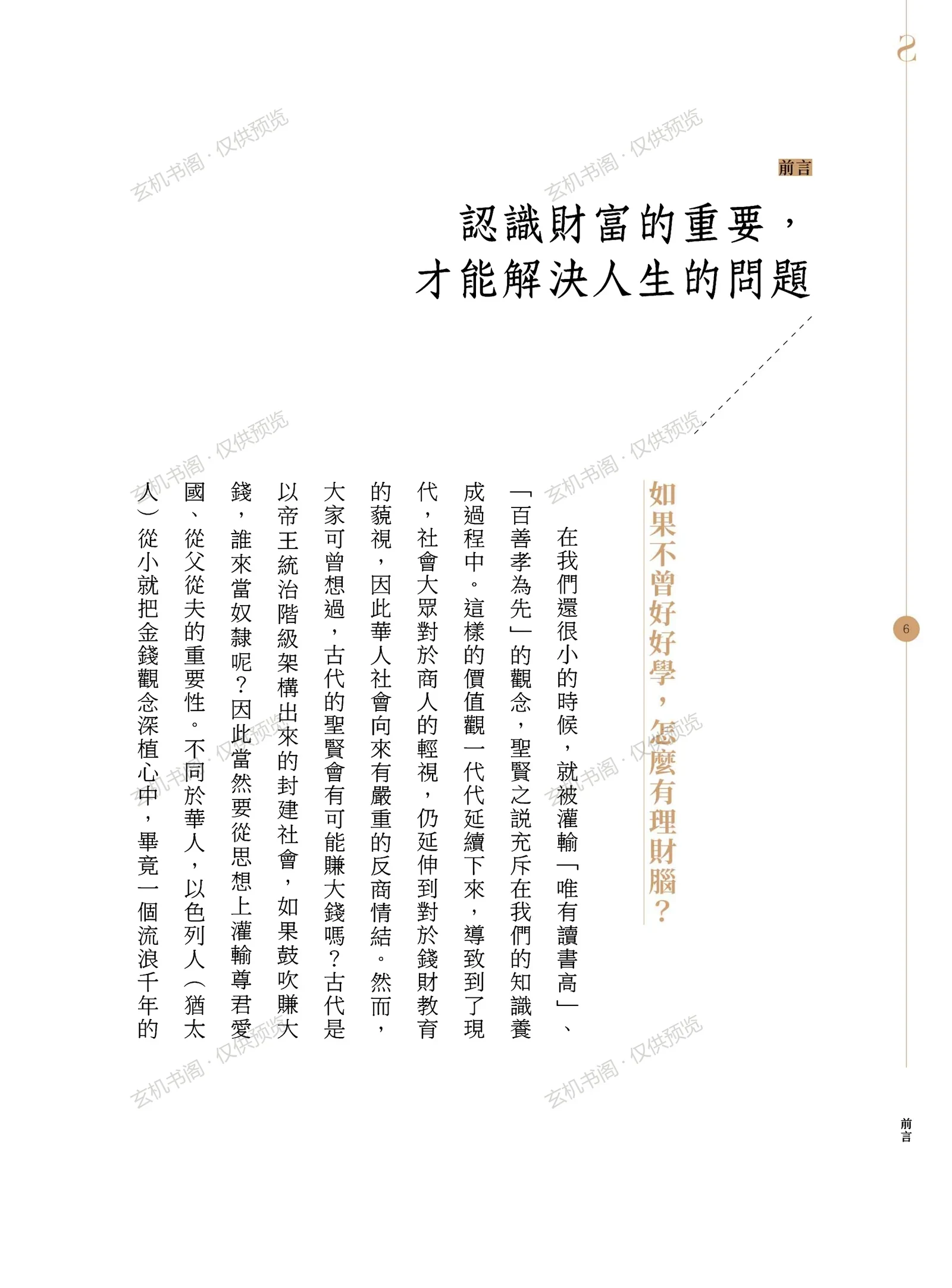
Preface: understanding wealth to solve life's problems
Ch.1: examining financial ability from the Wealth Palace
Ch.2: Four Transformations and Four Sha in the Wealth Palace
Ch.3: the Fortune Palace as the real source of earning power
Ch.4: the Servants Palace as bad teammates or benefactors
Ch.5: rules for escaping poverty and choosing financial tools
Ch.6: keeping wealth, with the Property Palace in focus
Ch.7: a treasure map of wealth in Zi Wei Dou Shu
Key Points
The Wealth Palace is the core for assessing earning patterns and financial capacity.
Four Transformations and Four Sha in the Wealth Palace change how wealth is judged.
The Fortune Palace shapes inner motivation and spending habits.
The Property Palace shows whether assets can be retained, with real estate as a focus.
The book also covers timing, environment, direction and wealth-replenishment practices.