Reading guide
Content guideOverview
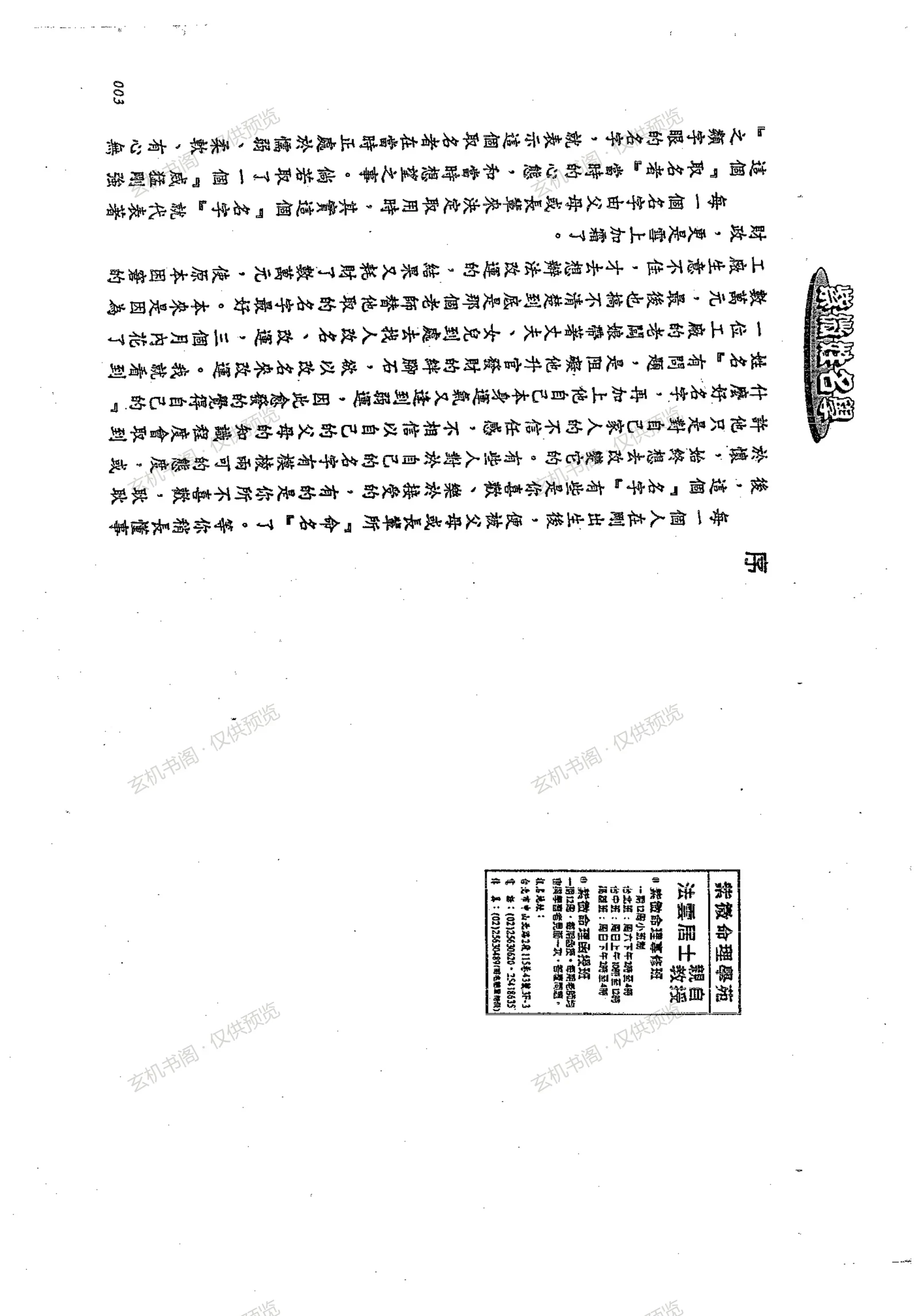
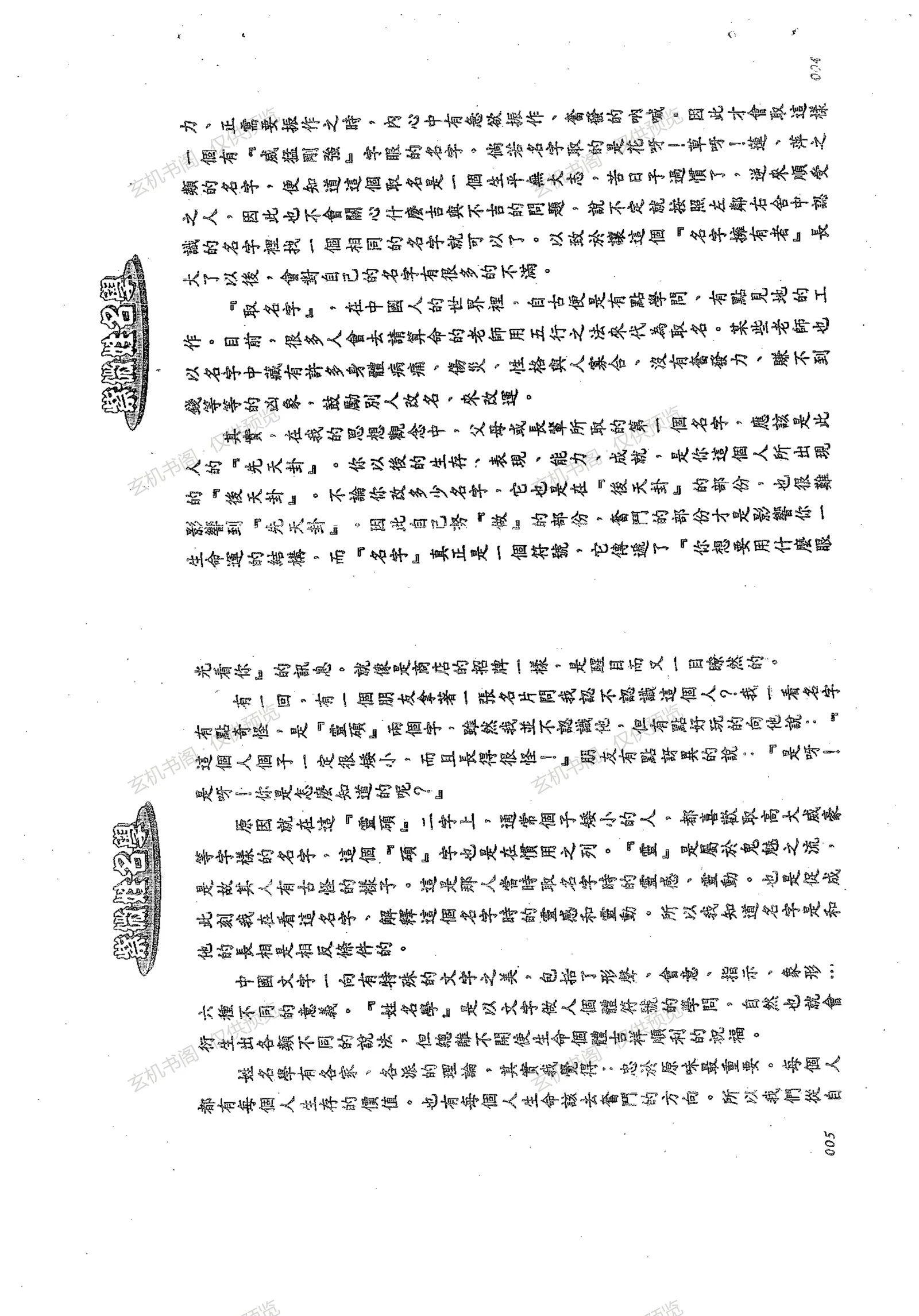
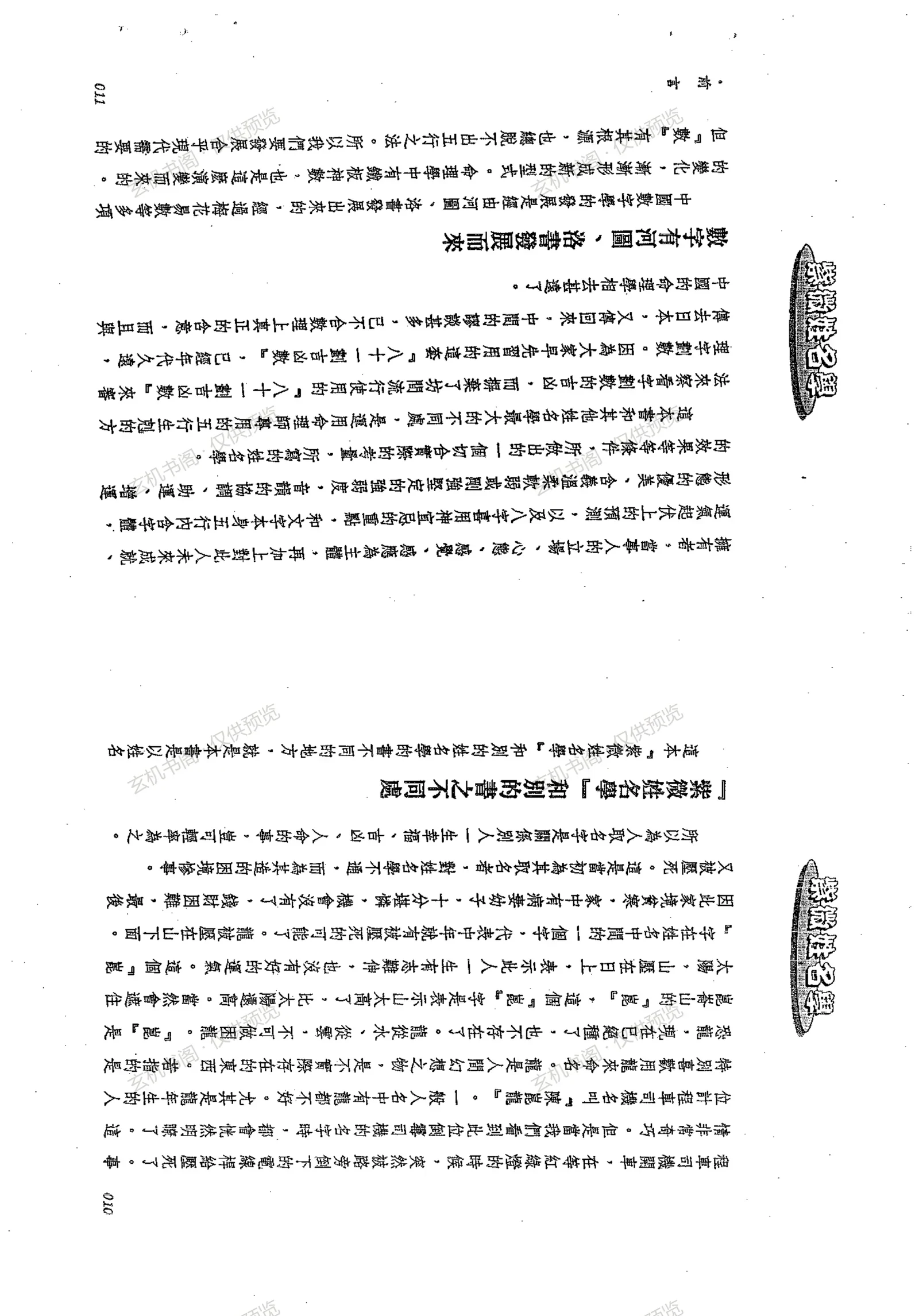
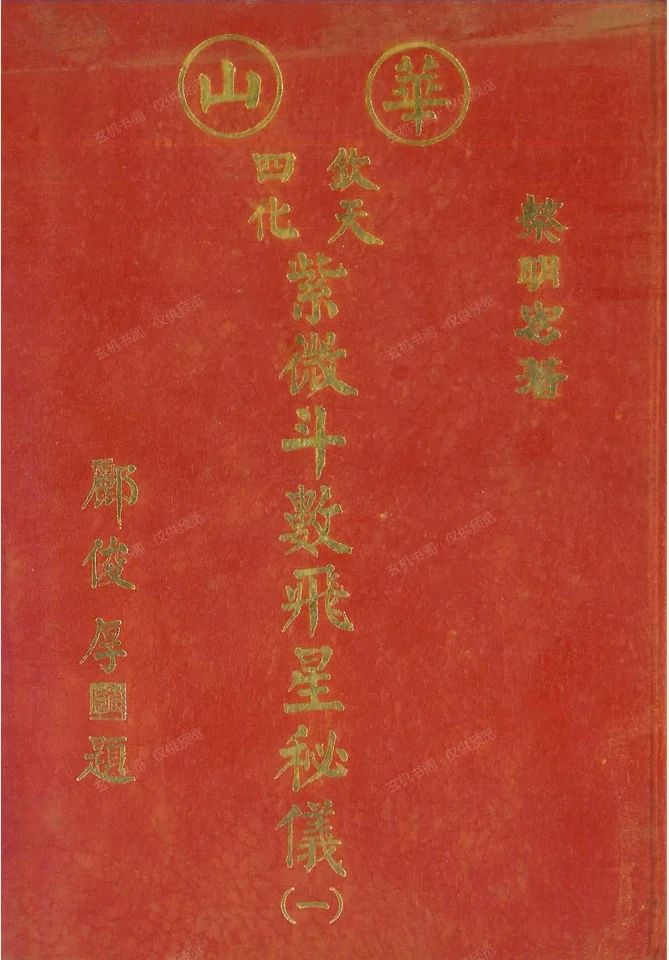
This book, Ziwei Nameology by Master Fayun, explores how a person's name relates to destiny, personality, health, family, and career. Drawing on the preface and table of contents, the author argues that a name is not merely a label but a carrier of the 'acquired hexagram' formed after birth, shaping one's life path. The method integrates Zi Wei Dou Shu natal charts with Five Elements theory, examining the self, zodiac sign, spouse palace, children palace, and property palace before selecting characters based on form, meaning, and sound. The book also discusses the six categories of Chinese characters and how to infer personality, appearance, illness, and family circumstances from a name. The table of contents covers principles of name influence, chart-name coordination, five-grid analysis, zodiac-character matching, and practical case studies of name changes. Readers can use it to understand common approaches in Taiwanese folk nameology, while recognizing its divinatory nature rather than scientific status.
Contents
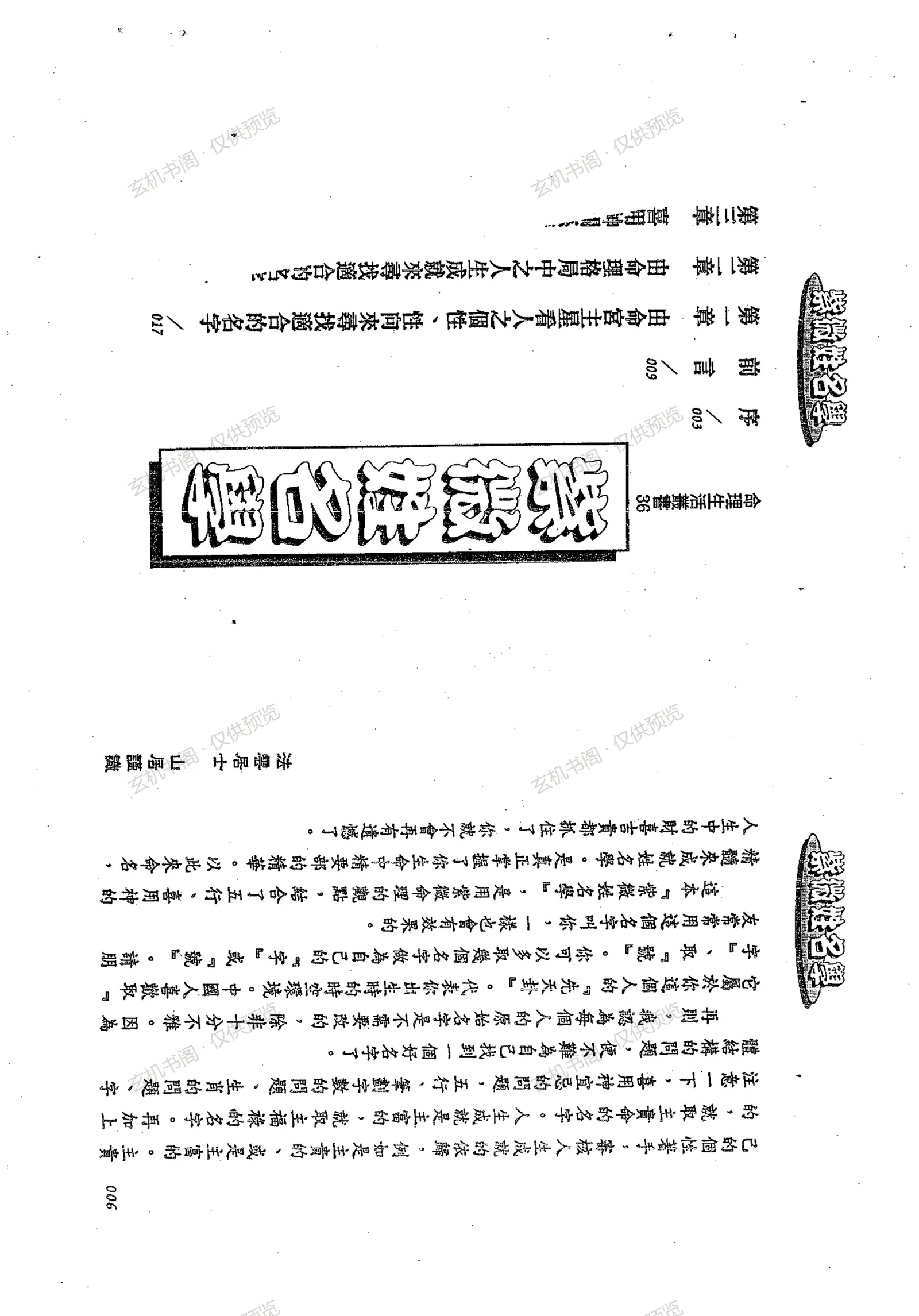
Preface: the relationship between name and destiny
Ch.1: Reading personality from the chart and name coordination
Ch.2: Family roles seen through the natal chart
Ch.3: Basic concepts before naming
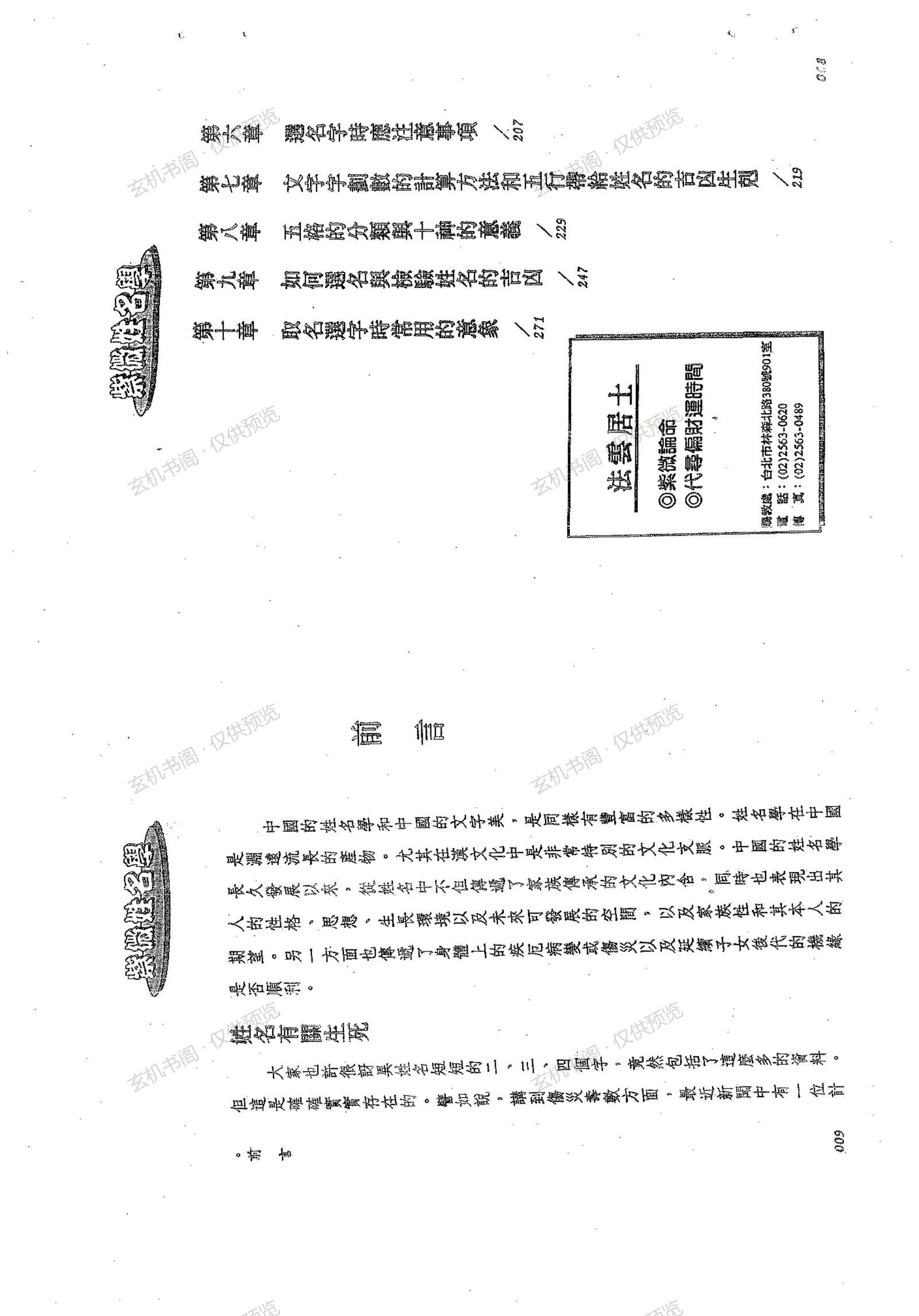
Ch.7: Choosing characters by meaning, sound, and Five Elements
Ch.8: Five-grid analysis and Three Talents configuration
Ch.9: How to judge name auspiciousness
Ch.10: Common naming characters and usage taboos
Key Points
Uses Zi Wei Dou Shu charts as the core basis for name analysis
Treats the name as an 'acquired hexagram' carrying postnatal fortune
Combines Five Elements, character form, meaning, and sound in naming
Discusses the six categories of Chinese characters in nameology
Illustrates name changes and auspiciousness assessment with real cases