Reading guide
Content guideOverview
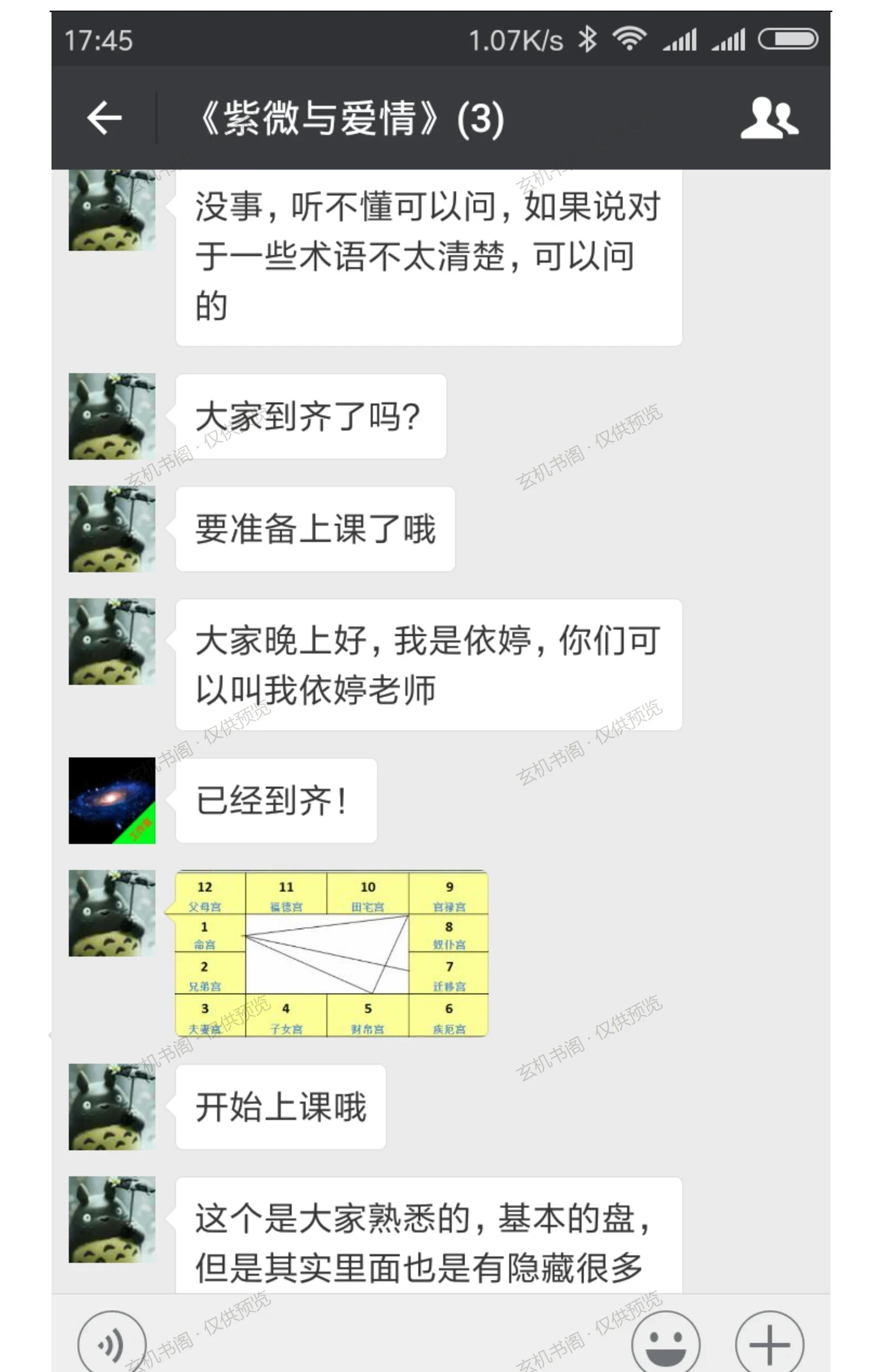
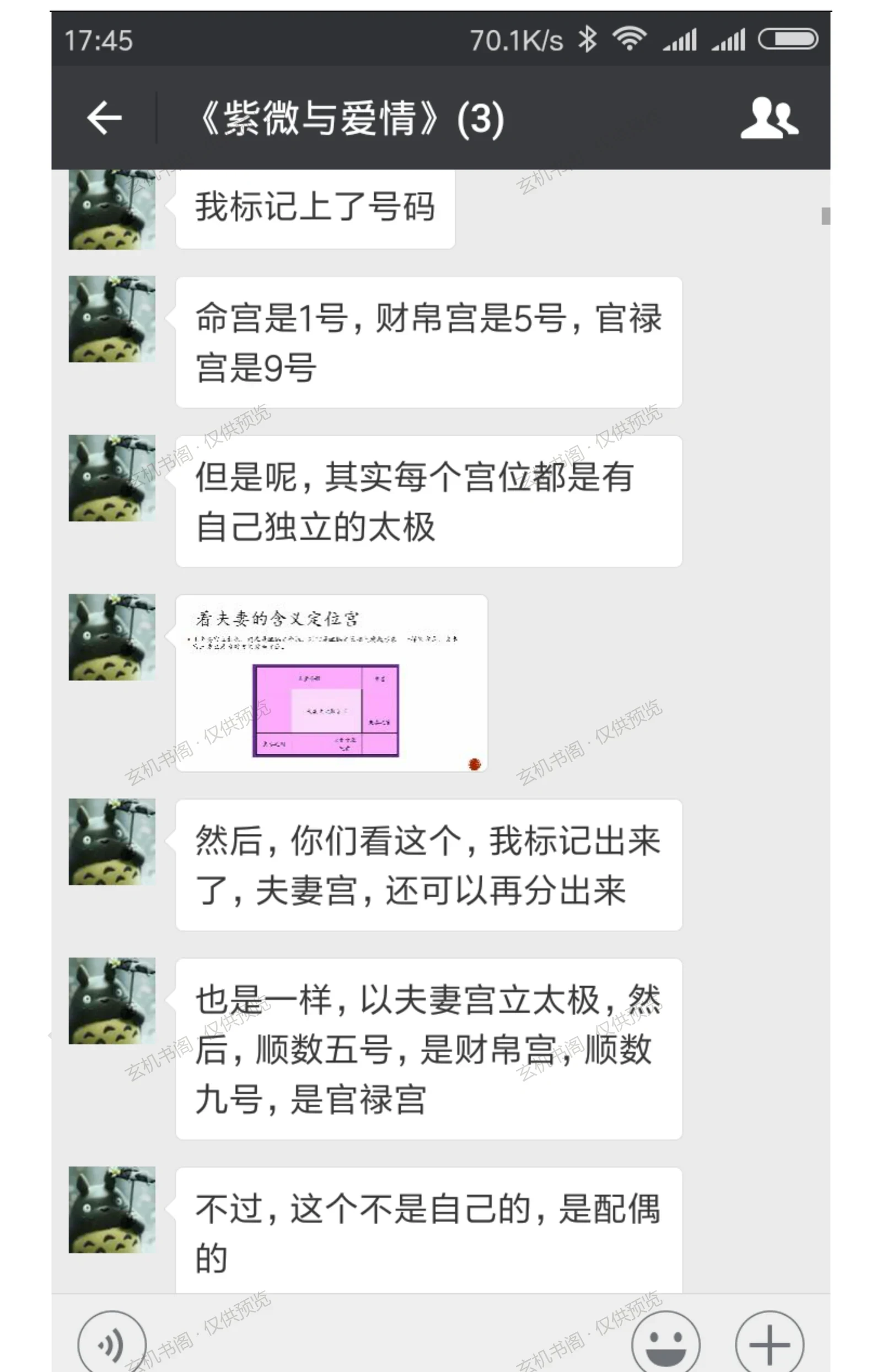
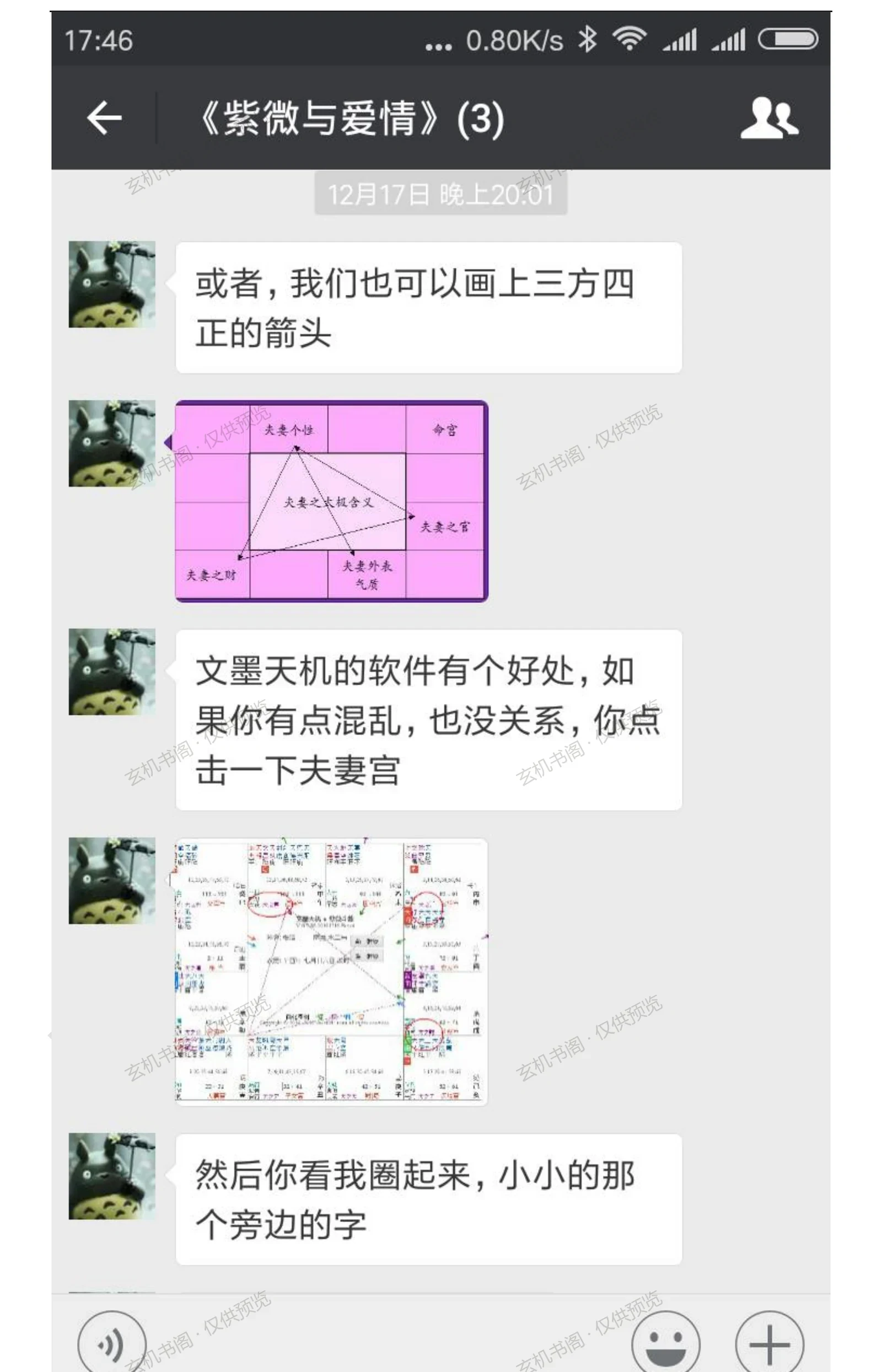
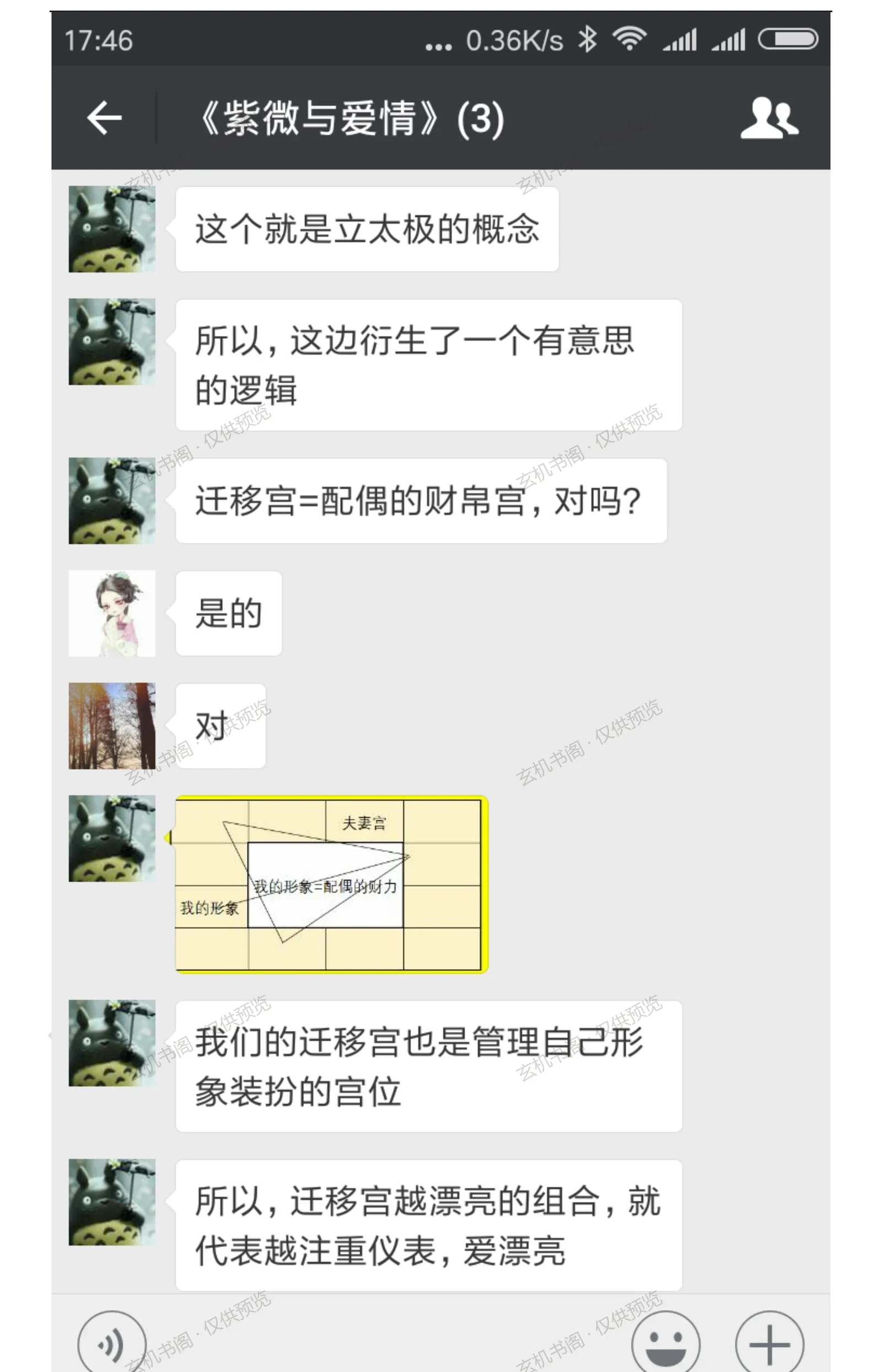
This is the first volume of Yi Ting's Zi Wei and Love, presented as a record of a group chat class on using Zi Wei Dou Shu to analyze love. The cover only shows the author and title, while the screenshots capture the actual lesson. Yi Ting begins with a basic natal chart, numbering the twelve palaces: the life palace is 1, the wealth palace is 5, and the career palace is 9. She stresses that each palace has its own independent Taiji. She then introduces the key idea of setting the spouse palace as a new center: counting five positions gives the spouse's wealth palace, and counting nine gives the spouse's career palace. She further explains that the travel palace equals the spouse's wealth palace and also governs one's own appearance and image, so a more attractive travel palace combination indicates greater attention to looks. The lesson also references the Wenmo Tianji software, where clicking the spouse palace shows the triangle of major palaces and labels for the spouse's personality and appearance. The book is a classroom transcript rather than a systematic textbook, moving from basic chart structure to palace rotation and introductory logic for love reading.
Contents
Cover and course group information
The twelve palaces and their numbering on a basic chart
Setting the spouse palace as a new Taiji
The triangle of palaces and deriving the spouse's wealth and career palaces
The travel palace as the spouse's wealth palace
The travel palace and personal image
Key Points
The life, wealth, and career palaces correspond to numbers 1, 5, and 9.
Each palace has its own independent Taiji and can serve as a new center.
With the spouse palace as center, the fifth position is the spouse's wealth palace and the ninth is the spouse's career palace.
The travel palace equals the spouse's wealth palace and governs one's own image.
A more attractive travel palace combination suggests greater attention to appearance.