Reading guide
Content guideOverview
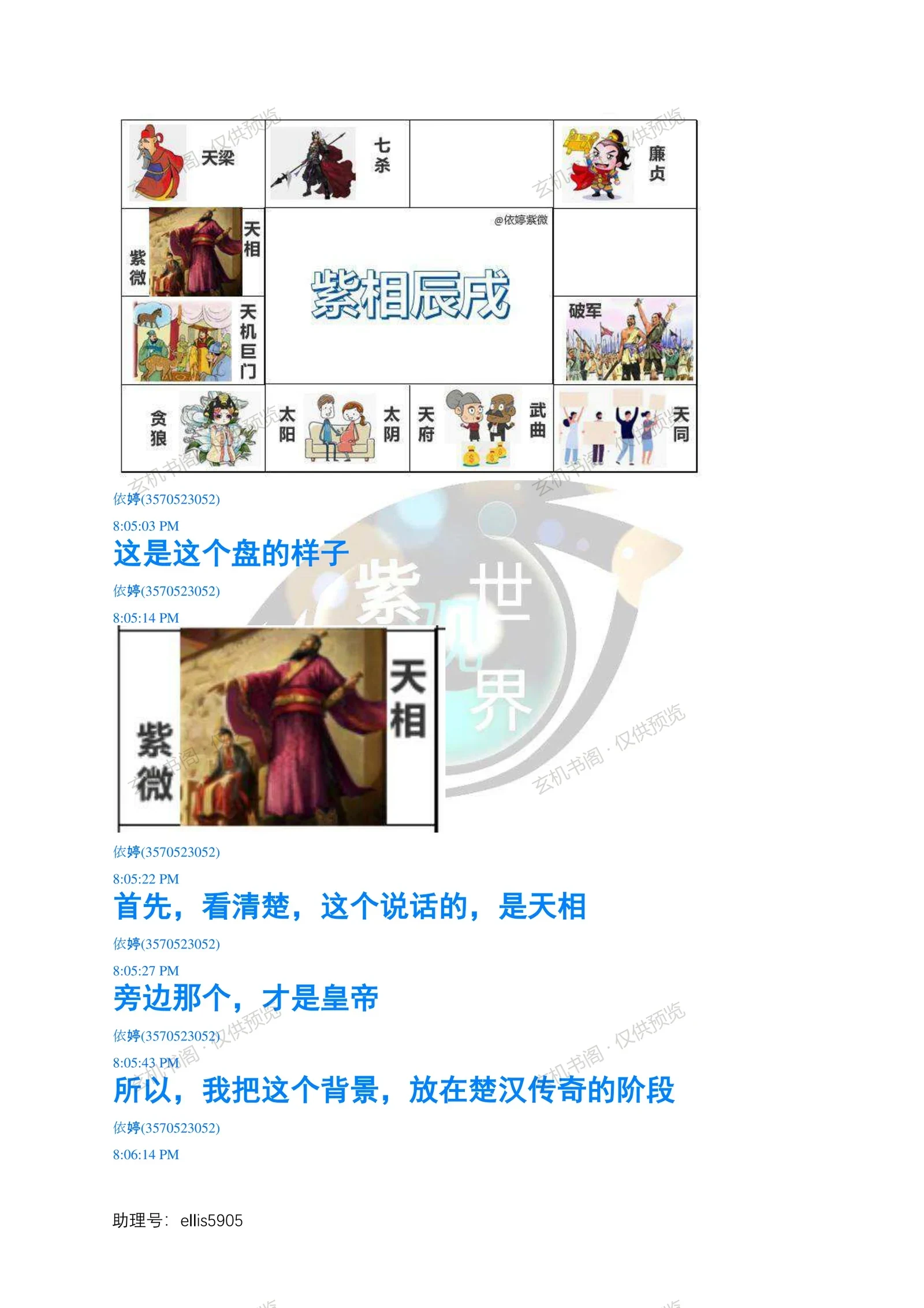
This handout centers on the Ziwei-Tianxiang chart in the Chen and Xu palaces. It first lays out the twelve palaces with their stars, then reads the configuration as an empire in decline or an old-style enterprise marked by internal rivalry and imbalanced management. The instructor, Yiting, uses figures from the Qin dynasty—Hu Hai, Zhao Gao, and Li Si—as living metaphors to explain the roles of Ziwei-Tianxiang, Tianliang, Jumen, and Tianji. Tianliang in the Parents palace is framed as a retired advisor still anxious about state affairs, while Tianji-Jumen is linked to Zhao Gao's 'calling a stag a horse' story. The material is a classroom recording aimed at helping students grasp the palace interactions and human imagery of this chart.
Contents
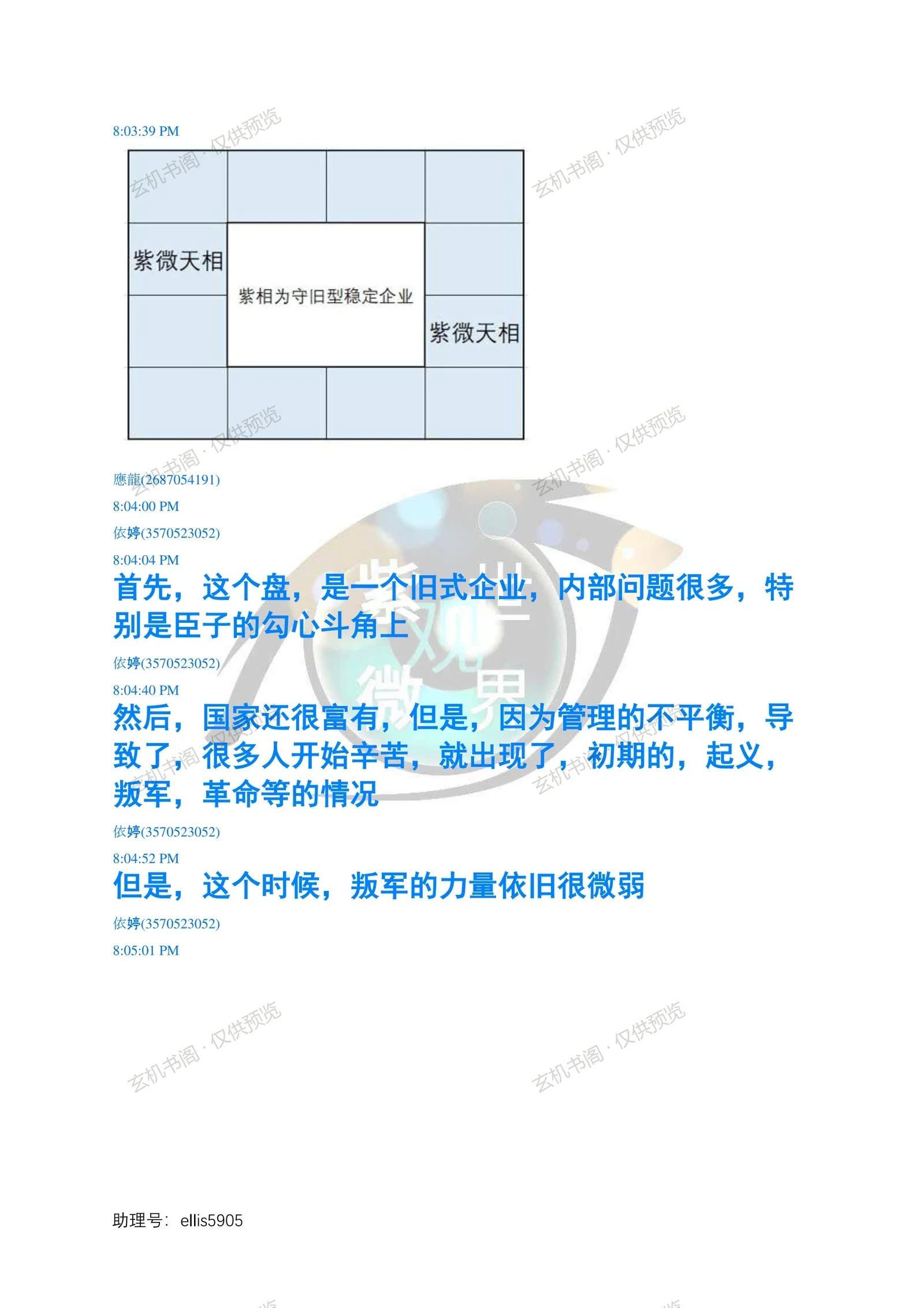
Sample chart: Ziwei-Tianxiang in Chen and Xu
Image: an old enterprise and internal conflict
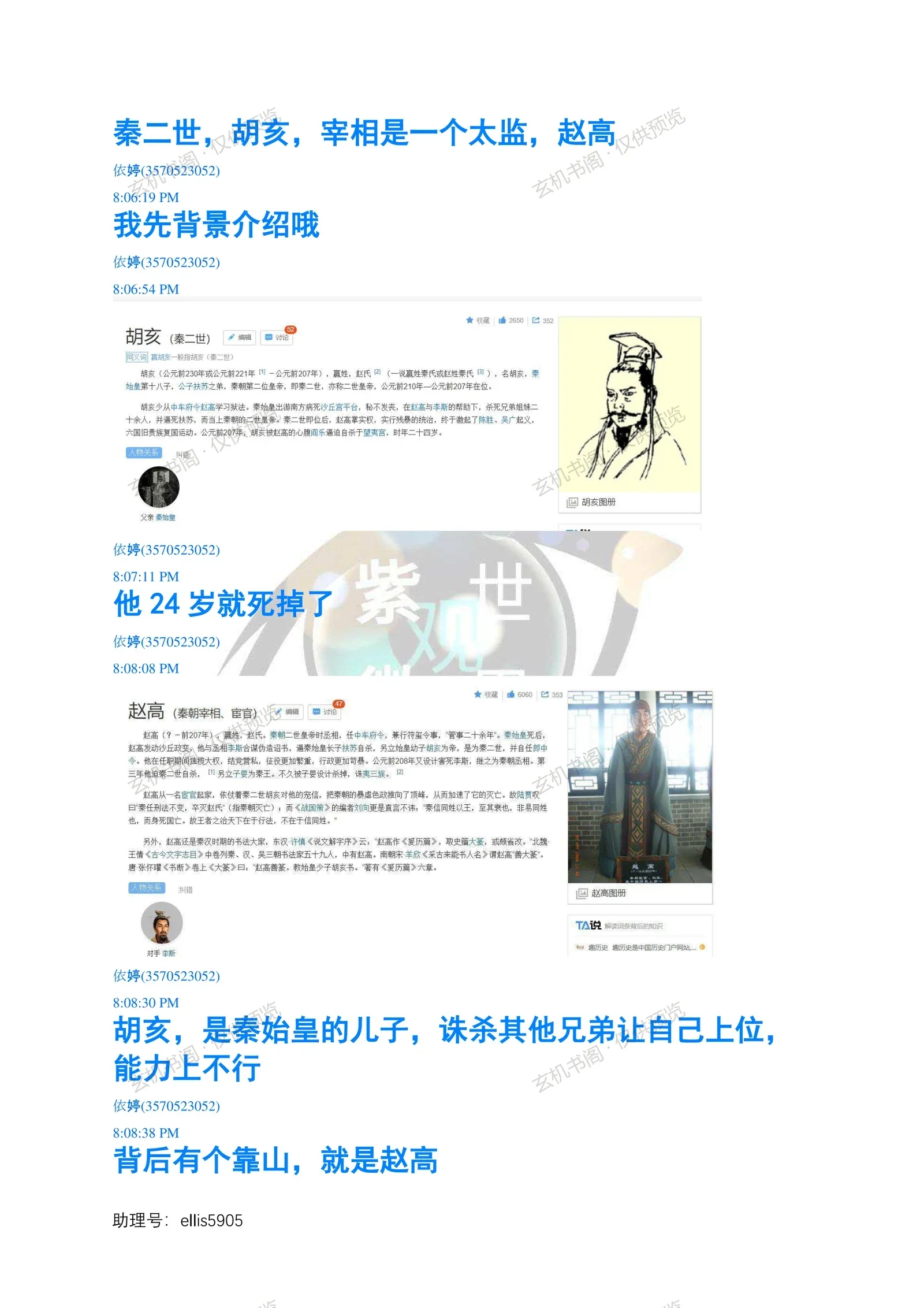
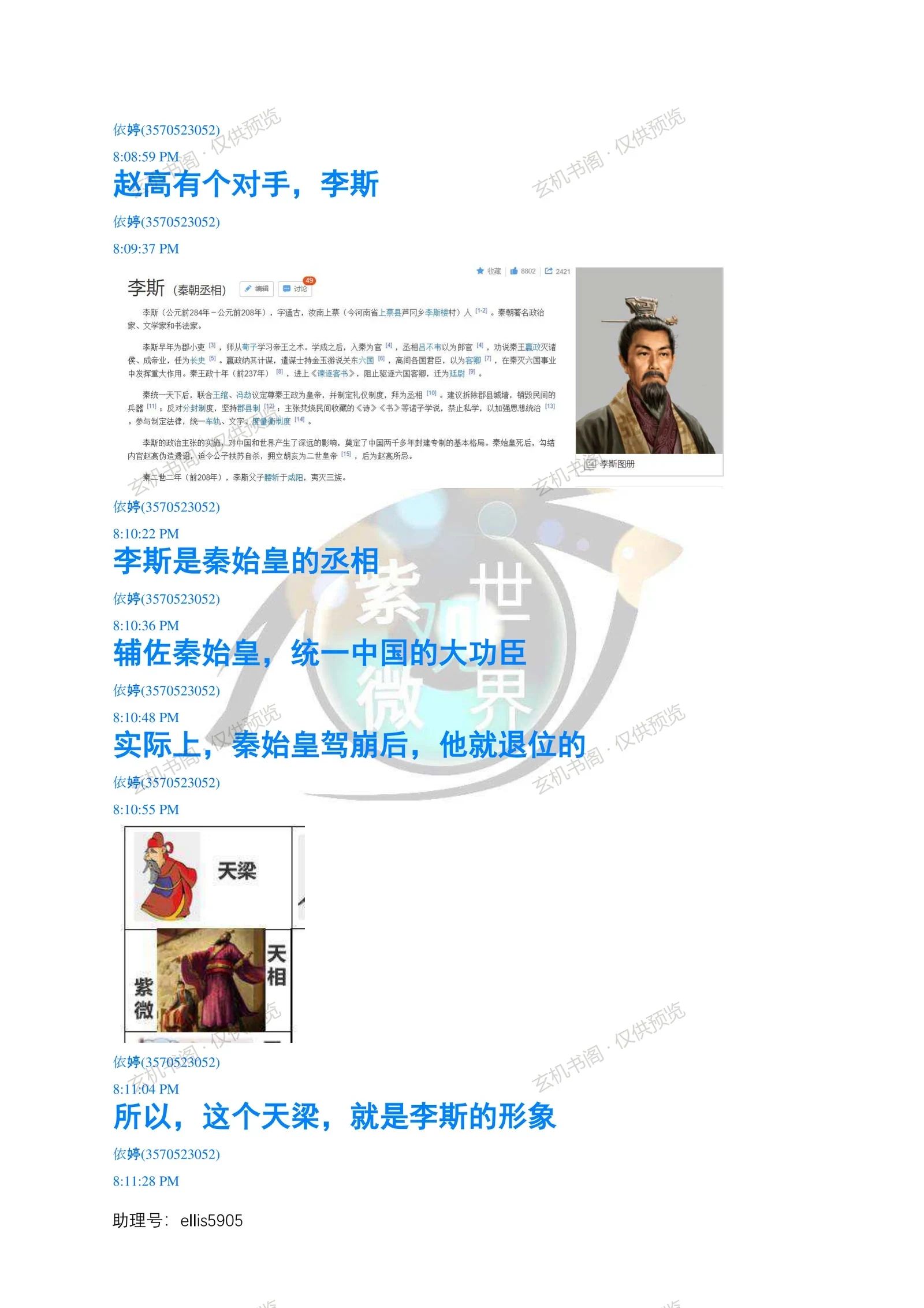
Historical roles: Hu Hai, Zhao Gao, Li Si
Tianliang in Parents palace: the worried advisor
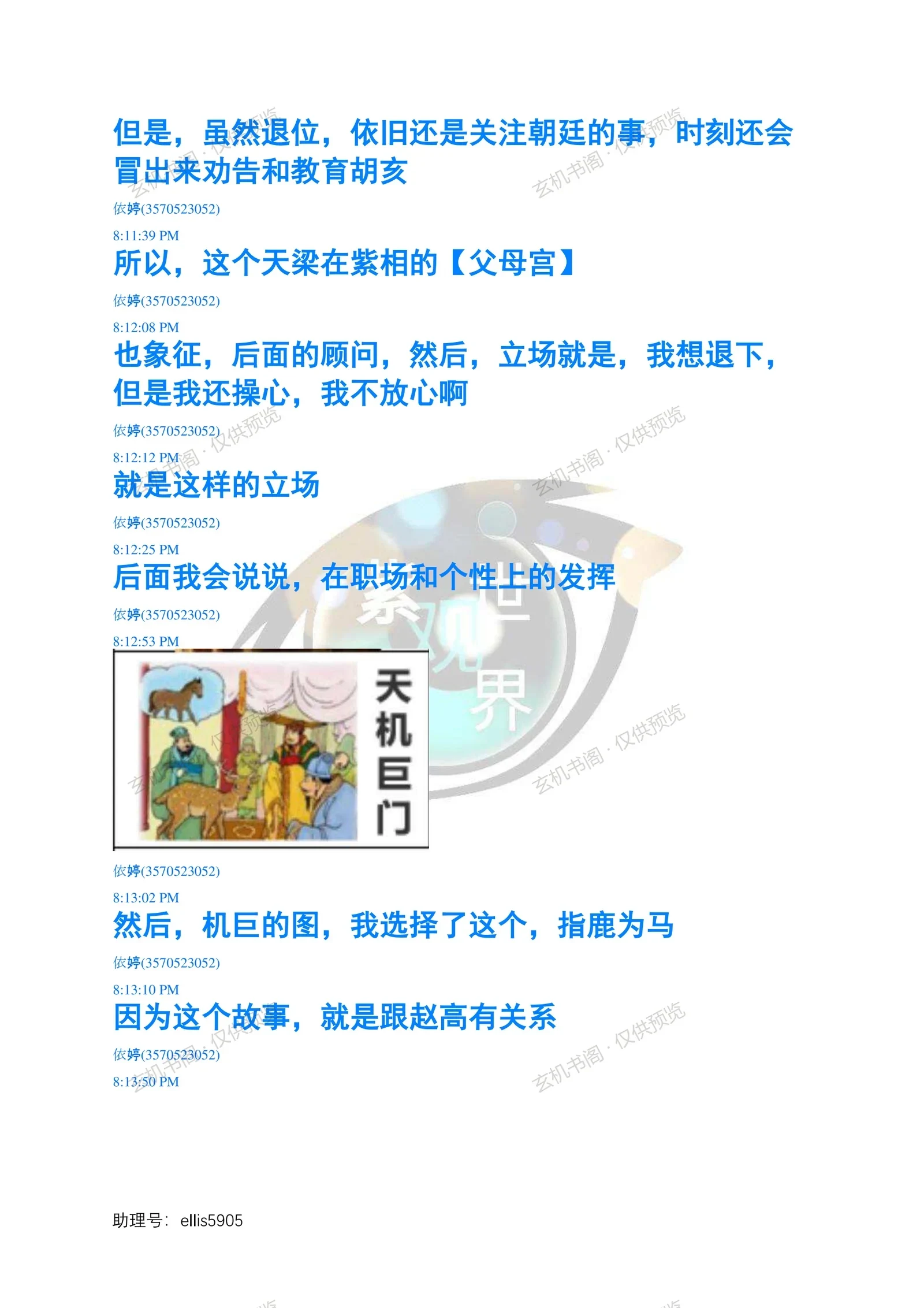
Tianji-Jumen: calling a stag a horse
Extensions to workplace and personality
Key Points
The chart places Ziwei-Tianxiang in the Chen and Xu palaces
Read as a conservative enterprise with internal problems
Qin dynasty narrative maps to star roles
Tianliang in Parents palace suggests a retired but concerned advisor
Tianji-Jumen evokes Zhao Gao's stag-horse trick