Reading guide
Content guideOverview
This text works through Eight Mansions (Bazhai) feng shui in three parts. The opening is a teacher-student dialogue that interprets each trigram pairing—yannian, wugui, liusha, jueming—and ties them to concrete outcomes such as fire, lawsuits, illness and family discord. The middle section questions the common practice of fixing the fuwei position by the main door, comparing door-qi, sitting-mountain and magnetic approaches, and notes how hard it is to determine orientation in modern apartments; it argues for adding the ming gua personal field to the qi and magnetic fields. The final part sets out a framework of field effects, major and minor fields, and house-versus-fate judgment, ranking door, main room and stove combinations for east and west four-mansion people, with rules for couples of differing ming gua and several case studies. It closes with the Song-dynasty Xuangji Fu by Wu Jingluan as a mnemonic verse basis. Practical and argumentative rather than introductory.
Contents
Trigram pairings: yannian, wugui, liusha, jueming
Debate on fixing the Dayou Nian fuwei position
Door-qi, sitting-mountain and ming gua methods compared
Field effects, major/minor fields and house-fate judgment
Door, main room and stove for east/west four-mansion people
Four house case studies
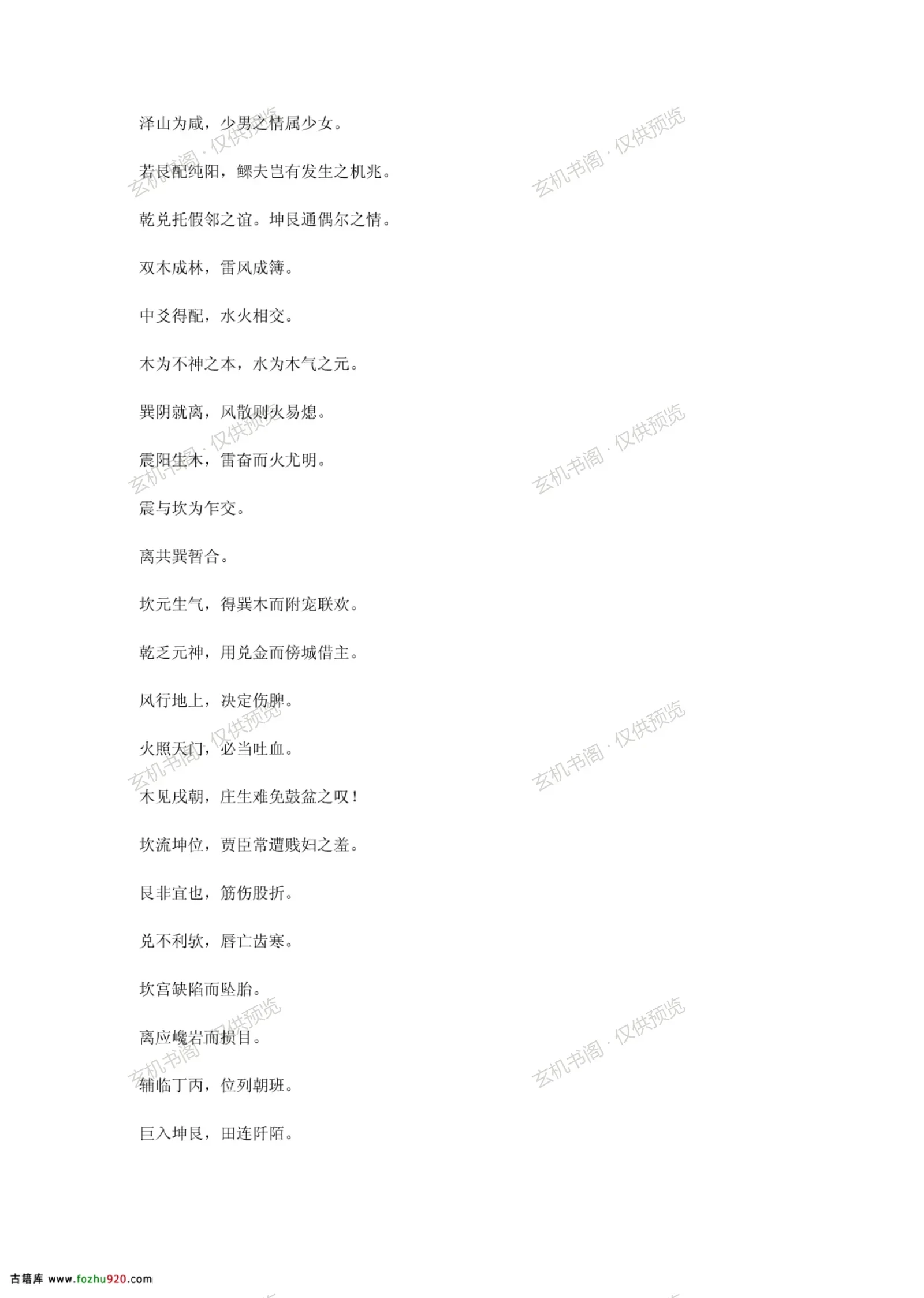
Appendix: Xuangji Fu by Wu Jingluan
Key Points
Explains each Eight Mansions star through dialogue and real outcomes
Questions door-based fuwei and argues for the personal ming gua field
Proposes combining qi, magnetic and personal fields
Grades door-main room-stove combinations from highly auspicious to inauspicious
Includes the Xuangji Fu verse as a doctrinal basis