Reading guide
Content guideOverview
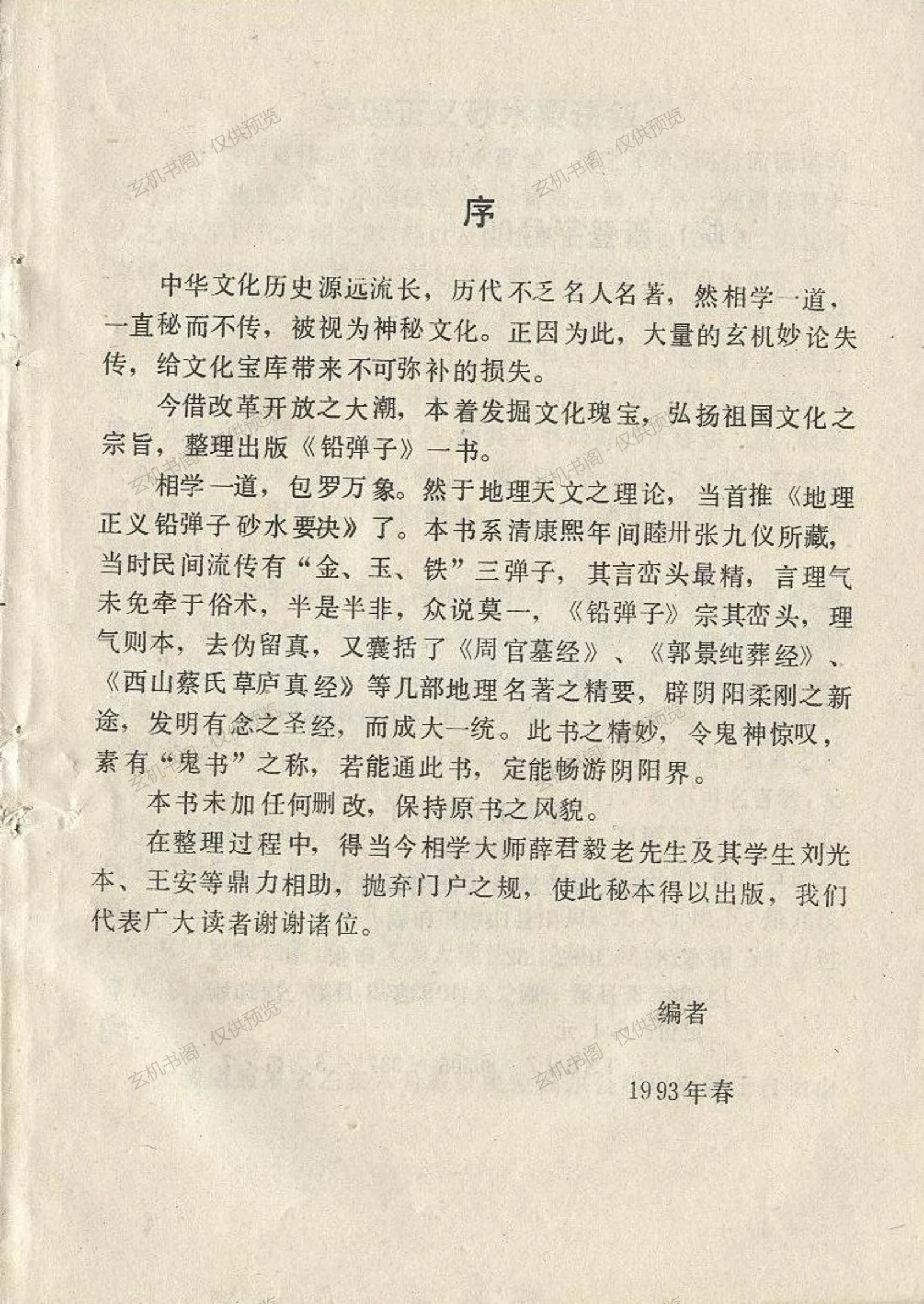
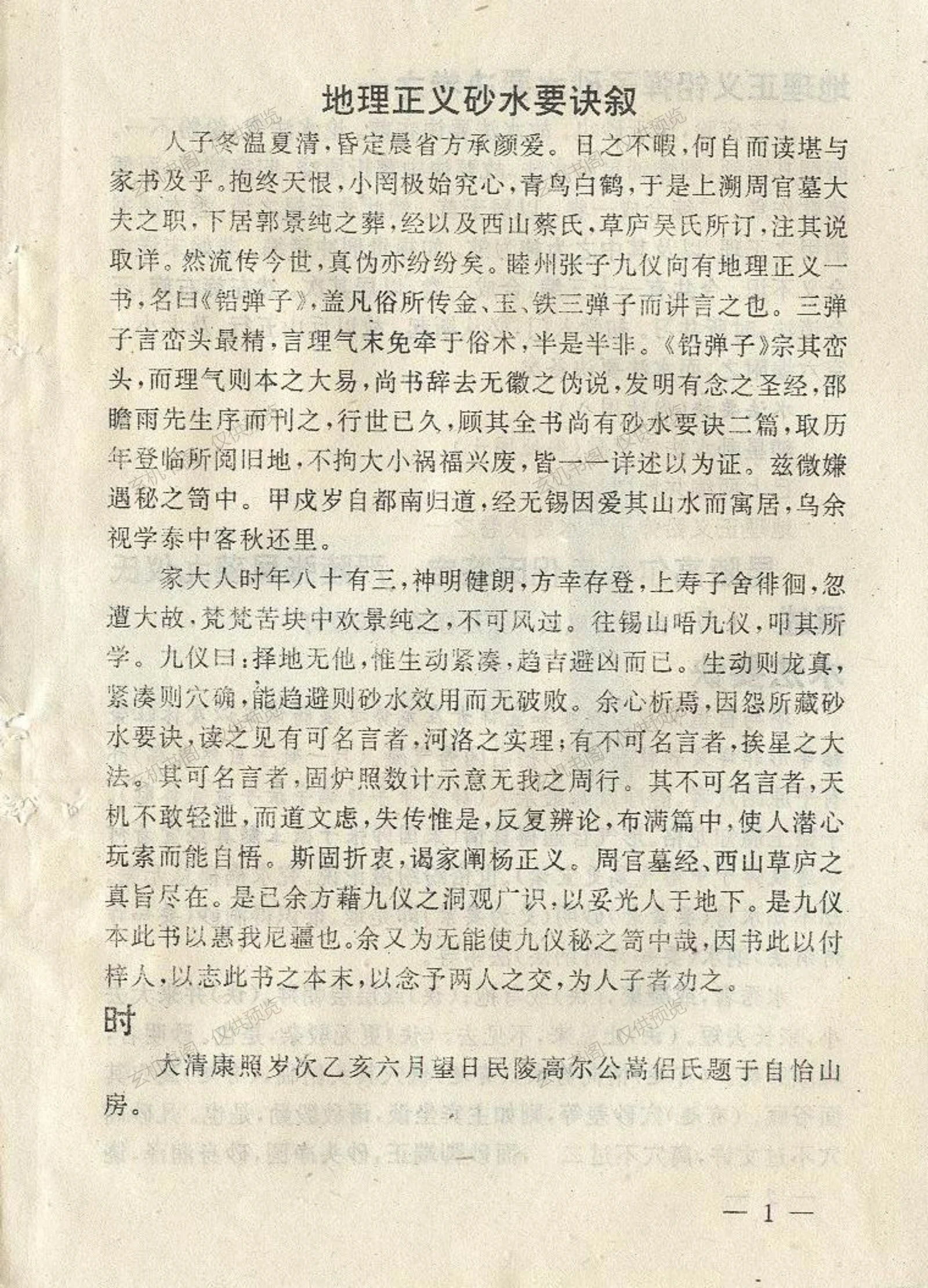
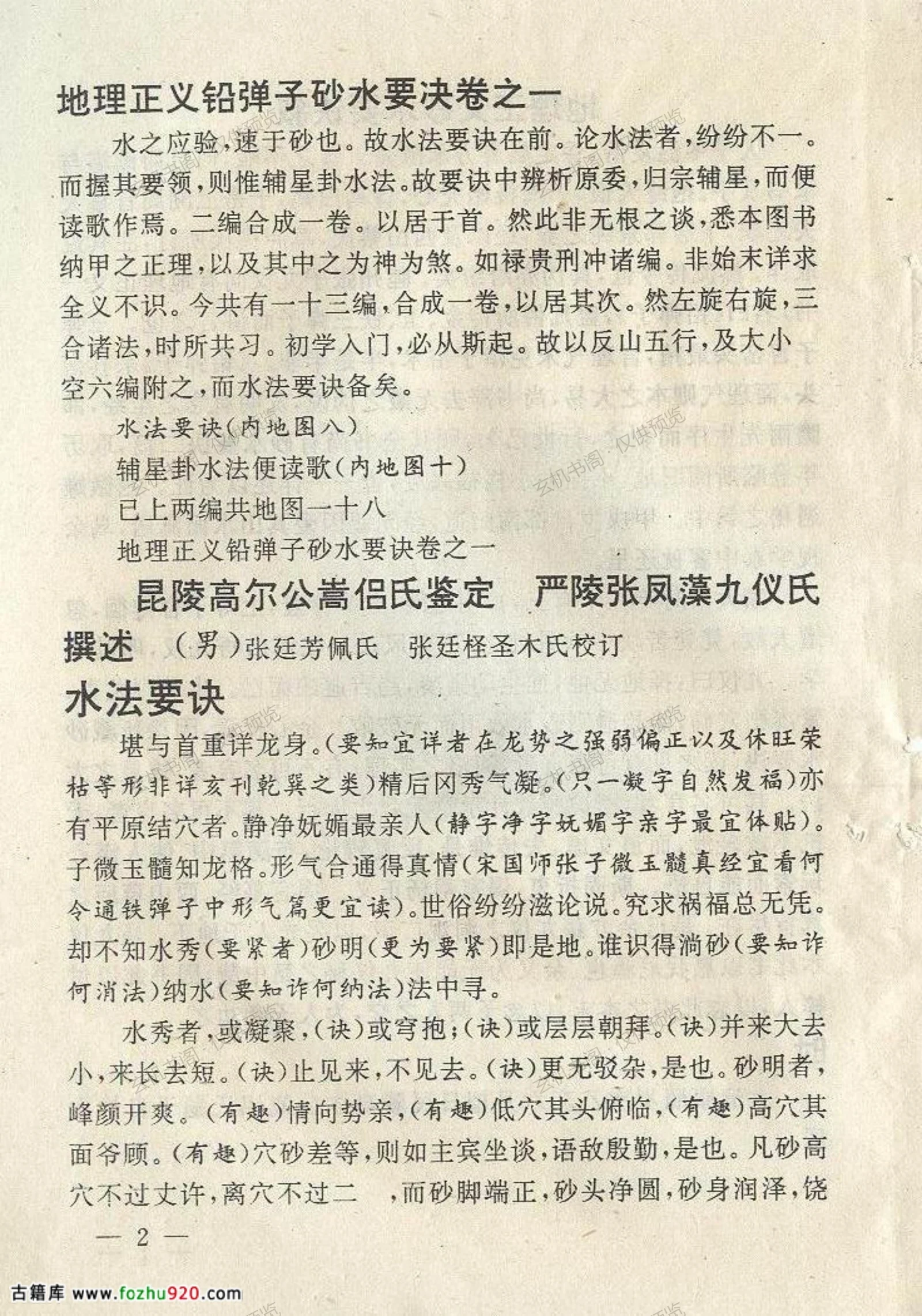
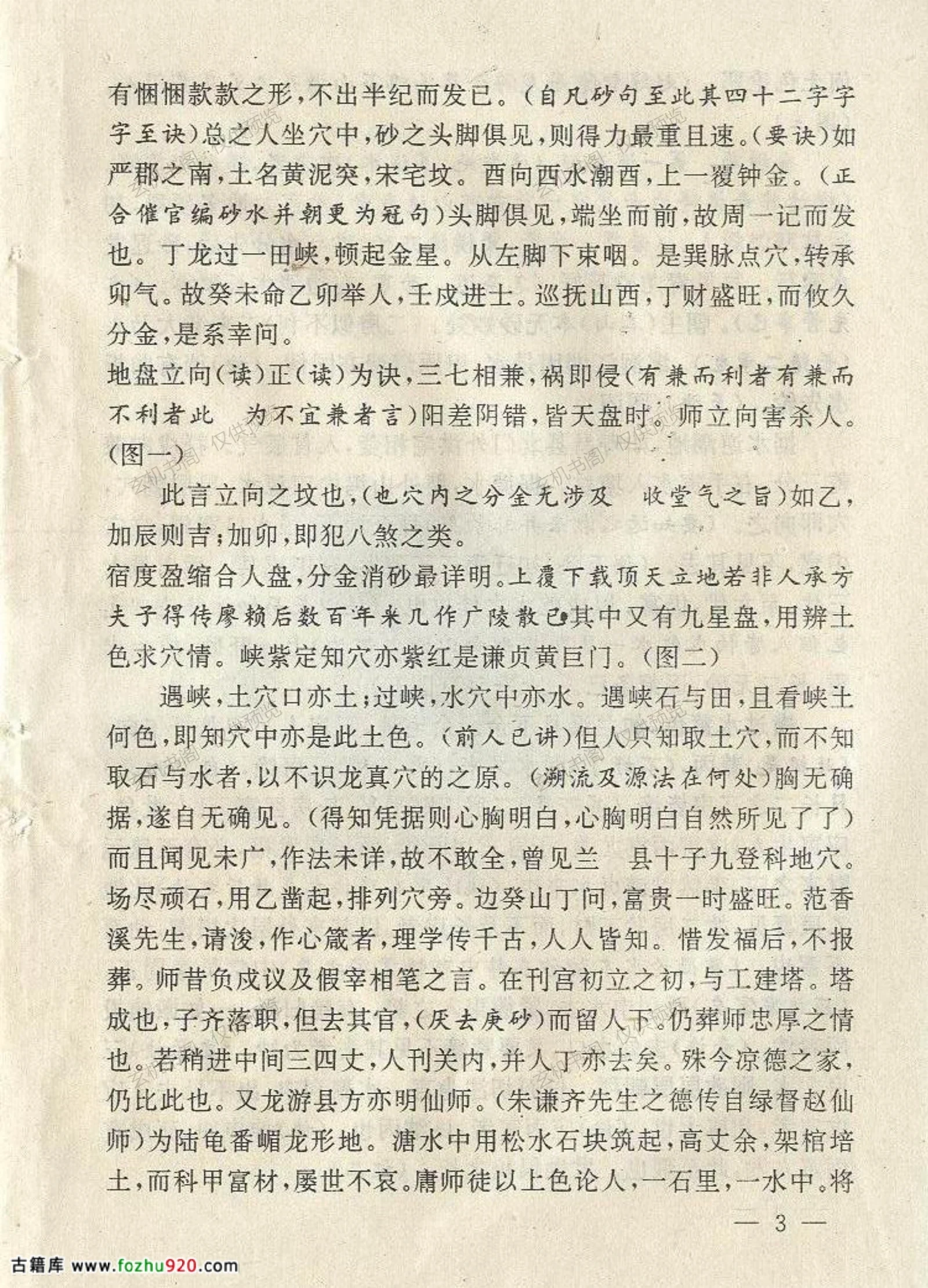
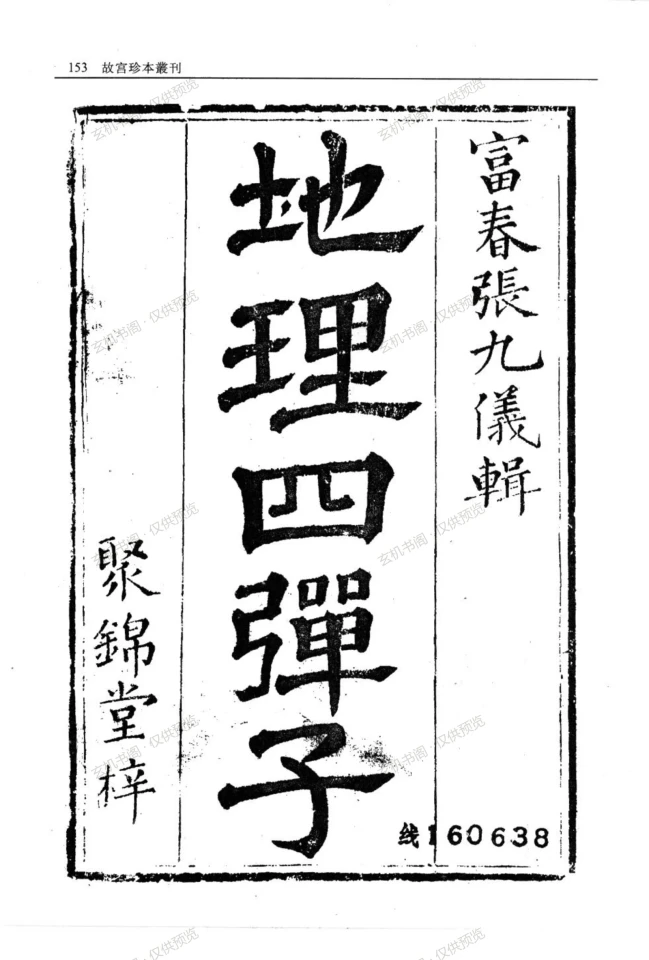
This is Volume One of the Dili Qiandanzi Shashui Yaoue, a geomantic text attributed to Zhang Jiuyi of the Kangxi era and popularly called the 'ghost book.' The scanned copy is a 1993 simplified-character, horizontally typeset edition from Anhui People's Publishing House. The volume opens with a preface by the compiler and an original-style preface by Gao Silü dated 1695, then presents the 'Essentials of Water Methods,' the 'Fuxing Hexagram Water Method Song' with eighteen internal maps, and supplementary sections on the three-harmony rotation, reverse-mountain five-elements, and major/minor void positions. Drawing on classical geographical works such as the Zhouguan Mujing, Guo Pu's Zangjing, and the Caolu Zhenjing, it combines landform observation with hexagram and stem-branch reasoning, and supports its arguments with historical tomb cases. It is useful for understanding the sand-and-water theory of the Sanhe school and the style of 1990s vernacular reprints of old technical texts, though dense diagrams and terminology make it demanding for beginners.
Contents
Compiler's preface (spring 1993)
Publication information page
Original preface by Gao Silü (1695)
Volume One: general principles of water methods
Fuxing hexagram water method song and eighteen maps
Supplementary sections on reverse-mountain five-elements and void positions
Key Points
Water is held to respond faster than sand, so water methods come first
The core technique is the Fuxing hexagram water method, with najia and Sanhe rotations
Landform and directional theory are to be used together, not vulgar shortcuts
Eighteen internal maps illustrate water auspiciousness and inauspiciousness
Cites classical geographical authorities such as the Zhouguan Mujing and Zangjing