Reading guide
Content guideOverview
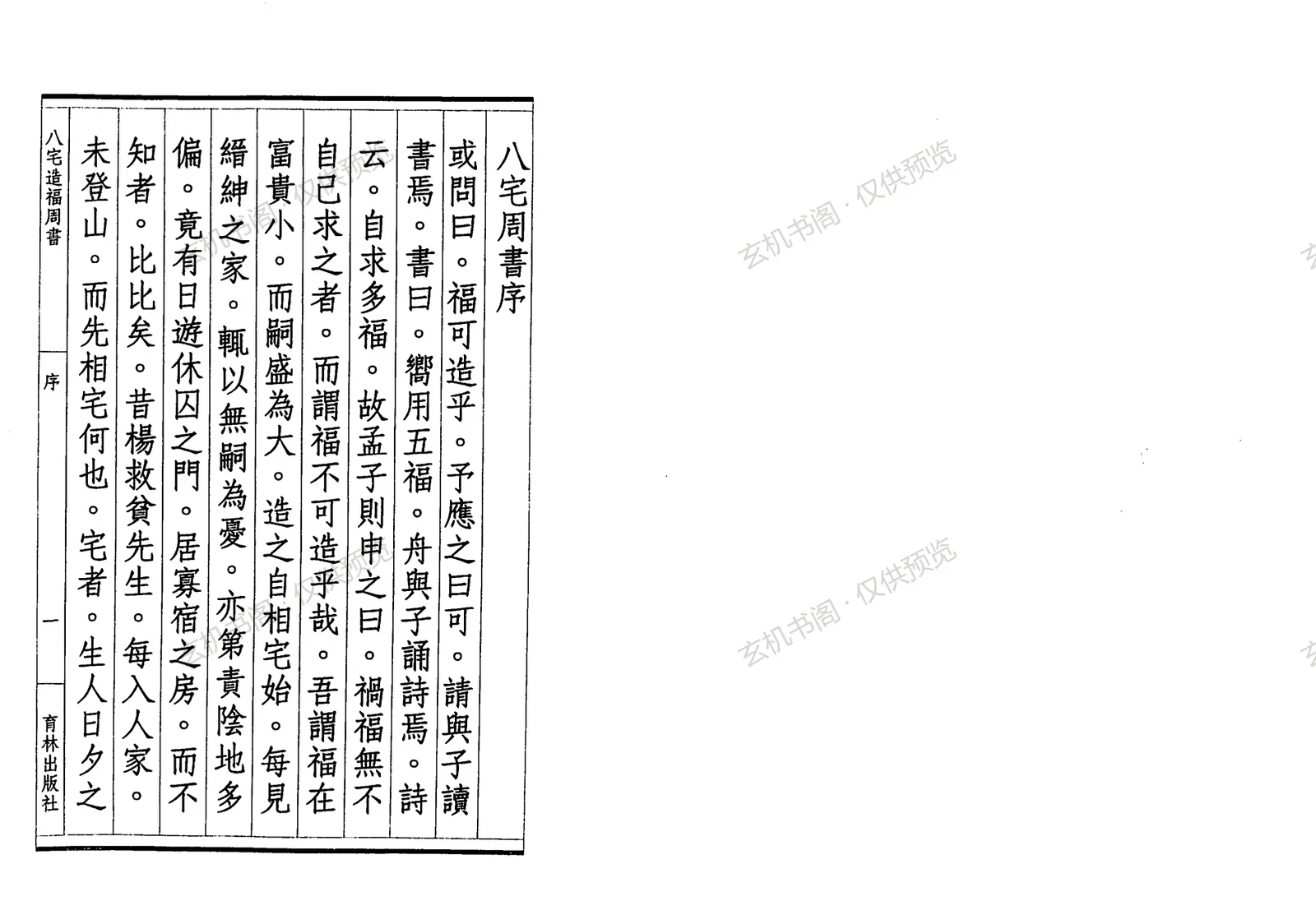
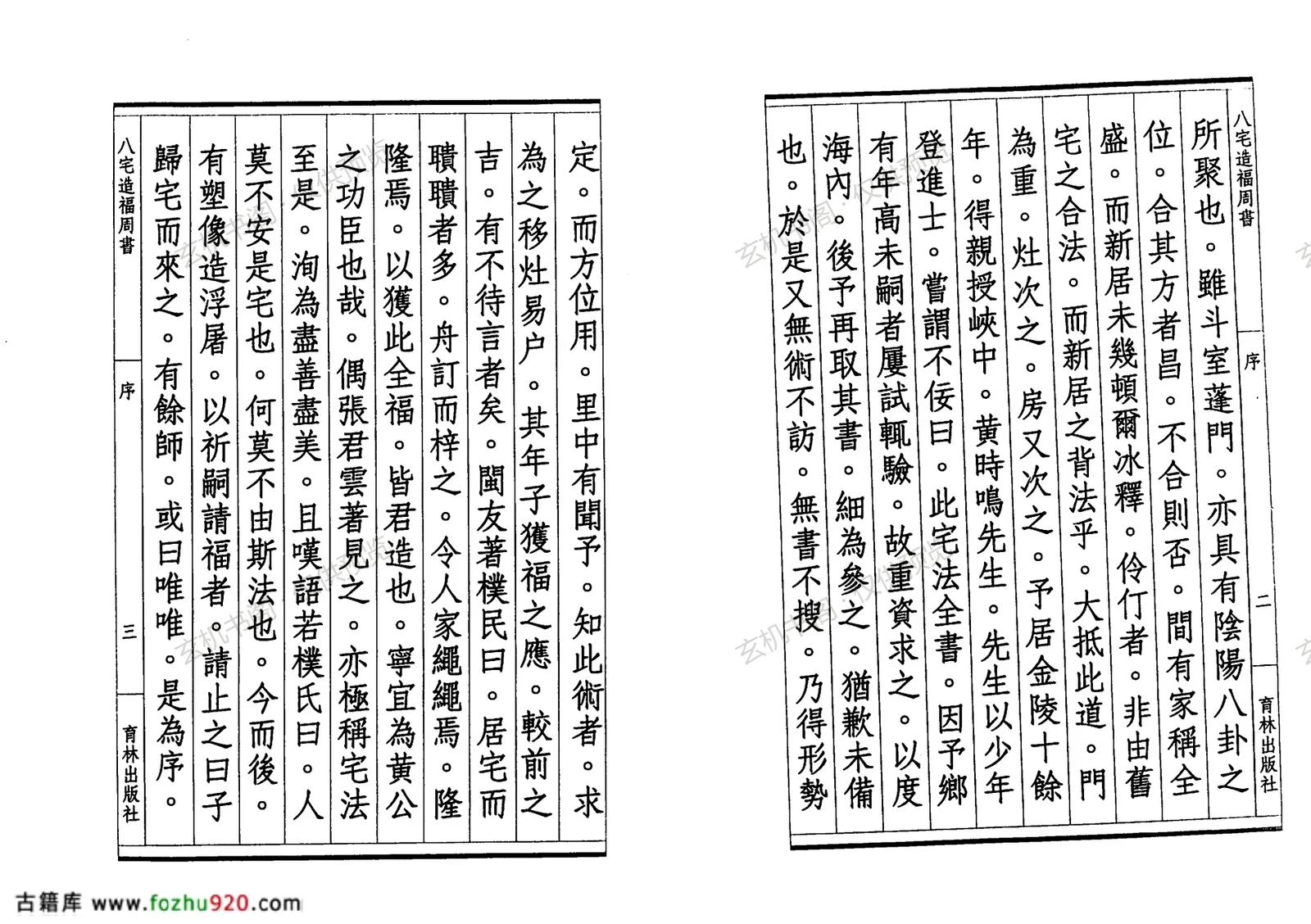
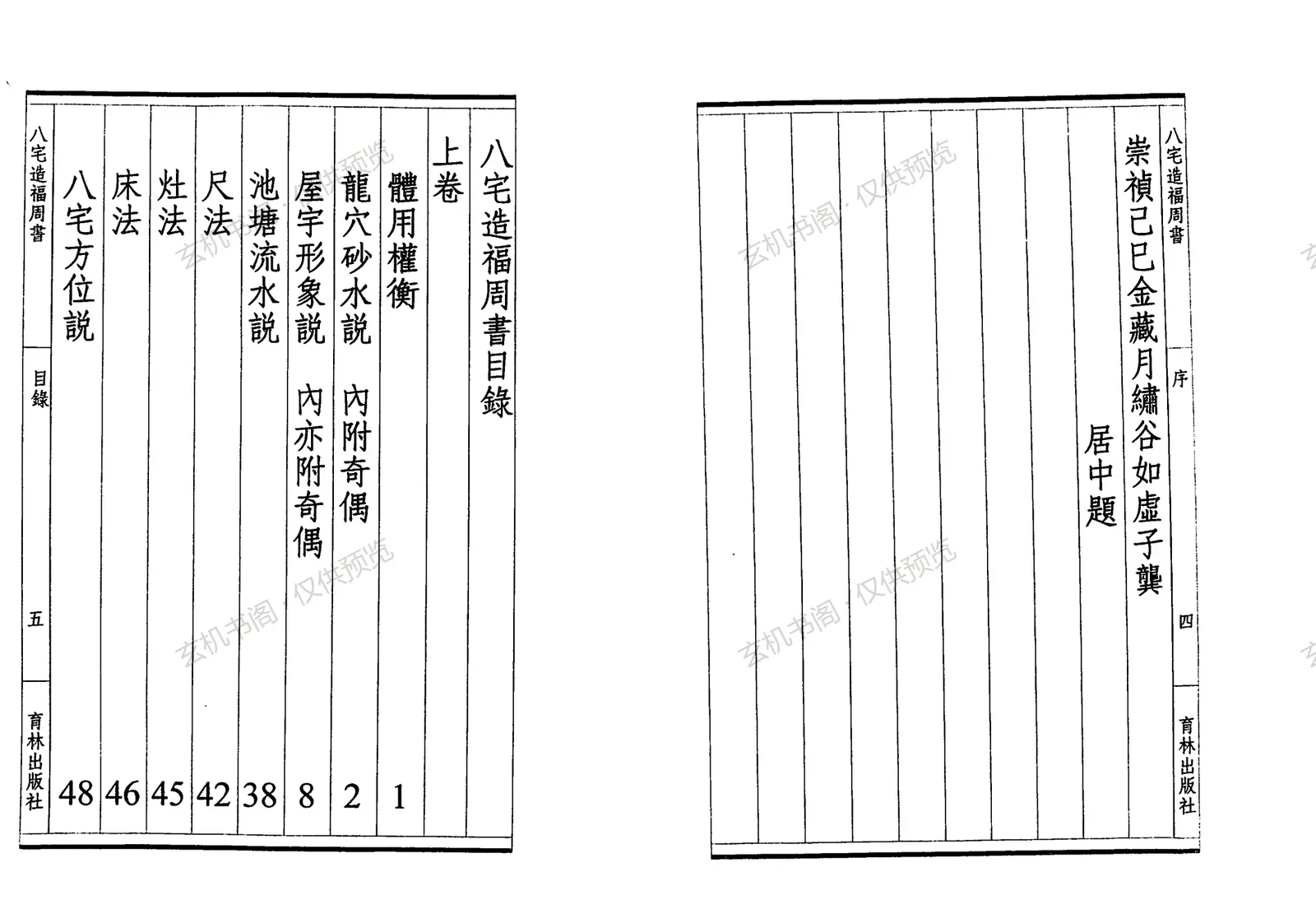
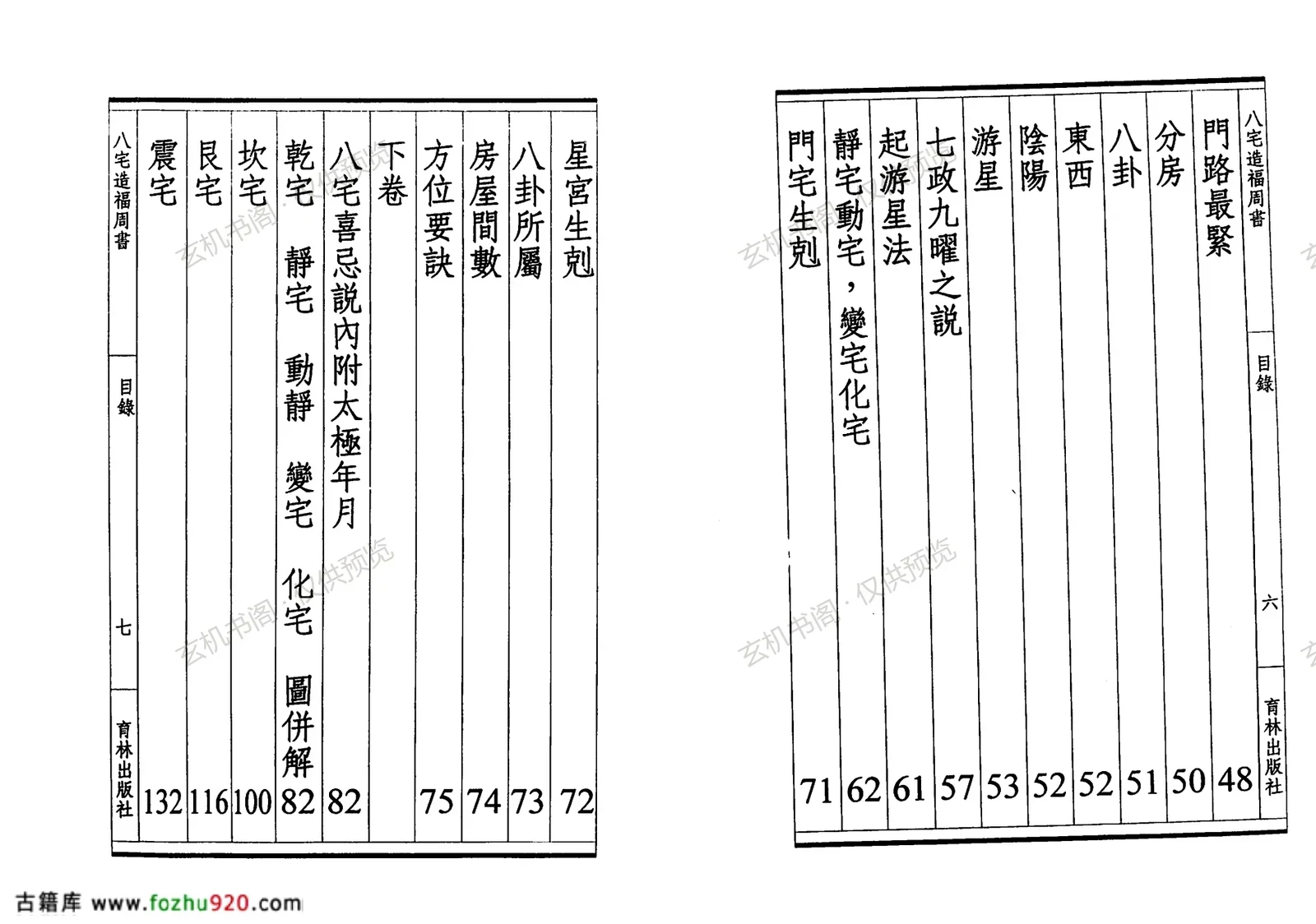
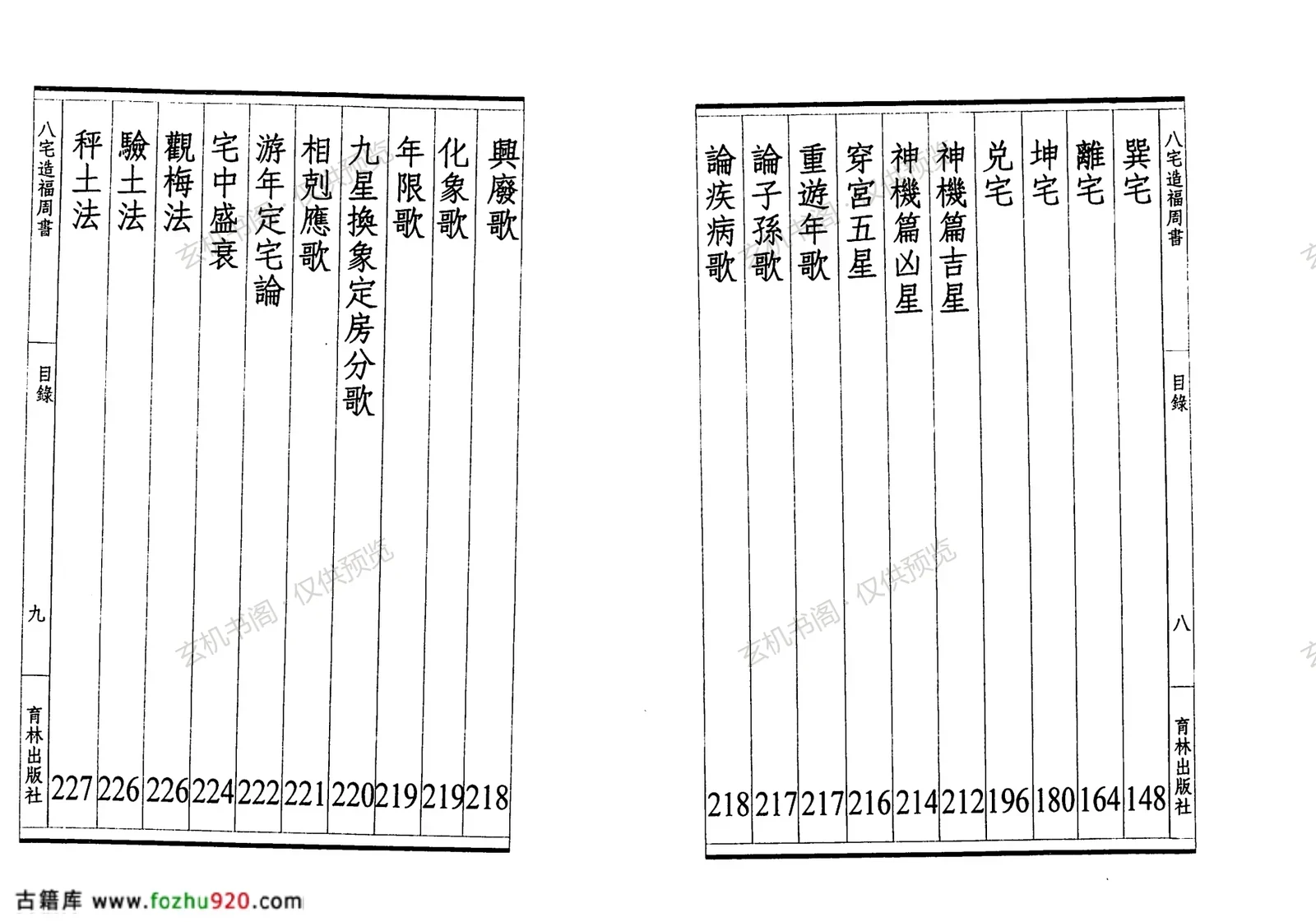
Ba Zhai Zao Fu Zhou Shu is a Ming-dynasty fengshui manual on yangzhai (dwelling) practice attributed to Huang Yifeng. Its table of contents shows two volumes. The upper volume opens with Ti Yong Quan Heng, then treats dragon, acupoint, sand and water; building forms; ponds and flowing water; measurements; stove and bed placement; and the eight dwelling orientations. The lower volume covers star-palace generation and restriction, the eight trigrams, room counts, key directional rules, the taboos of the eight dwellings, individual chapters on Qian, Kun, Kan, Li, Zhen, Xun, Gen and Dui houses, and the four types of static, moving, changing and transforming dwellings with diagrams. It also includes methods for roaming stars and the seven luminaries and nine luminaries, discussions of doors and paths as the most critical element, door-dwelling generation and restriction, and closing mnemonic verses on rise and decline, yearly limits, star transformations, responses, observation and soil testing. The book moves from theory to individual dwellings and from forms to star patterns, making it a representative text for studying Ba Zhai yangzhai methods and Ming folk fengshui practice.
Contents
Upper volume: Ti Yong Quan Heng, dragon-sand-water and building-form discussions
Upper volume: ponds, measurements, stove, bed and eight-dwelling orientations
Lower volume: star-palace cycles, trigrams, room counts and directional rules
Lower volume: taboos and separate chapters on the eight dwellings
Lower volume: static, moving, changing and transforming dwellings with diagrams
Lower volume: roaming stars, seven and nine luminaries, doors and paths
Lower volume: mnemonic verses on decline and rise, yearly limits, observation and soil testing
Key Points
A dedicated Ba Zhai yangzhai manual covering forms, water, measurements, stove and bed placement
Upper volume stresses physical form; lower volume stresses stars and prognostic verses
Separate discussions of Qian, Kun, Kan, Li, Zhen, Xun, Gen and Dui dwellings
Four dwelling types—static, moving, changing, transforming—explained with diagrams
Concludes with practical mnemonics for observation and soil testing