Reading guide
Content guideOverview
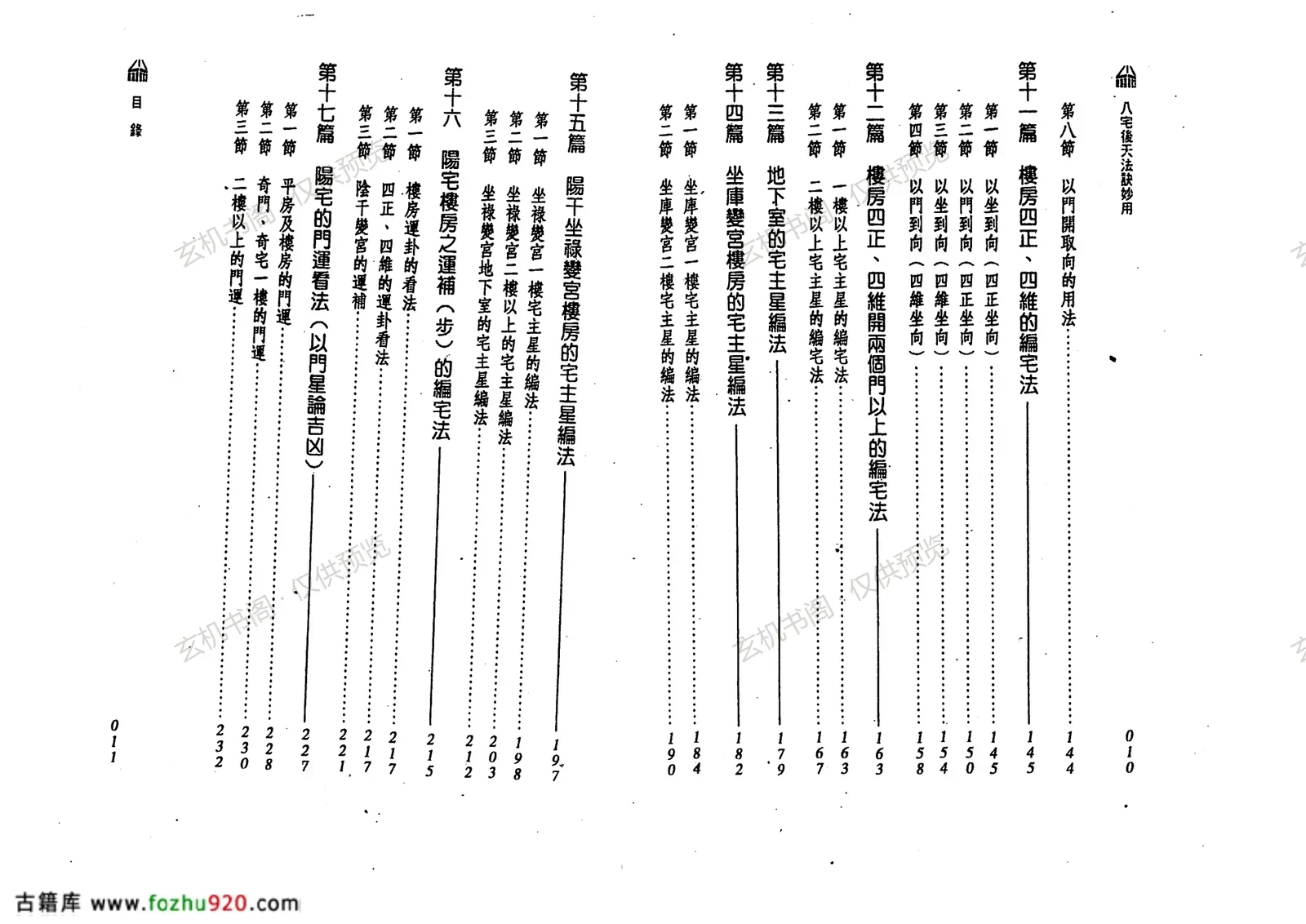
This book by Lin Xinming is a Later Heaven Eight Mansions (Bazhai) feng shui manual. In the preface, the author explains that after publishing a vernacular annotation of the Eight Mansions Mirror, readers found it too advanced, so he produced this follow-up volume as a practical, accessible next step. The book first traces the lineage of Later Heaven feng shui, mentioning Li Hushan and his transmission, and compares classical methods such as the Three Essentials of Dwellings. It emphasizes Later Heaven approaches to movement and stillness, transformed and transformed-again dwellings, building floors, and life gua. The main chapters discuss exterior forms, interior forms, building interiors, door orientations, floor levels, the five elements, and life gua, with numerous diagrams and oral formulas. The table of contents shows a preface, a section on viewing dwelling exteriors, and illustrated sections on auspicious and inauspicious exterior forms, including building shapes, terrain, mountains and waters before the door, ponds, roads, trees, and comprehensive exterior judgments. Later sections cover interior forms, building interiors, pressure directions, door orientations, floor numbers, five elements, life gua, and door luck. The content is practical and formula-driven, suited to readers with a foundation in Eight Mansions feng shui.
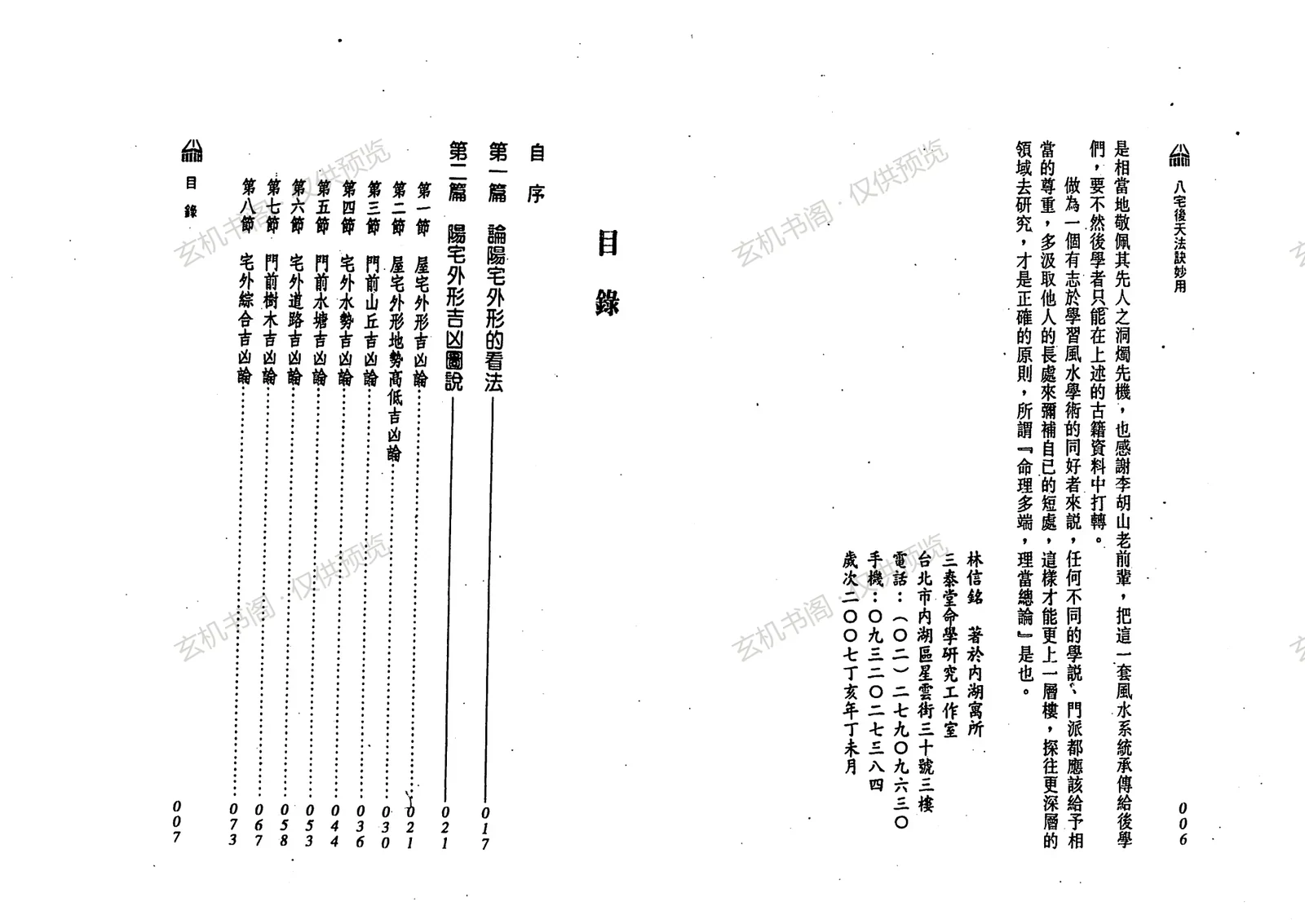
Contents
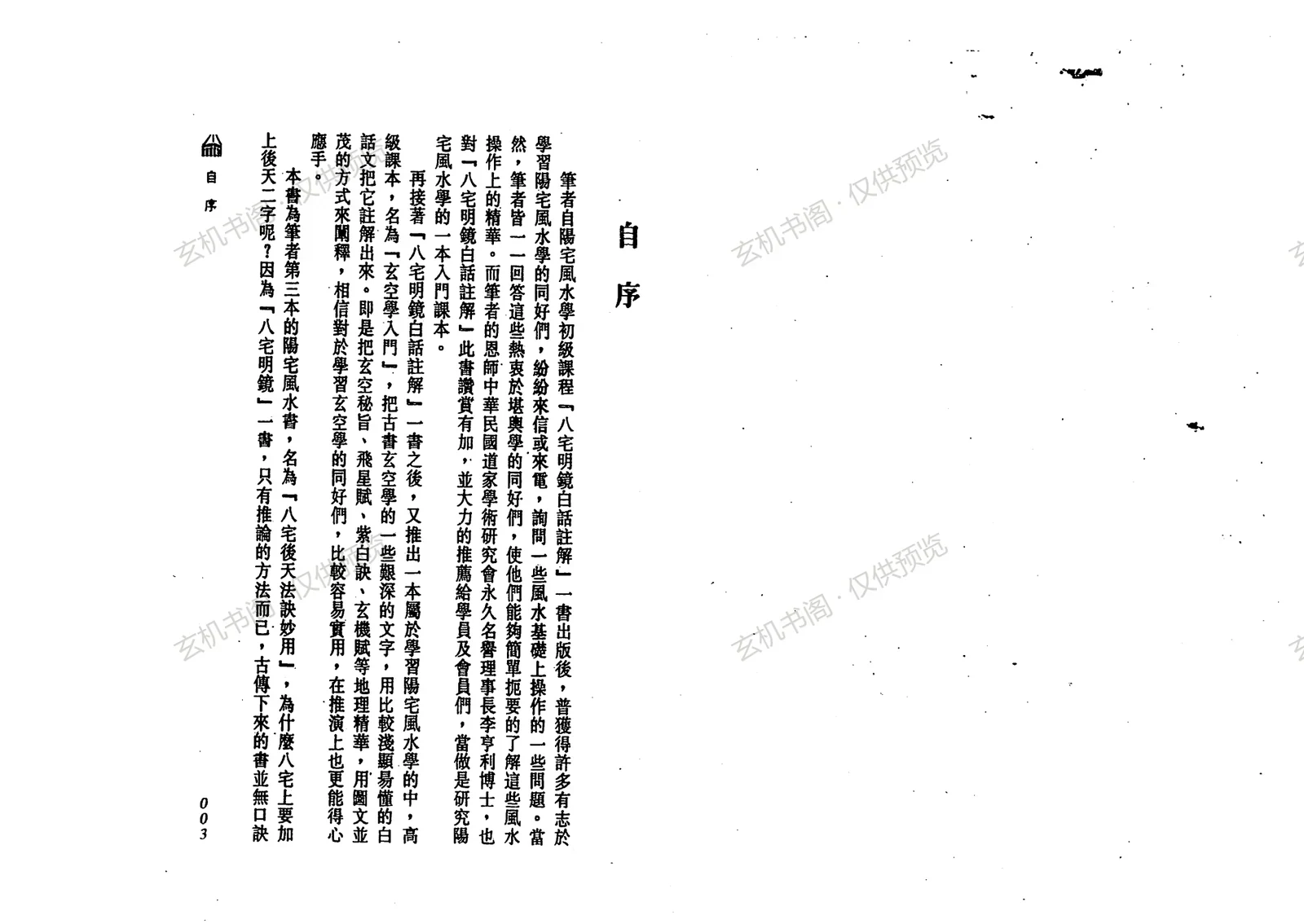
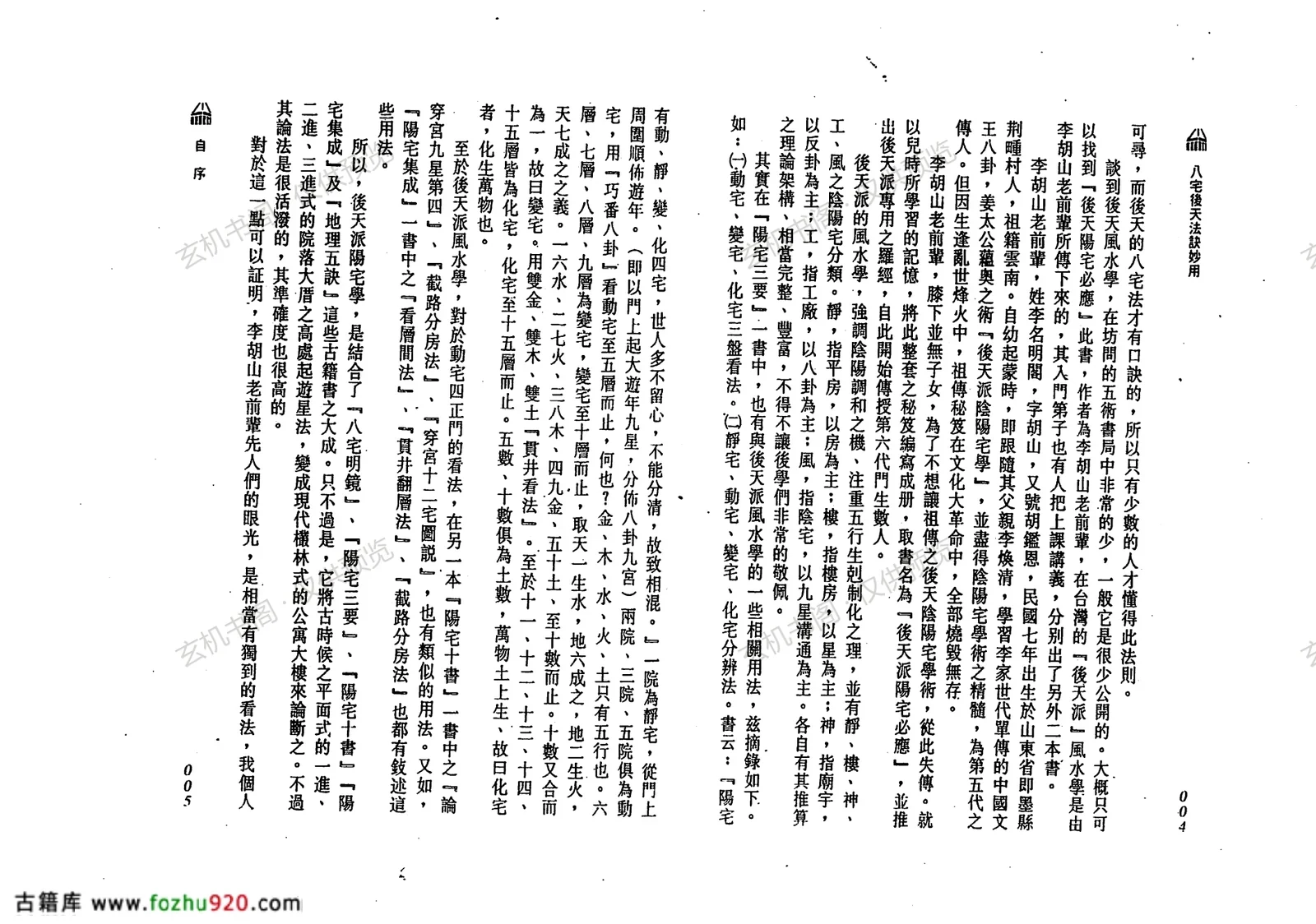
Preface: origins of the book and Later Heaven lineage
Part 1: How to assess dwelling exteriors
Part 2: Illustrated auspicious and inauspicious exterior forms, including shapes, terrain, mountains, waters, roads, and
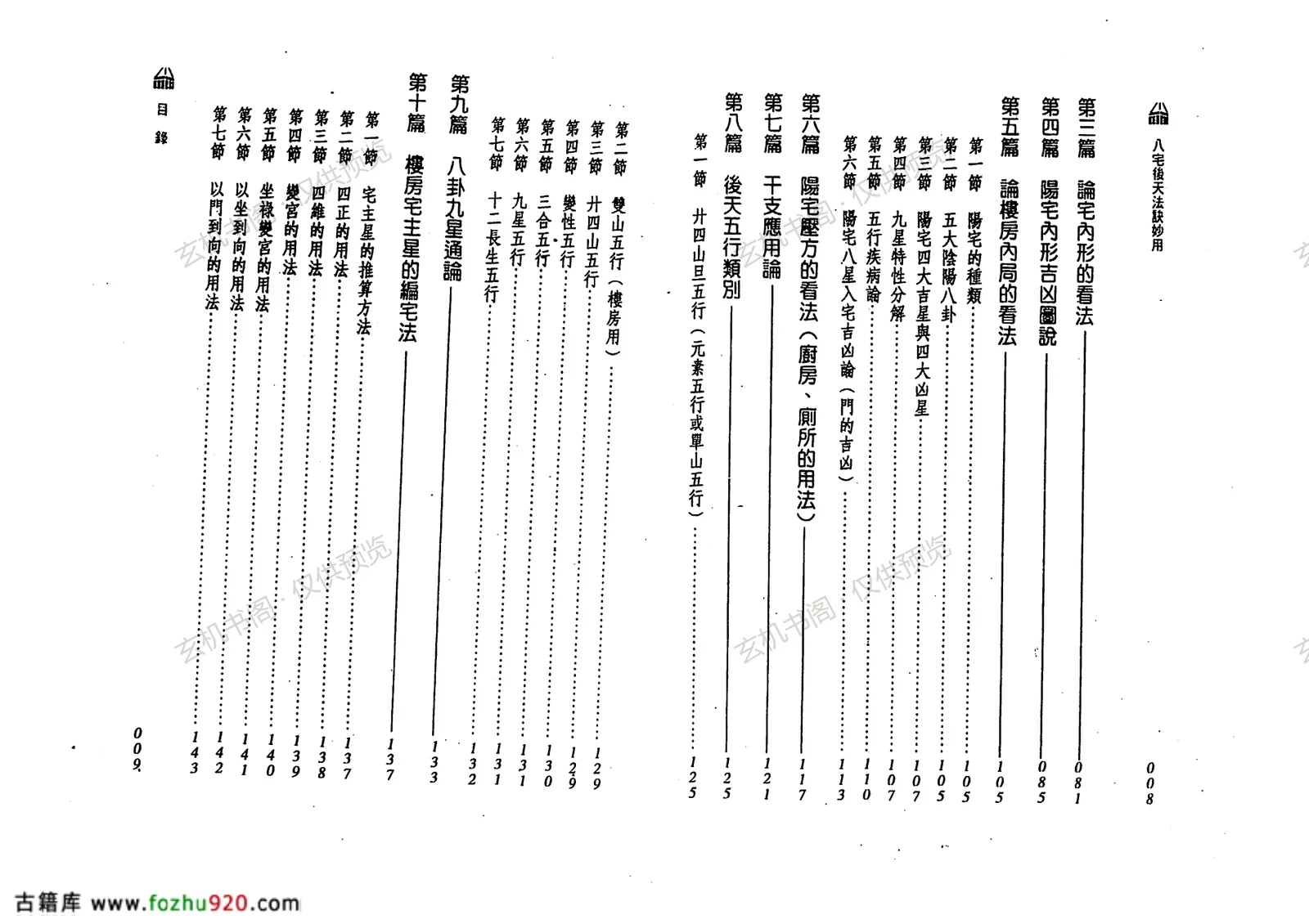
Part 3: How to assess dwelling interiors
Part 4: Illustrated auspicious and inauspicious interior forms
Part 5: How to assess building interiors
Part 6: Pressure directions, kitchens, and toilets
Part 7: Application of heavenly stems and earthly branches
Part 8: Building floors, door orientations, and life gua calculations
Key Points
Core method is Later Heaven Eight Mansions, emphasizing movement/stillness, transformed dwellings, and building floors
Focuses on both exterior and interior forms with categorized diagrams and judgments
Special sections on building interiors, pressure directions, door orientations, and life gua
Quotes classical formulas and explains them in vernacular Chinese
Intended as an advanced companion to the annotated Eight Mansions Mirror