Reading guide
Content guideOverview
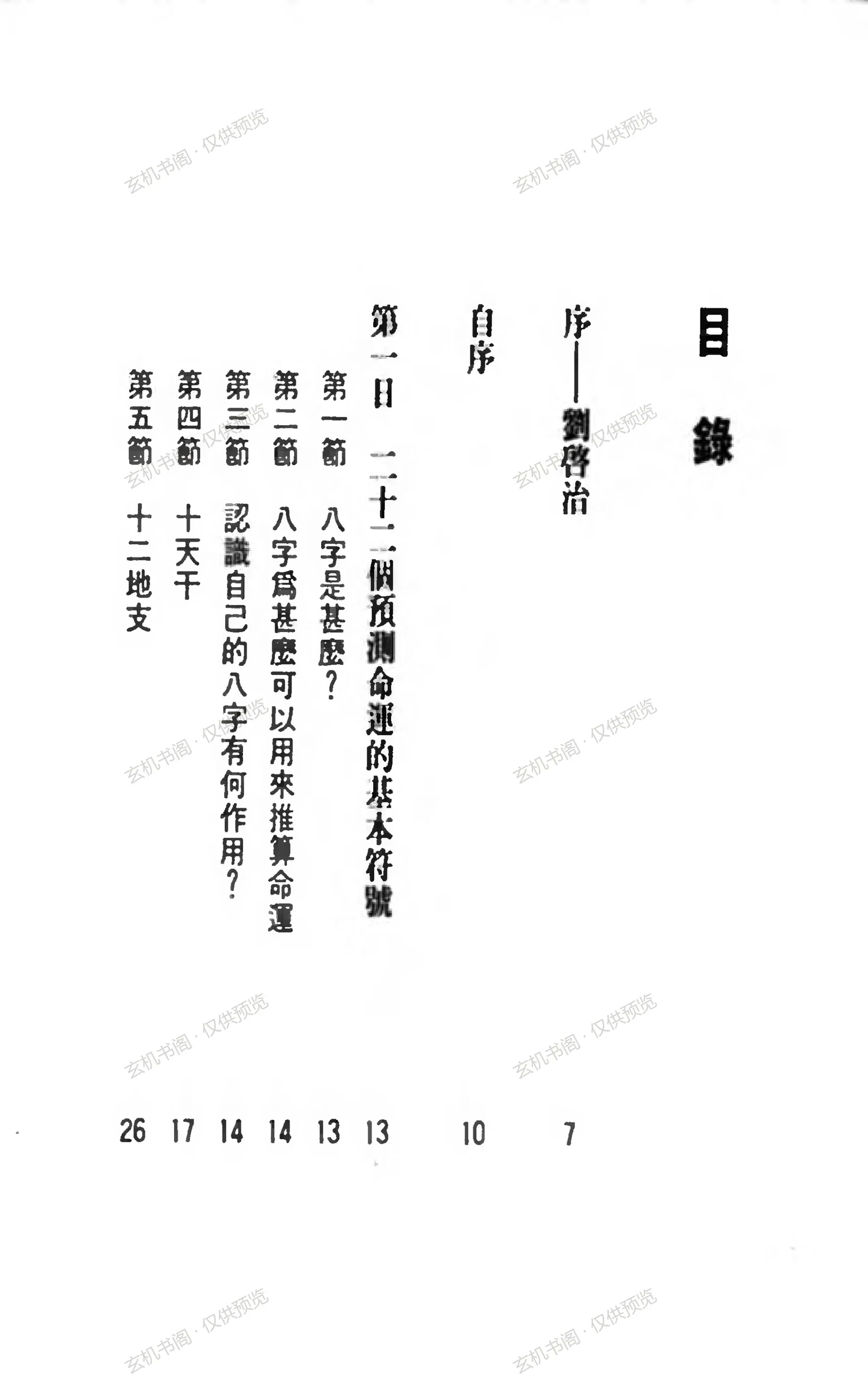
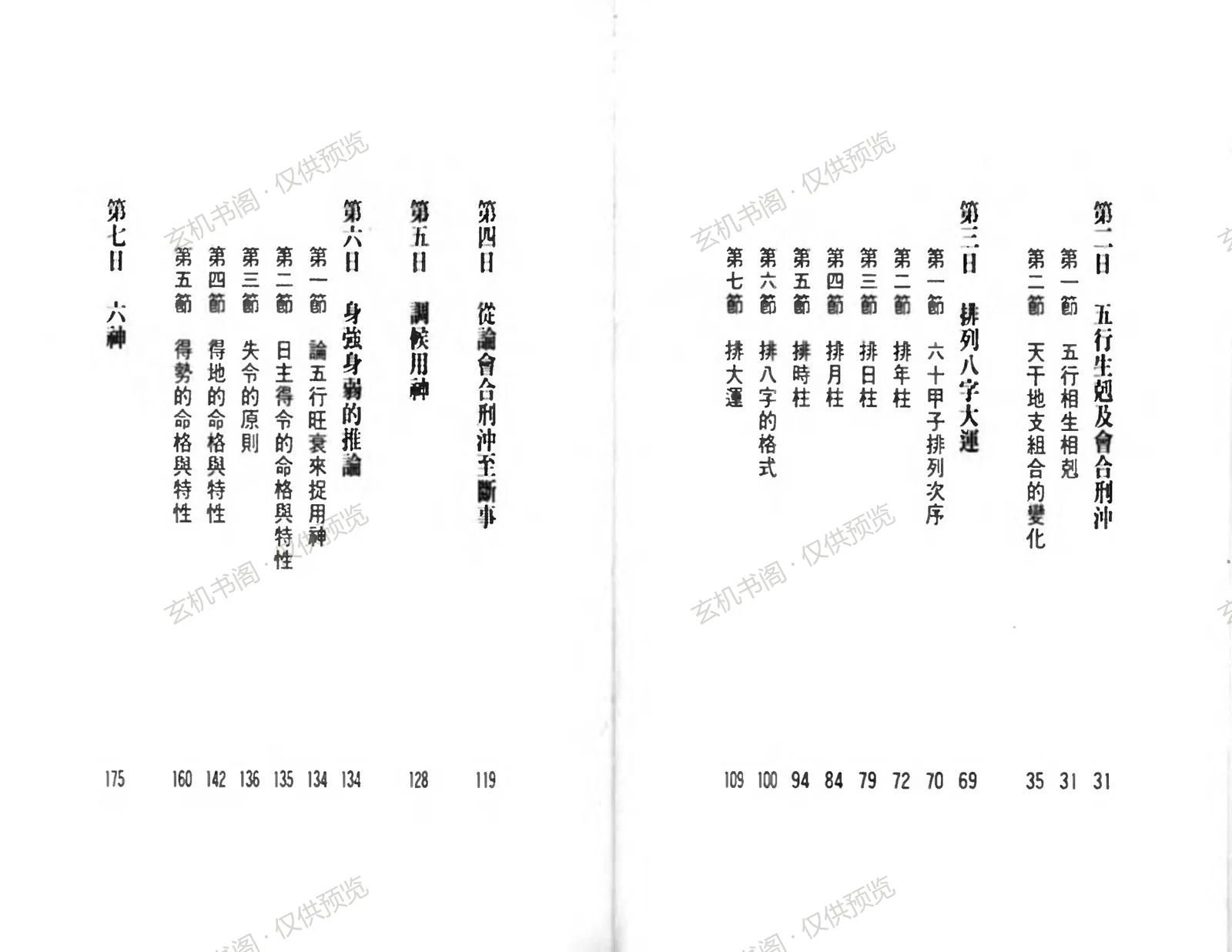
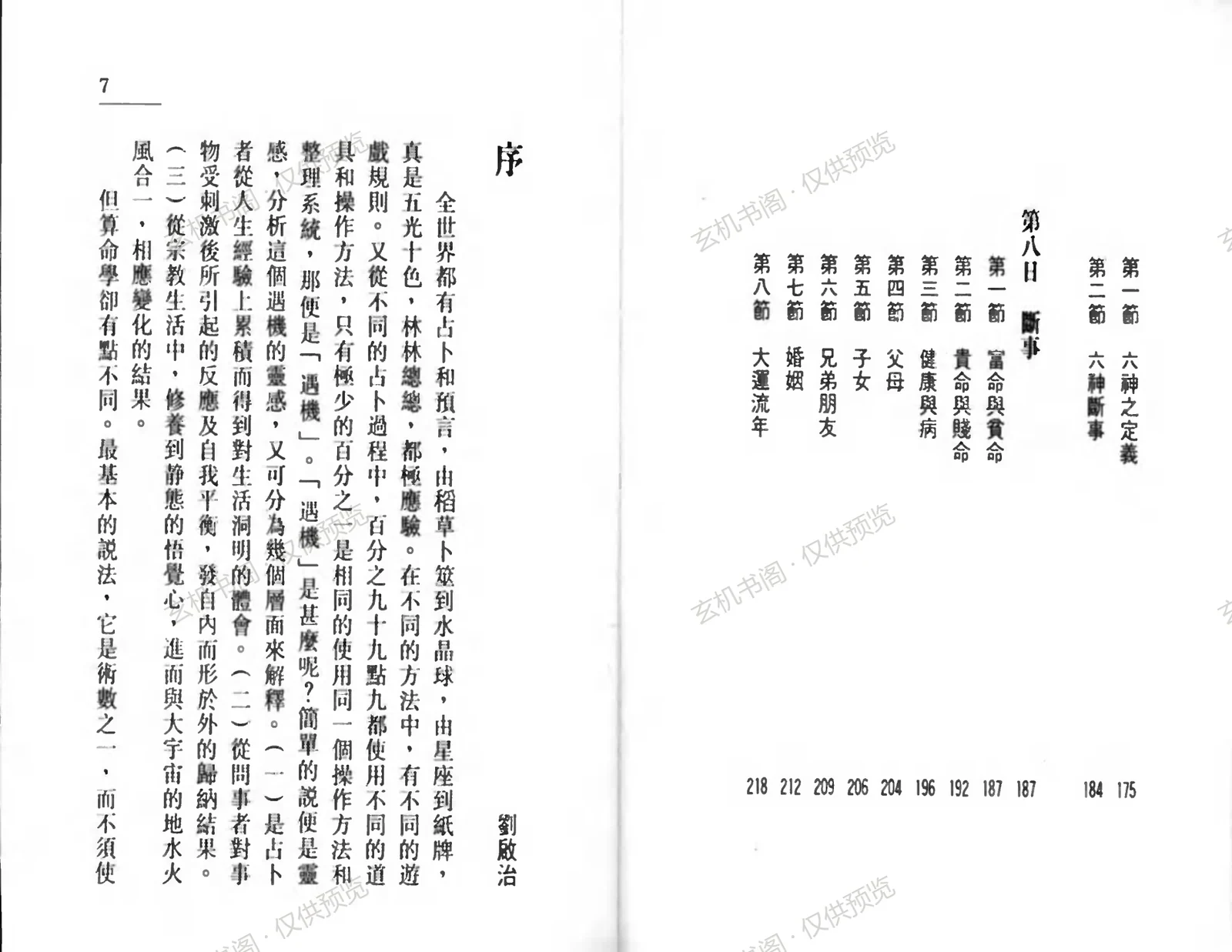
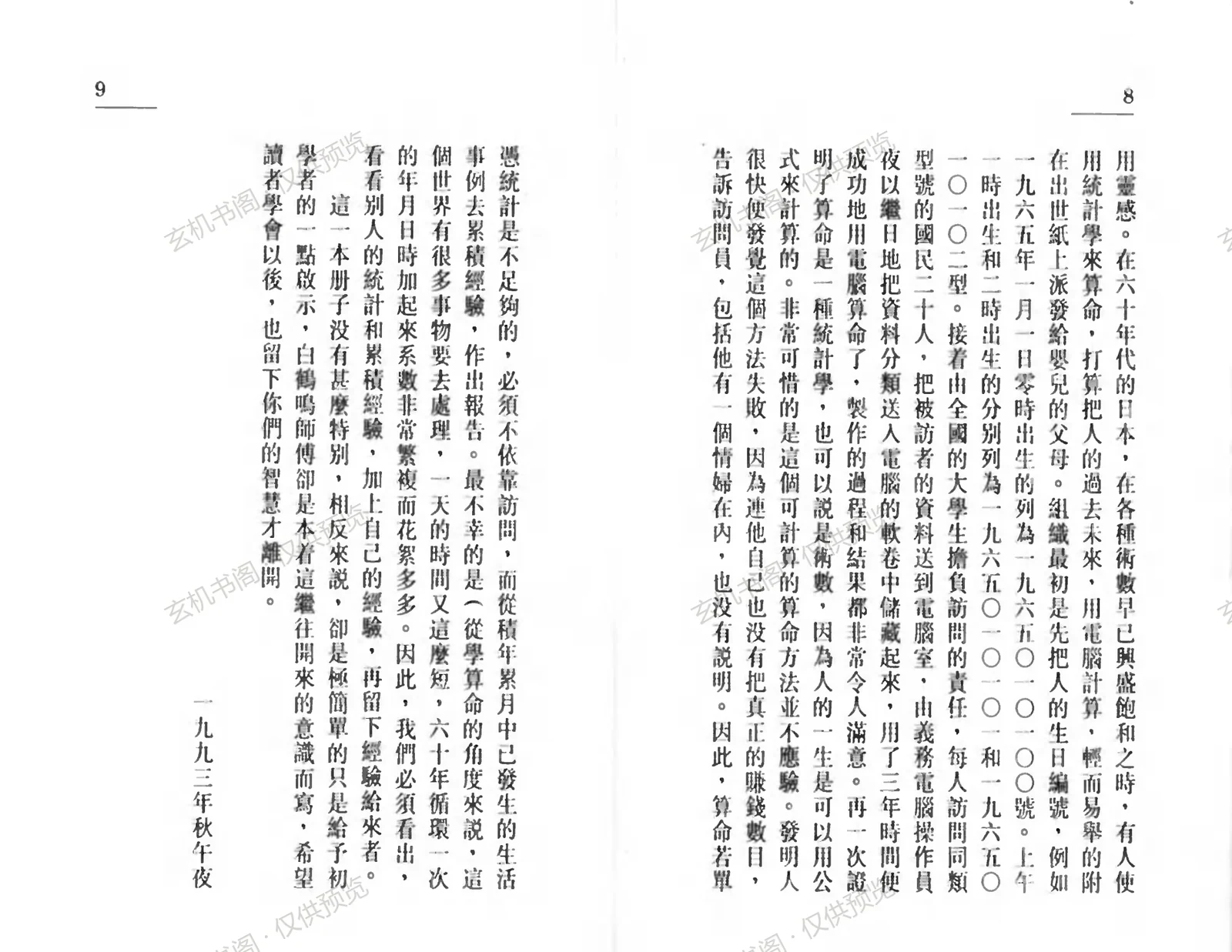
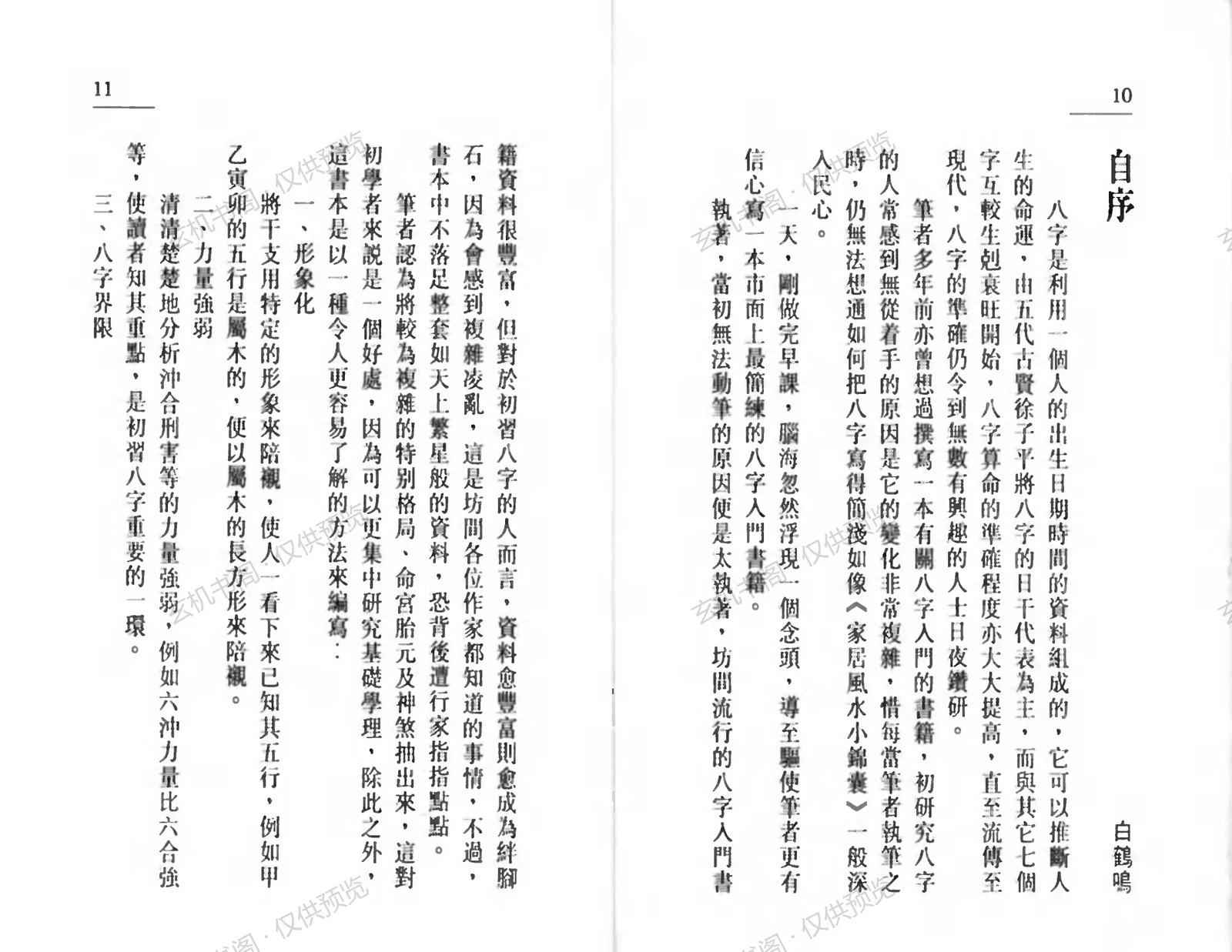
This is an introductory Bazi (Four Pillars) book by Bai Heming in the "Shushu Congshu" series, published by Juxian Guan Culture. The cover shows the title "Eight Days to Bazi." The book is organized as eight days of study: Day 1 explains what Bazi is, what it can be used for, and introduces the ten heavenly stems and twelve earthly branches; Day 2 covers the five elements' generating and overcoming relations, combinations, clashes, punishments, and changes in stem-branch combinations; Day 3 explains how to arrange the major luck cycles, including the sexagenary cycle order and methods for setting the year, month, day, and hour pillars plus the chart format and luck cycles; Days 4 and 5 discuss reading events from combinations and clashes and the seasonal useful god; Day 6 covers strong and weak day masters, including using the five elements' strength to choose a useful god, whether the day master gains the season or ground, and the characteristics of favorable and unfavorable charts; Day 7 introduces the Six Spirits; Day 8 covers judgments on wealth and poverty, nobility and lowliness, health and illness, parents, children, siblings and friends, marriage, and major luck cycles and annual years. The book opens with a preface by Liu Qizhi and the author's own preface, which explains that it was written because many popular Bazi books are scattered and complex, and that it uses three threads—visual imagery, strength of forces, and the boundaries of the eight characters—to help beginners.
Contents
Day 1: What Bazi is; the ten stems and twelve branches
Day 2: Five elements, combinations, clashes, and punishments
Day 3: Setting up the chart and major luck cycles
Days 4–5: Reading combinations and clashes; seasonal useful god
Day 6: Strong and weak day masters and chart characteristics
Day 7: The Six Spirits
Day 8: Wealth, family, marriage, and luck cycles
Key Points
Structured as eight day-by-day lessons
Starts from basic stem-branch and five-element symbols before charting and judgment
The author says it uses imagery, strength of forces, and chart boundaries as learning aids
Covers concrete methods for setting year, month, day, and hour pillars and major luck cycles
Judgment sections include wealth and status, health, family relations, and marriage