Reading guide
Content guideOverview
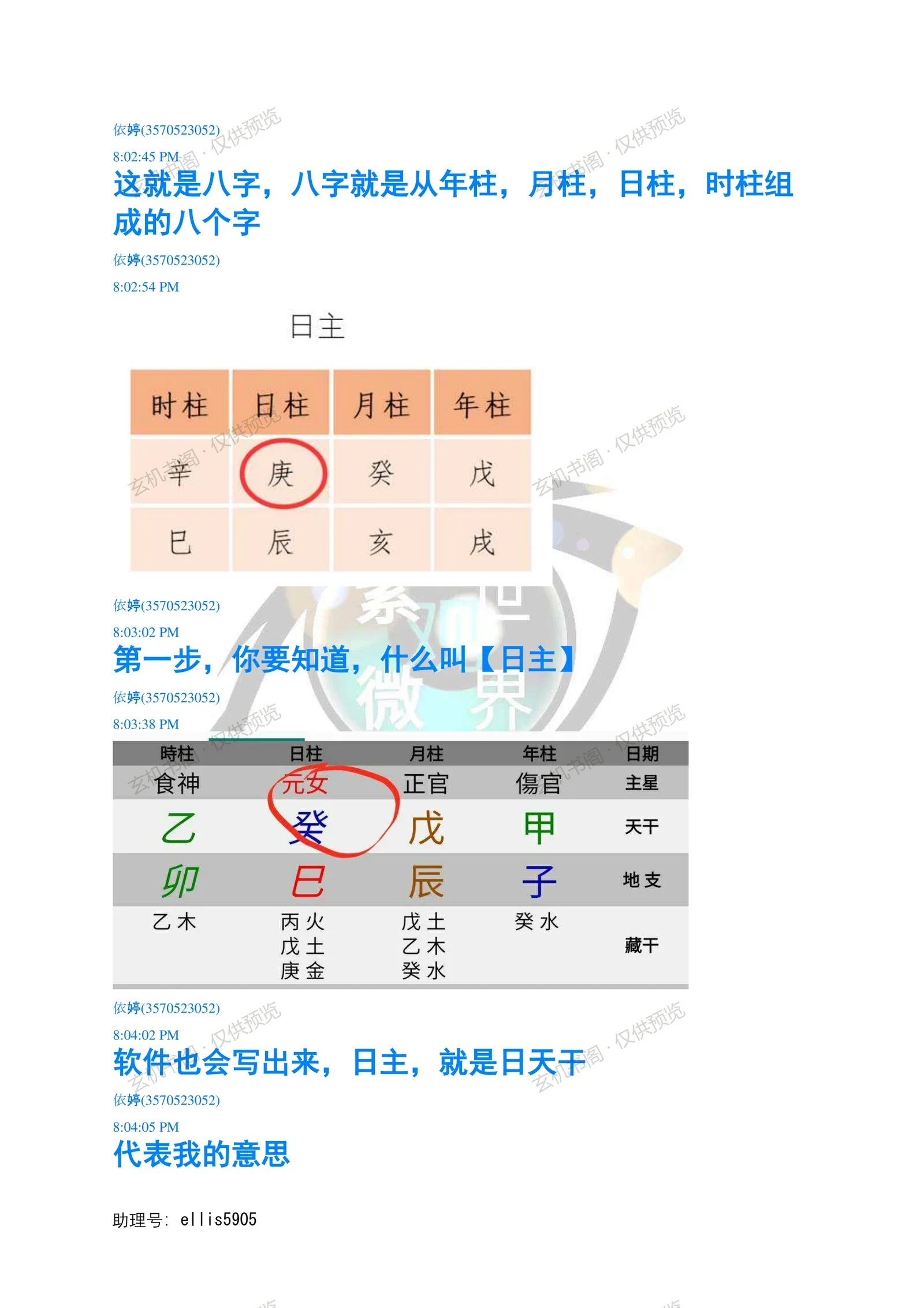
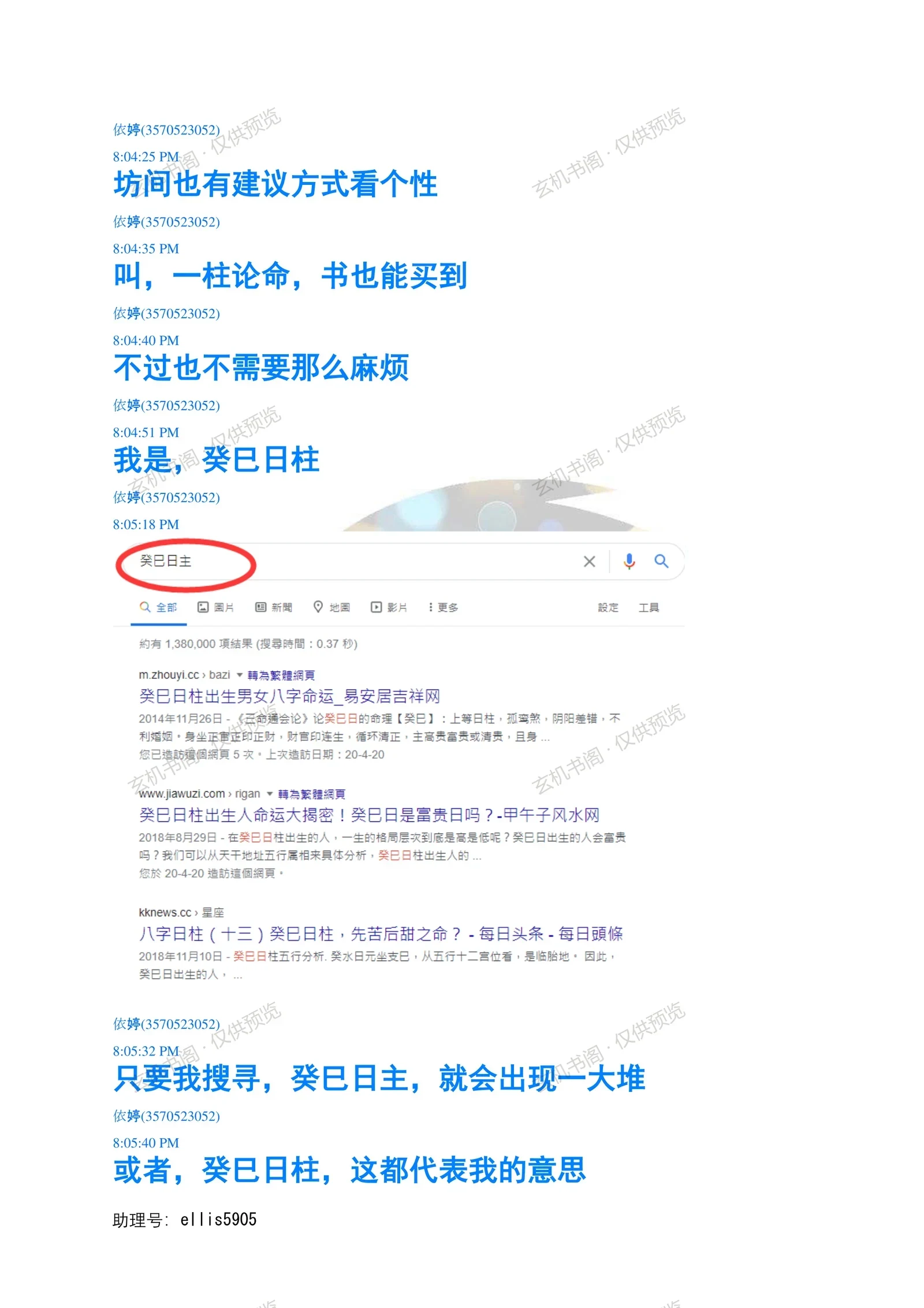
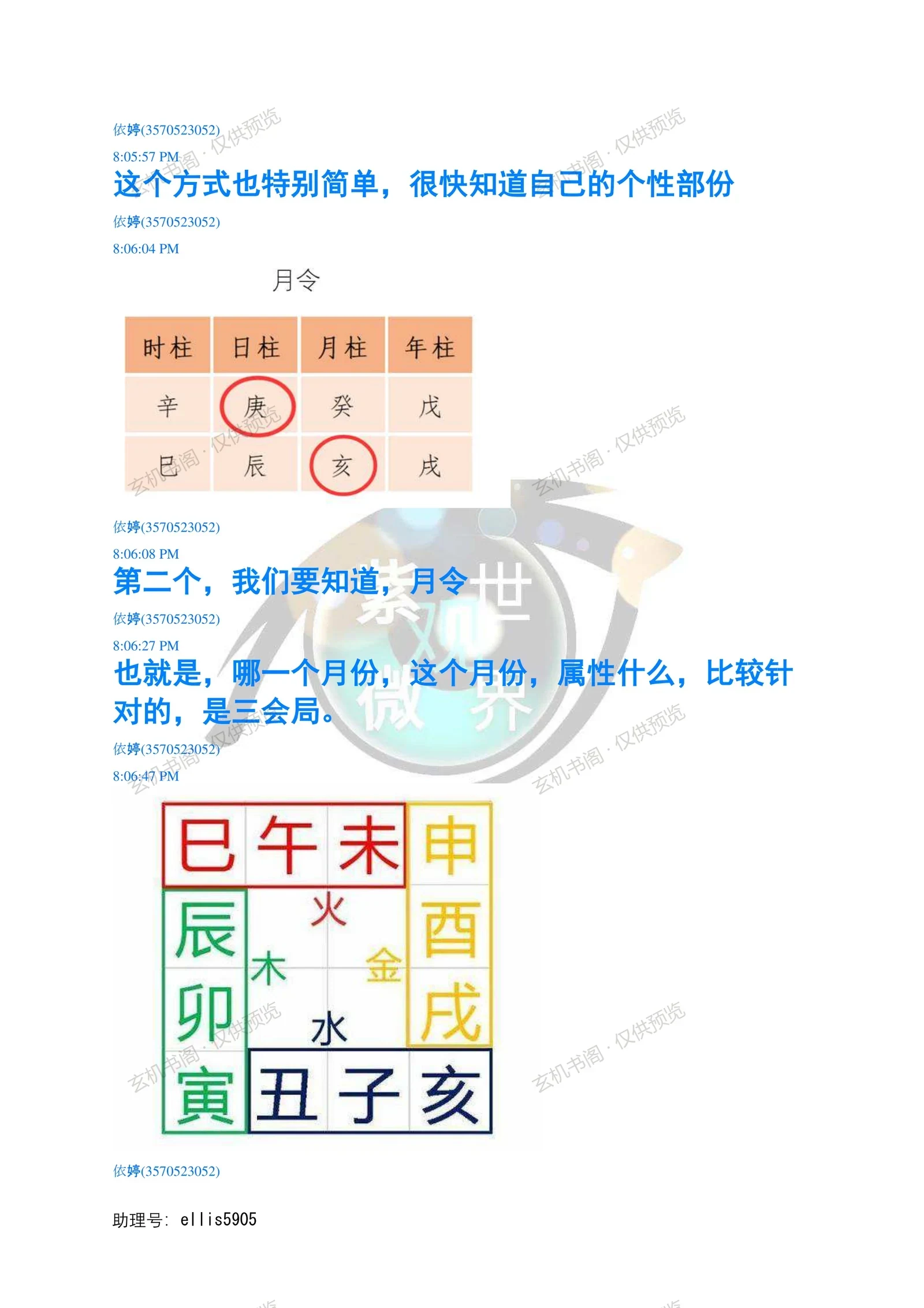
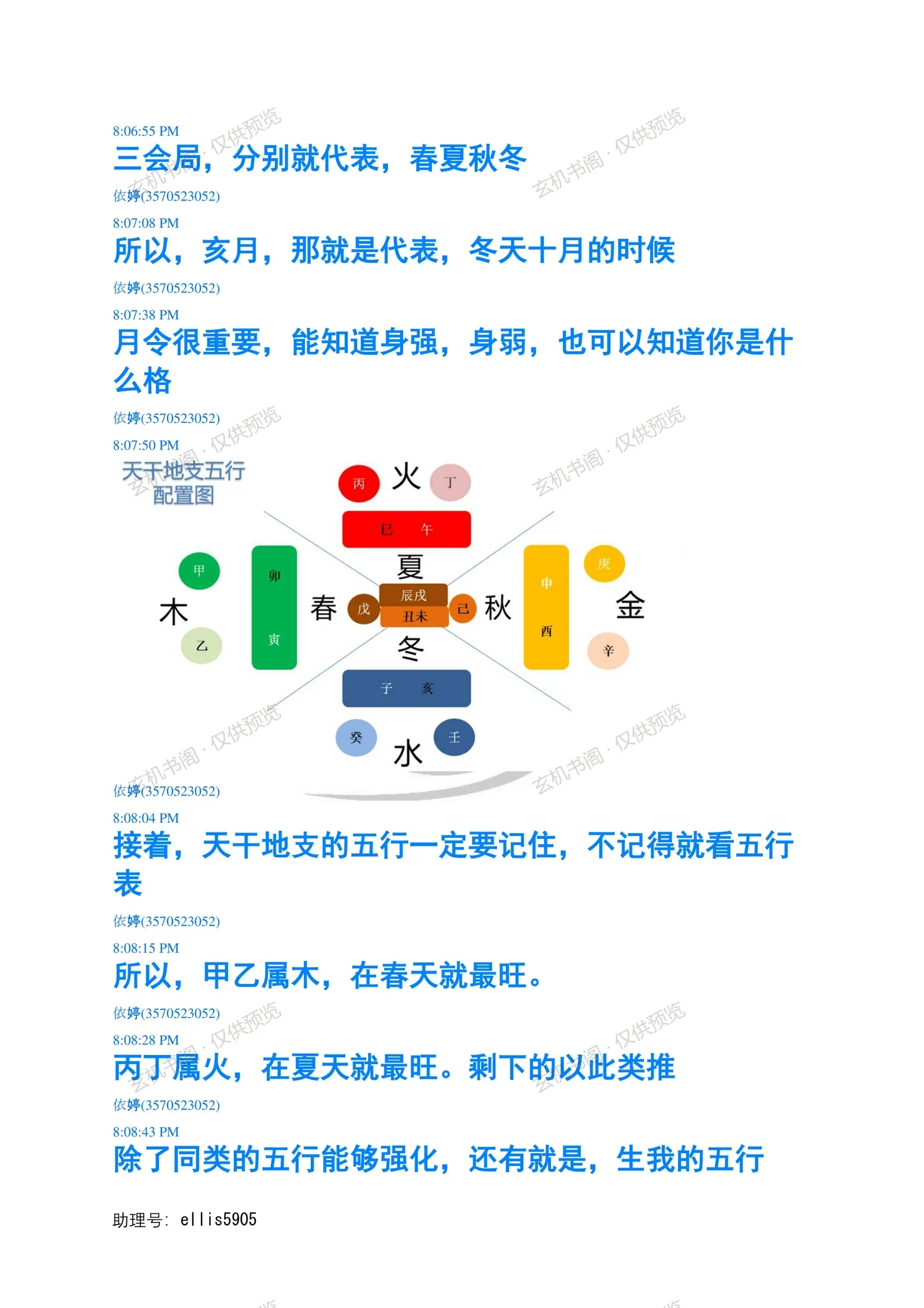
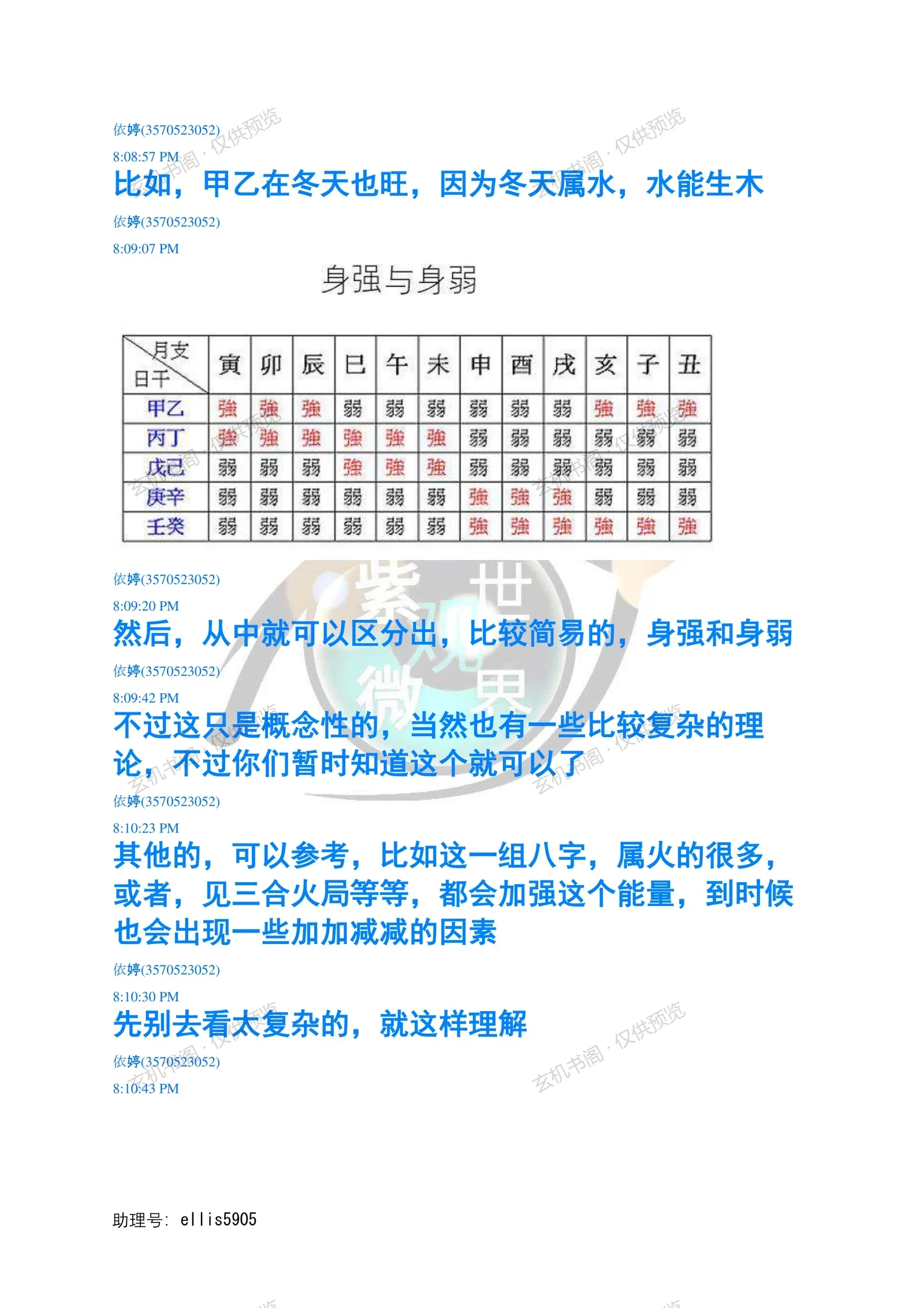
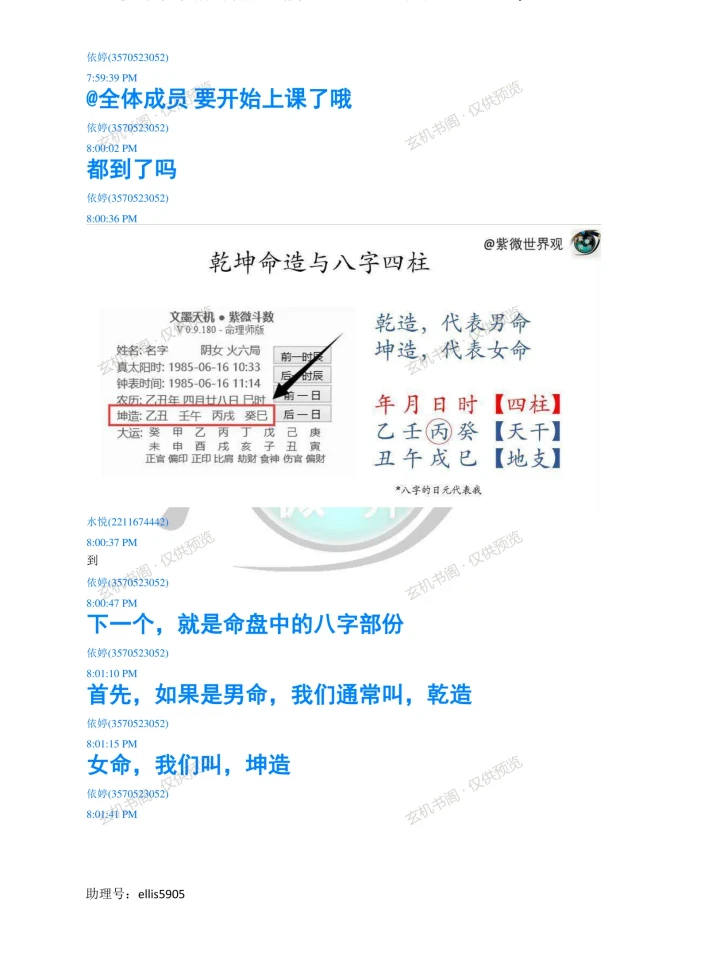
This handout is a classroom transcript titled 'Bazi: Heavenly Stems and Earthly Branches,' inserted into a Zi Wei Dou Shu course as foundational Bazi material. It opens with chat logs explaining that a little Bazi will be covered before moving on to Four Transformations Flying Star. The text first presents a four-pillar table of year, month, day, and hour pillars, stressing that the day stem is the 'Day Master' representing the self, and demonstrates searching 'Gui Si Day Master' for personality and fate references. It then explains the importance of the monthly command, mapping the three-meeting combinations to the four seasons: Yin-Mao-Chen as spring wood, Si-Wu-Wei as summer fire, Shen-You-Xu as autumn metal, and Hai-Zi-Chou as winter water, to judge whether the Day Master gains seasonal support. Finally, a table lists the strength of the ten stems across the twelve month branches, noting this is only a conceptual entry point; actual analysis must account for three-combination structures and other additions. The structure is clear and suitable as a zero-foundation Bazi primer tied to Zi Wei Dou Shu coursework.
Contents
Course introduction and four-pillar example
Day Master: the day stem as the self
Using the Day Master to search personality references
Monthly command and seasonal three-meeting combinations
Heavenly stems and earthly branches five-element chart
Strength/weakness quick table and caveats
Key Points
Four pillars consist of year, month, day, and hour pillars, totaling eight characters
The day stem is the Day Master, representing the person
The monthly command determines seasonal element and is key to structure and strength
Three-meeting combinations map to seasons: Yin-Mao-Chen wood, Si-Wu-Wei fire, Shen-You-Xu metal, Hai-Zi-Chou water
Strong/weak can first be checked via the month branch and day stem table, then adjusted for combinations