Reading guide
Content guideOverview
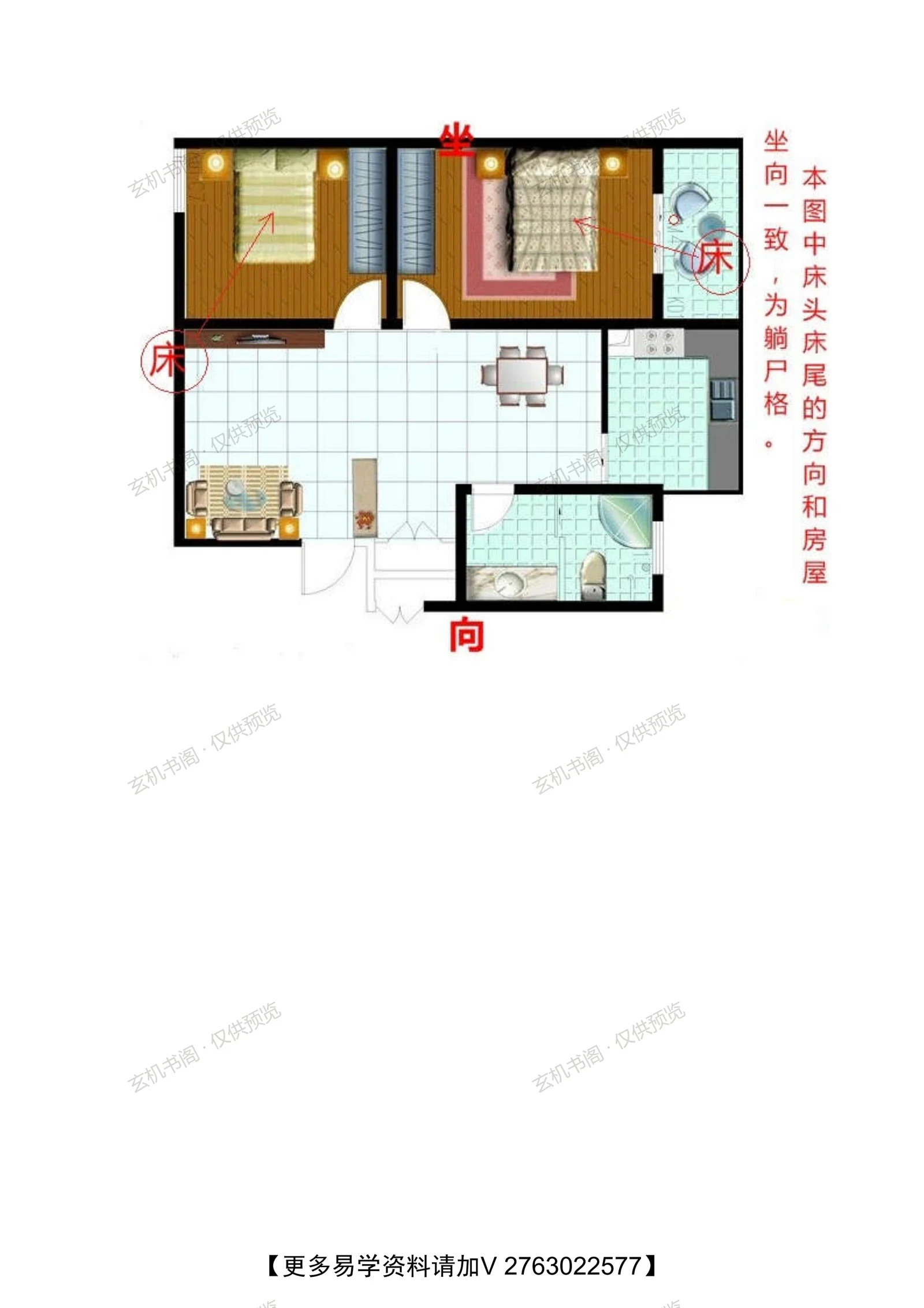
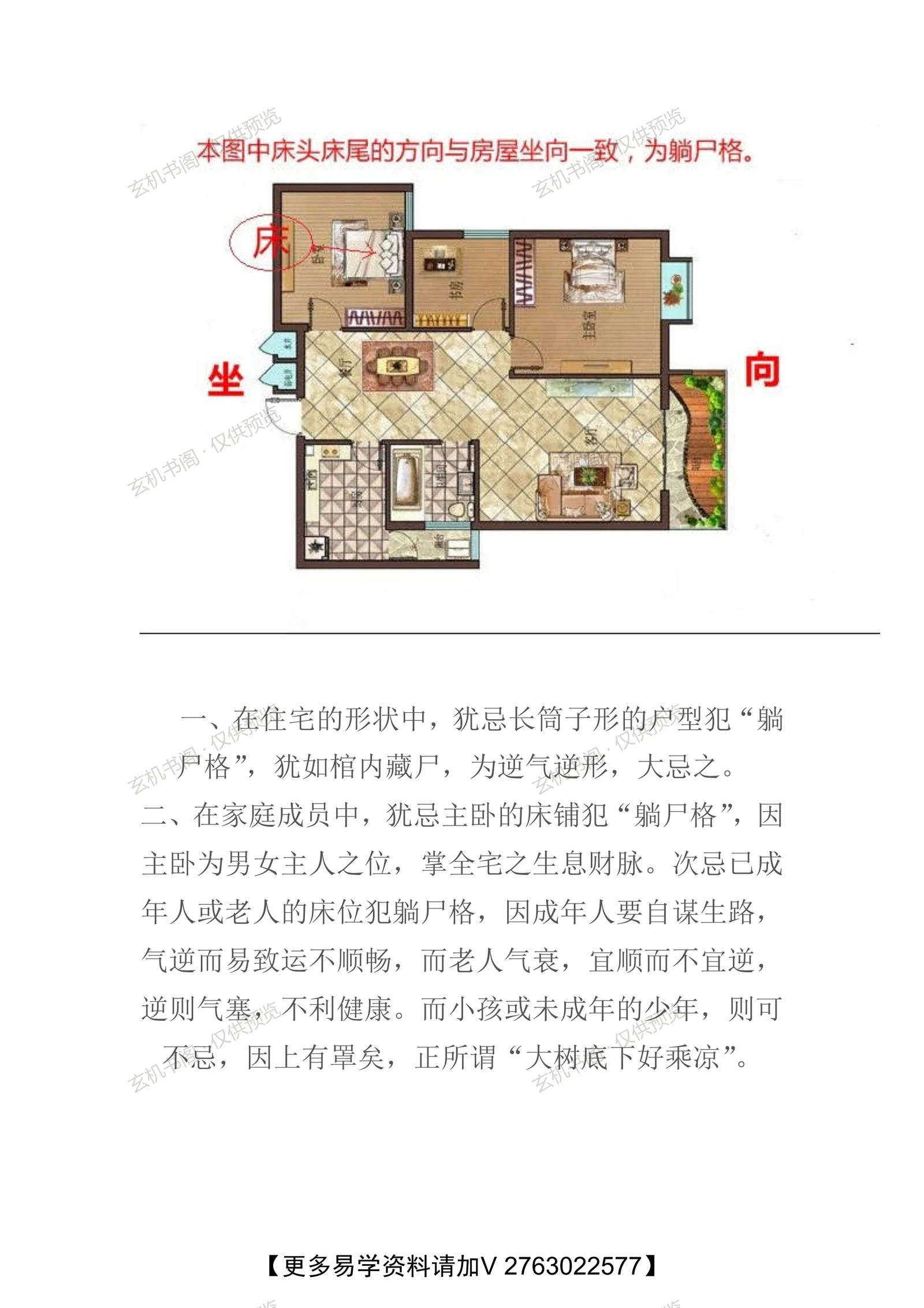
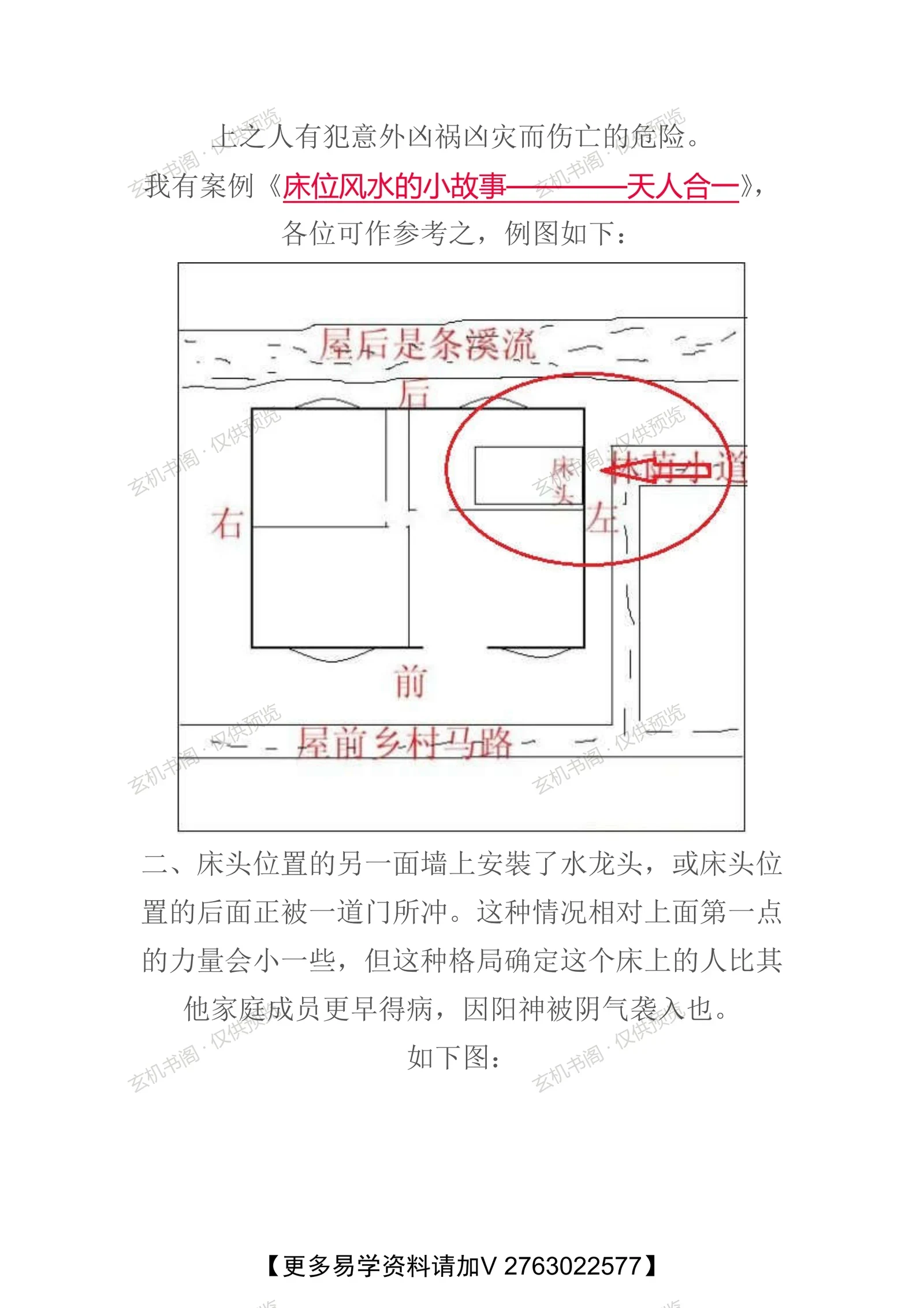
This book focuses on bed-position feng shui through the lens of yin-yang theory. It argues that still is yang and movement yin, and that a dwelling's sitting side is yang while its facing side is yin; since a sleeping person's field is yin, the bed's orientation should cut across the house's sitting axis rather than align with it. When the head-to-foot direction matches the house's sitting direction, the result is the 'corpse-laying pattern', in which like repels like, disturbing sleep and blocking wealth. Floor plans illustrate this, noting that long tube-shaped layouts and the master or elderly bedroom are most vulnerable, while children are exempt. The book then turns to 'drenching water': the head is a gathering point of yang spirit that should stay still, so rivers, roads, water taps or doors rushing at the headboard bring moving yin against yang, causing premature decline, cerebral illness and even accidental harm. Diagrams of a rural house with streams and paths accompany the text, making this a practical manual of yang-dwelling feng shui.
Contents
Yin-yang theory and the sitting/facing of dwellings
The corpse-laying pattern: bed aligned with house axis
Layouts and family members most affected
Drenching water: headboard struck by flow or roads
Variants: water taps and doors rushing the headboard
Key Points
Bed orientation should cut across the house axis to harmonize yin and yang
Alignment with the house axis forms the corpse-laying pattern, harming sleep and wealth
Tube-shaped layouts and master or elderly beds are most at risk
The head is a yang gathering point and should not face flowing water or roads
Drenching water is linked to head illness, early decline and accidents