Reading guide
Content guideOverview
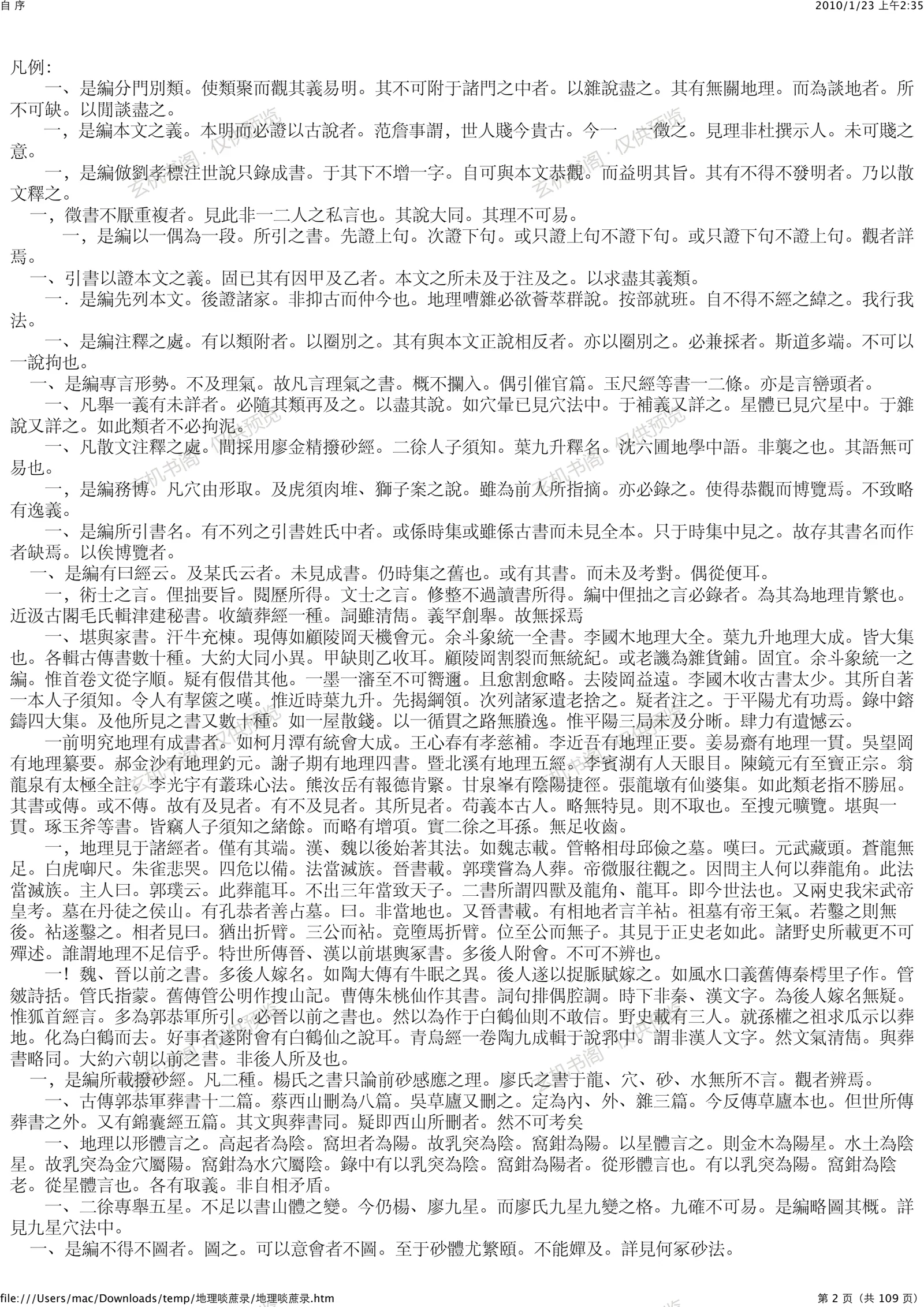
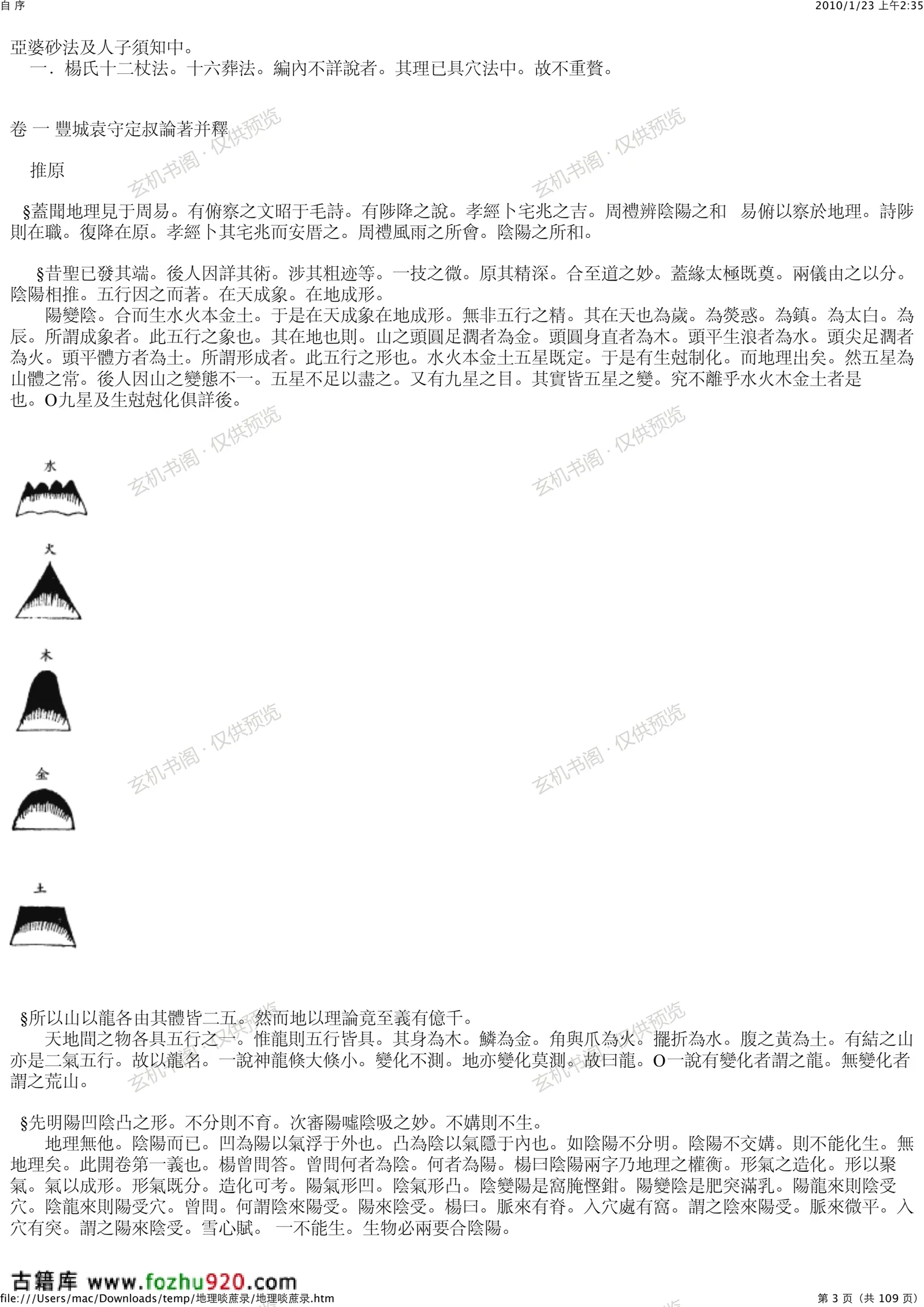
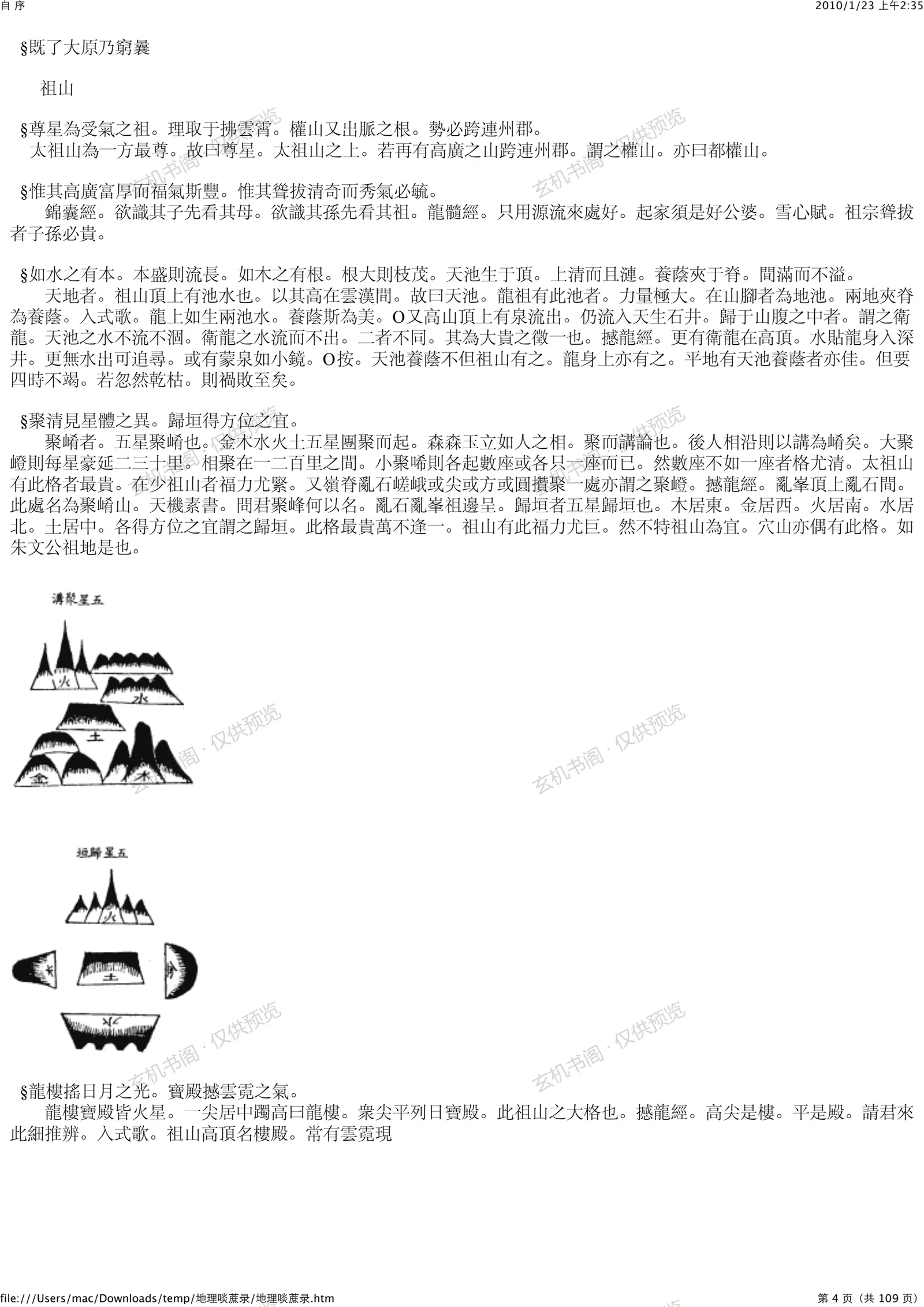
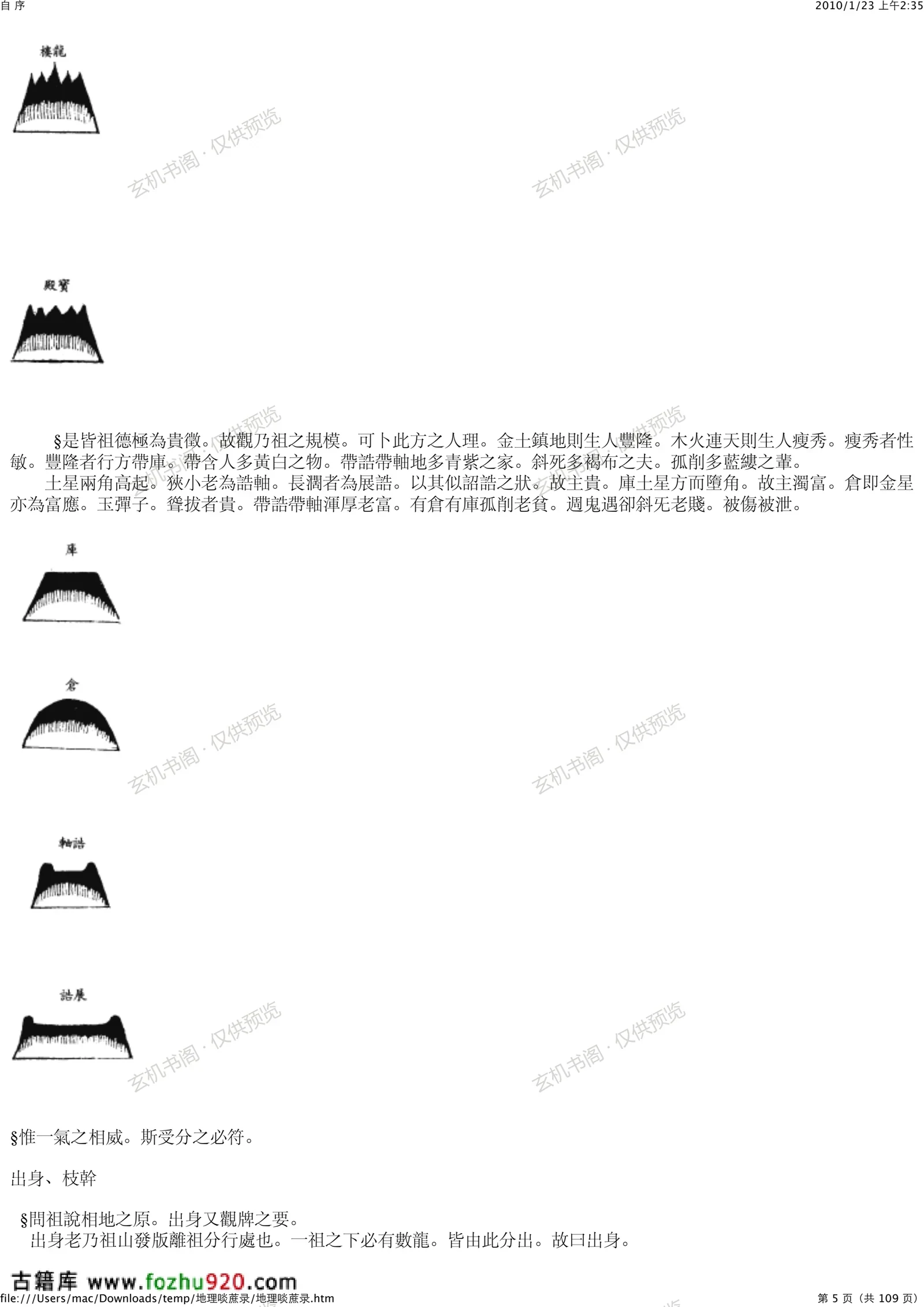
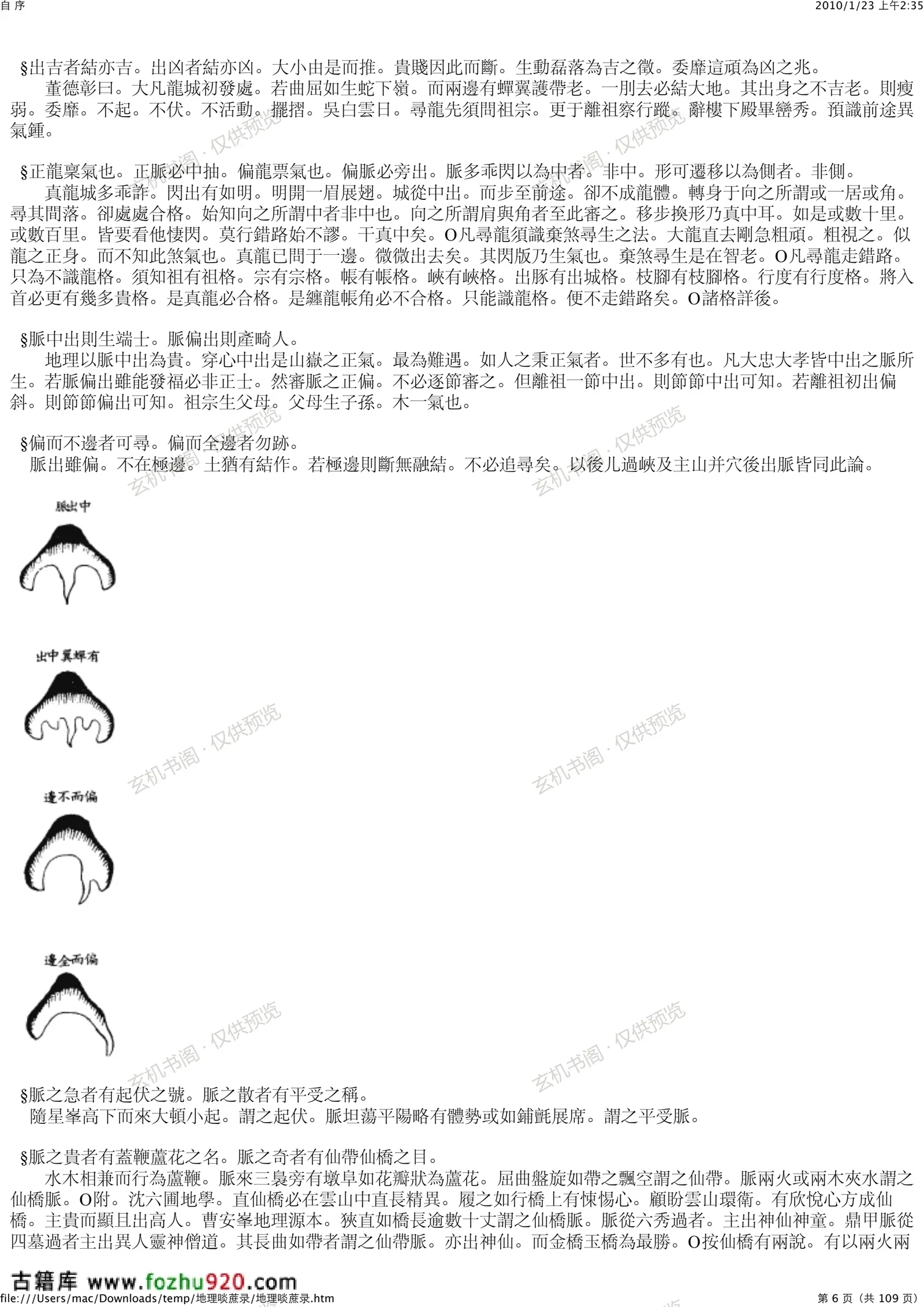
Digan Zhe Lu is a fengshui work centered on landscape form (luantou). These six pages include the author's preface, editorial notes, table of contents, and the beginning of Volume One. The preface, dated 1755 and signed Yuan Shouding, explains that after his mother's death he studied major burial manuals by Yang, Zeng, Wu, and Liao, distilled their essentials, and arranged them into this book; the title evokes the pleasure of eating sugarcane from the top down. The editorial notes describe the method: separate topics, quote sources, discuss form rather than qi-theory, and pair illustrations with text, mentioning Yang's twelve-staff method and Liao's nine-star transformations. The eight-volume table of contents runs from origin, ancestral mountains, and branching veins through acupoint methods, dragon and tiger hills, water methods, and miscellaneous notes. Volume One traces geomancy to the Zhouyi, Shijing, and Xiaojing, discusses yin-yang, the five phases, and five/nine-star mountain shapes, then treats ancestral mountains, gathering peaks, heavenly pools, and dragon-tower palaces with diagrams.
Contents
Preface and editorial notes: origins and method
Vol. 1: origins, ancestral mountains, branching veins
Vol. 2: transformation, stopping, entering the head
Vols. 3-4: acupoint methods and planting methods
Vol. 5: dragon and tiger hills, facing mountains
Vol. 6: water methods, bright hall, surrounding features
Vols. 7-8: flat land, soil, qi, miscellany
Key Points
Focuses on landscape form rather than qi-theory
Volume One classifies mountains by five phases and nine stars
Ancestral mountain and branching-vein chapters set the search order
Mountain-shape diagrams support textual description
Editorial notes explain how sources and schools are handled