Reading guide
Content guideOverview
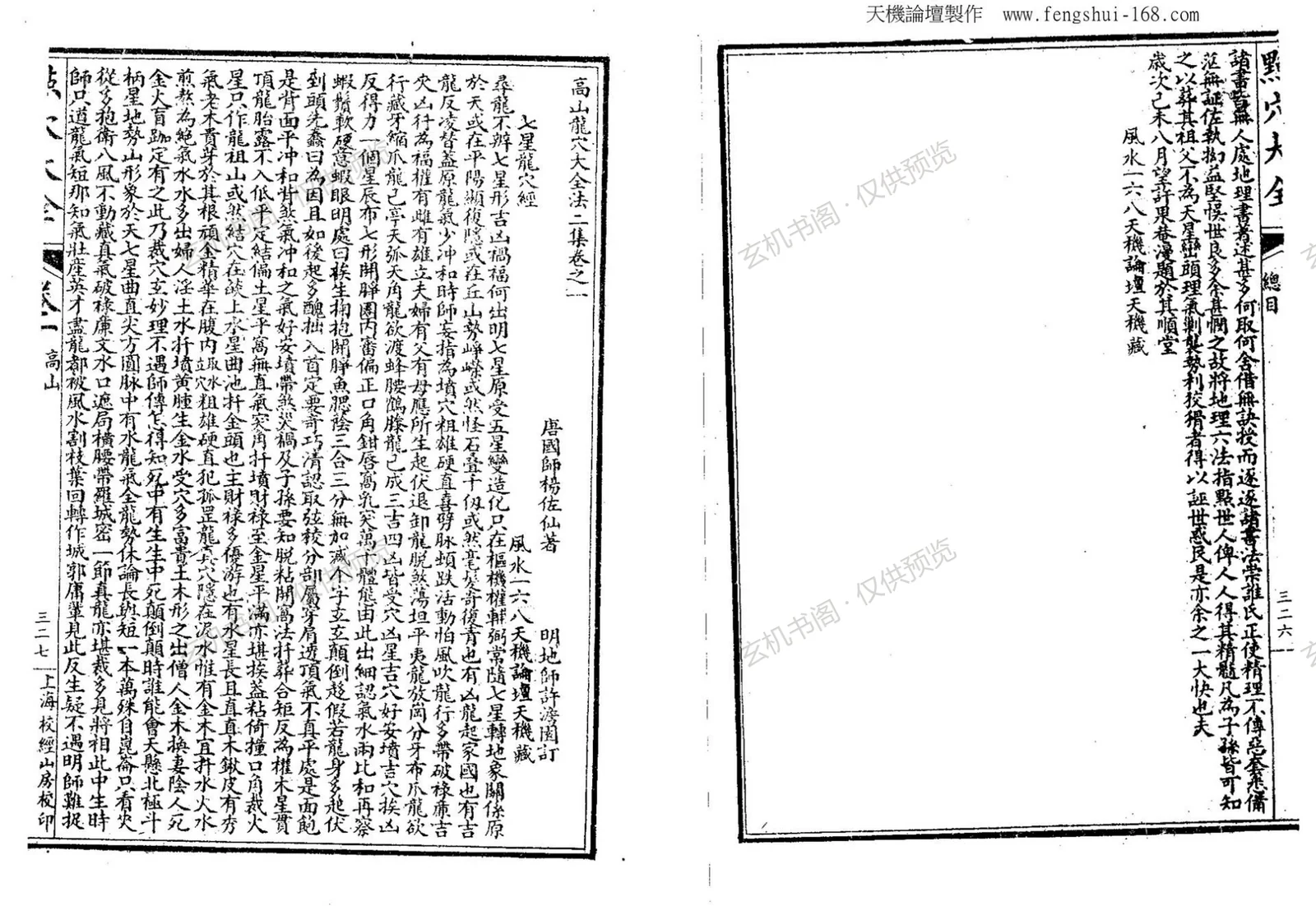
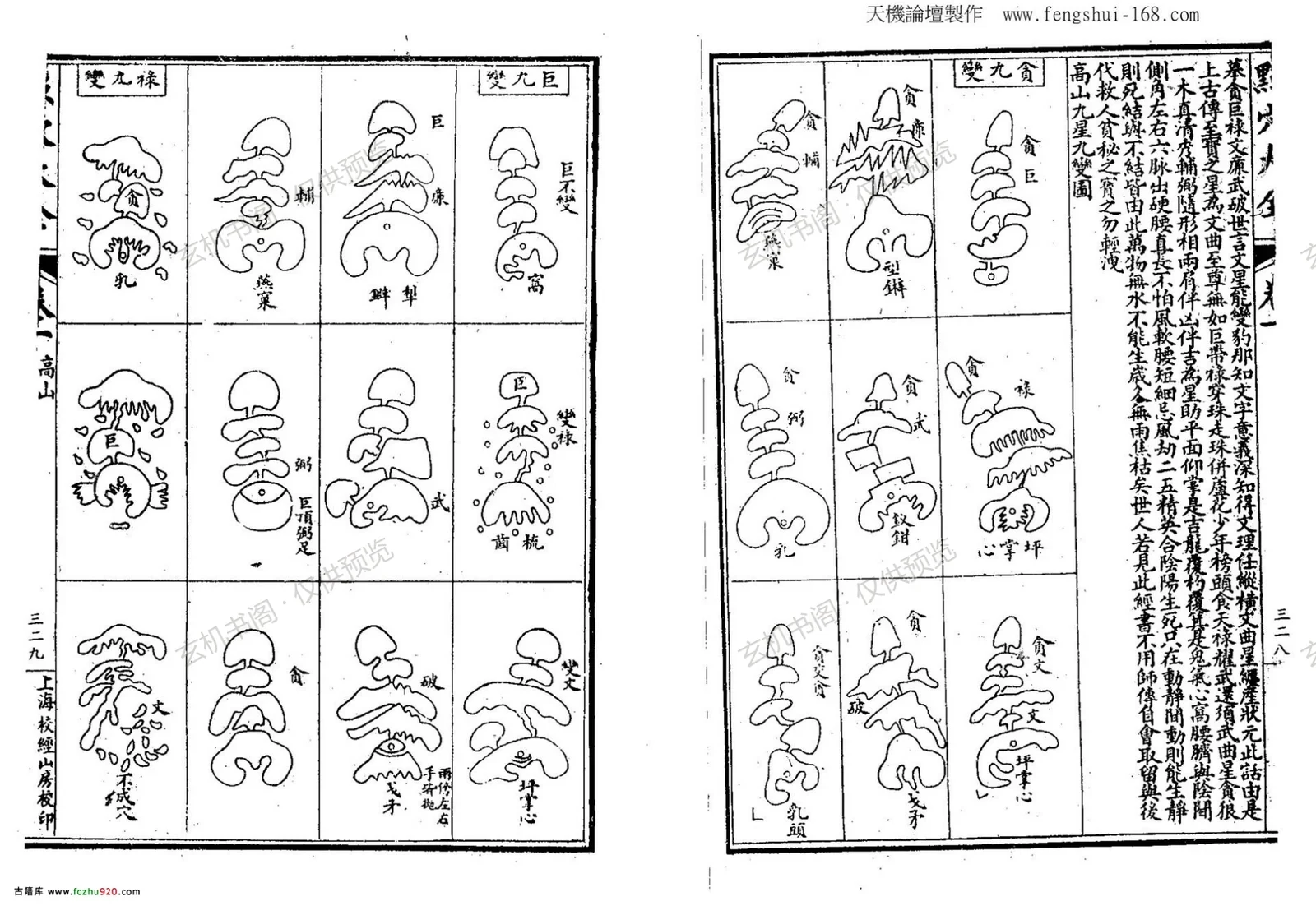
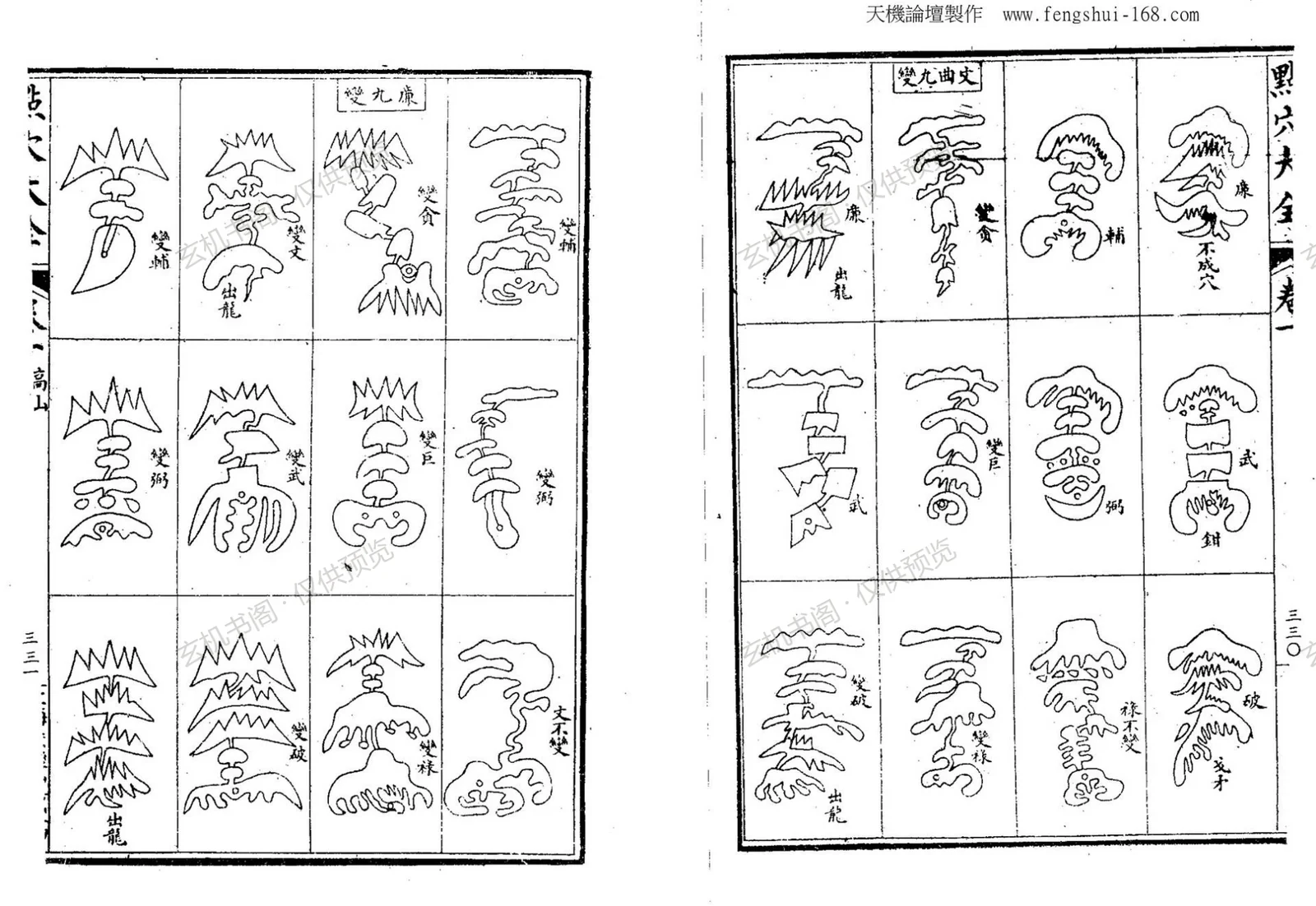
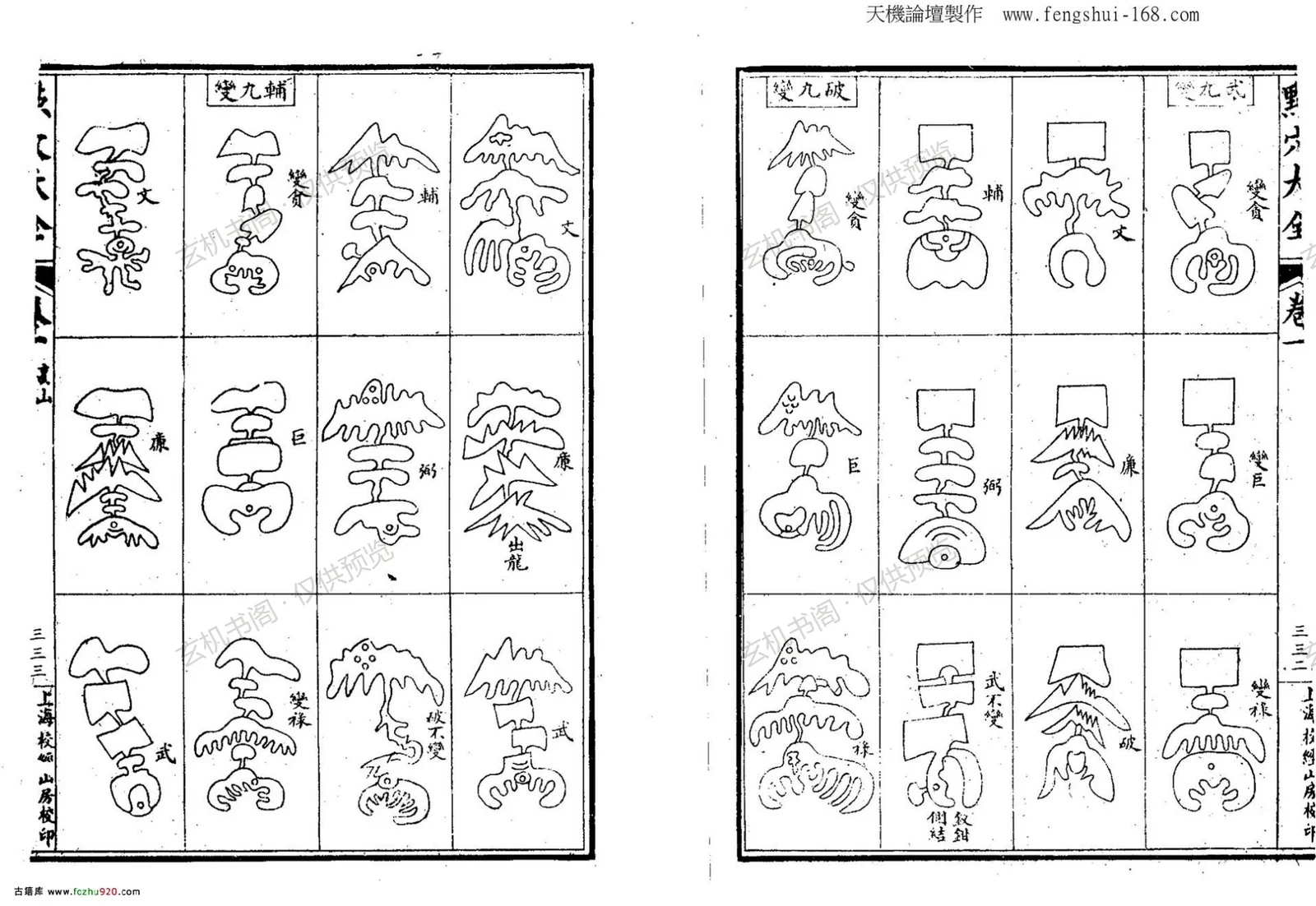
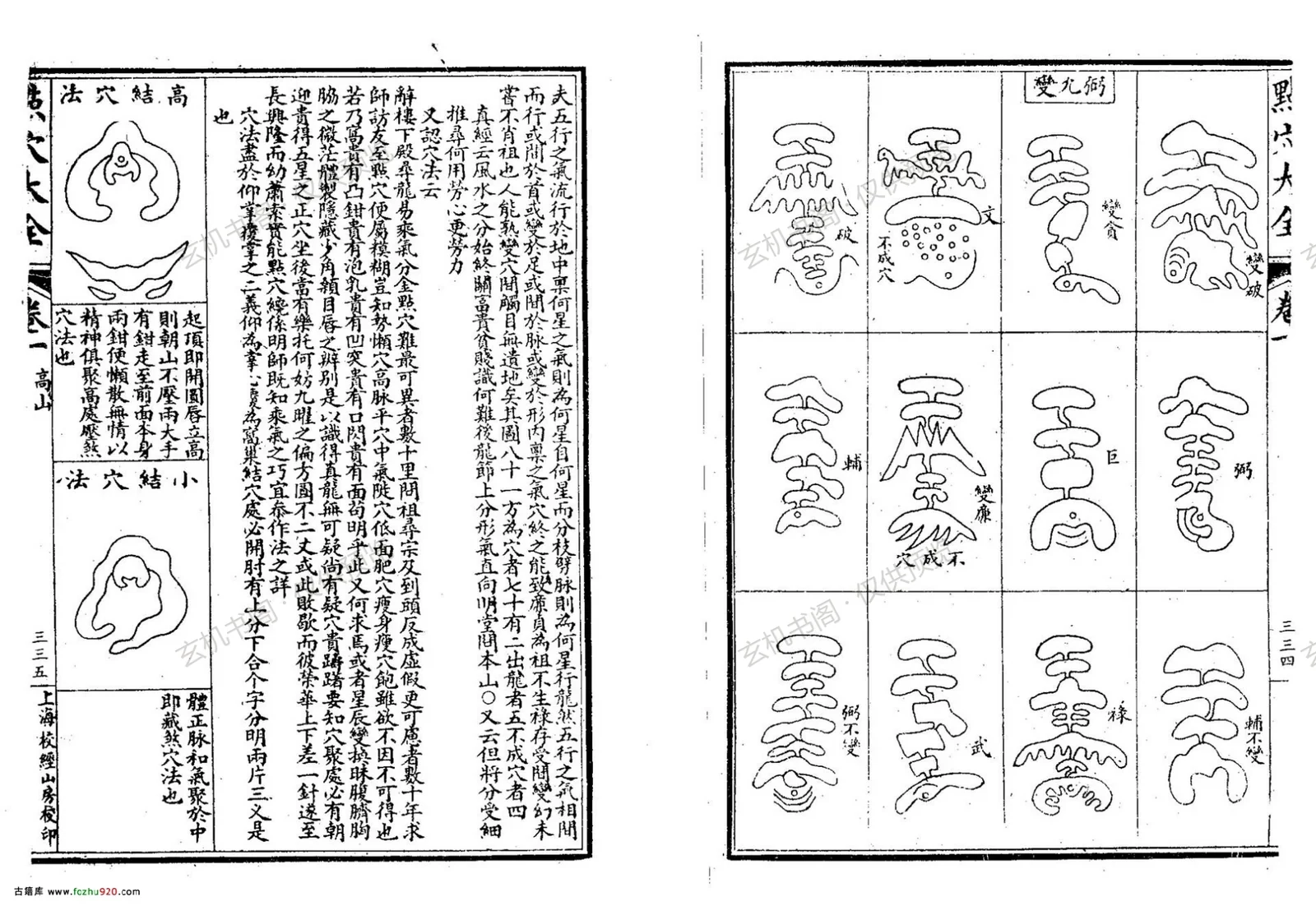
This is the opening portion of a Qing-era fengshui manual, showing the general table of contents, a preface, and part of Volume One, 'Mountain Point Methods.' The work is organized around six methods—mountain points, plain points, water-clamp points, and directional sand-and-water methods among them—and argues, citing Yang Junsong, that dragon, point, sand, water, and facing must all accord with yin-yang and the Five Elements, while criticizing practitioners who rely on the compass alone. Volume One, attributed to Yang Zuoxian and edited by Xu Danyuan, centers on diagrams of the Nine Stars (Tanlang, Jumen, Lucun, Wenqu, Lianzhen, Wuqu, Pojun, and the two Fu/Bi stars), each showing mountain formations with annotations such as 'emerging dragon,' 'no point,' 'double transformation,' and 'double junction.' The schematic woodblock drawings are valuable for studying the formal school of terrain analysis and traditional diagram-based point-selection, though they require prior grounding in landscape terminology to interpret.
Contents
General preface: dragon, point, sand, water, facing and the Five Elements
Vol. 1: Mountain point methods
Vol. 2: Plain point methods
Vol. 3: Plain point methods (continued)
Vol. 4: Water-clamp point methods
Vol. 5: Sima water methods
Vol. 6: Directional sand-and-water methods
Key Points
Organizes mountain point forms under the Nine Stars.
Annotations mark 'emerging dragon,' 'no point,' 'double transformation,' and 'double junction' to distinguish true from false points.
The preface insists on terrain as primary and criticizes overreliance on the compass.
Six methods divide the work, treating mountain and plain terrain together.
The diagrams are schematic woodblock line drawings meant to be read alongside the text.