Reading guide
Content guideOverview
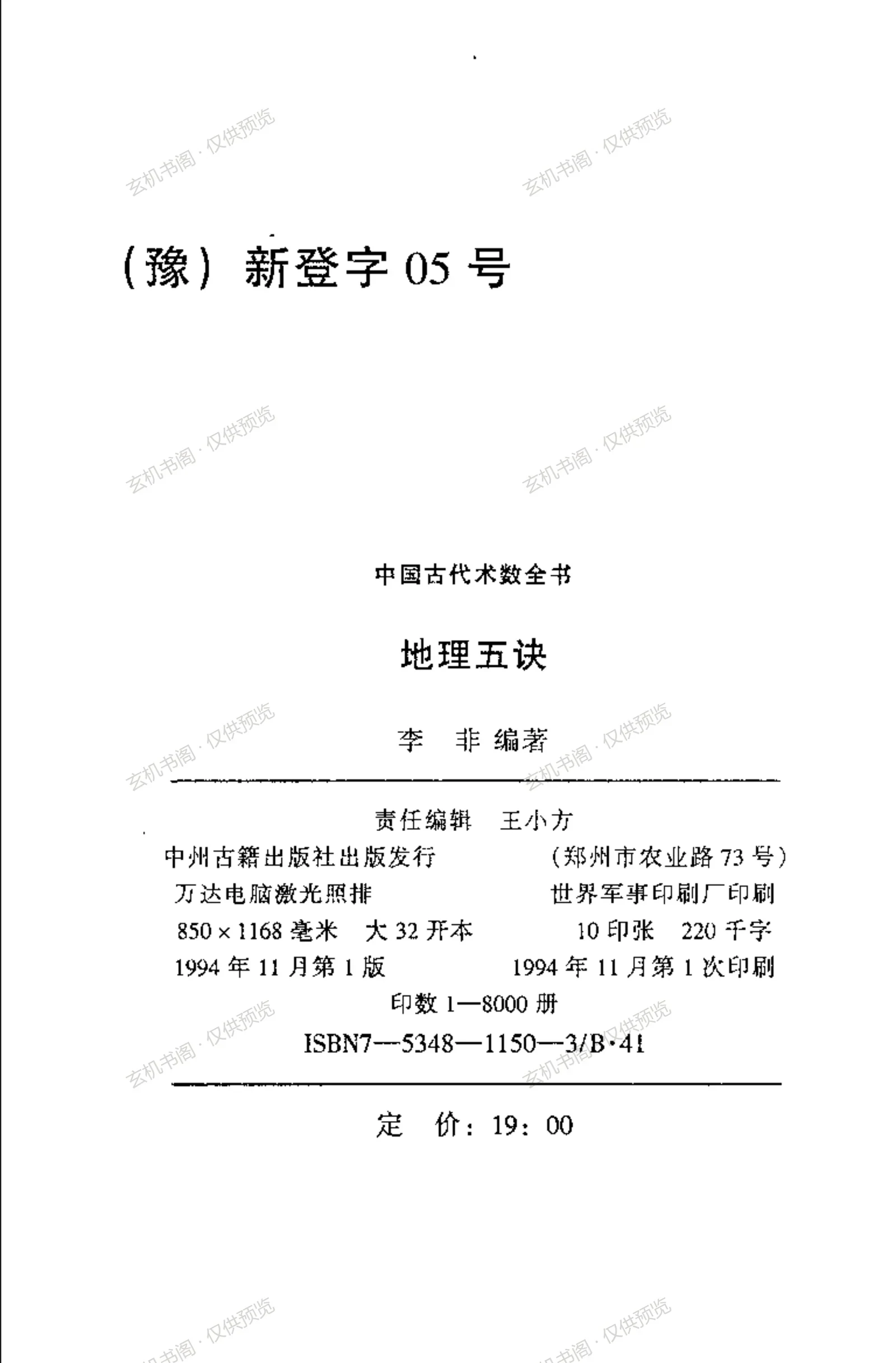
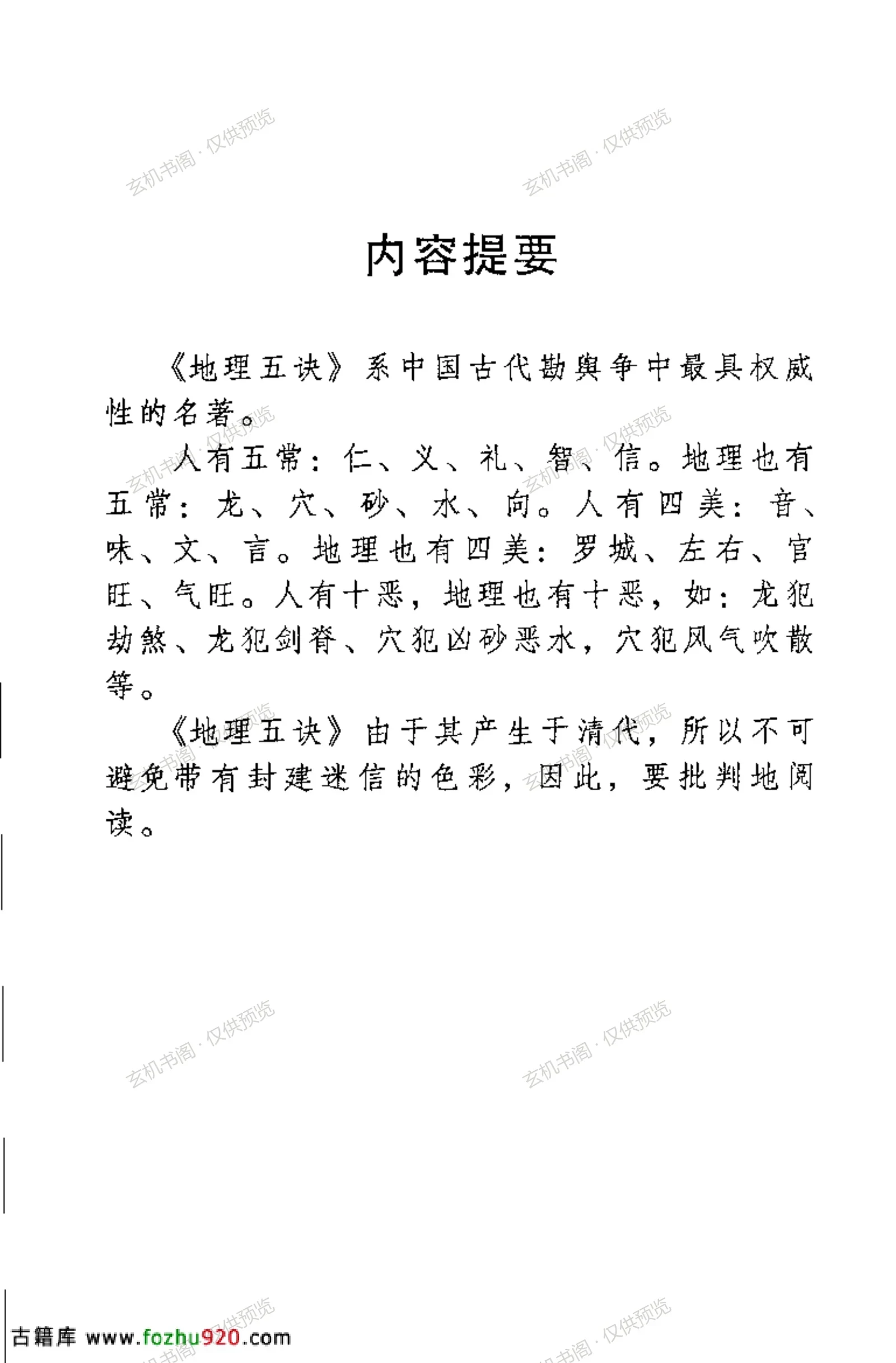
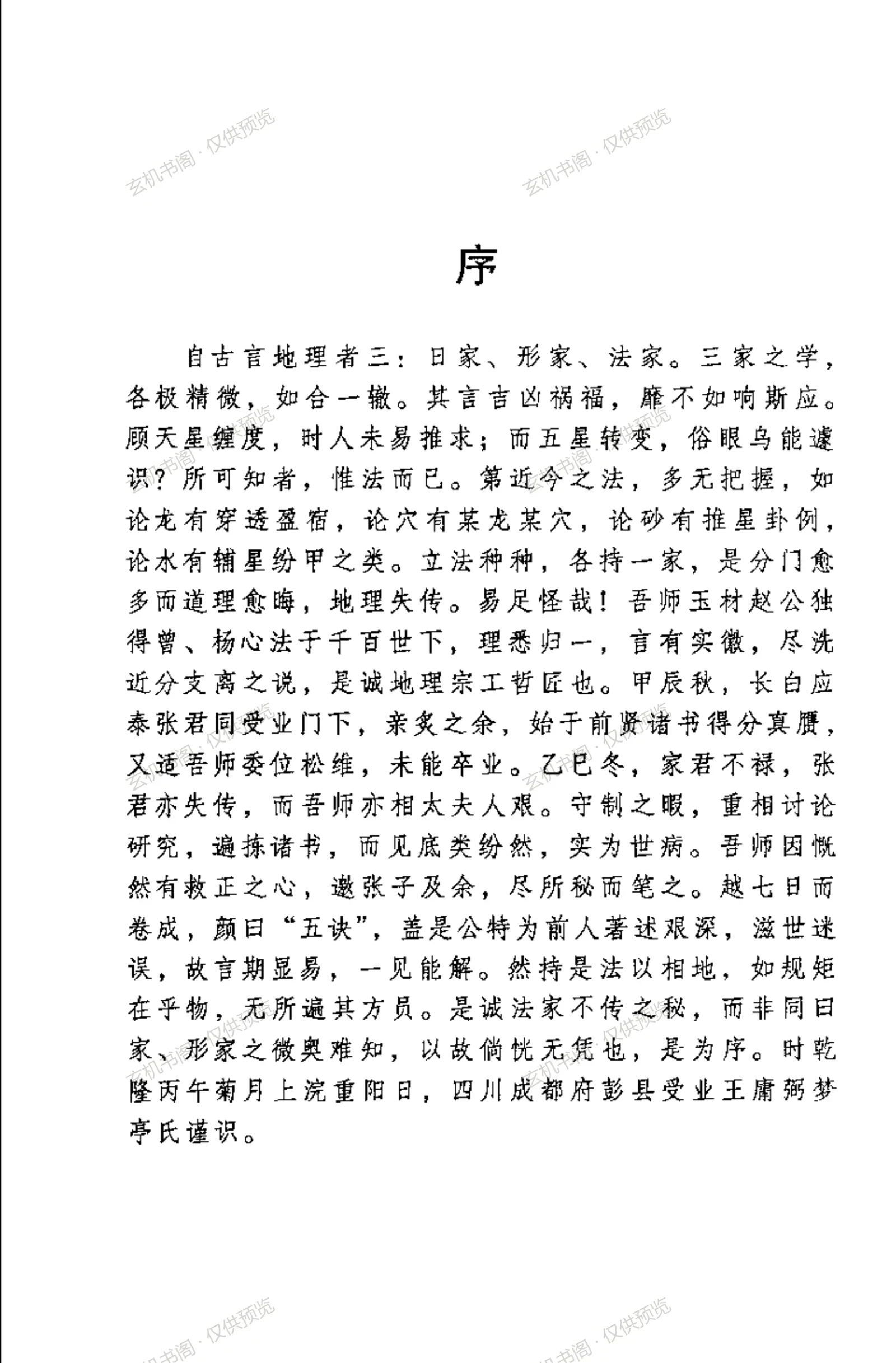
This is Li Fei's edited edition of Dili Wujue, published by Zhongzhou Guji Press in November 1994 as part of the Collected Works on Ancient Chinese Divination. The content note presents it as a leading classic of traditional Chinese geomancy, likening the five Confucian virtues to the five essentials of siting—dragon, site, sand, water and facing—and listing corresponding auspicious and inauspicious configurations. The table of contents runs to eight juan: compass methods and five-element verses, the rise and decline of dragons, yin-yang and wealth rankings of sites, sand forms and their proper positions, water and its advance-retreat qualities, the four configurations of facing with dragon-water matching, the twelve water-mouth judgments, and plain-terrain essentials with a later appendix. The preface, dated the Double Ninth of 1786 and signed by Wang Yongbi of Peng County, Sichuan, traces the teaching line back to Zhao and Yang and explains that the book was written to resolve the confusion of competing manuals. The work belongs to the Sanhe school of form-based feng shui, moving from compass operation to dragon, site, sand, water and facing in sequence. It suits readers seeking an introduction to traditional siting terminology and procedure.
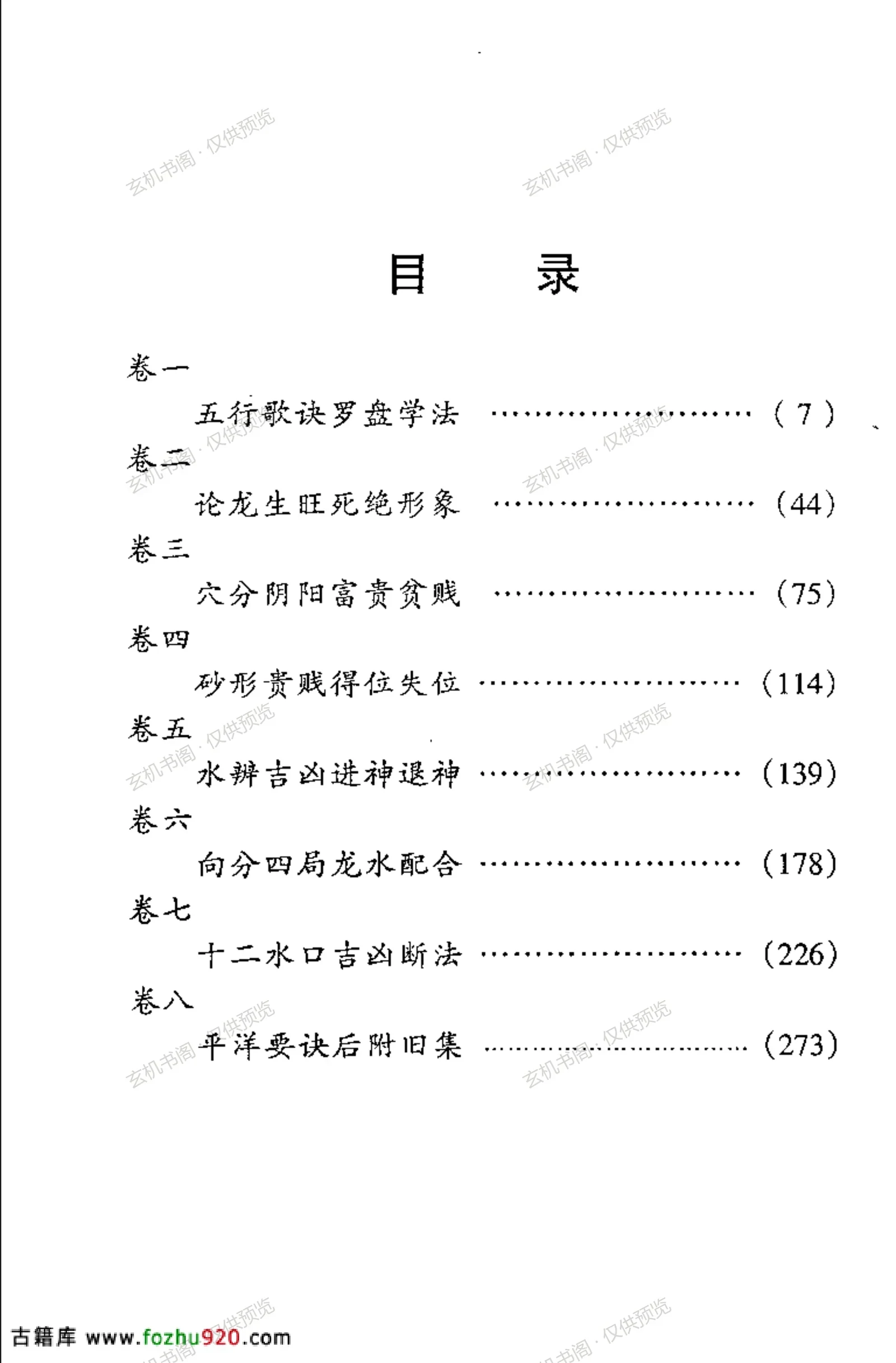
Contents
Juan 1: Five-element verses and compass method
Juan 2: Dragons in growth, prosperity, death and extinction
Juan 3: Yin-yang, wealth and poverty of sites
Juan 4: Sand forms, noble or base, in or out of position
Juan 5: Water, auspicious or inauspicious, advancing or retreating
Juan 6: Four facing configurations and dragon-water matching
Juan 7: Twelve water-mouth judgments
Juan 8: Plain-terrain essentials with appendix
Key Points
Dragon, site, sand, water and facing form the book's five-part framework
Juan 1 on five-element verses and compass use underpins later chapters
Juan 6 and 7 focus on facing and water mouths, central to Sanhe practice
Juan 8 addresses flat terrain, distinct from mountain dragon hunting