Reading guide
Content guideOverview
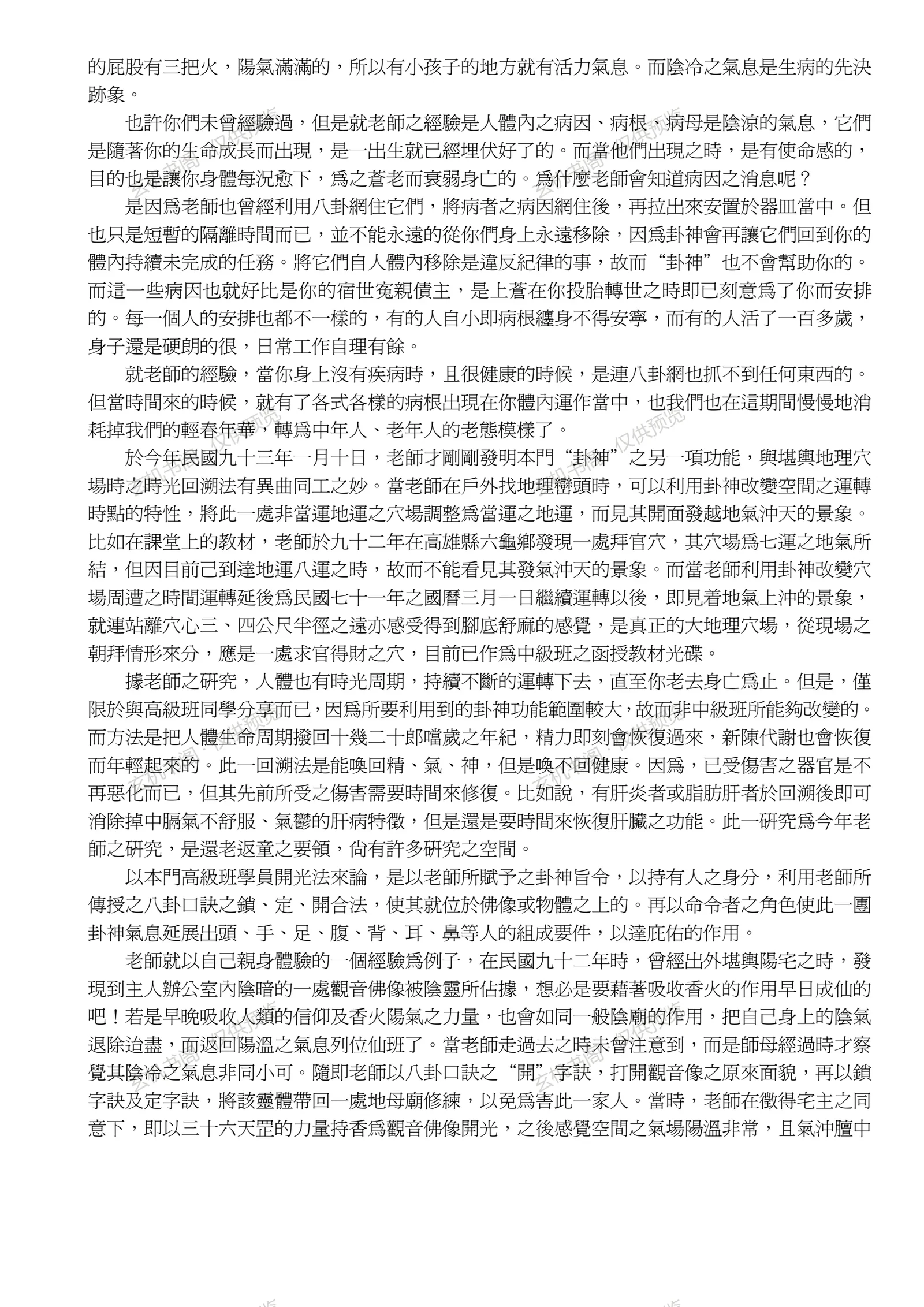
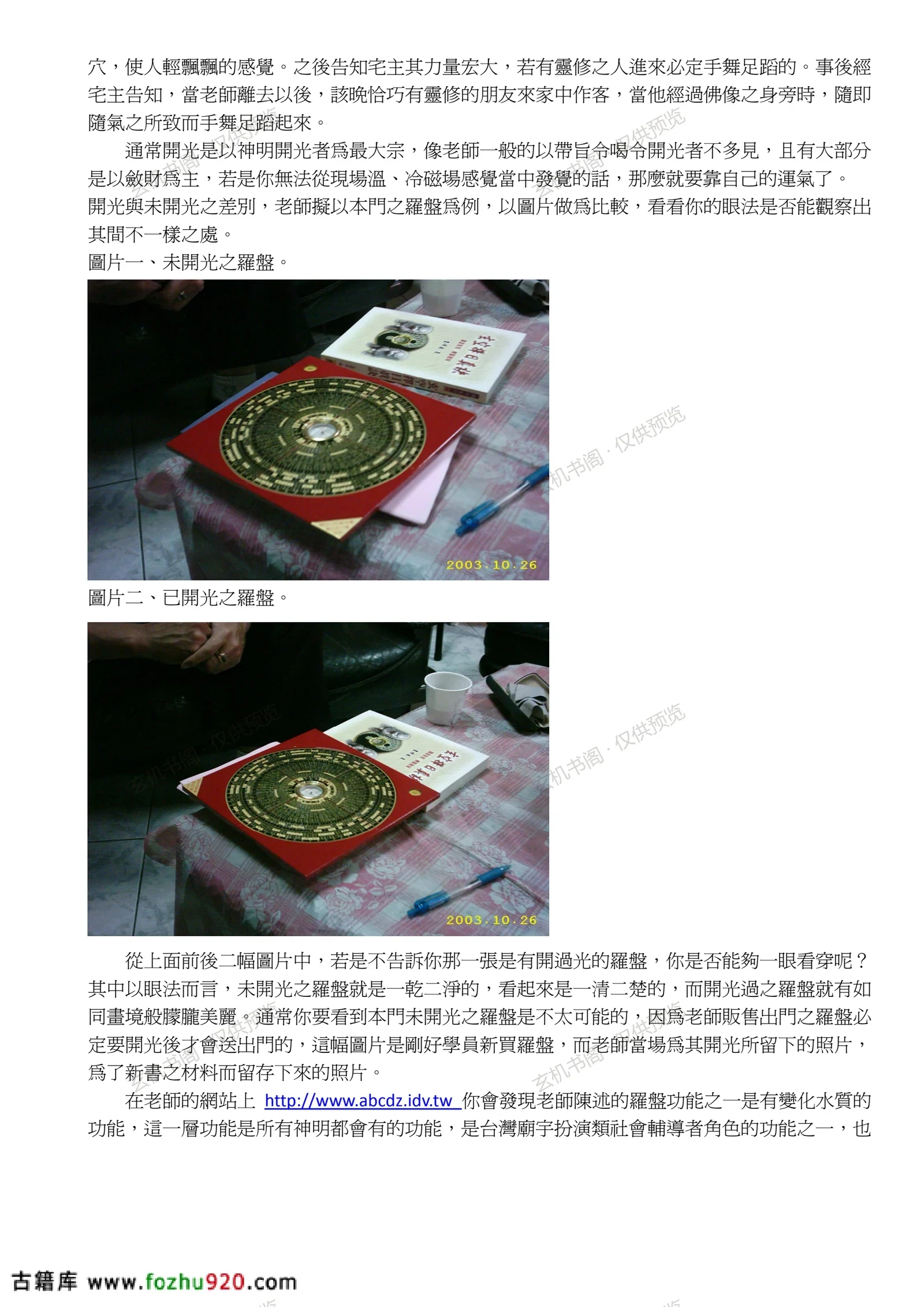
This is the opening chapter of Wang Xiang'an's lecture series The True Classic of Geography, titled 'Consecration and Spirit Bodies.' The preface lays out a research method: first master four foundational works on burial and dwelling feng shui, then observe how shops and cities gather qi, verify the pull of dragon sites in the field, and finally ground the practice in good deeds. The text then discusses consecration and spirit bodies, arguing that all formed things carry spirit and that statues, images, and compasses receive spiritual power through consecration. Photographs compare a consecrated and unconsecrated compass. Later sections touch on illness and yin qi, the relationship between divination spirits and merit, and methods of consecration using bagua oral formulas, with anecdotal cases such as a Guanyin statue and changes in the taste of water. The material blends feng shui instruction with personal religious experience and is best read as a record of the author's teaching lineage.
Contents
Chapter 1 preface: five steps of feng shui research
Four foundational works and study order
Qi sensation at sites and observing shops
Section 2: what consecration and spirit mean
Cases of consecrating statues and compasses
Section 3: where spirit bodies exist
Three human light rings and wealth ring
Key Points
Stresses mastering four foundational texts before learning site finding.
Uses shop traffic and urban qi gathering to verify site pull.
Defines consecration as transmitting spiritual power into images or compasses.
Includes before-and-after compass photos for sensing differences.
Explains feng shui practice through divination spirits and merit.