Reading guide
Content guideOverview
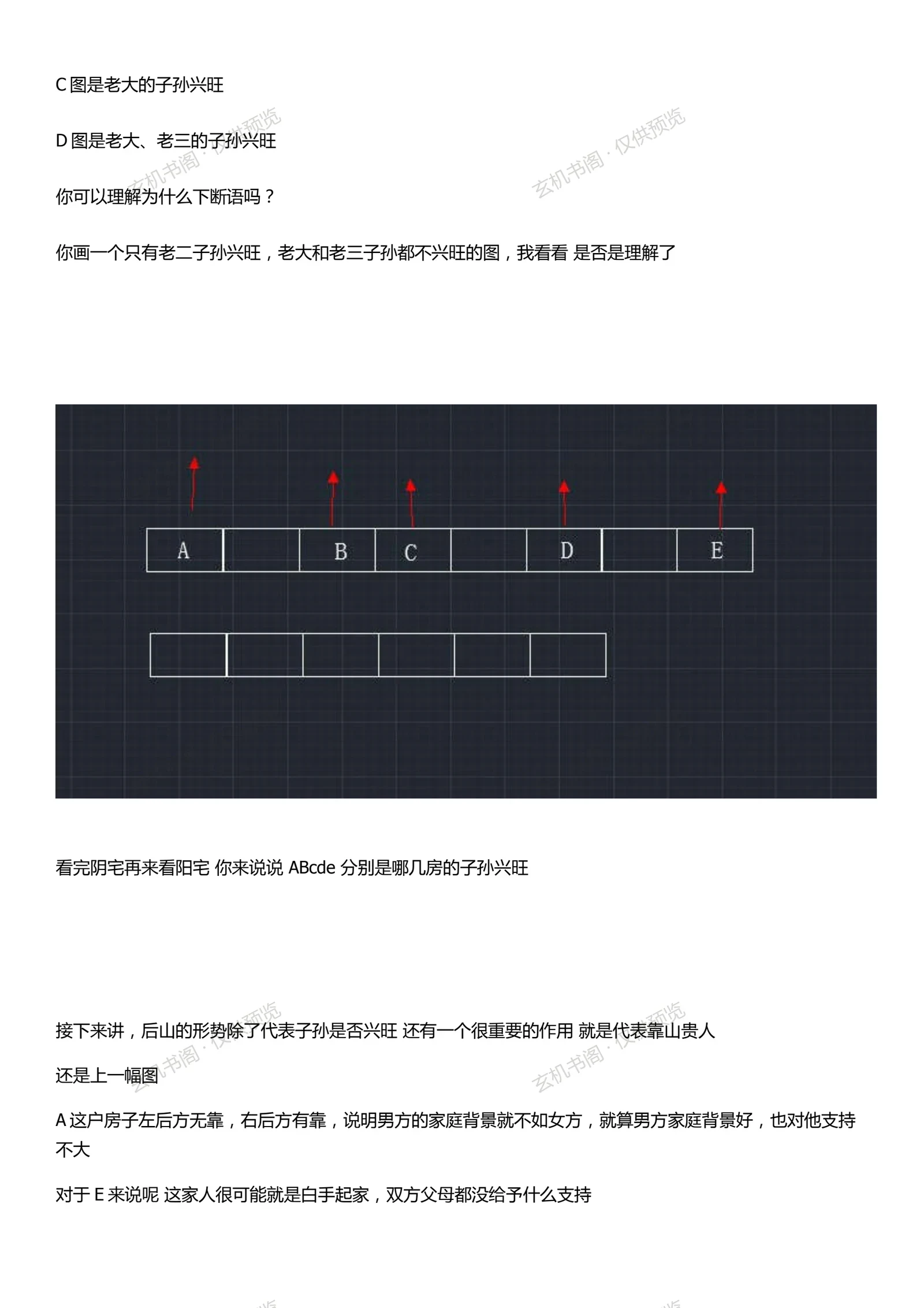
This is a set of lecture notes on yang-dwelling feng shui. The first pages contrast high pressure on the dragon side and tiger side, distinguishing whether the rising structures are connected or separated, and link these shapes to mental states: pressure from the dragon side and rear mountain is read as agitation rooted in oneself, while pressure from the tiger side and bright hall is seen as melancholy from external forces. A road diagram illustrates bright-hall pressure, where a building taller than the house signifies guest dominating host and weak descendants. Later pages borrow yin-dwelling terms—ancestral mountain and facing mountain—to explain judgments about unfilial descendants, then move to the rear mountain, which relates to the second son and to the prosperity of descendants. Hand-drawn diagrams show how different rear mountain formations indicate which branch (first, second or third son) thrives. The final page uses a row of houses to discuss support from the rear mountain and whether a household started from scratch or received parental help.
Contents
Connected vs. separated dragon-tiger pressure
Agitation and melancholy from dragon-tiger height
Bright hall pressure: guest dominating host
Ancestral vs. facing mountain height
Rear mountain formations and branch fortunes
Row houses and support from the rear mountain
Key Points
Dragon-tiger pressure differs by whether the tall structures are connected or separate.
Dragon and rear-mountain pressure suggests self-driven agitation; tiger and bright-hall pressure suggests external melancholy.
A bright hall higher than the house is a serious form of guest dominating host.
Rear mountain formations correspond to which branch of descendants thrives.
The rear mountain also indicates backers or benefactors, with left and right rear support reflecting family background.