Reading guide
Content guideOverview
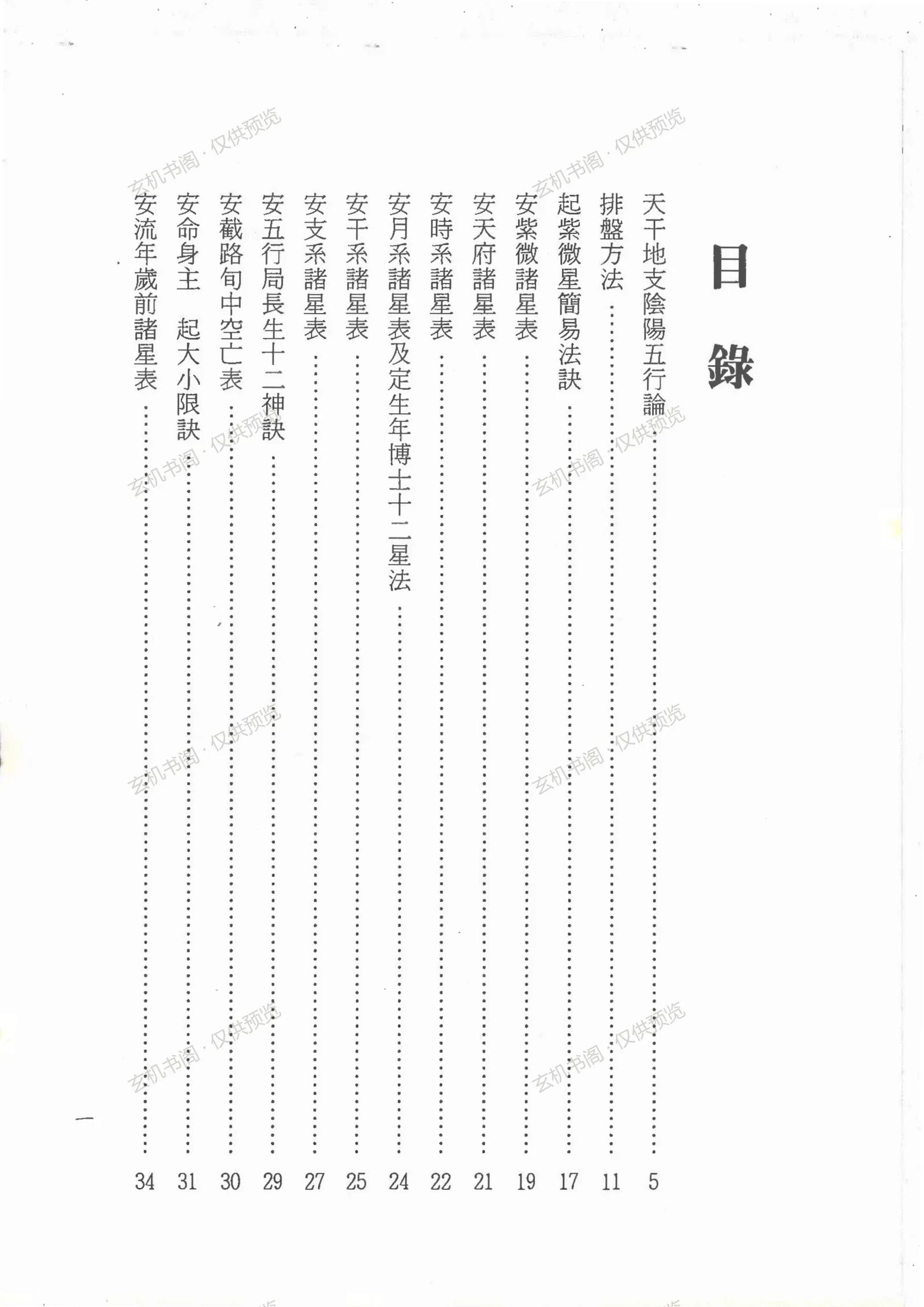
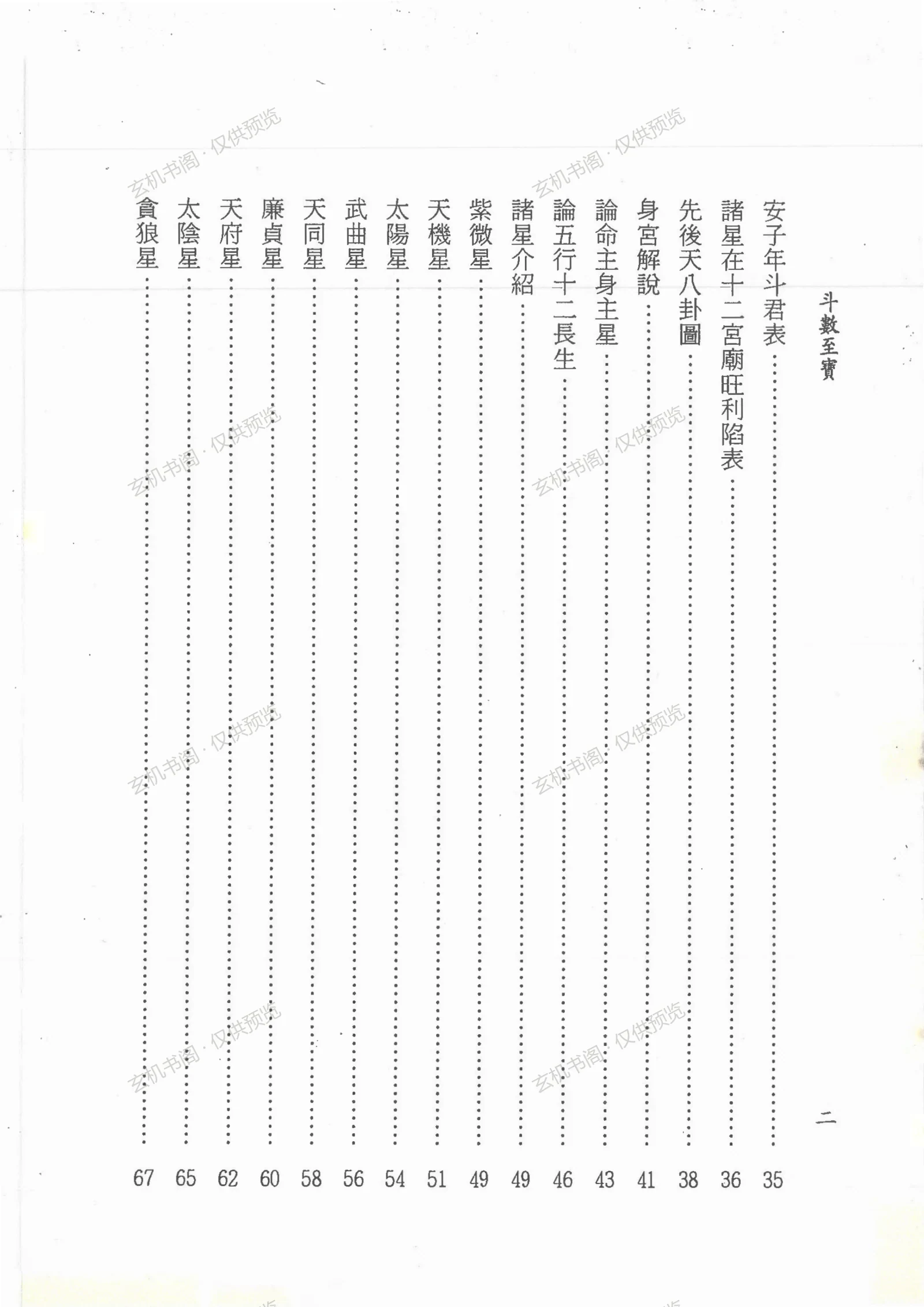
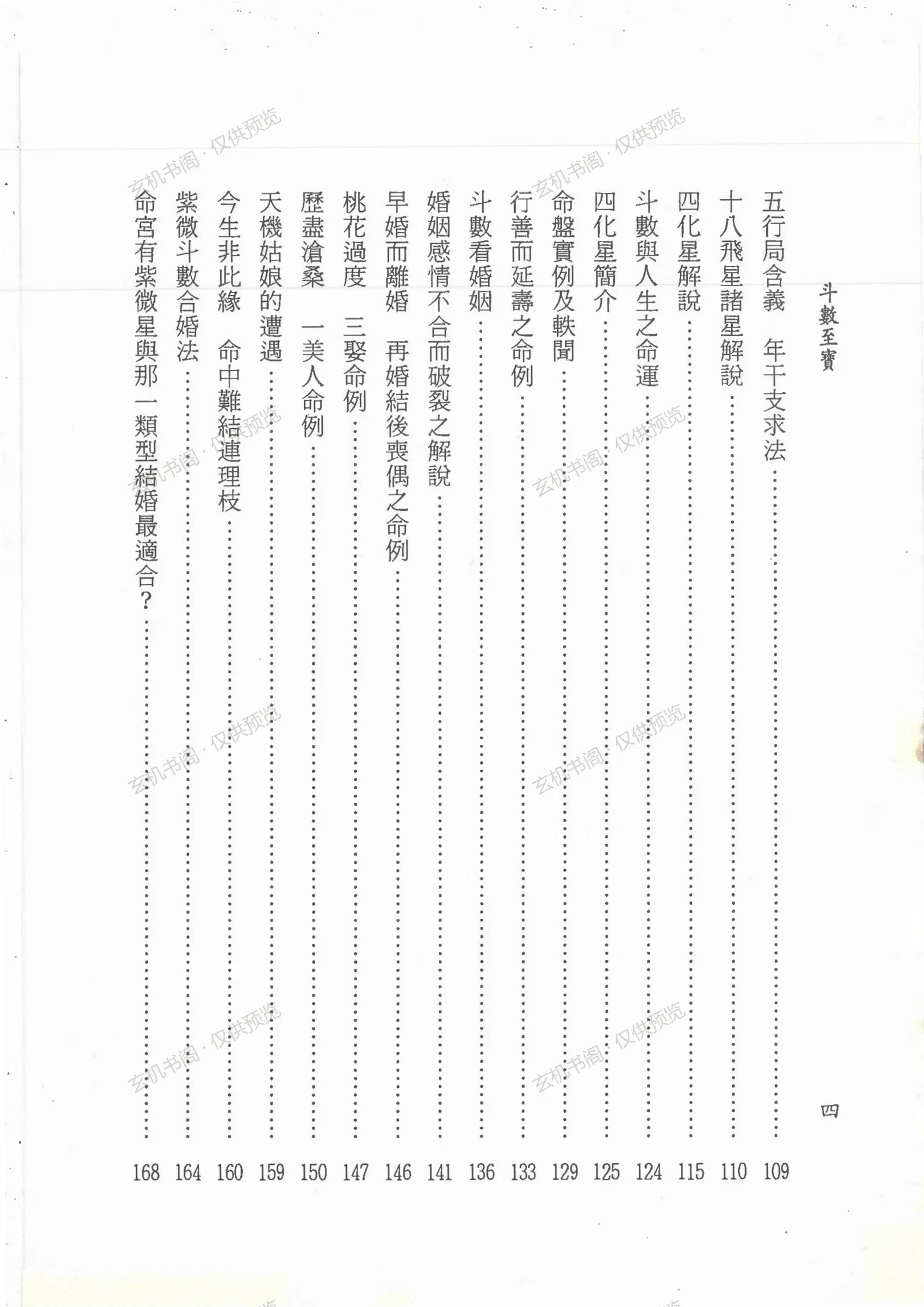
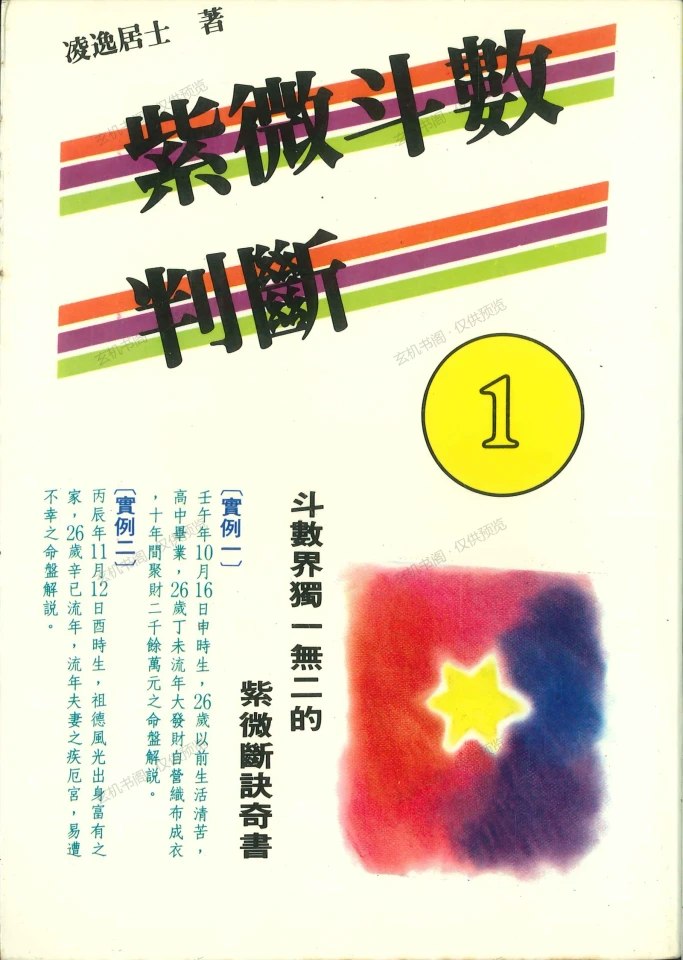
Written by Qin Annan, The Supreme Treasure of Ziwei Doushu presents a structured course in Purple Star Astrology. Opening with heavenly stems, earthly branches, yin-yang and the five elements, it explains chart construction and then provides tables for placing the Purple Star, Heavenly Mansion, and the time-, month-, stem- and branch-related stars, along with the methods for the twelve growth phases and the major and minor limits. The second part turns to star interpretation: a table of stars in their bright, prosperous, weak and fallen positions across the twelve palaces, the body palace, the life and body rulers, the twelve stages of growth, and individual entries for the fourteen major stars, assistant stars, malefic stars, and miscellaneous stars such as Hong Luan, Tian Xi, Tian Yao and Tian Xing, including notes on pairs of stars sharing a palace. The final section is practical, covering the five-element bureau, year stems and branches, the eighteen flying stars, the four transformations, discussions of fate and destiny, chart examples and anecdotes, and a series of marriage-related cases such as early marriage and divorce, remarriage followed by loss of a spouse, excessive romance, and multiple marriages. It is suited to readers who already know basic Doushu terminology and want a systematic reference for star placement and star qualities.
Contents
Stems, branches, yin-yang, five elements and chart construction
Tables for placing the Purple Star, Heavenly Mansion and other stars
Five-element bureau, twelve growth phases and life/body rulers
Star brightness in the twelve palaces and the body palace
Star-by-star entries for major and assistant stars
Five-element bureau, four transformations and chart examples
Marriage and relationship case studies
Key Points
Organizes Doushu star-placement procedures in table form
Explains the qualities of major, assistant, malefic and minor stars
Includes a dedicated table of star brightness across the twelve palaces
Uses marriage and relationship cases to demonstrate interpretation
Covers the four transformations, five-element bureau and year stems and branches