Reading guide
Content guideOverview
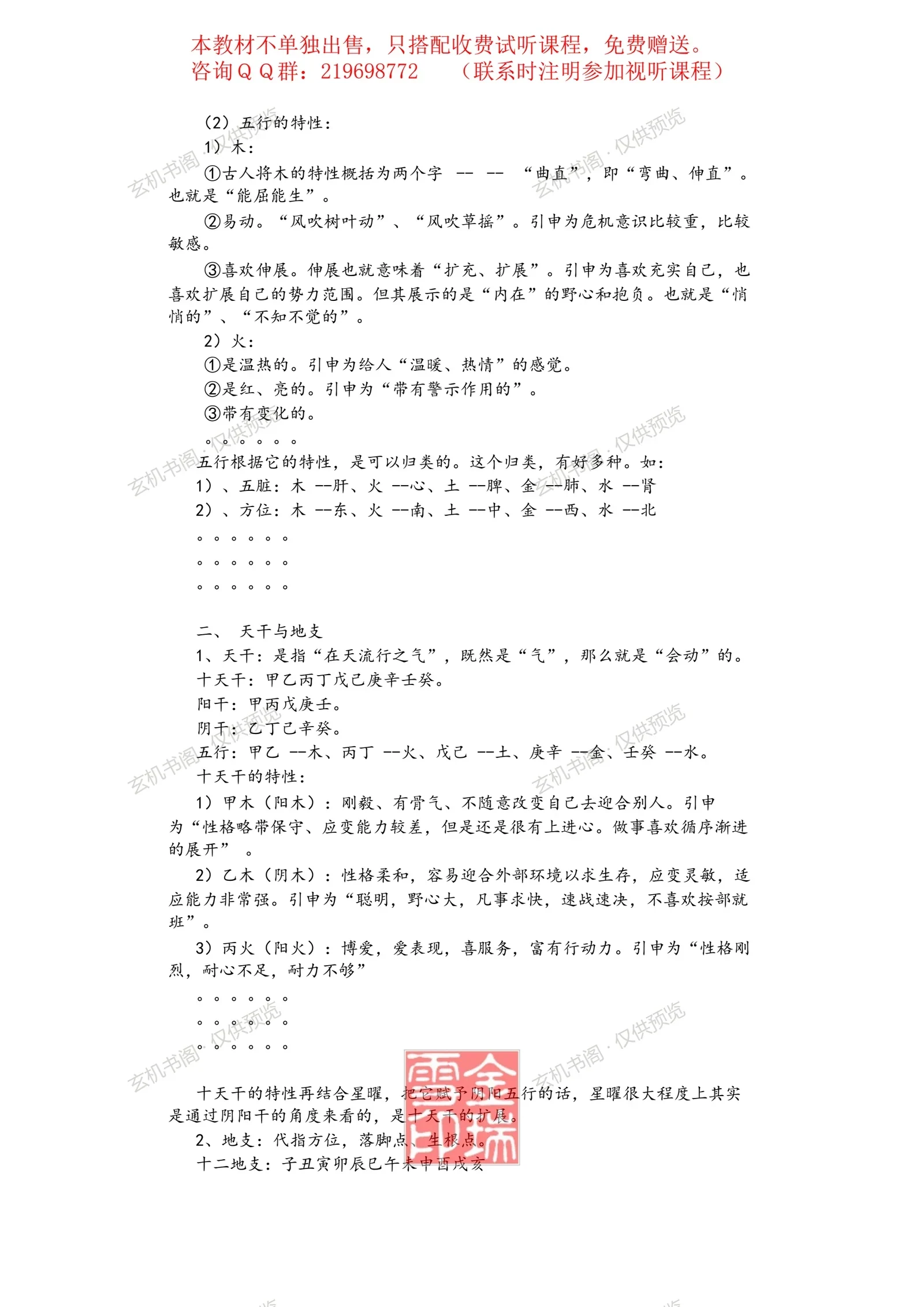
This is Jin Ruixue's condensed lecture-note textbook for a Zi Wei Dou Shu foundation class, running to about 100,000 characters in twelve chapters. Chapter 1 covers the origins and basic concepts of Dou Shu; Chapter 2 outlines six stages of study; Chapter 3 treats the twelve personnel palaces, their six-line divisions, self/other palace distinctions, palace transformation, and Hetu-Luoshu principles. Chapter 4 explains the stars, beginning with a six-point method for reading stars, then discussing star natures by Zi Wei, Tian Fu, year, month, and day-hour systems, plus star configurations. Chapters 5–7 cover the four transformations in general, birth-year and palace transformations, the Lu, Ji, Quan, and Ke charts, and the ten stems' transformations. Chapter 8 states two prerequisites for reading a chart: establishing the Taiji and understanding fixed numbers and responses. Chapter 9 presents the 'marvelous mind method' for the natal chart, palace imagery, and major/year cycles. Chapters 10–11 apply the method to marriage and to case studies, and Chapter 12 closes. The emphasis is on building one's own framework from first principles rather than memorizing fixed judgments.
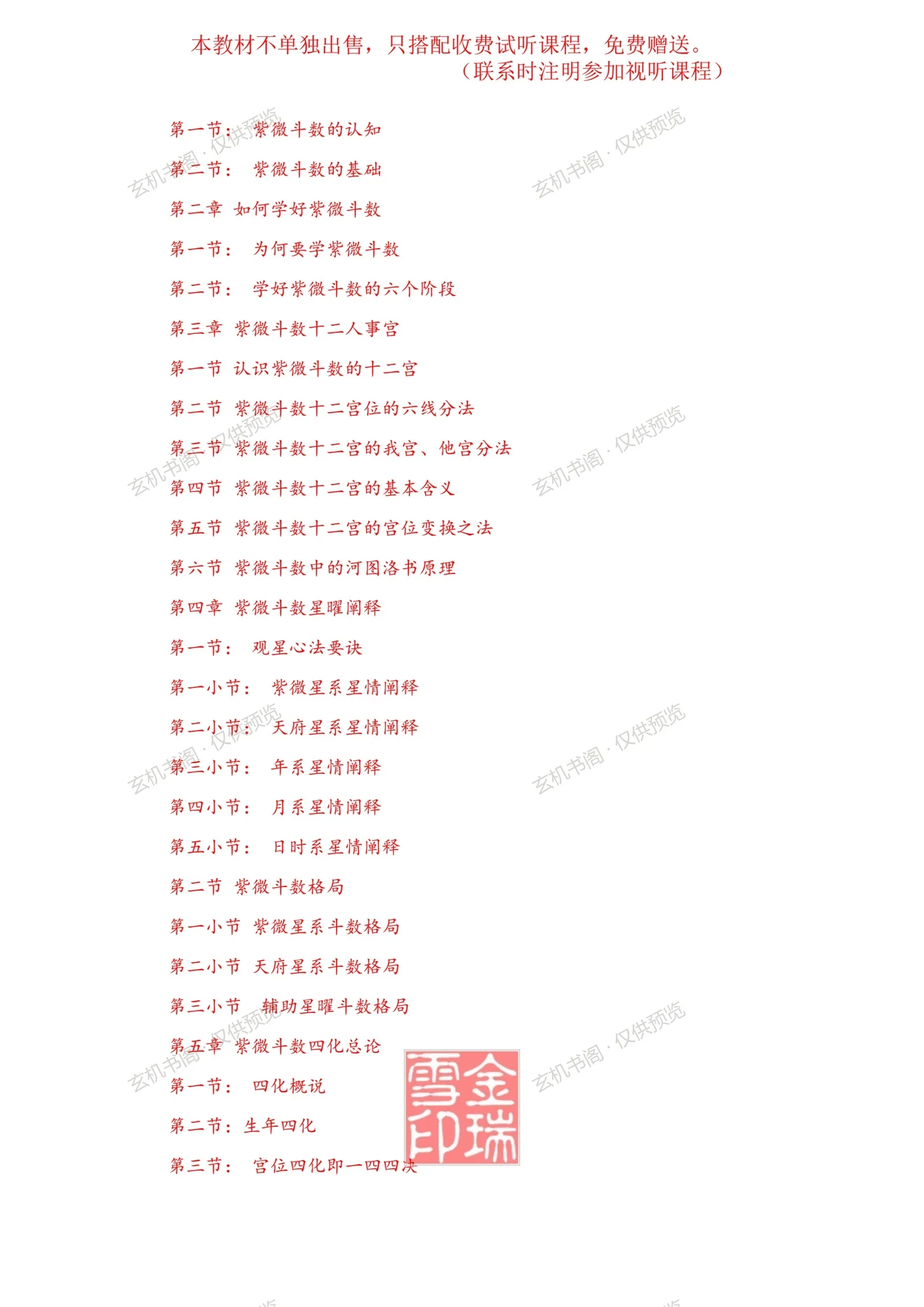
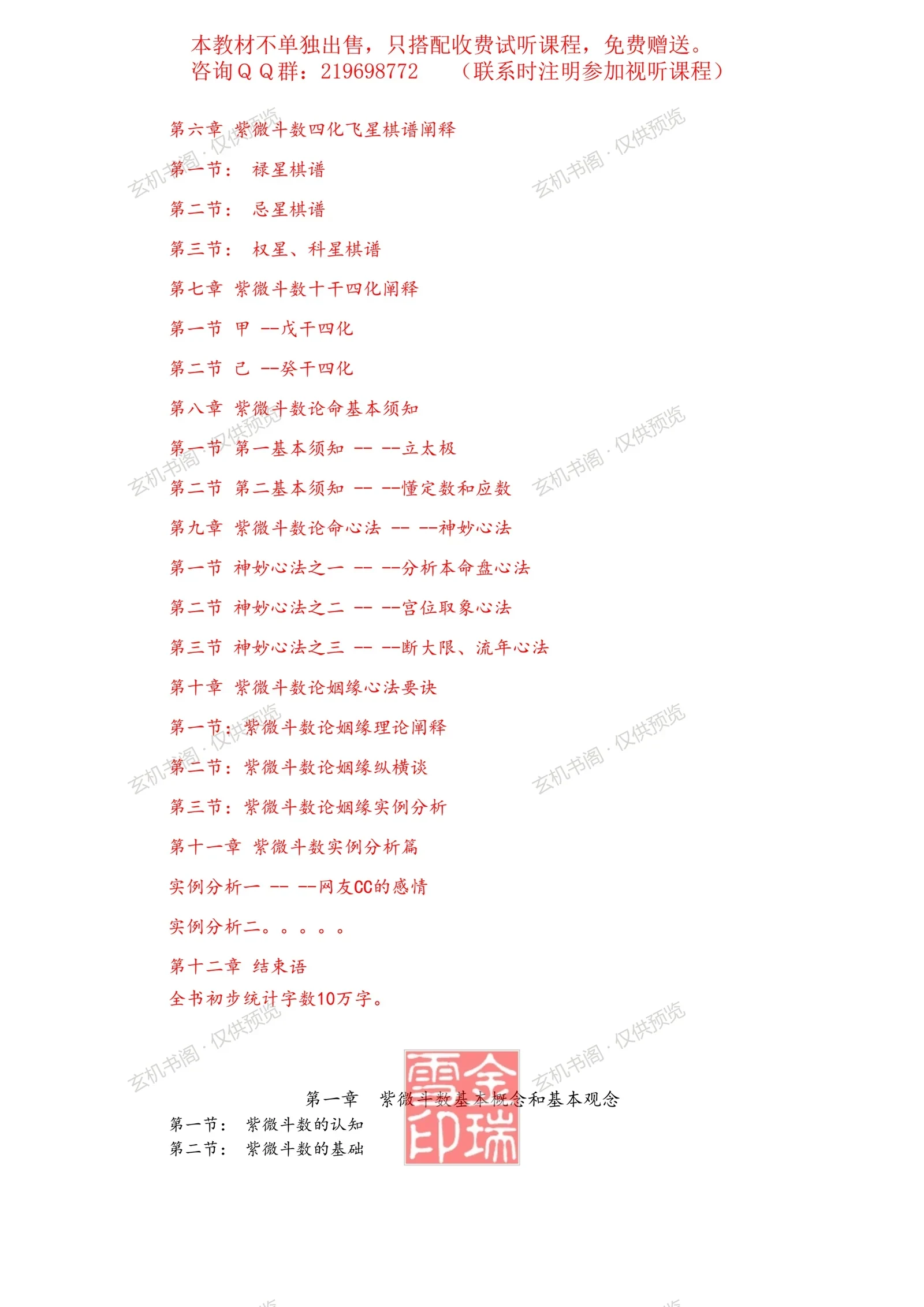
Contents
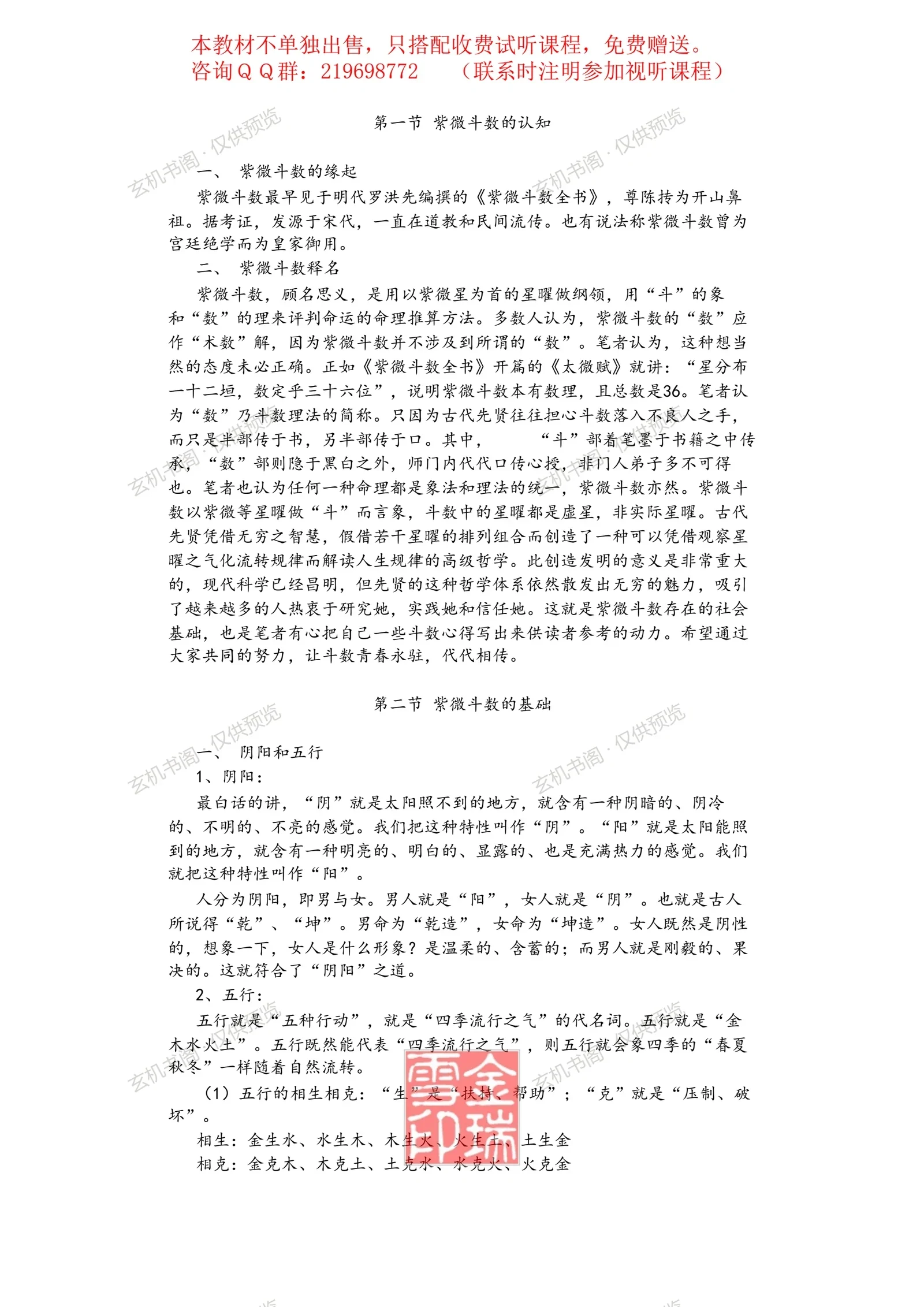
Ch.1 Basic concepts and views of Zi Wei Dou Shu
Ch.2 How to learn Dou Shu in six stages
Ch.3 Twelve palaces, palace transformation, Hetu-Luoshu
Ch.4 Star explanation: reading method, star natures, configurations
Ch.5 Four transformations, birth-year and palace transformations
Ch.6 Flying-star charts for Lu, Ji, Quan, Ke
Ch.7 Ten-stem transformations; Ch.8 Two prerequisites for reading
Ch.9 Marvelous mind method; Ch.10–12 marriage and case studies
Key Points
Proposes Quan and Ke star charts and combines them with Lu and Ji charts for flying-star study.
Summarizes a six-point method for reading stars by nature, five phases, yin-yang, and palace.
Reinterprets star natures with extended meanings and explains why those extensions hold.
Explains the basic principles of chart reading through establishing Taiji and fixed numbers with responses.
Urges readers to build a personal Dou Shu framework rather than rely on stock judgments.