Reading guide
Content guideOverview
This revised edition by Cheng Jianjun treats feng shui as the ancient Chinese art of planning and designing the built environment. Writing as an architectural historian, the author insists on a factual appraisal of feng shui's dual nature as both proto-science and superstition. The eight chapters move from an overview of the term 'cang feng de shui,' its history, schools and influence at home and abroad, to the doctrine of auspicious sites illustrated by imperial tombs, the Qing Eastern Tombs and the Longmu Temple. Later chapters cover environmental siting (terrain, hydrology, soil, climate), the geomantic compass and building orientation (astronomy, terrestrial magnetism, calculation methods), traditional 'house inspection' compared with modern residential design (plans, lighting, temperature, ventilation, noise), traditional construction rulers and modular systems (yabai ruler, menguang ruler, guobai method), feng shui diagrams and psychology (talismans, ward-off charms, prophetic symbolism), and a final critique separating essence from dross, including the Confucian stance. Theory, case studies and practical methods are combined, making it useful for students of architecture and of feng shui culture.
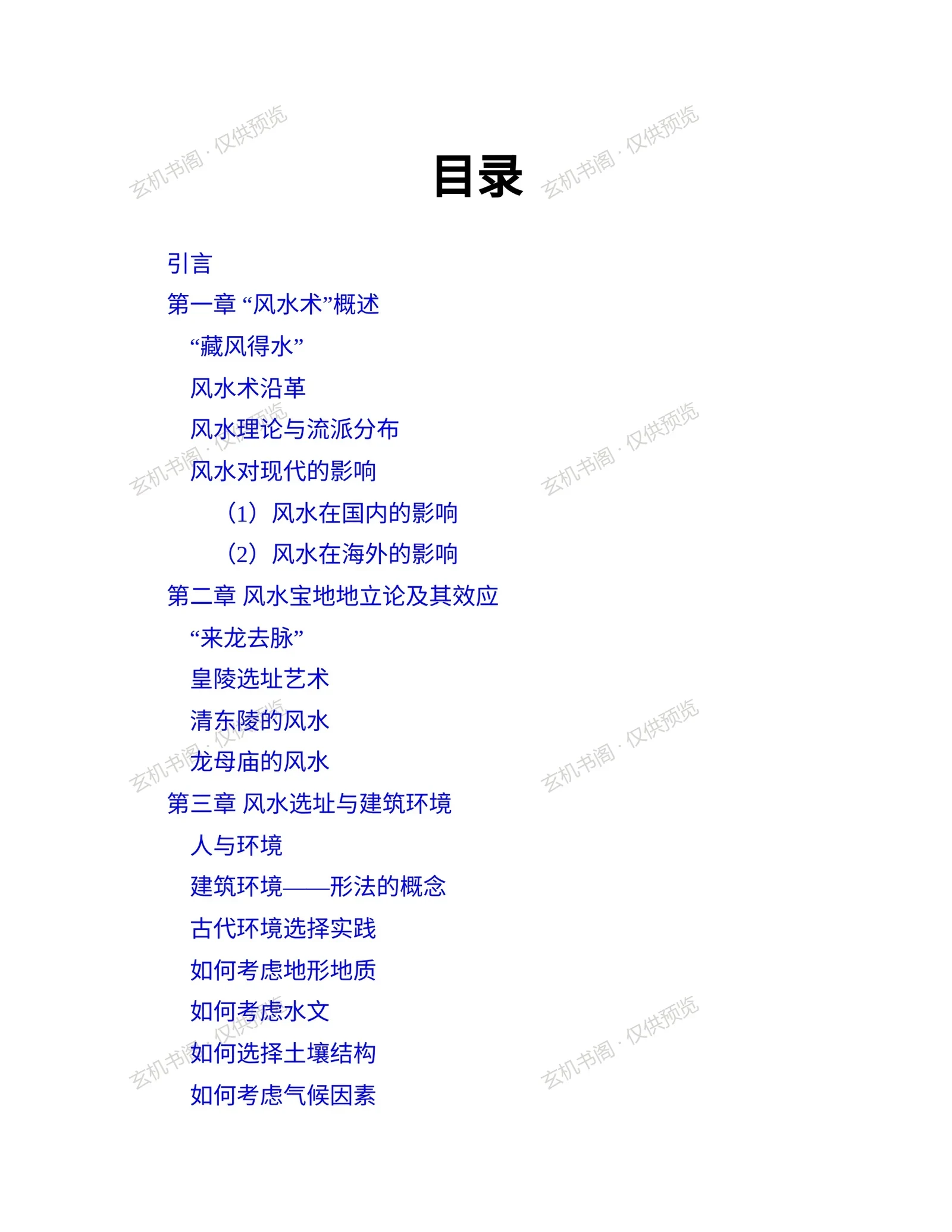
Contents
Ch.1 Overview of feng shui: meaning, history, schools, influence
Ch.2 Auspicious sites: imperial tombs, Qing Eastern Tombs, Longmu Temple
Ch.3 Siting and environment: terrain, water, soil, climate
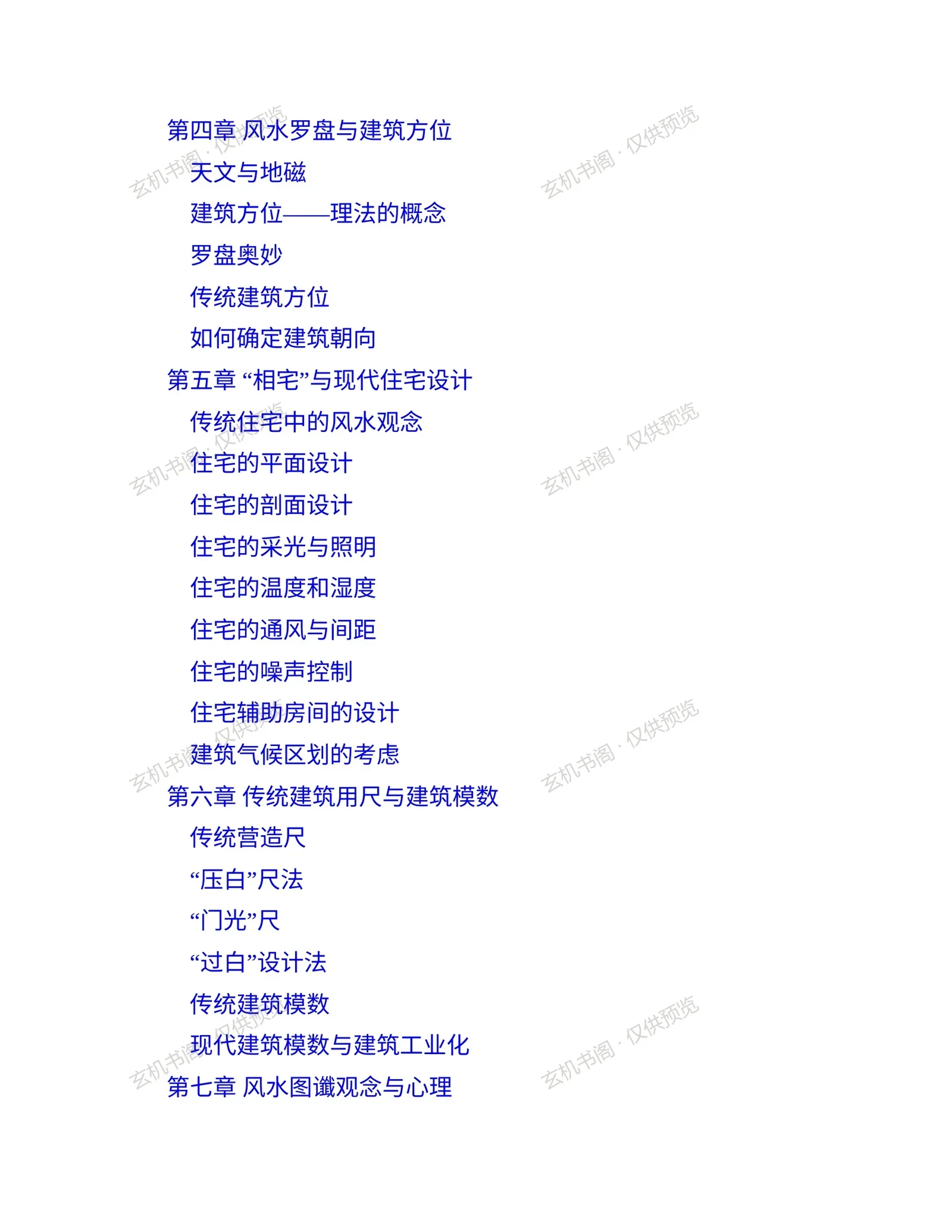
Ch.4 Compass and orientation: astronomy, magnetism, calculation
Ch.5 House inspection versus modern residential design
Ch.6 Traditional rulers and building modules: yabai, menguang
Ch.7 Diagrams, psychology, talismans and ward-off charms
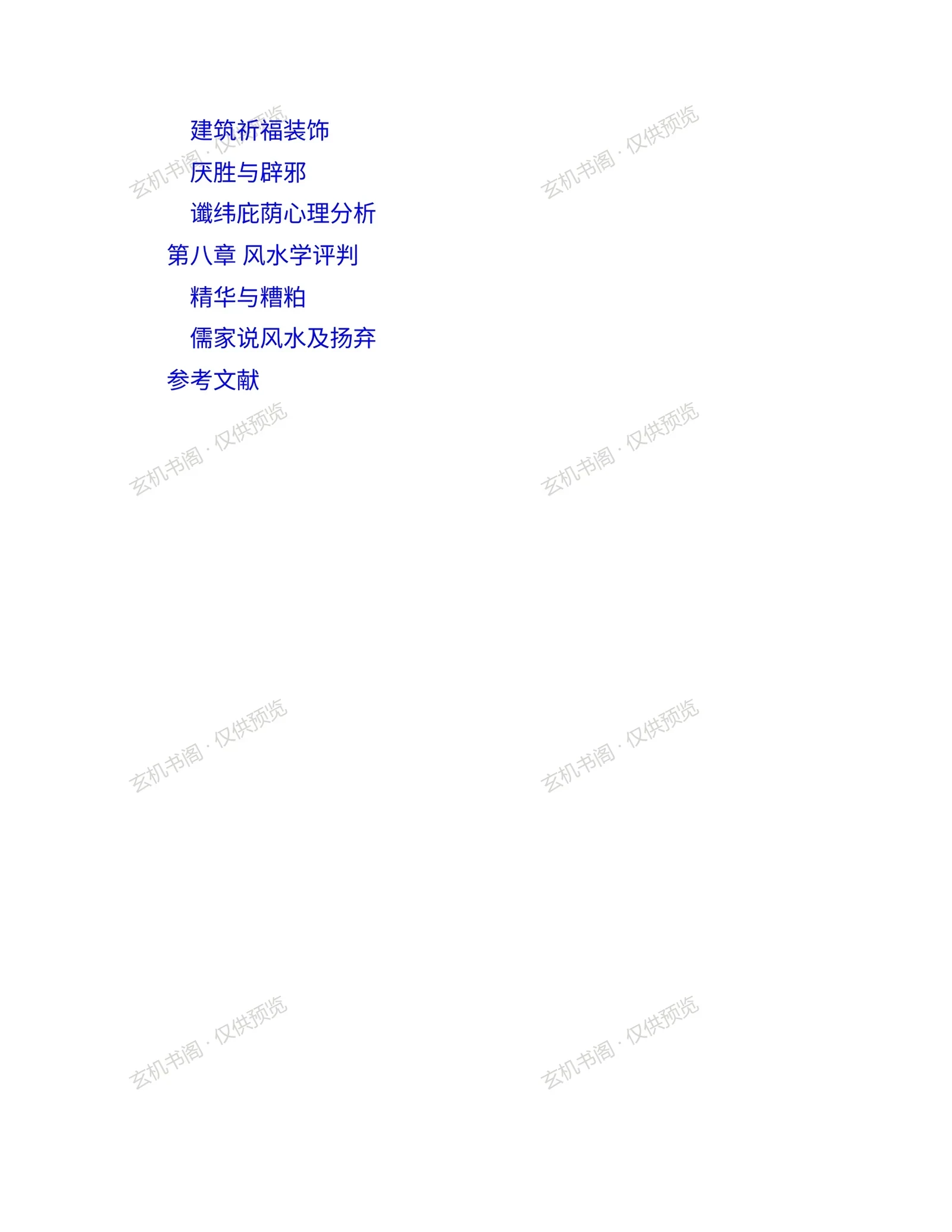
Ch.8 Critique: essence and dross, the Confucian view
Key Points
Reads feng shui through architectural history, covering schools and methods
Uses imperial tombs and temple sites as siting case studies
Dedicated chapter on the compass, magnetism and orientation
Compares traditional house inspection with modern housing design
Documents yabai, menguang and guobai ruler methods
Final chapter weighs feng shui's value against its superstition