Reading guide
Content guideOverview
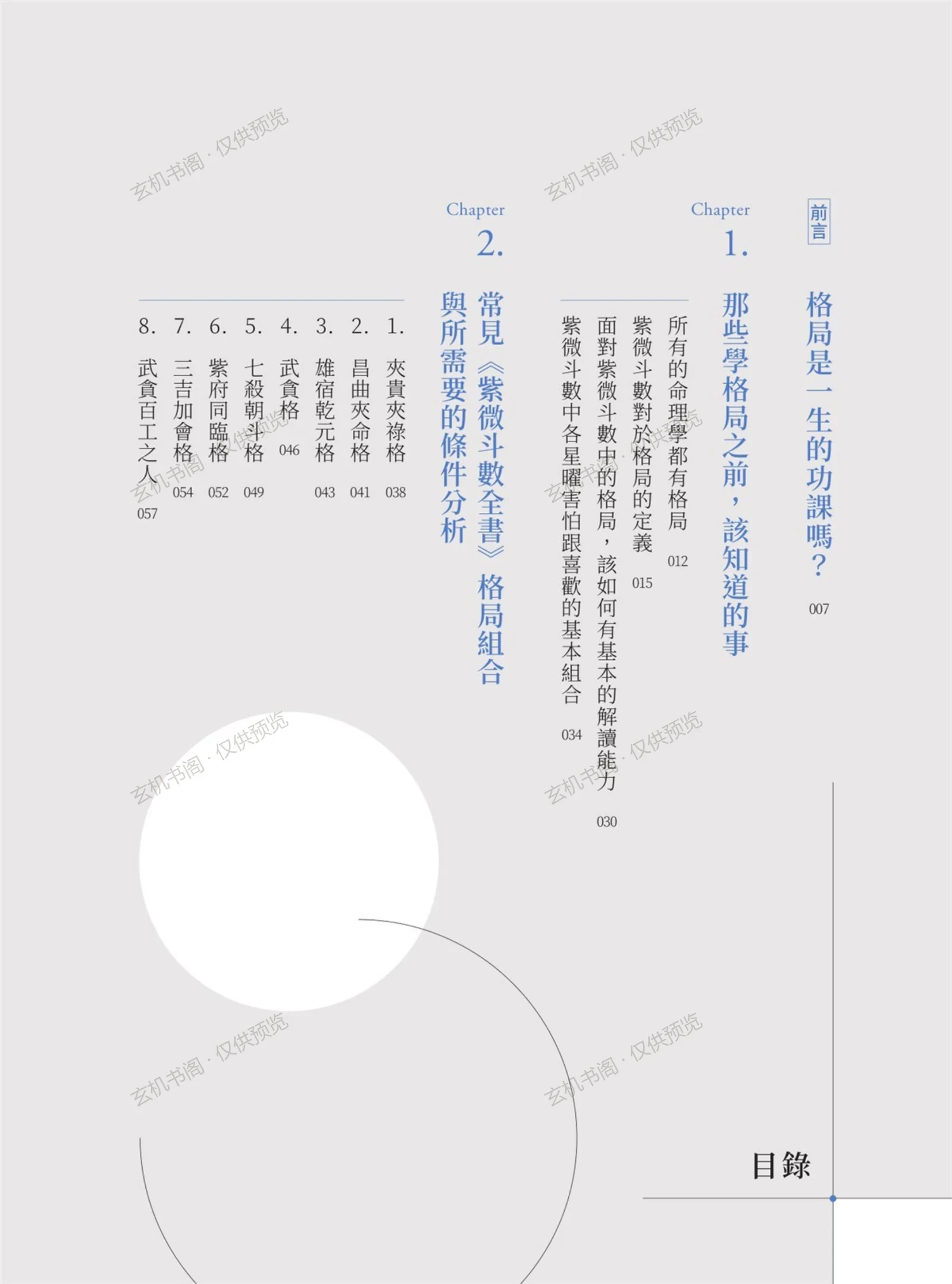
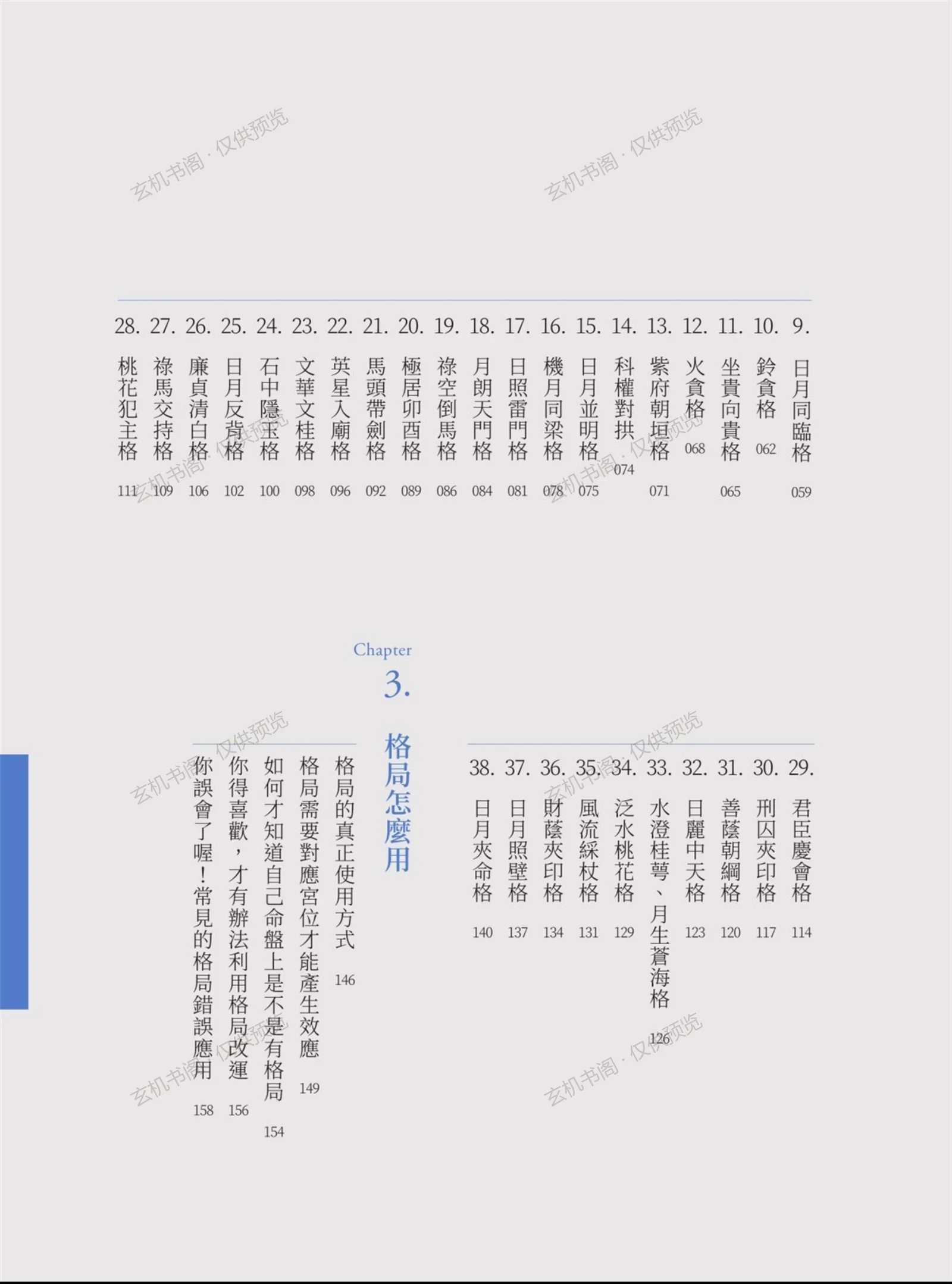
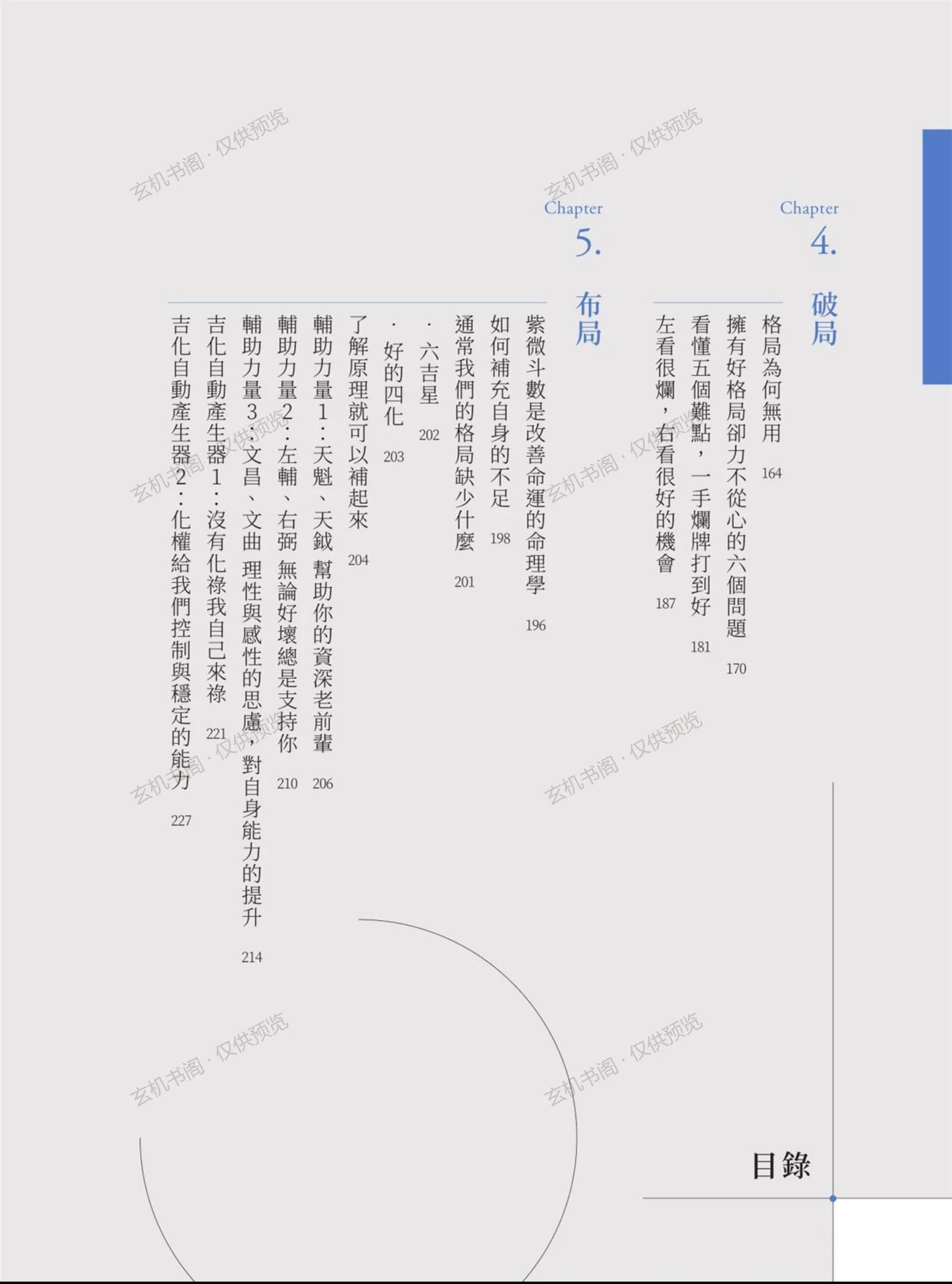
This volume of Da Geng's The Book of Changing Fortune focuses on geju, the structural patterns of Zi Wei Dou Shu charts. It opens by asking whether patterns are a lifelong lesson, then explains what to know before studying them and how the tradition defines a pattern. Chapter 2 catalogues dozens of classical combinations from the Zi Wei Dou Shu Quanshu, such as Jia Gui Jia Lu, Chang Qu Jia Ming, Xiong Su Qian Yuan, Wu Tan and Qi Sha Chao Dou, each with its required conditions. Chapter 3 turns to actual use: a pattern must affect the palace in question, and the reader must judge whether a chart truly holds one and how to apply it for change, while avoiding common misreadings. Chapter 4, Breaking Patterns, addresses why a good pattern can still fail and how to play a weak hand well. Chapter 5, Setting the Layout, treats Zi Wei Dou Shu as a method for improving fate, covering how to compensate for deficiencies, the Six Auspicious Stars, the Four Transformations, and supportive stars such as Tian Kui, Tian Yue, Zuo Fu, You Bi, Wen Chang and Wen Qu. The book moves from recognizing patterns to judging, applying, breaking and re-laying them out, suited to readers with basic Zi Wei Dou Shu knowledge.
Contents
Preface: Are patterns a lifelong lesson?
Ch.1 What to know before studying patterns
Ch.2 Classical patterns and their conditions
Ch.3 Real use of patterns and common misuses
Ch.4 Breaking patterns: why good charts fail
Ch.5 Layout: supplements, six stars, four transformations
Key Points
Catalogues dozens of classical patterns with their formation conditions
Stresses that a pattern must affect a palace to matter
Explains why good patterns fail and how to break the deadlock
Uses the six auspicious stars and four transformations to fill gaps
Argues for laying out one's own fate rather than trusting patterns blindly