Reading guide
Content guideOverview
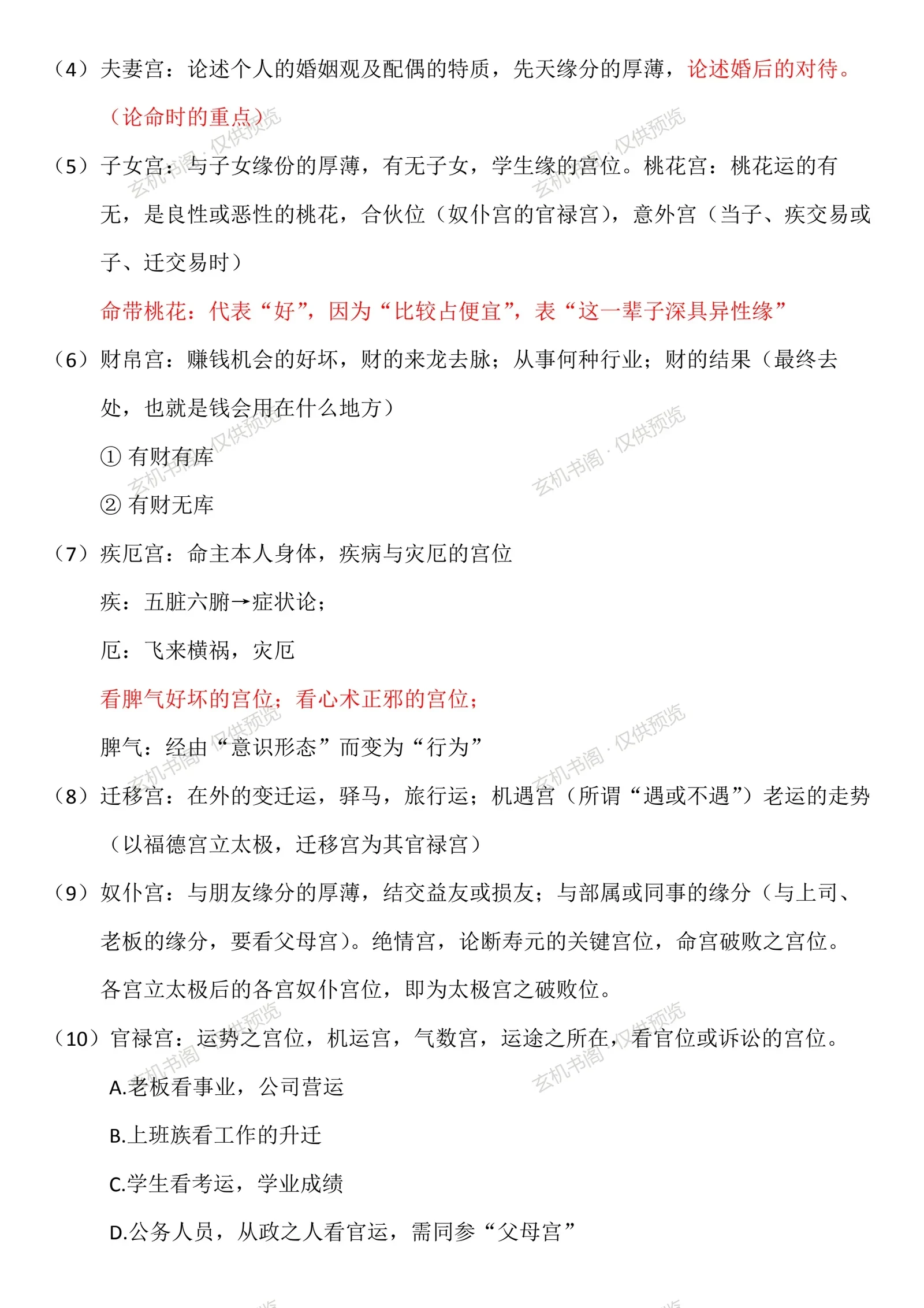
These are course notes from Xu Quanren's advanced Zi Wei Dou Shu class, compiled under the label 'Nanpai Sansu.' The text begins with the causal structure of innate destiny versus acquired fortune: destiny is fixed at birth, while luck unfolds through time, so reading a chart starts from the birth-year four transformations and the palace of origin. The core framework is the triad of palace, image and star. Palaces carry both basic and hidden meanings; images are handled through four transformations in single, double and triple combinations; stars do not carry good or bad fortune themselves but direct qi and describe personality. The notes also present a mnemonic for borrowing heavenly stems, tracing stars, forming images, matching branches to years and harmonizing with months. The later sections explain the meanings of the twelve palaces one by one, including destiny, parents, siblings, spouse, children, wealth, health, travel, servants and career, stressing that palace and image must be combined before stars are added.
Contents
Innate destiny, acquired change and the palace of origin
Three elements: palace, image, star
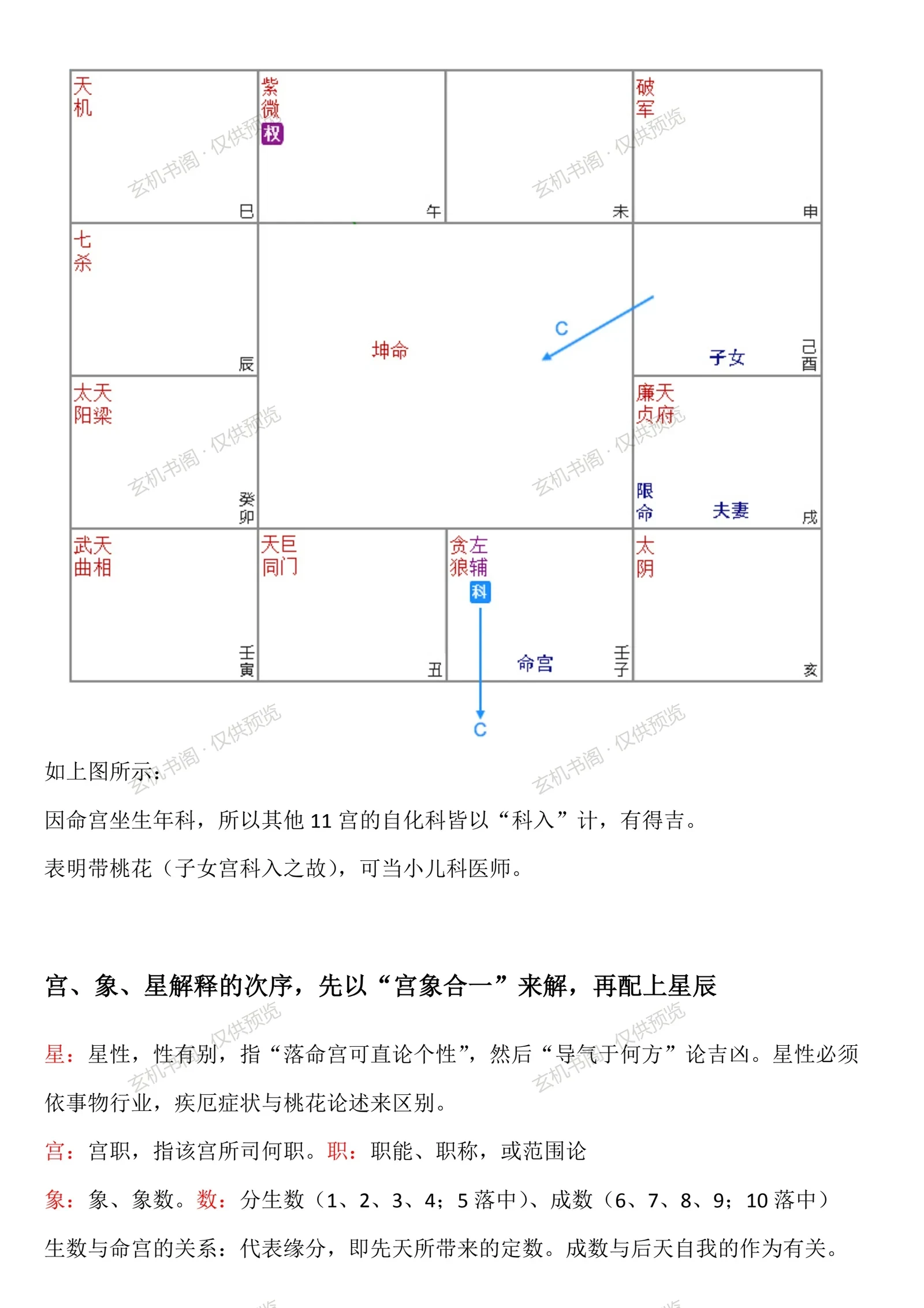
Four transformations in single and combined forms
The mnemonic for stems, stars, images and timing
Key questions and order of chart reading
Meanings of the twelve palaces
Key Points
Start from birth-year four transformations and the palace of origin
Palace, image and star must be read together for people, events and things
Stars carry no fixed fortune; they direct qi
Birth-year transformations are fixed; flying and self-transformations are variable
Each palace has basic and hidden meanings