Reading guide
Content guideOverview
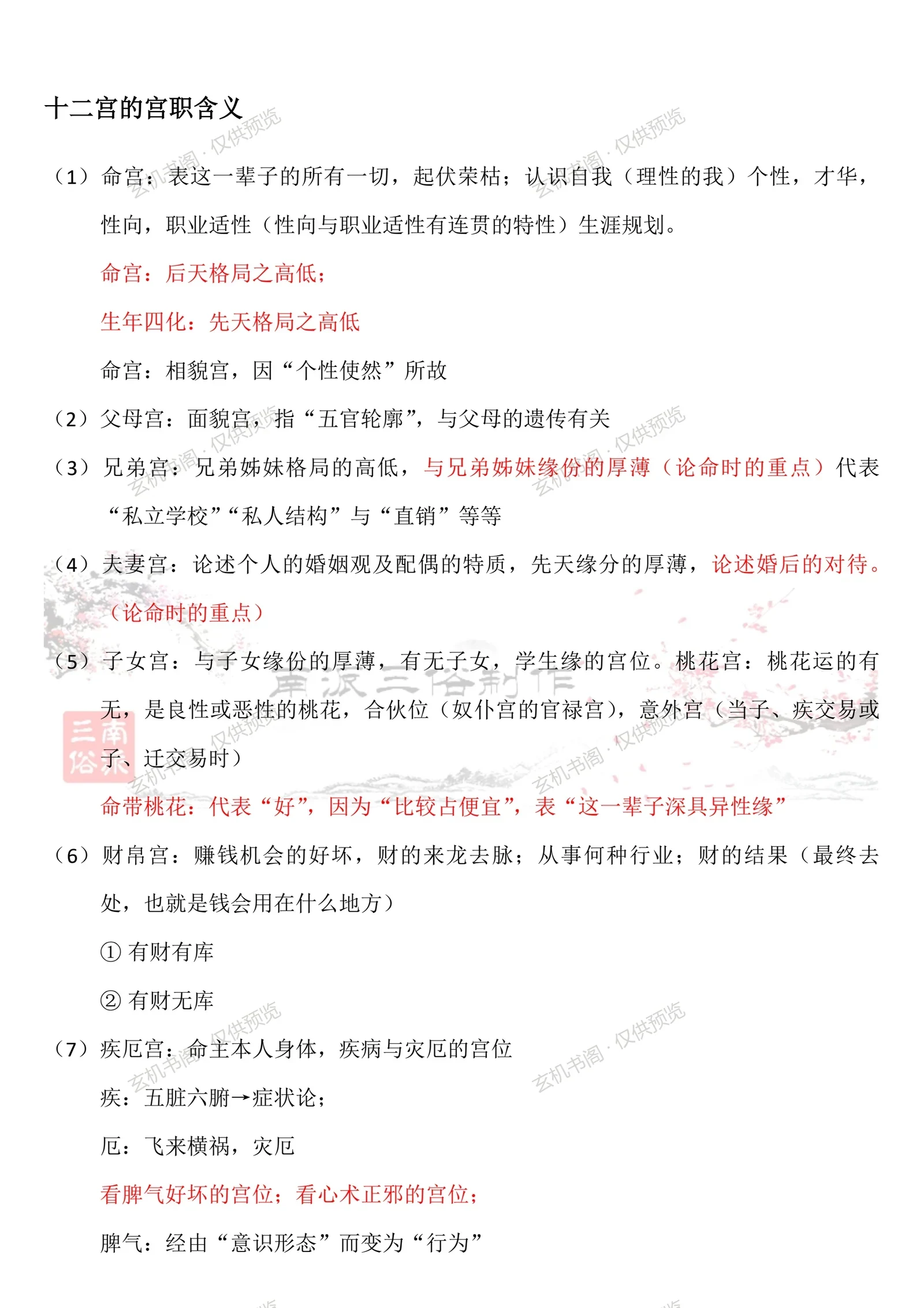
These notes from Xu Quanren's advanced Zi Wei Dou Shu class set out a structured method for chart reading. The opening sections distinguish innate destiny from later change, explain the role of birth-year Four Transformations and the originating palace, and discuss how time and space operate in judgment, noting the tradition's roots in Yijing numerology. The core framework is the triad of palace, sign and star: palaces carry official and hidden meanings, signs cover birth-year, flying and self-transformed Four Transformations, and stars guide qi and describe personality. Worked chart examples show how to combine palace and sign before adding stars, how to judge fortune and misfortune, and how a transformed Ke can indicate romance or career direction. The later part explains the meaning of each of the twelve palaces—life, parents, siblings, spouse, children, wealth, health and others—in terms of innate potential, closeness of relationships and suitable occupations. The book closes with practical rules for consultation, stressing that the reader should first ask what the client does and work from the existing situation.
Contents
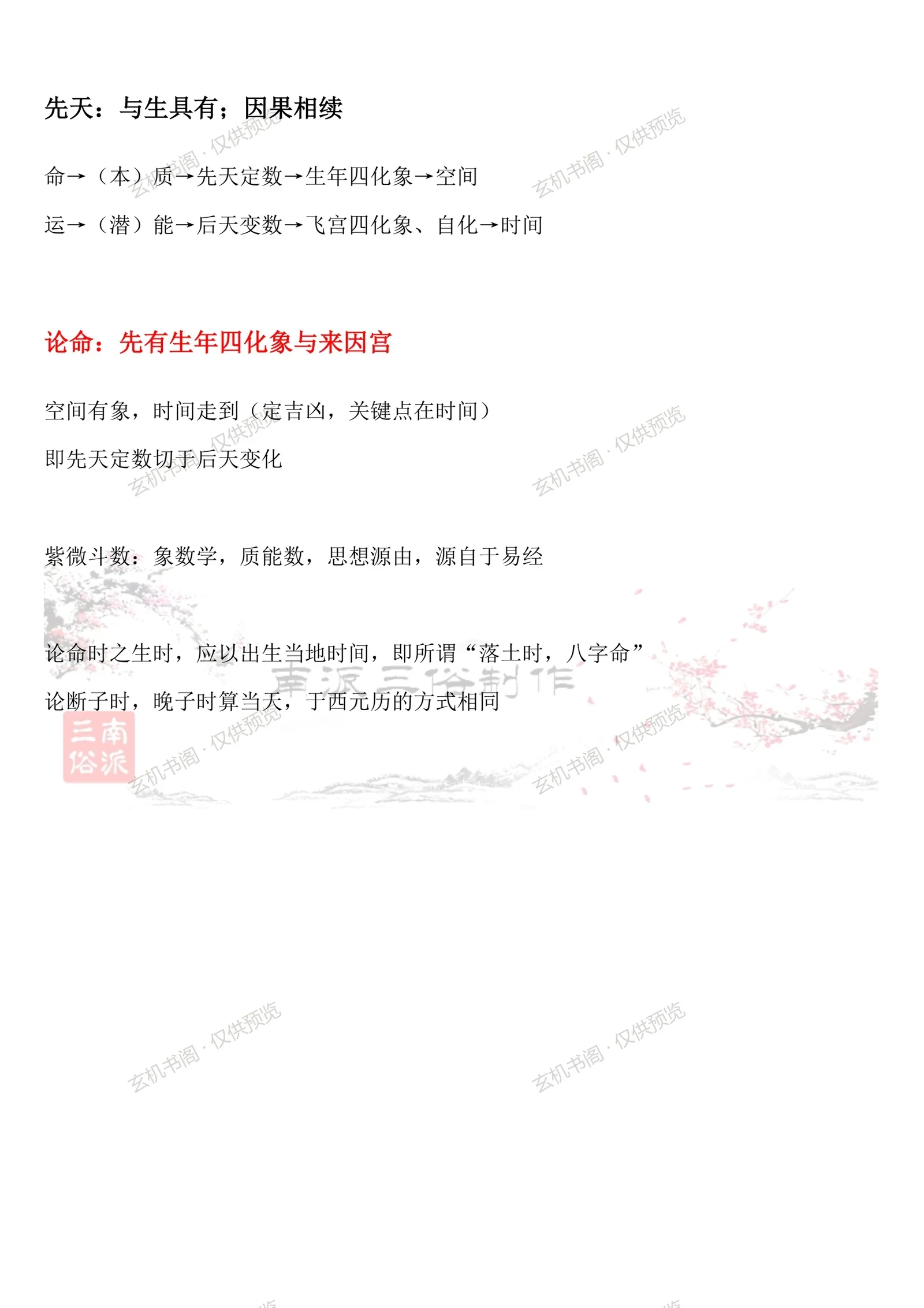
Innate destiny and later change
Birth-year Four Transformations and originating palace
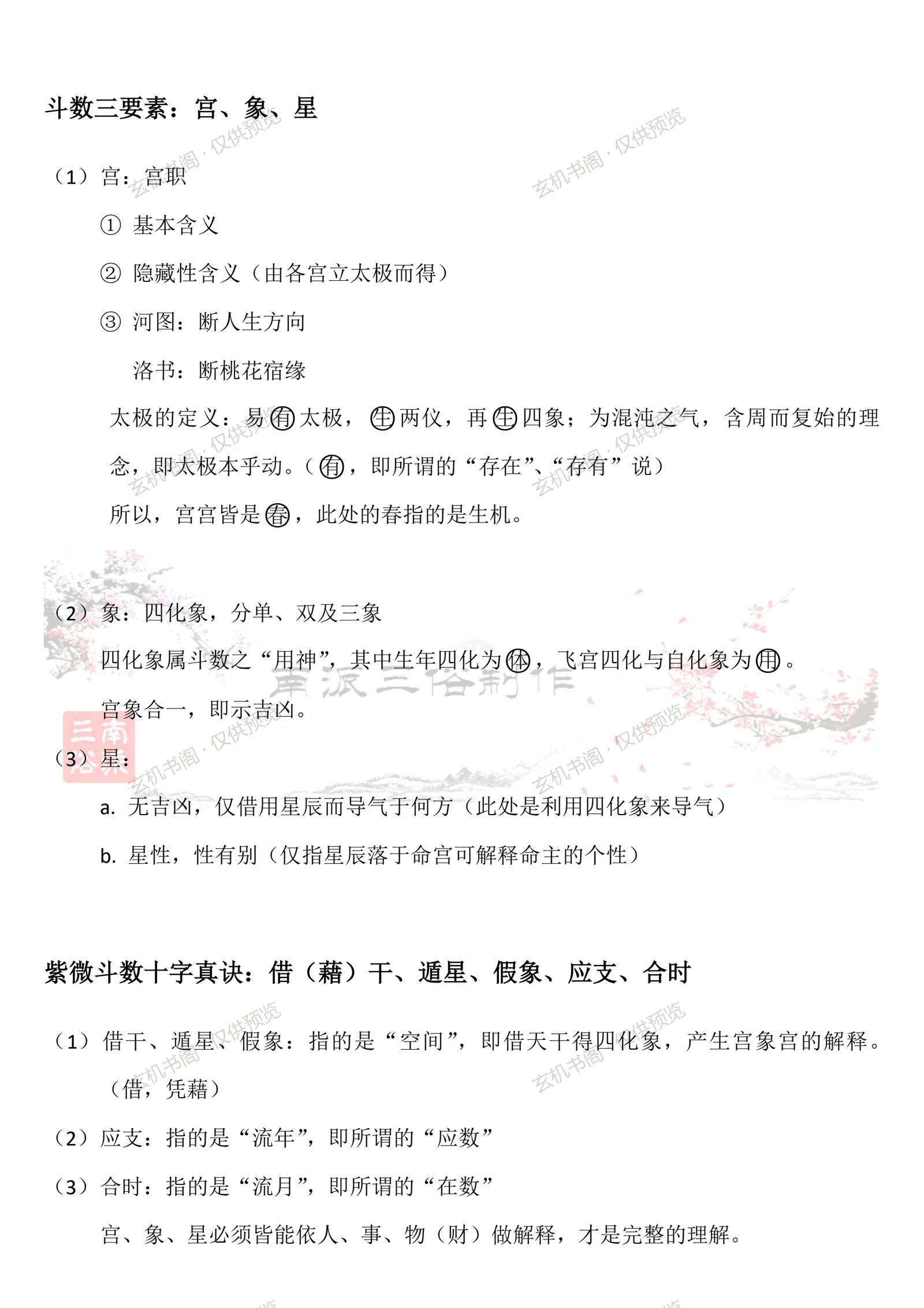
Three elements: palace, sign, star
Four Transformations: birth-year, flying, self
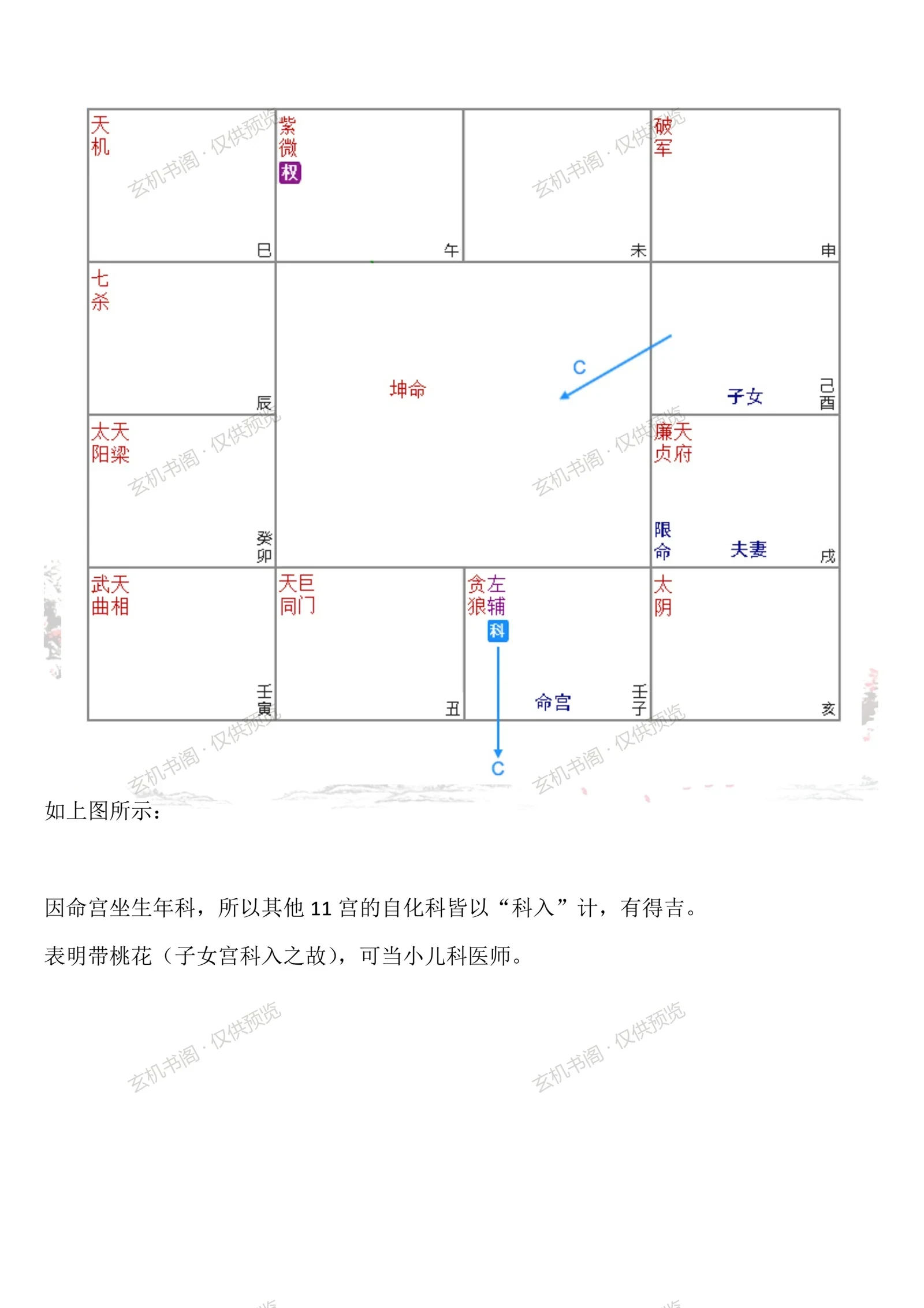
Chart examples: combining palace and sign
The twelve palaces and their functions
Consultation rules: context and timing
Key Points
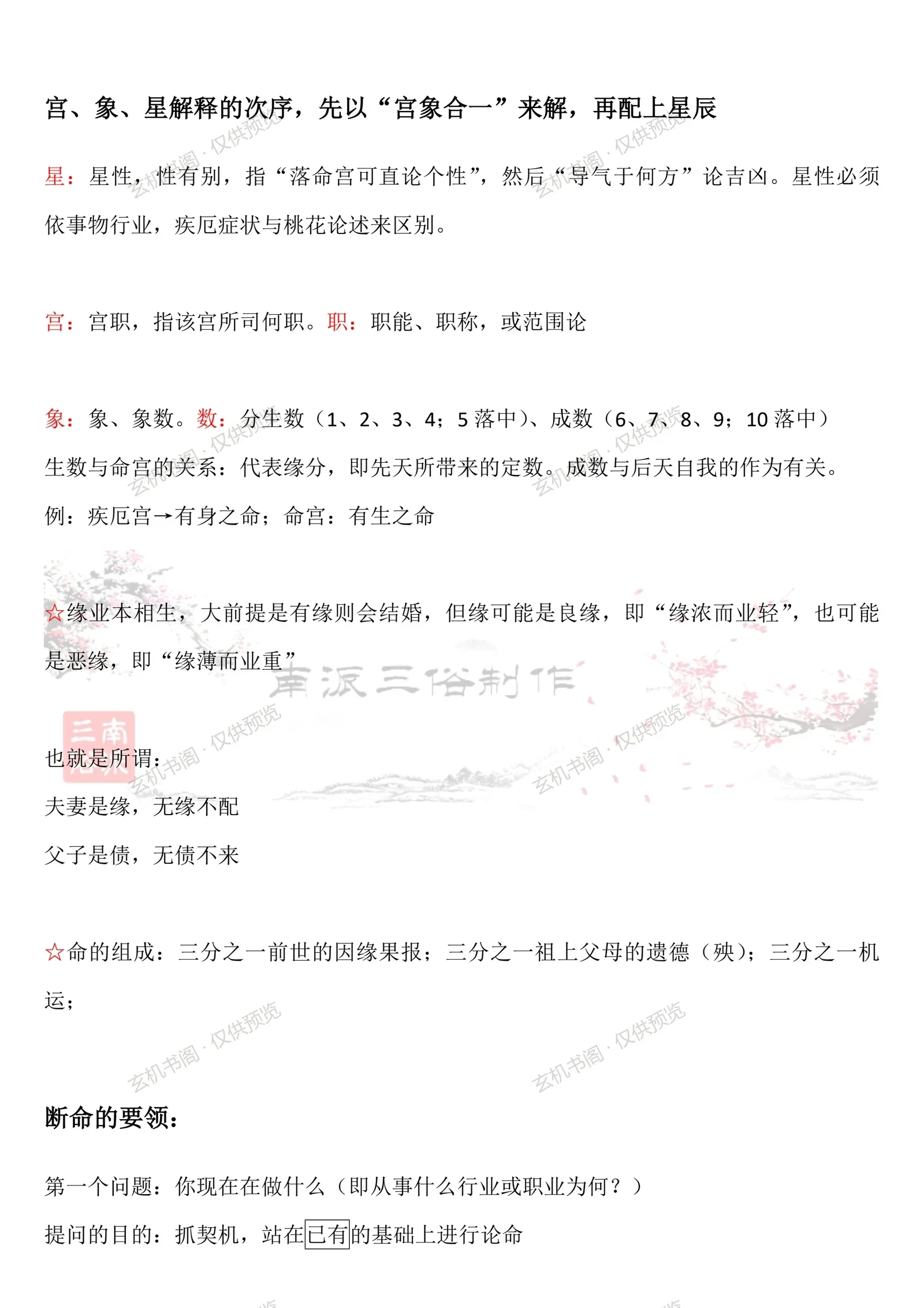
Palace, sign and star form the main analytical framework, with palace and sign read before stars.
Birth-year transformations define innate potential; flying and self transformations describe change and timing.
Space gives signs, time gives numbers, and timing is the key to fortune and misfortune.
Each palace's meaning should be interpreted through occupation, illness, romance and other concrete matters.
A reading begins by asking what the client does and building on the existing situation.