Reading guide
Content guideOverview
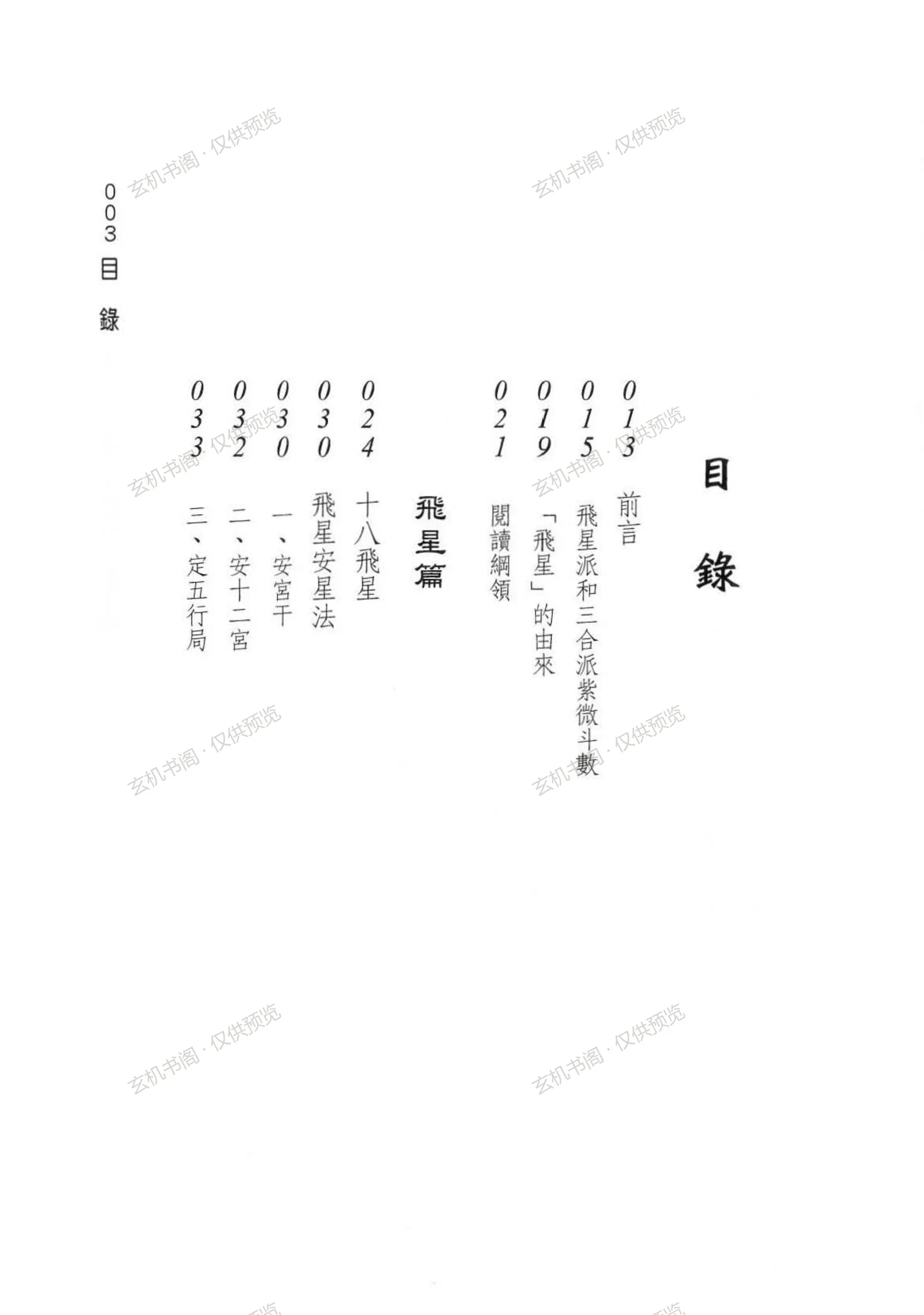
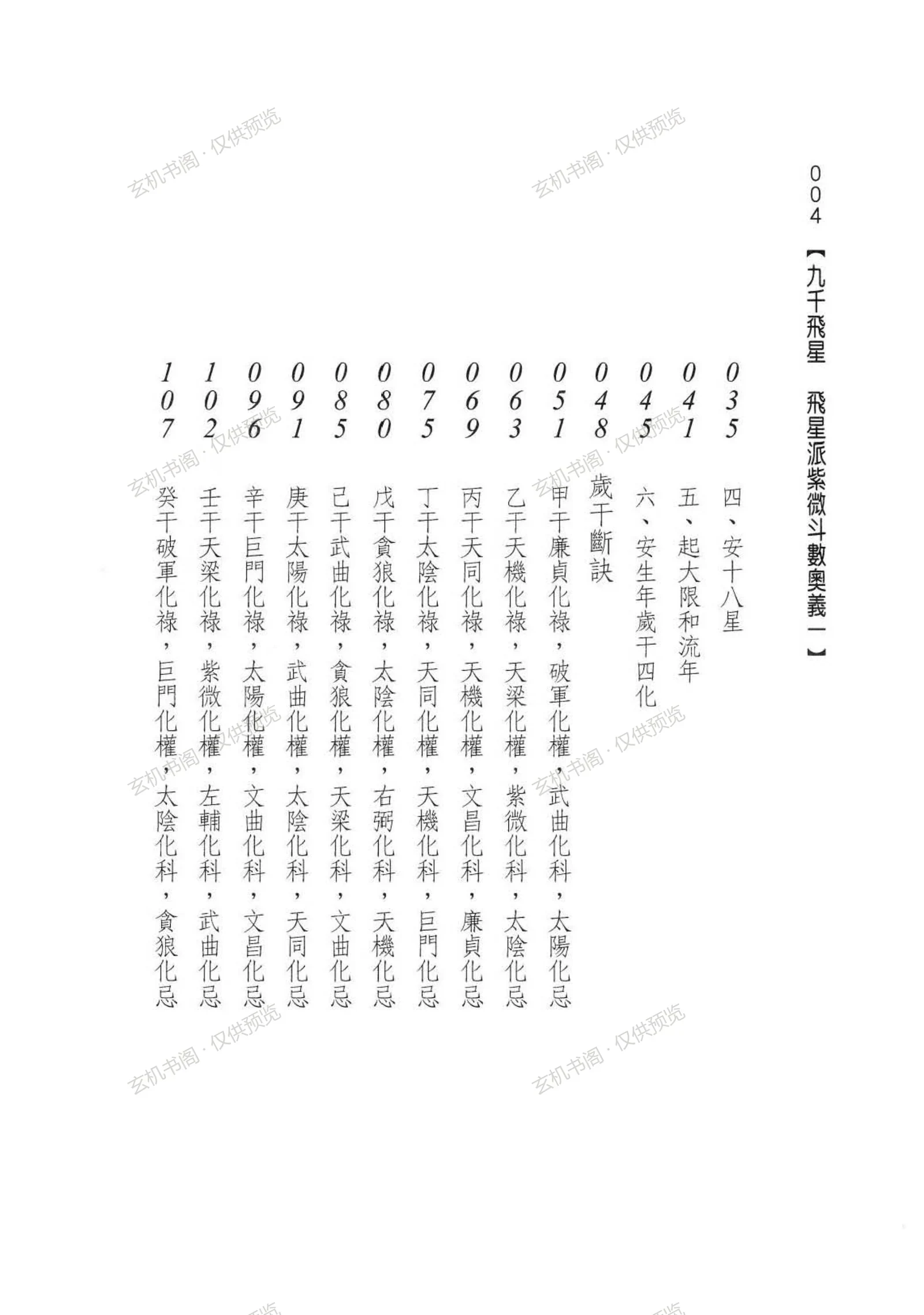
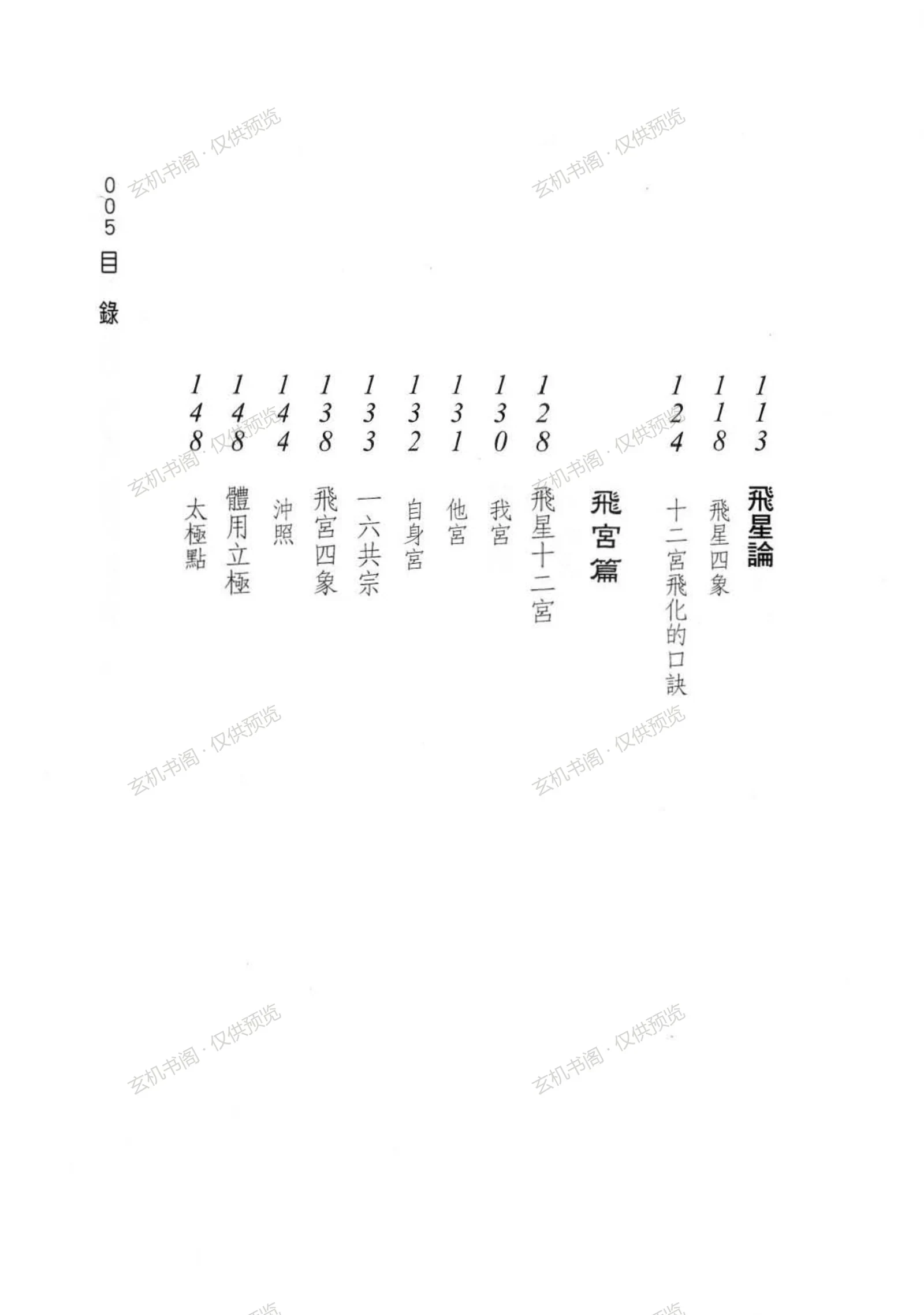
This is the first volume of a Flying Star (Feixing) school Zi Wei Dou Shu series. It opens with reading guidance and a comparison between the Flying Star and Sanhe approaches, then moves into chart construction: the eighteen flying stars, methods for placing stars, assigning palace stems, setting the twelve palaces, and determining the five-element bureau. A full set of four-transformation formulas for the ten heavenly stems is given, followed by sections on placing the eighteen stars, starting the major limits and yearly cycles, and stem-based judgments. The Flying Palace section explains flying star theory, the four images, and palace-by-palace transformation formulas, discussing the self palace, other palace, and body palace, along with the one-six shared principle, opposition and illumination, substance and function, and the taiji point. The Flying Origin section treats time, event, and star as three variables, covering palace transfer, self-transformation, and the threefold origins of stems, branches, and human cycles. The emphasis throughout is on the dynamic relations produced by the four transformations rather than static star combinations.
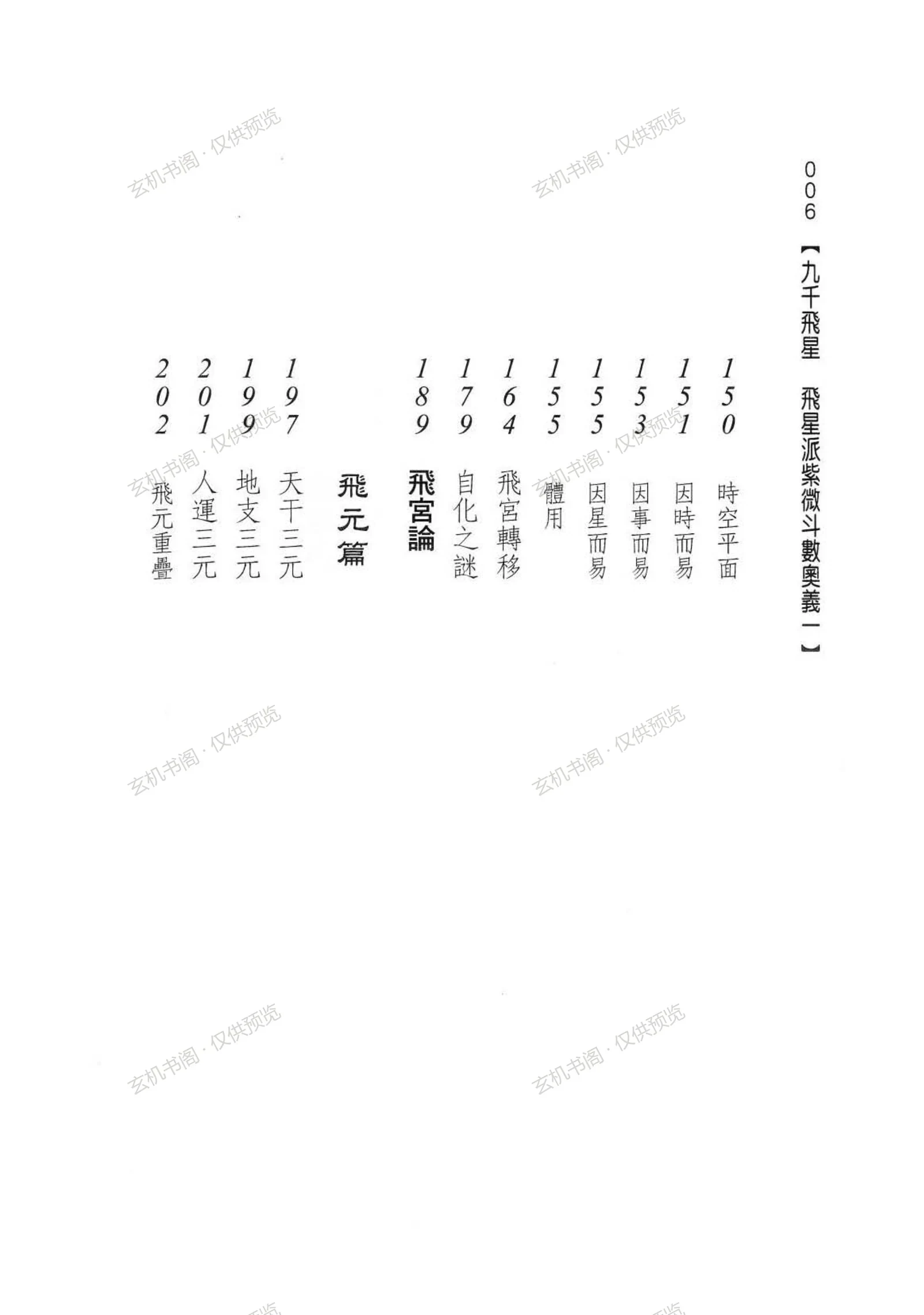
Contents
Preface and comparison of the Flying Star and Sanhe schools
Flying Star section: eighteen stars and placement methods
Assigning palace stems, twelve palaces, five-element bureau
Four transformations by year stem and birth year stem
Flying Palace section: four images and palace formulas
Substance and function, opposition, taiji point
Flying Origin section: three origins and palace transfer
The puzzle of self-transformation and overlapping origins
Key Points
Centers on the four transformations rather than star combinations
Provides complete four-transformation formulas for all ten stems
Explains flying transformations for self, other, and body palaces
Introduces the one-six principle, substance-function, and taiji point
Treats time, event, and star together in the Flying Origin section