Reading guide
Content guideOverview
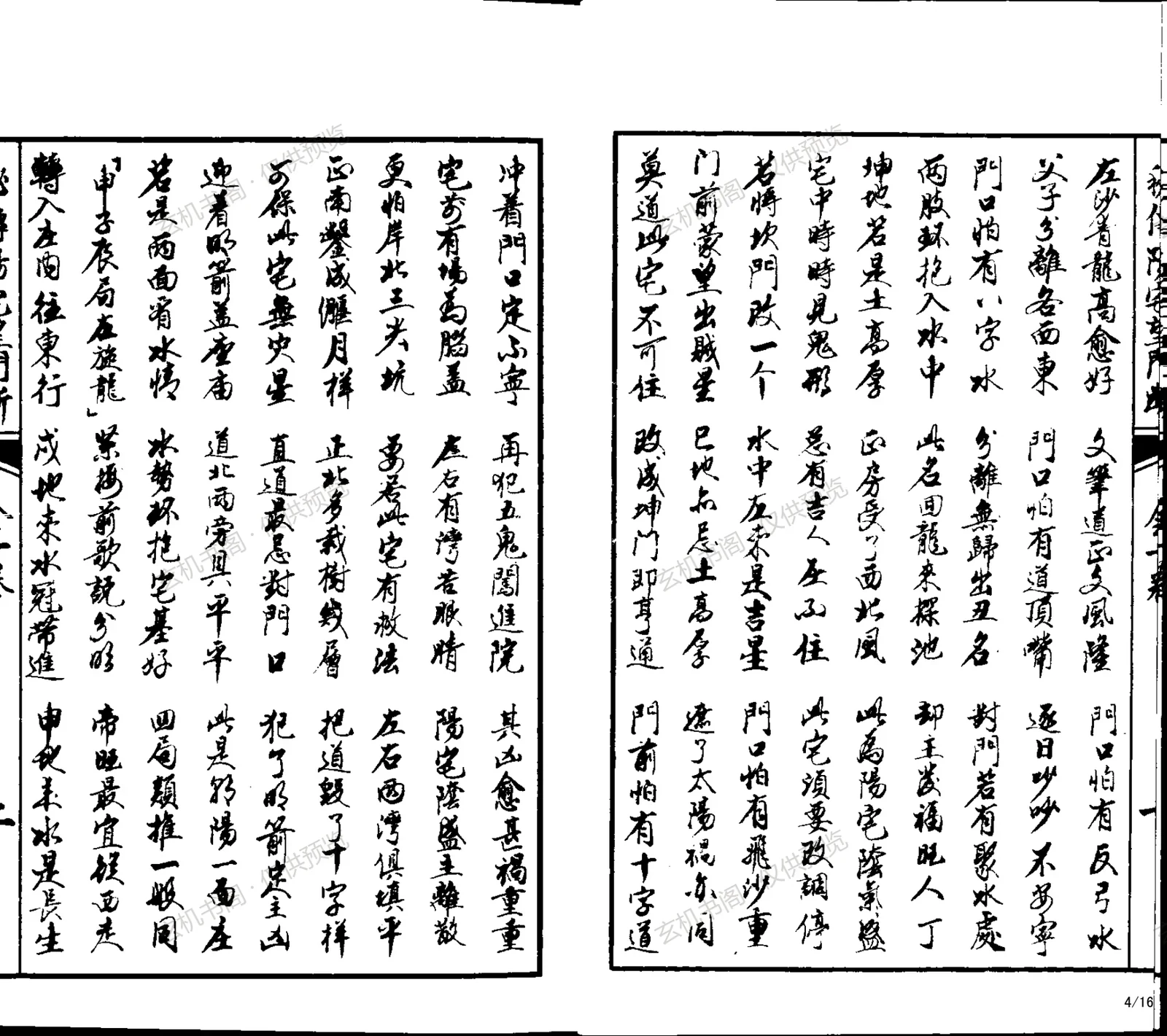
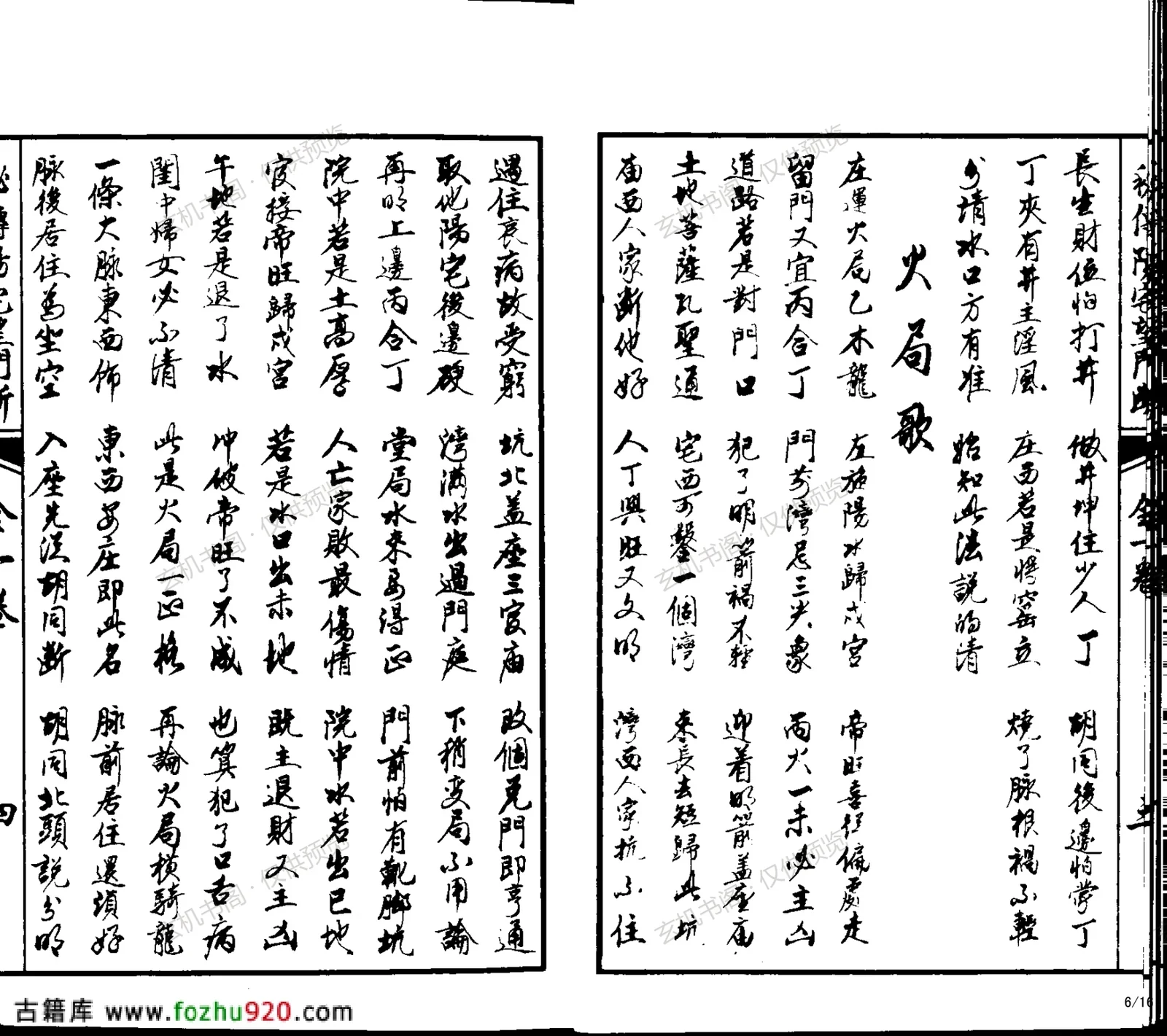
Printed in 1919 by Shanghai Dacheng Book Company, this yang-dwelling (yangzhai) text is written in seven-character verse and focuses on external form rather than compass-school calculation. It opens with general rules on sitting orientation, encircling forms, and water mouths, then catalogs gate-facing features such as reverse bow water, splayed water, crossroads, unbalanced dragon-tiger sides, ghost-shaped sand, flying sand, and temple intrusions, each with judgments on household members, wealth, examination success, illness, and legal trouble. Later sections include局 songs such as the Fire Bureau Song, showing a mix of form-based and bureau-based methods. The book is useful for studying Republican-period popular fengshui, verse-style宅法 literature, and traditional terminology of house judgment.
Contents
General principles: orientation, encircling forms, water mouths
Water forms before the gate: reverse bow, splayed water, crossroads
Sand and structures: dragon-tiger imbalance, ghost forms, flying sand, temples
Bureau-based songs, including the Fire Bureau Song
Judgments on household members, wealth, illness, and disputes
Key Points
Records gate-observation house judgments in seven-character verse for easy recitation.
Emphasizes external forms: gate orientation, watercourses, sand peaks, roads, and neighboring structures.
Judgments cover offspring, wealth, examination success, illness, lawsuits, and isolation.
Includes bureau songs such as the Fire Bureau Song, indicating methods beyond pure form theory.
A Republican-era imprint useful for studying modern popular fengshui editions.