Reading guide
Content guideOverview
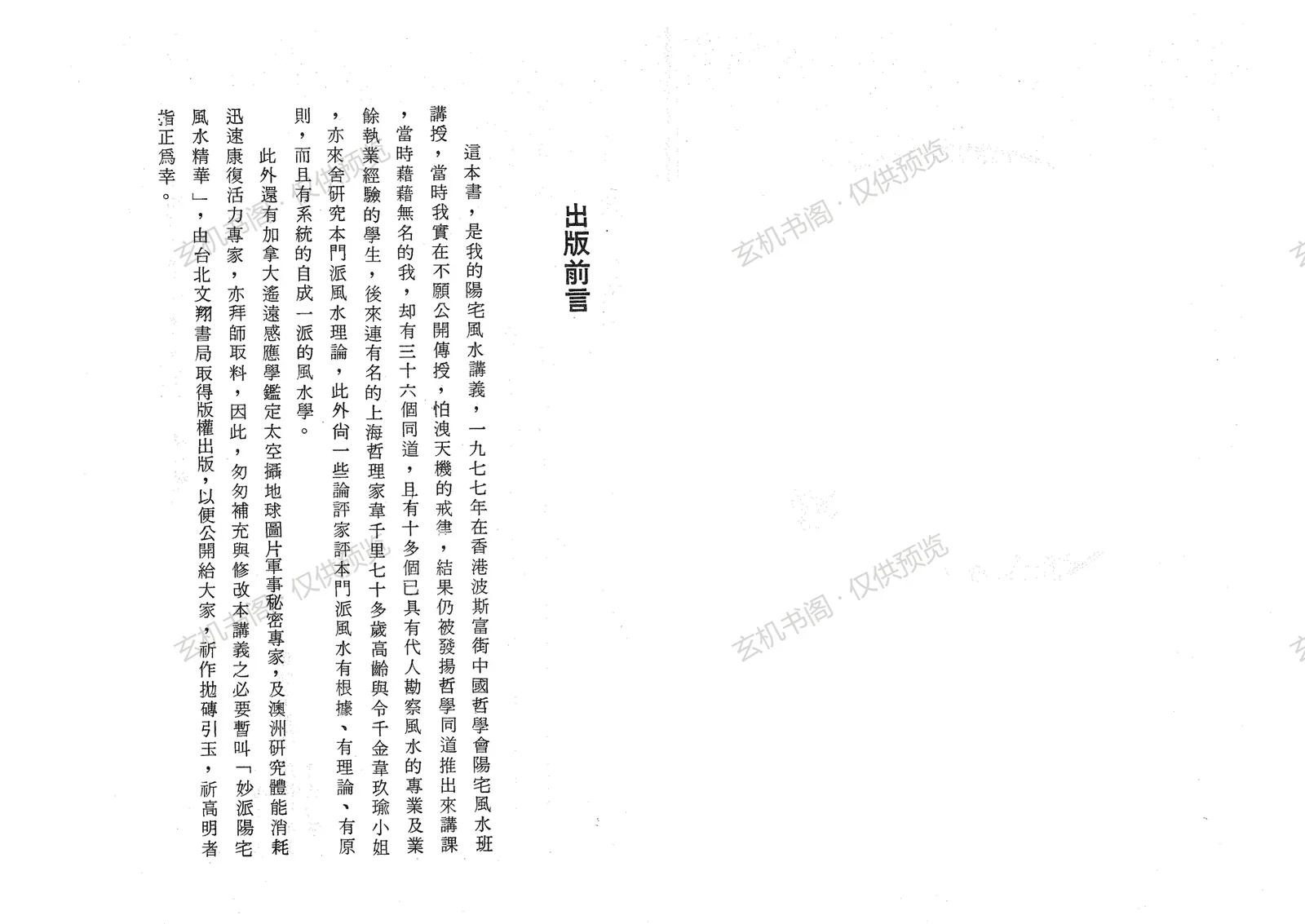
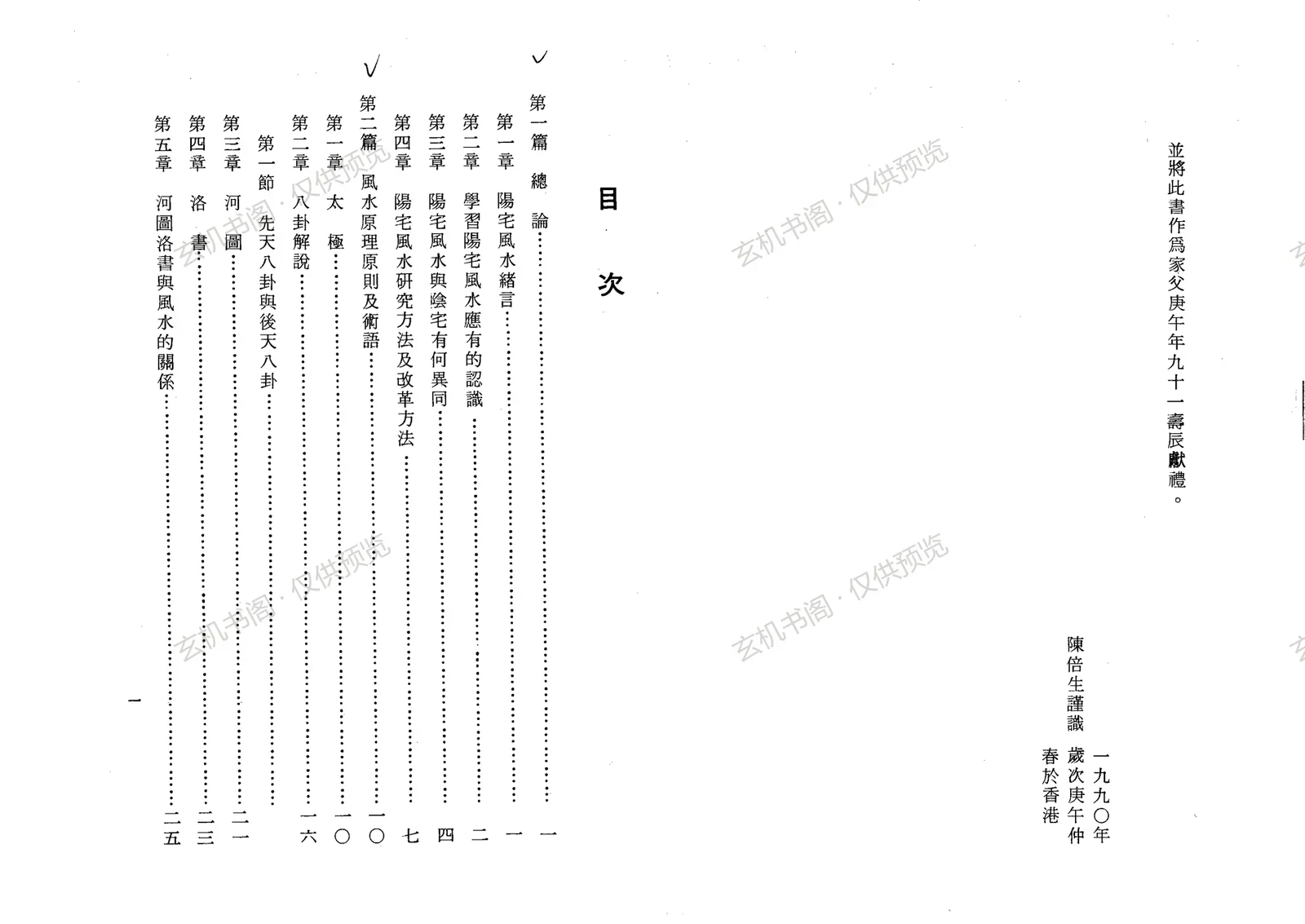
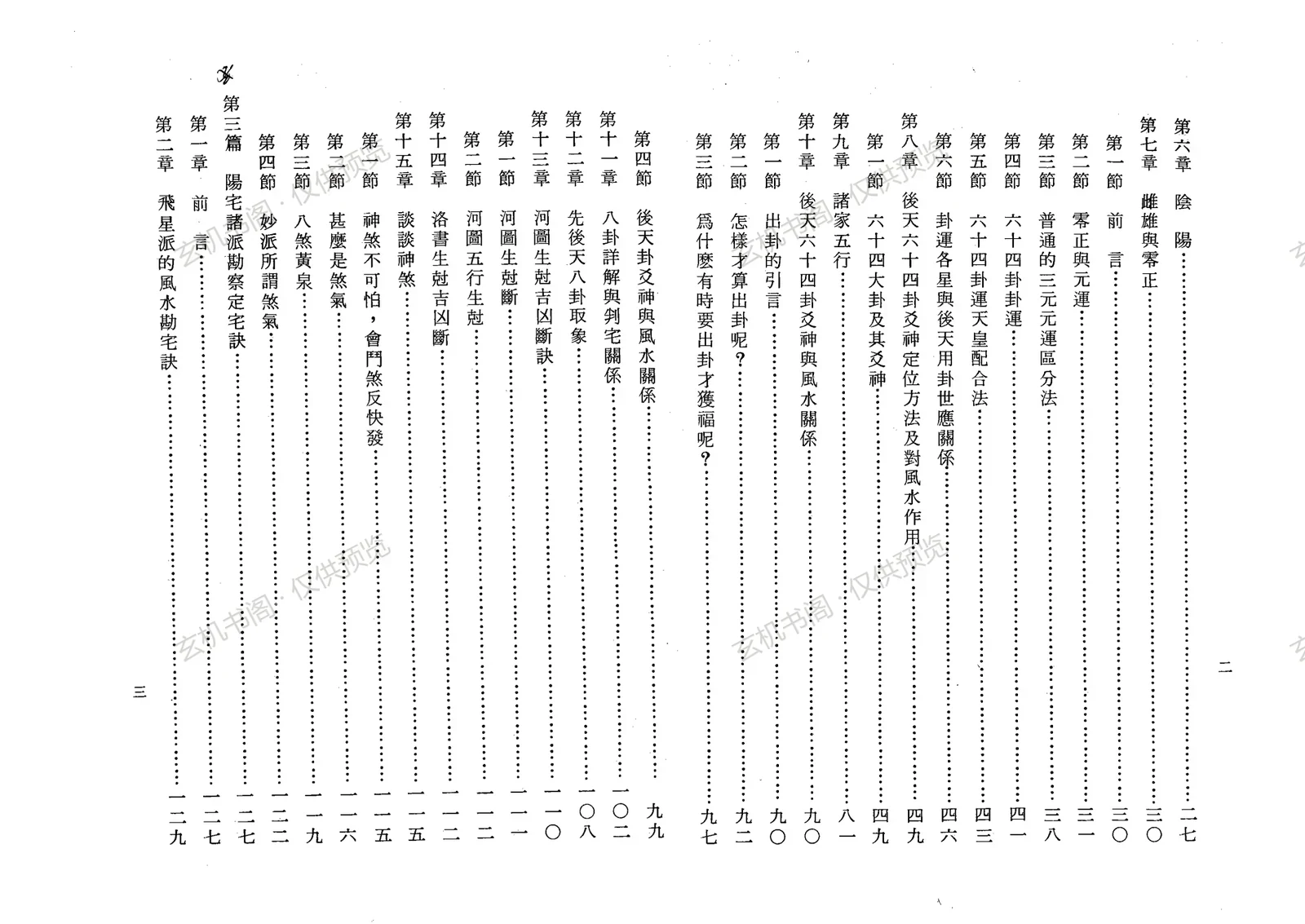
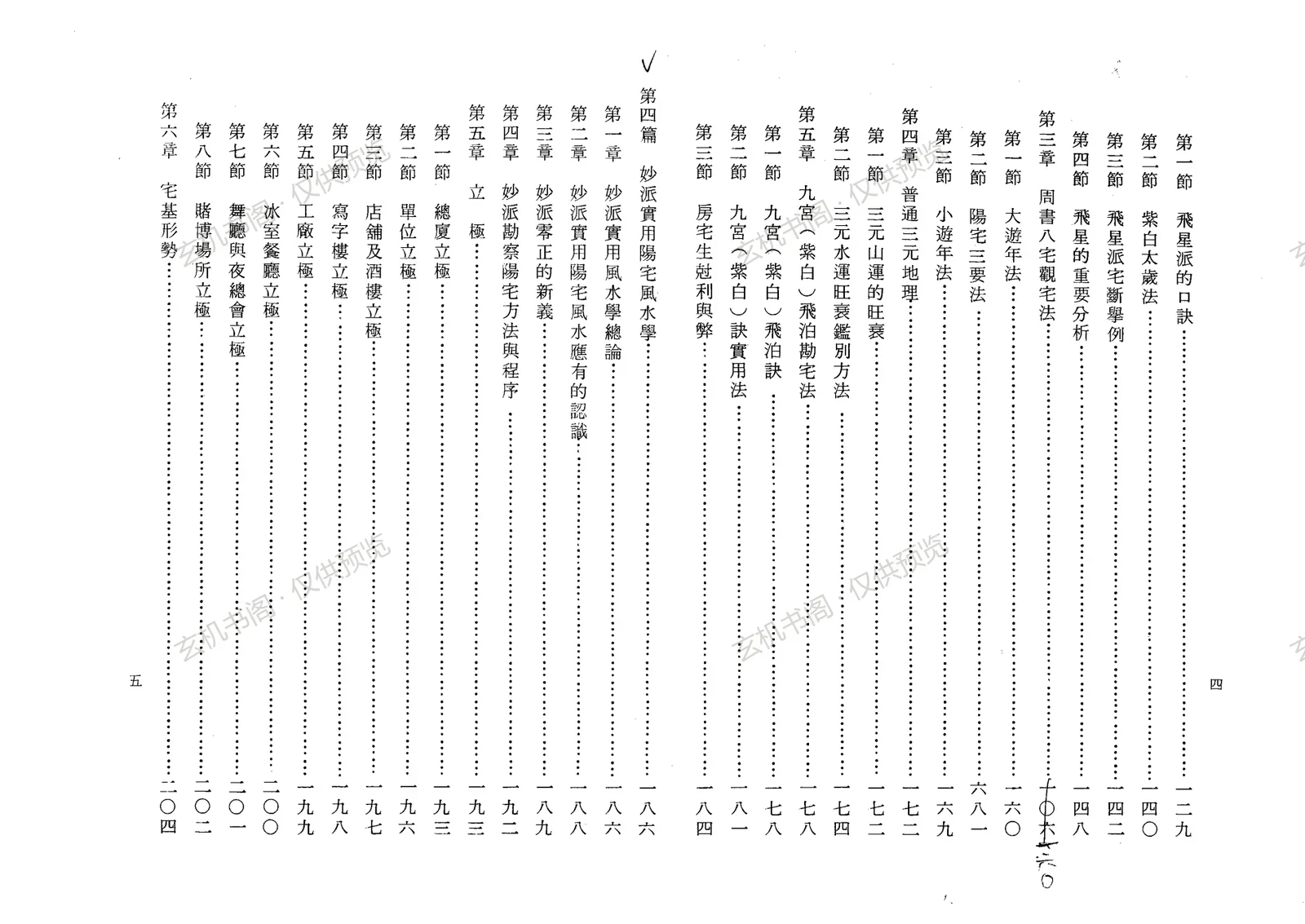
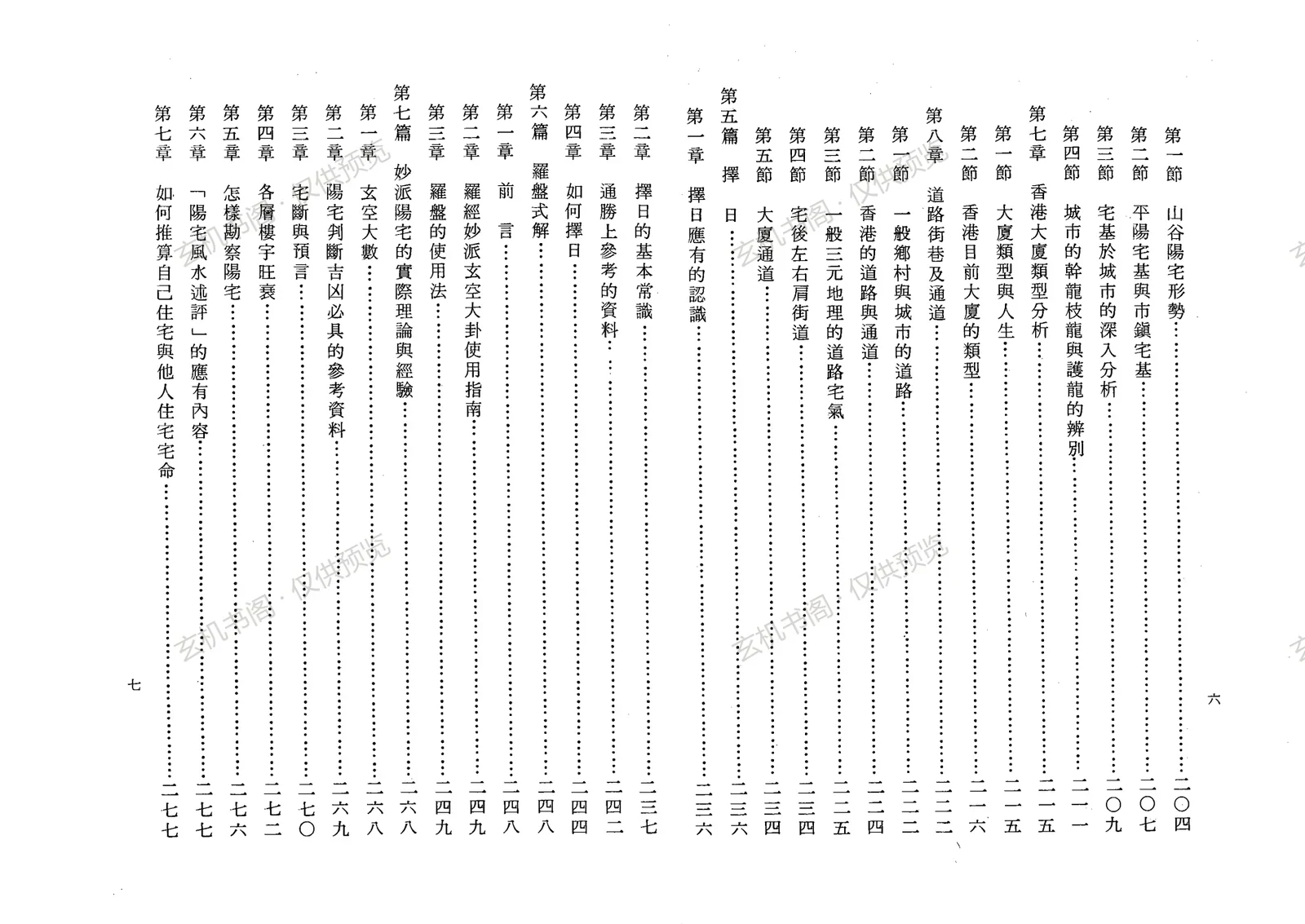
This book is based on lectures Chen Beisheng gave in 1977 at the Chinese Philosophical Society on波斯富街 in Hong Kong, later expanded with commentary and additional material. It sets out the Miaopai approach to yang-dwelling feng shui in seven parts. The opening section discusses the purpose of yang-dwelling feng shui and how it differs from yin-dwelling practice. The second part builds the theoretical groundwork from Taiji, the bagua, and the Hetu and Luoshu, then works through the relations between earlier-and later-heaven trigrams and dwellings, the sixty-four hexagrams and their line-spirits and ruling/responding lines, and the conditions under which casting a hexagram brings benefit. The third part surveys various schools' methods of site inspection, comparing the eight-sha yellow spring, shensha and sha-qi, and the flying-star approach. Parts four and five form the core: practical Miaopai methods for establishing the center point (liji) in dwellings, shops, restaurants, factories, offices, shrines, and gambling halls; the nine-palace flying distribution; three-yuan water-period prosperity and decline; the mutual production and restraint of rooms; and the interpretation of roads, alleys, and building passageways. Part six is a detailed guide to the compass, especially the Xuan Kong Da Gua compass, and part seven presents applied theory and experience, including what a proper yang-dwelling assessment should contain and how to calculate dwelling destiny. The many Hong Kong street and building examples give the book a strongly practical, urban flavor.
Contents
Part 1: Introduction to yang-dwelling feng shui and study method
Part 2: Principles — Taiji, bagua, Hetu and Luoshu
Part 3: Site-inspection methods of various schools and flying-star assessment
Part 4: Practical Miaopai yang-dwelling methods and establishing the center
Part 5: Nine-palace flying, three-yuan water periods, and road forms
Part 6: Compass explanation and Xuan Kong Da Gua compass guide
Part 7: Applied Miaopai theory and experience
Key Points
Organizes Miaopai yang-dwelling practice while drawing on flying-star, three-yuan, and Xuan Kong Da Gua methods
Gives detailed center-point methods for homes, shops, factories, shrines, and more
Emphasizes hands-on compass work with a dedicated Xuan Kong Da Gua compass guide
Rich Hong Kong case material on roads, buildings, and alleys
Ends with a framework for yang-dwelling assessments and dwelling-destiny calculation