Reading guide
Content guideOverview
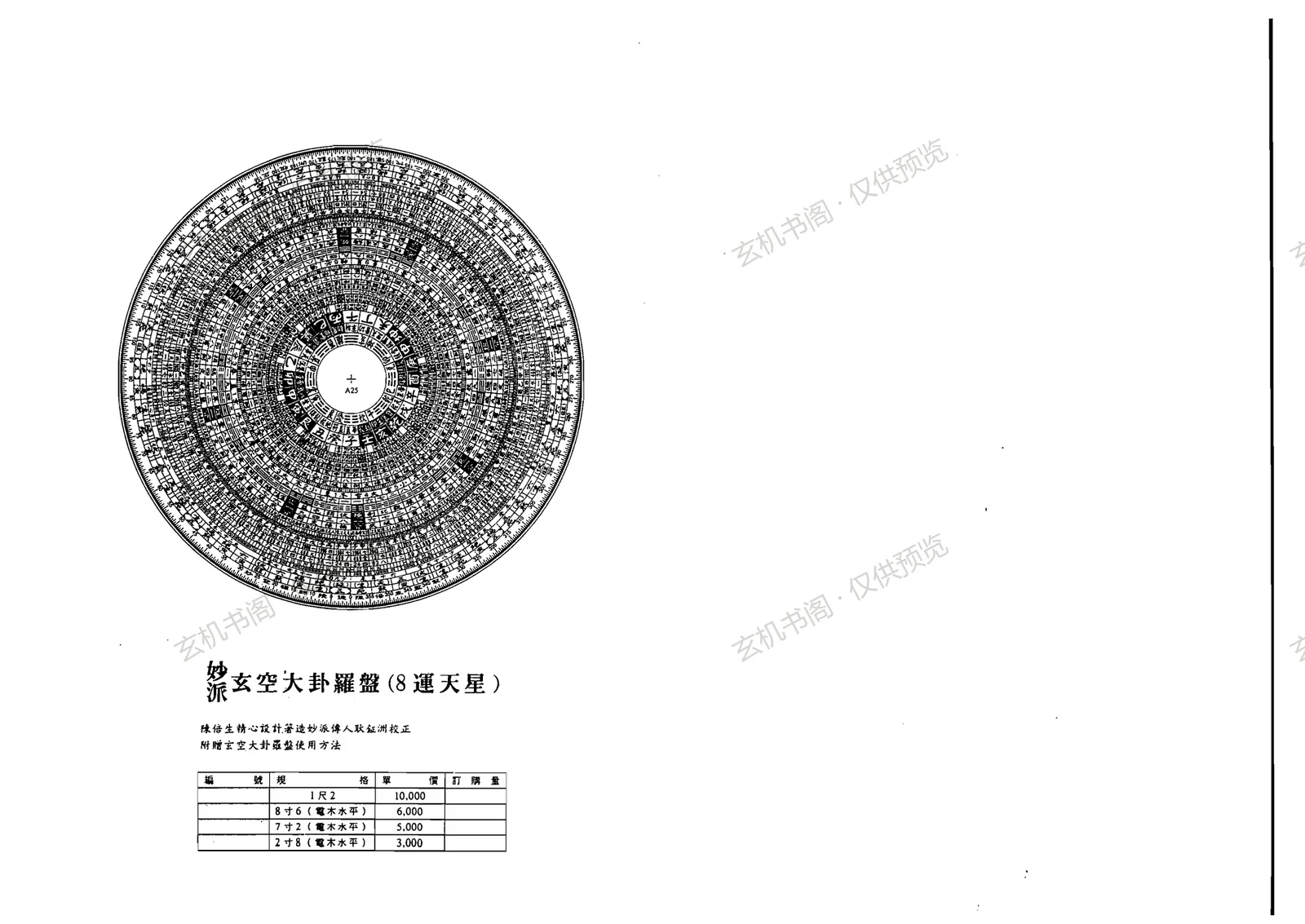
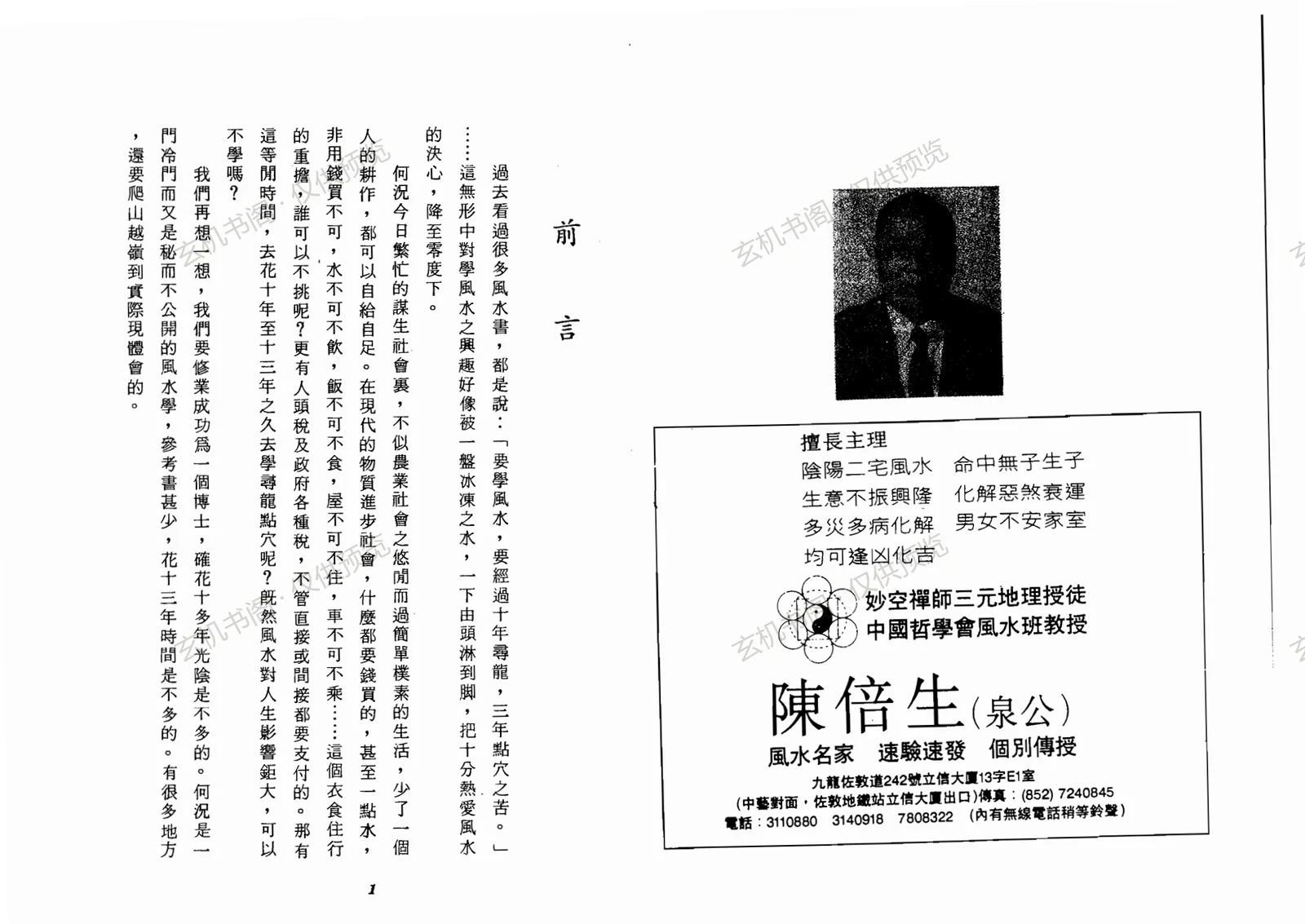
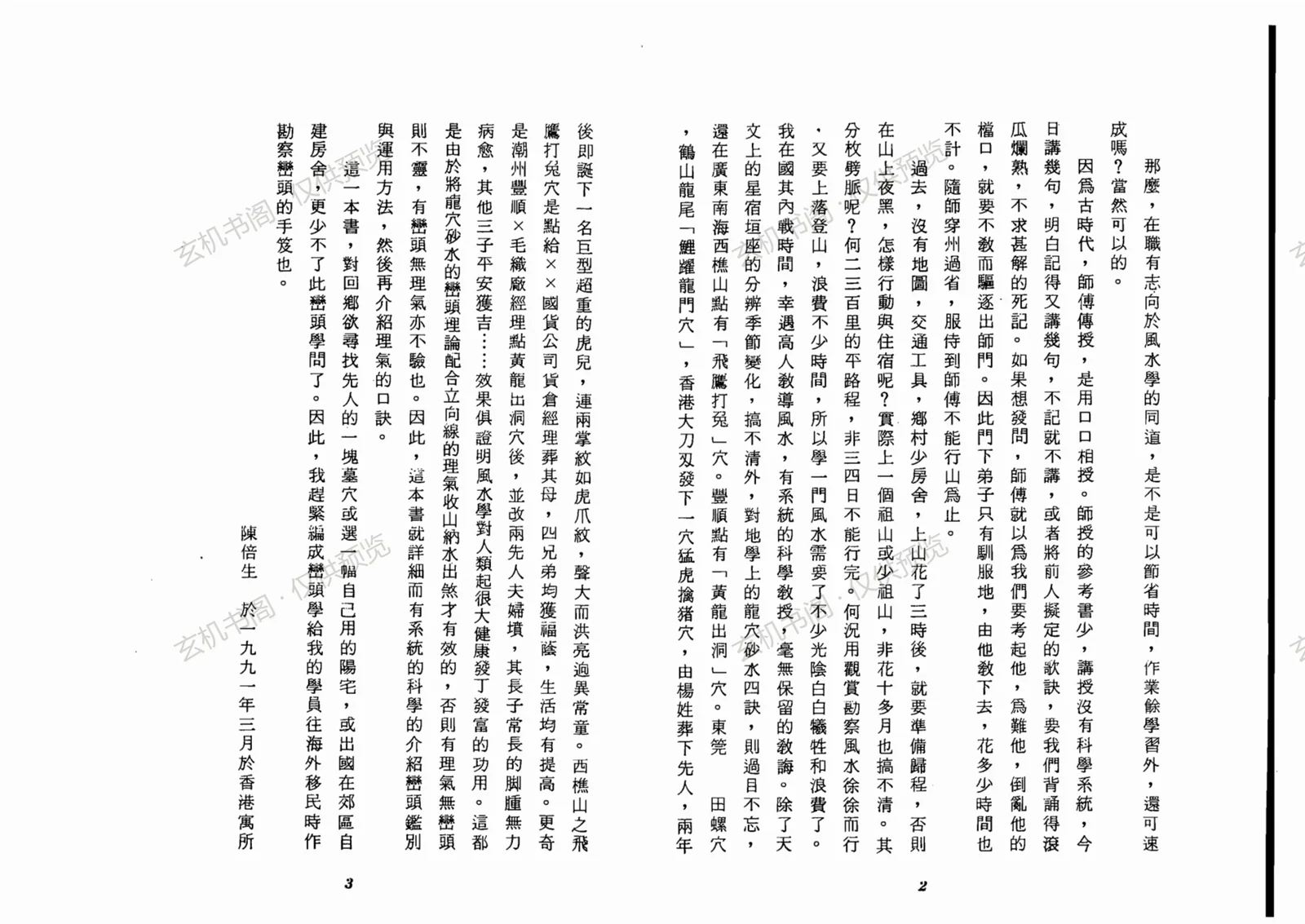
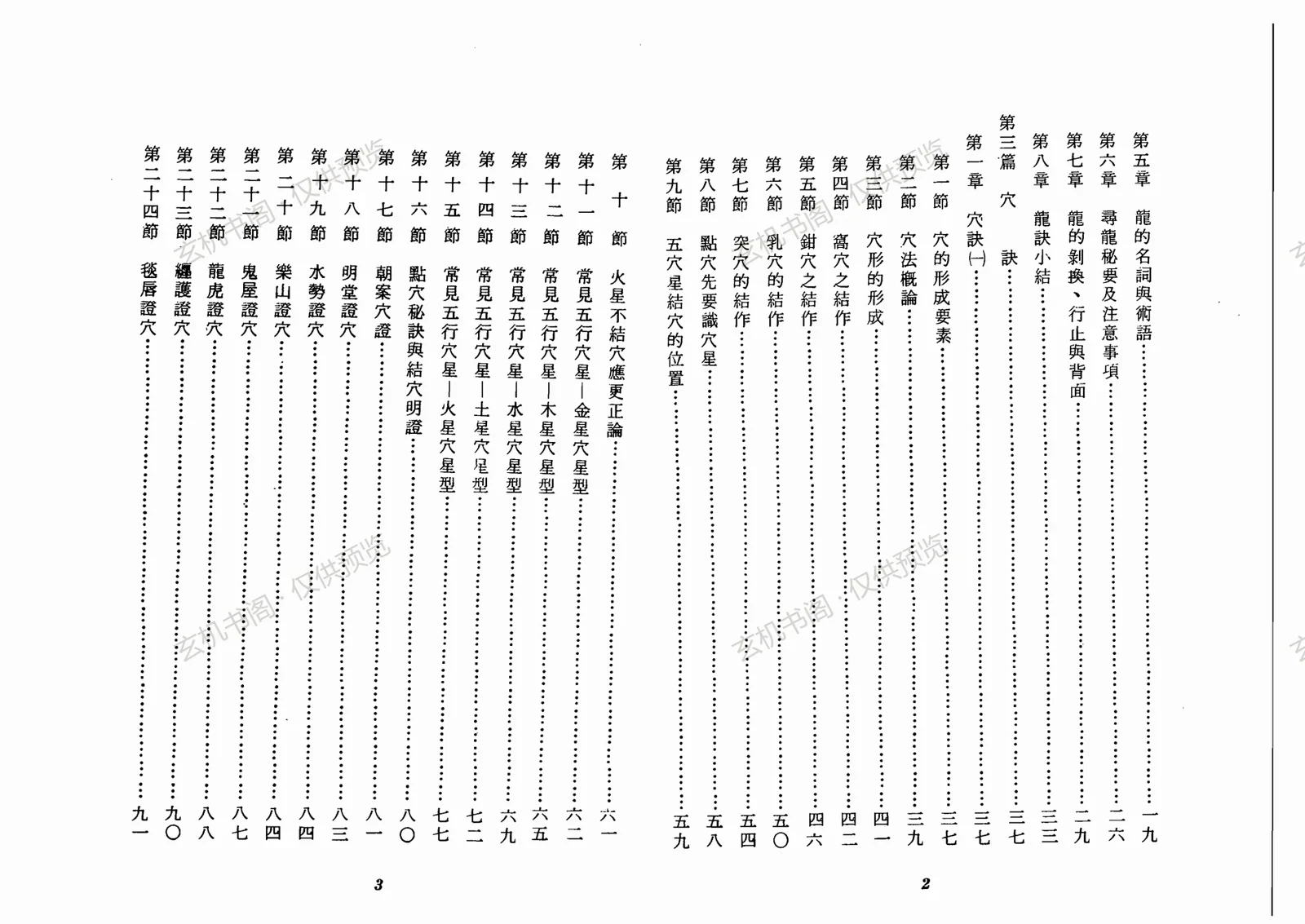
Compiled by Chen Beisheng, this book is an introduction to the form-school (luantou) method of seeking dragons and identifying points. It opens with general remarks on how landforms affect people and how to study them, then discusses the meaning of the dragon, its trunk and branches, its relative rank and classification. The focus then shifts to the point: the elements that form a point, general principles of point method, and the four basic formations of nest,钳, breast and突. Separate sections describe points formed by the five elemental star shapes—metal, wood, water, fire and earth—with a corrective note arguing that fire stars do not form points. Later sections list point evidence such as facing hills, water configuration, supporting mountains, ghost houses, dragon and tiger hills, and encircling ridges. A prefatory section shows the Miaopai Xuan Kong Great Hexagram compass (eighth-period heaven stars), designed by Chen and corrected by Miaopai transmitter Lai Hongzhou, together with instructions for its use. In his preface Chen explains that he wrote the book because older texts relied too much on oral transmission and lacked system, and that he drew on years of fieldwork. The result is a compact practical reference for readers studying the form-school branch of traditional feng shui.
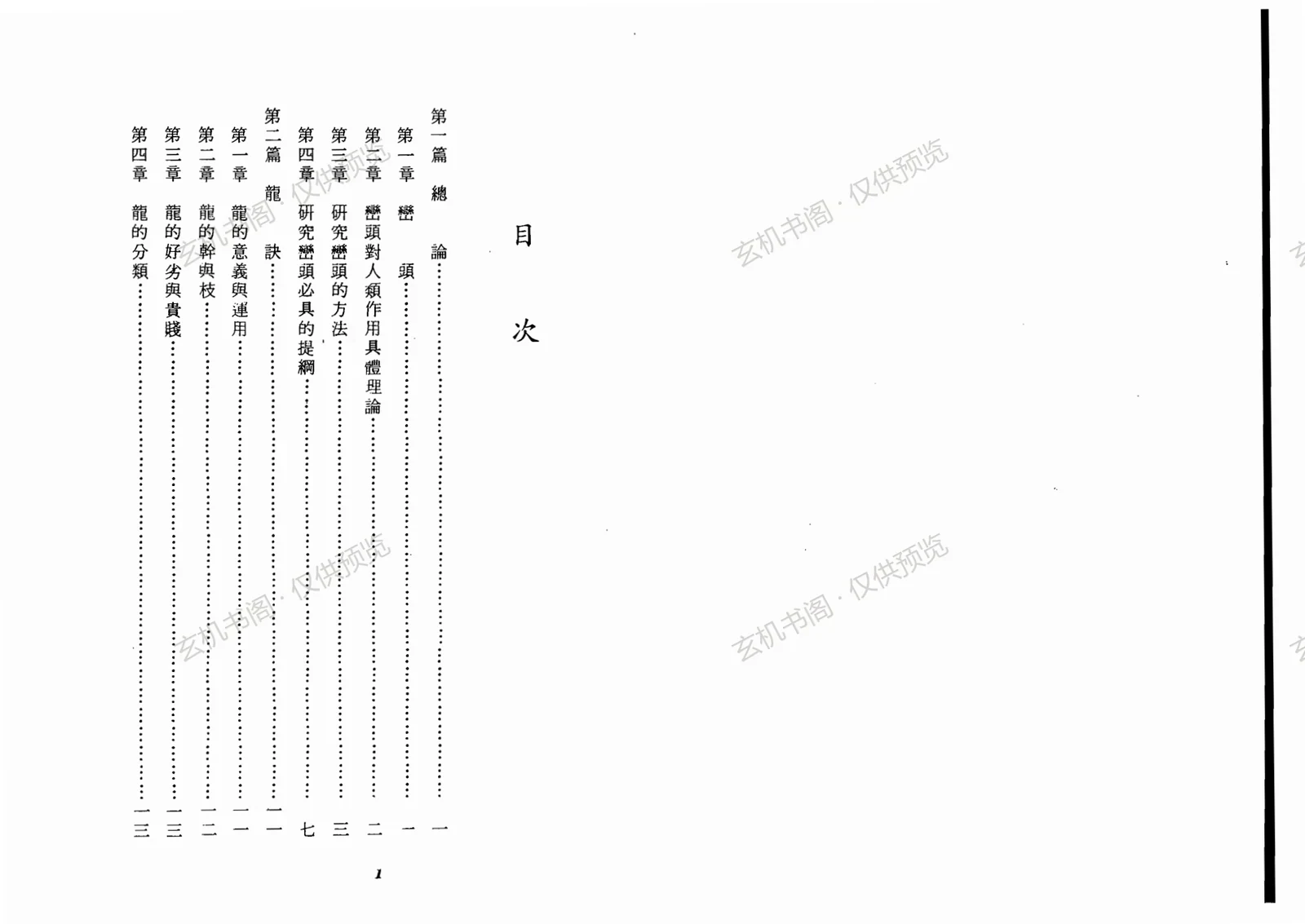
Contents
Part One: general remarks on landforms and method
Part Two: dragon formulas—meaning, branches, rank and types
Part Three: point formulas—formation and the four basic shapes
Five-element star points: metal, wood, water, fire and earth
Point evidence: facing hills, water, supporting and guardian hills
Appendix: Miaopai Xuan Kong compass (eighth period) and its use
Key Points
Form-school orientation: dragons first, then points.
Emphasis on five-element star forms and the four point shapes.
Argues against the conventional view that fire stars never form points.
Lists concrete point evidence such as facing hills, water and guardian hills.
Includes a Xuan Kong compass diagram linking form and directional method.