Reading guide
Content guideOverview
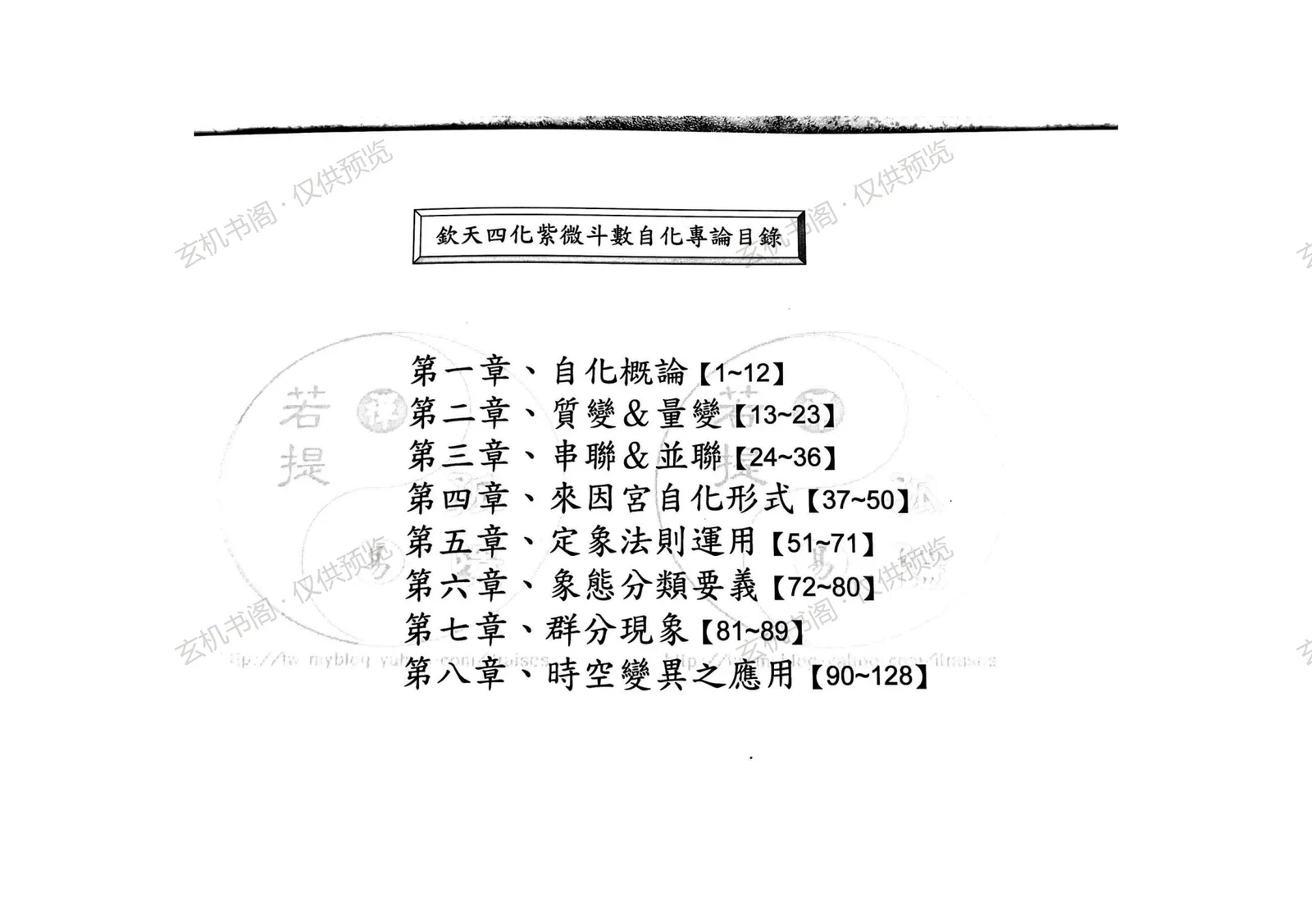
This is Part Six of the Qin Tian Four Transformations Zi Wei Dou Shu series, devoted entirely to the concept of zihua (self-transformation). Across eight chapters, it explains how self-transformation arises from the temporal flux of the birth-year four transformations and functions as a dynamic 'use' rather than a static 'body.' It examines qualitative and quantitative change, serial and parallel patterns, the forms of self-transformation from the originating palace, the rules of fixing images, classification of image states, group phenomena, and applications across changing time and space. With theoretical discussion and chart diagrams, it suits readers already grounded in the four transformations of Zi Wei Dou Shu.
Contents
Ch.1 Overview of self-transformation
Ch.2 Qualitative and quantitative change
Ch.3 Serial and parallel links
Ch.4 Forms of self-transformation from the originating palace
Ch.5 Application of image-fixing rules
Ch.6 Essentials of image-state classification
Ch.7 Group phenomena
Ch.8 Application across time and space
Key Points
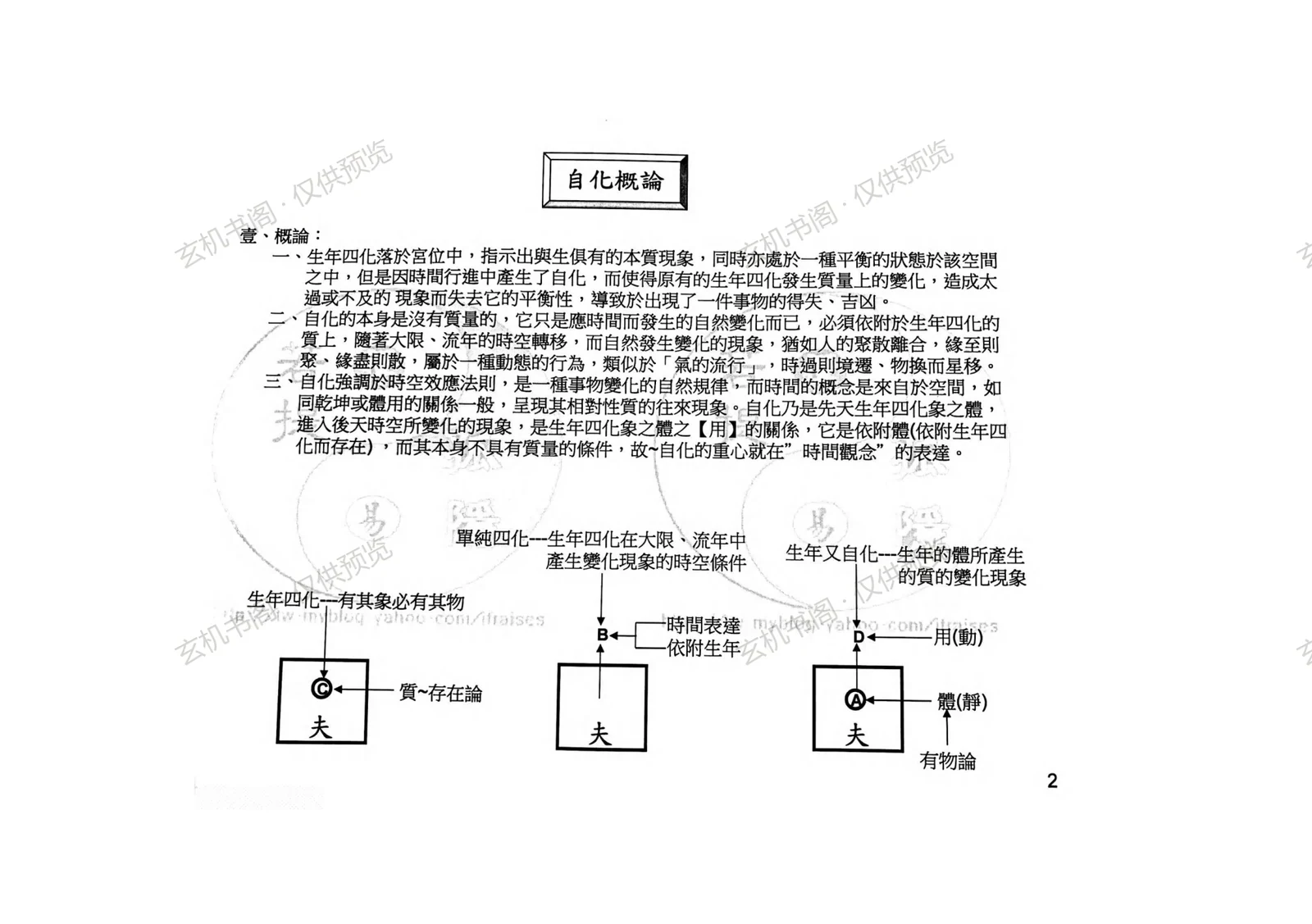
Self-transformation is the dynamic change of birth-year four transformations over time, belonging to 'use' not 'body'
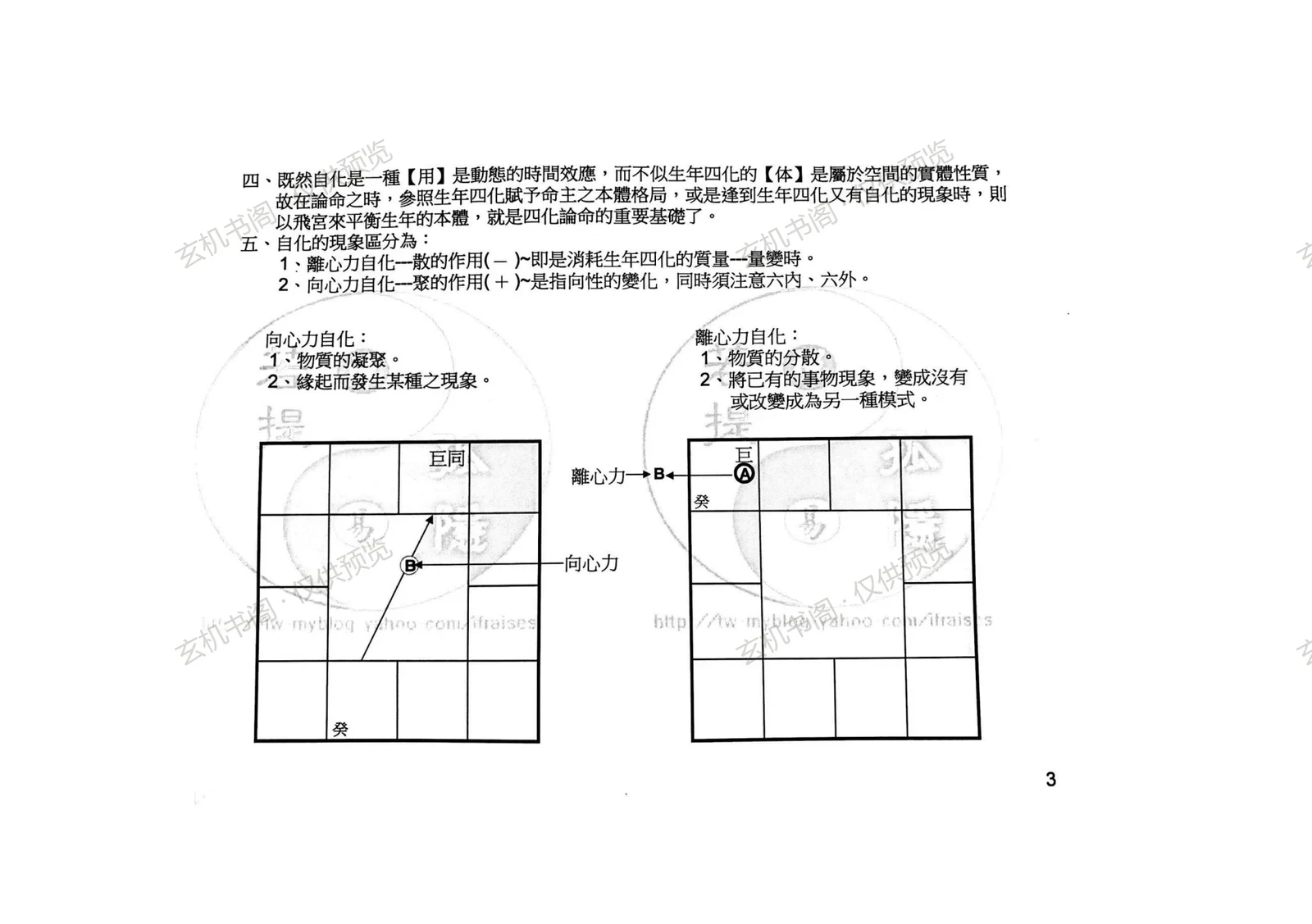
Distinguishes centrifugal self-transformation (quantitative depletion) from centripetal (qualitative condensation)
Self-transformation alongside birth-year transformations is called qualitative change, balanced via flying palace transformations
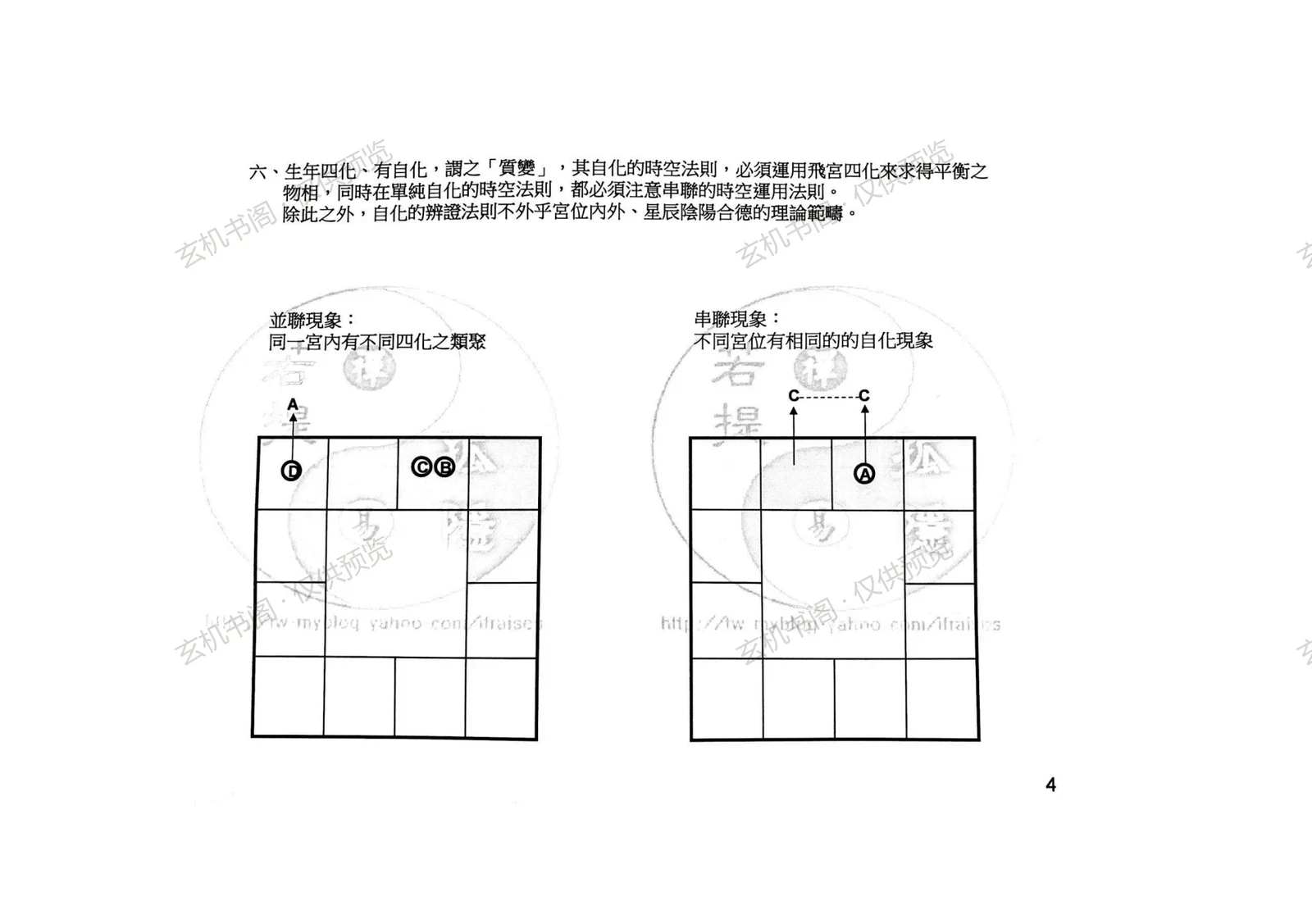
Serial links involve identical self-transformations in different palaces; parallel links cluster different transformations in one palace
Diagnosis involves inner/outer palaces and yin-yang harmony of stars