Reading guide
Content guideOverview
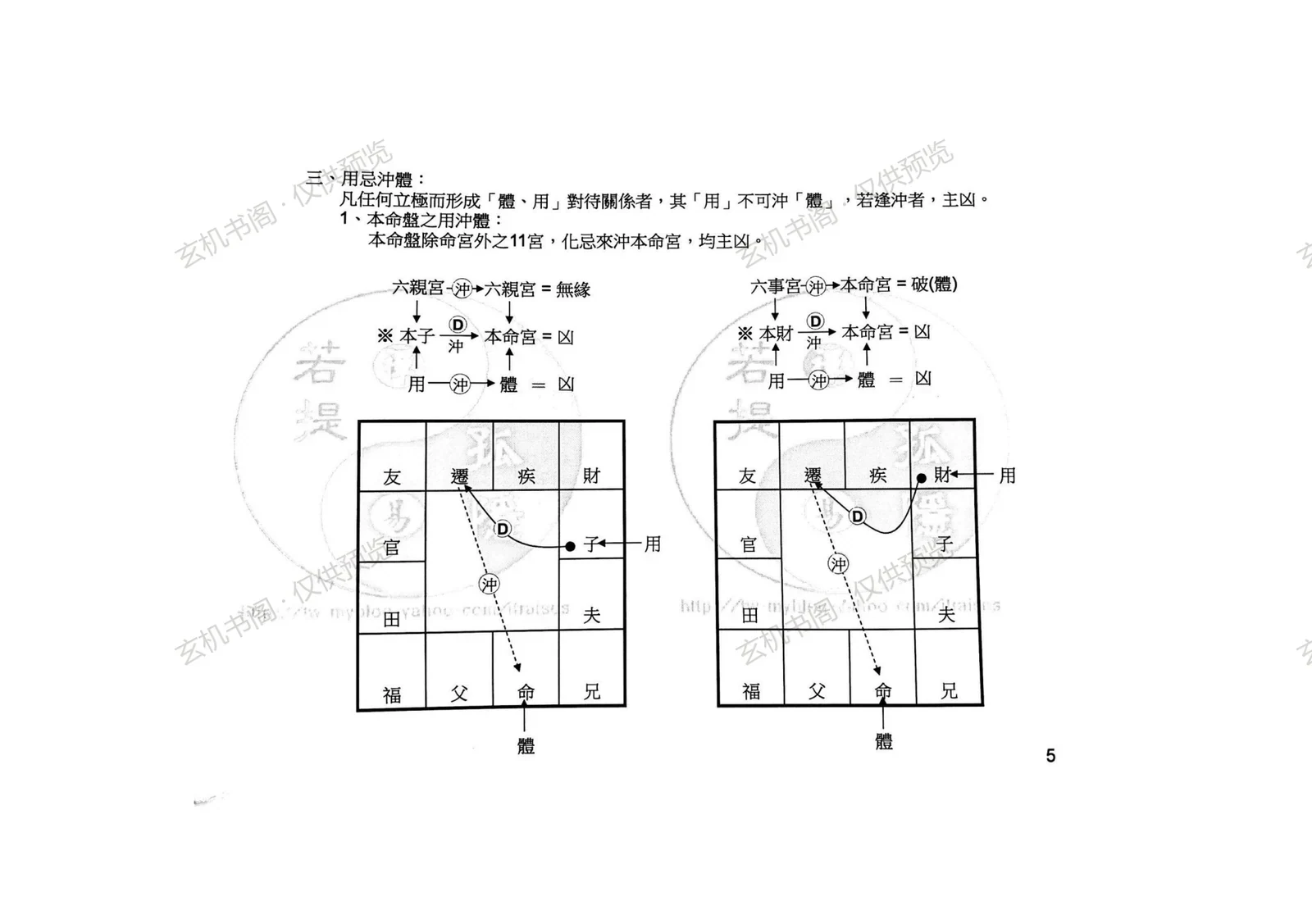
This is Part Five of the Qintian Four-Transformation Zi Wei Dou Shu set, titled 'Special Treatise on Flying-Palace Studies' and credited on the cover to Chanyi and Puti Huxi. The table of contents has three sections: concepts of flying-palace study, its governing rules, and a catalogue of 144 formulas and 576 images. The visible text first distinguishes birth-year four transformations as the 'body' (hidden image) from flying-palace transformations and self-transformations as the 'function' (visible image), explaining that a flying transformation is launched from a chosen palace—natal, decadal, or annual—to read the signs of the moment. The rules then cover mutual yin-yang (transformation from palace A into palace B, with its outflow, inflow, support and clash), separate yin-yang (what the receiving palace transforms toward its opposite palace, fixing auspicious or inauspicious relation), and the taboo of function clashing body. Diagrams of the twelve palaces with arrows illustrate each flight path. The material is advanced and rule-driven.
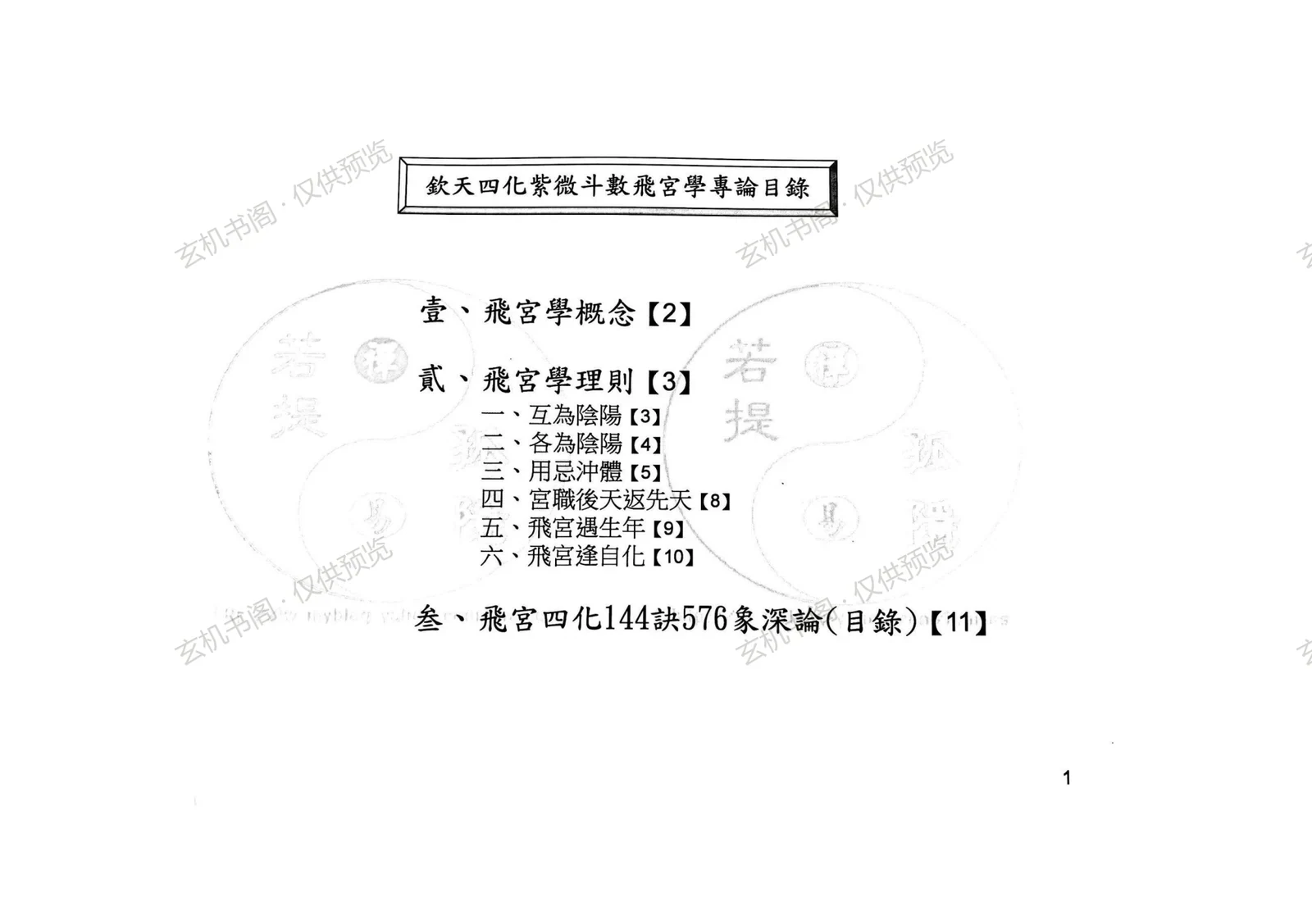
Contents
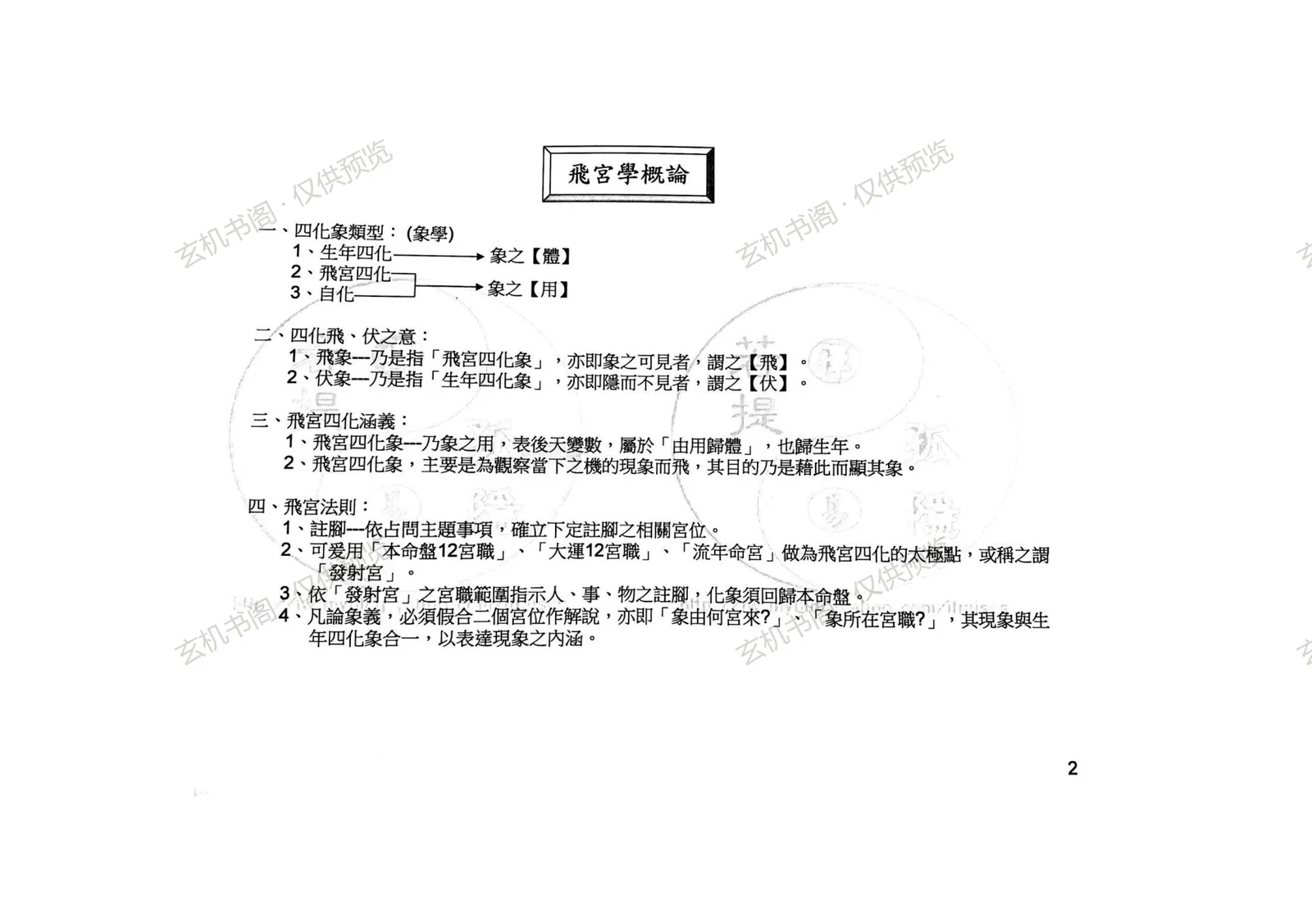
Concepts of flying-palace study
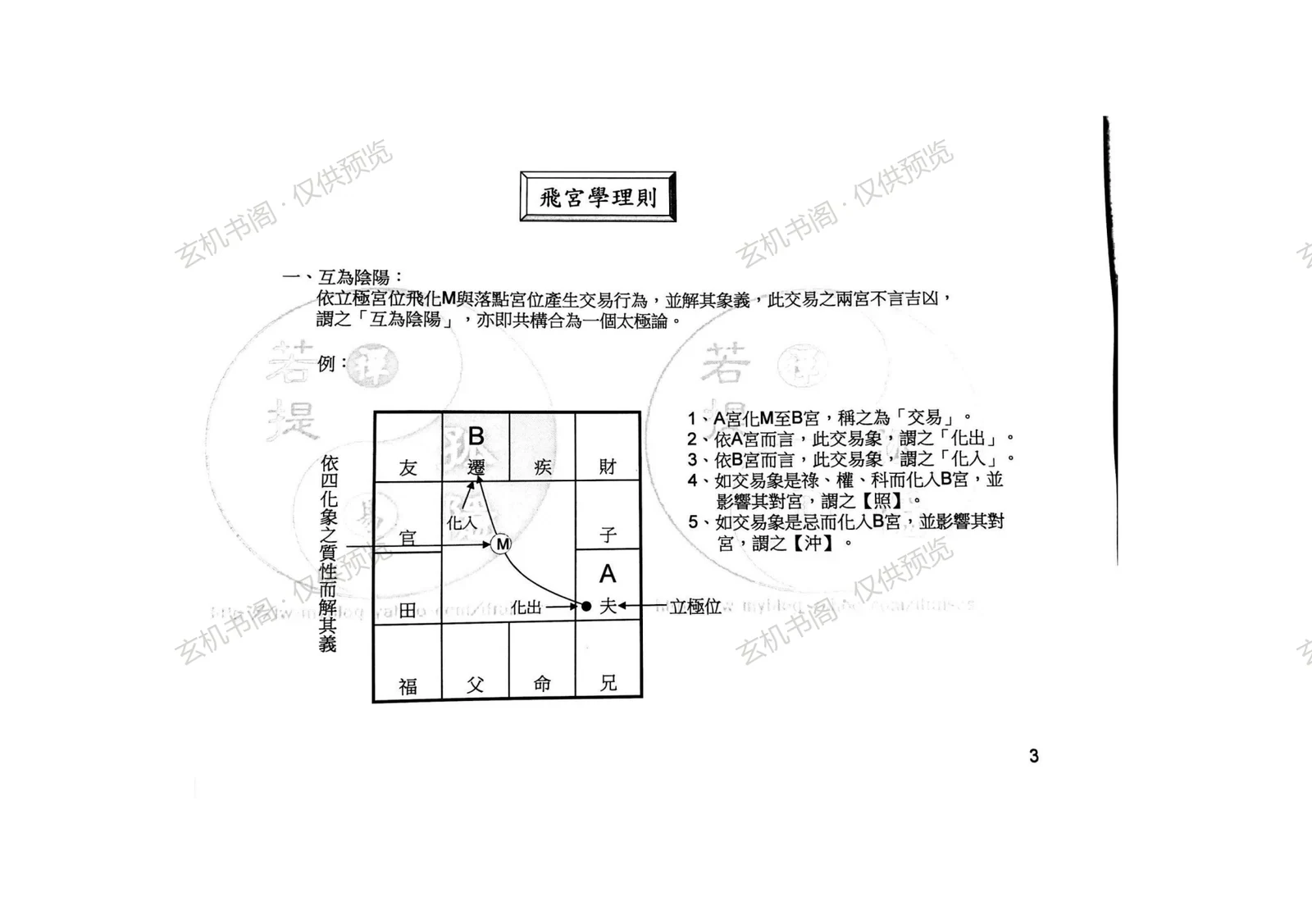
Rule: mutual yin-yang
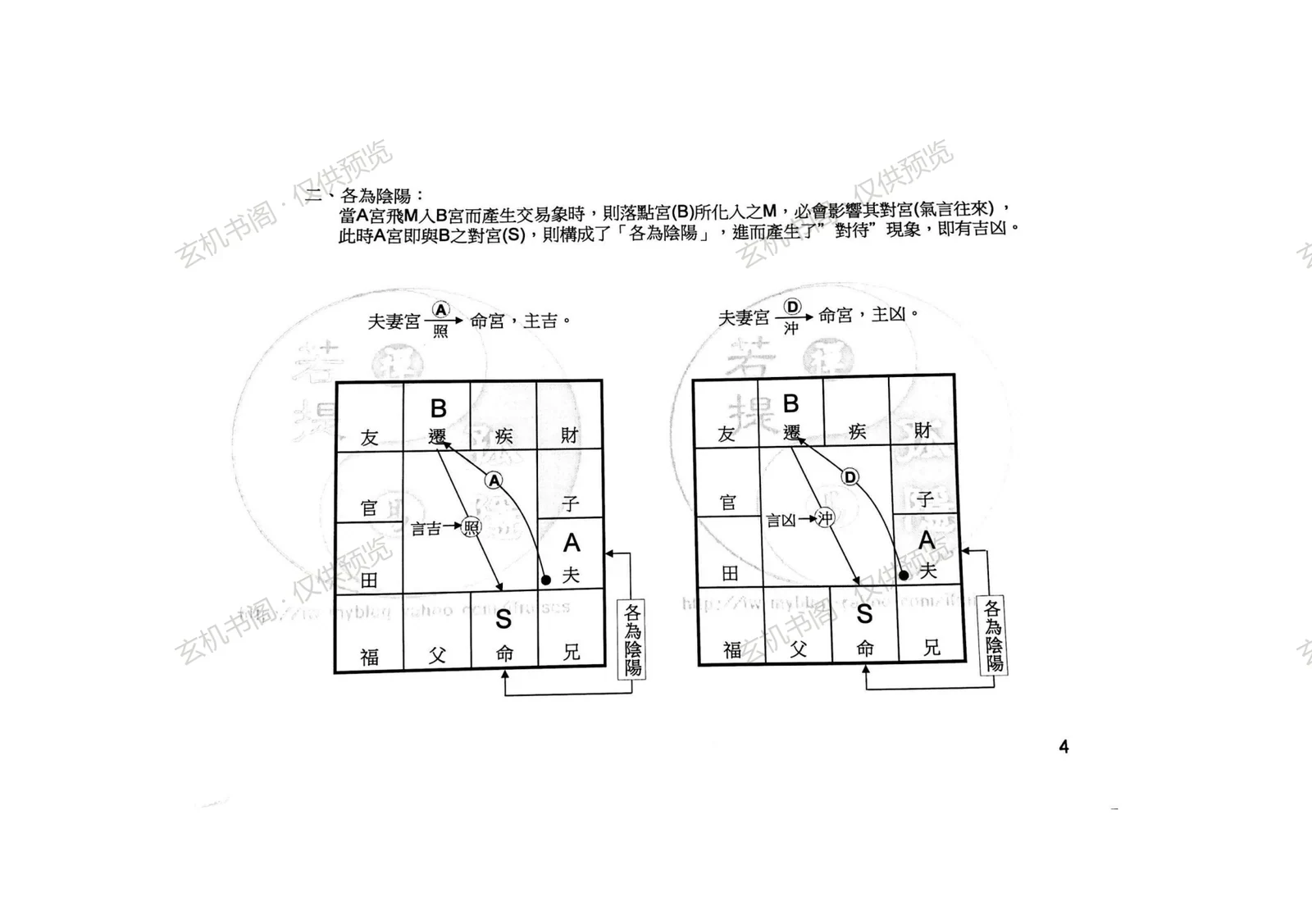
Rule: separate yin-yang
Rule: function must not clash body
Palace duties, birth-year encounters, self-transformation
144 formulas and 576 images of flying four transformations
Key Points
Birth-year transformations are body; flying and self-transformations are function
Each flight launches from a chosen palace and is read within palace duties
Mutual yin-yang covers outflow, inflow, support and clash between two palaces
Separate yin-yang judges fortune by the receiving palace's move on its opposite
Function clashing body is inauspicious; six-kin clashes mean no affinity