Reading guide
Content guideOverview
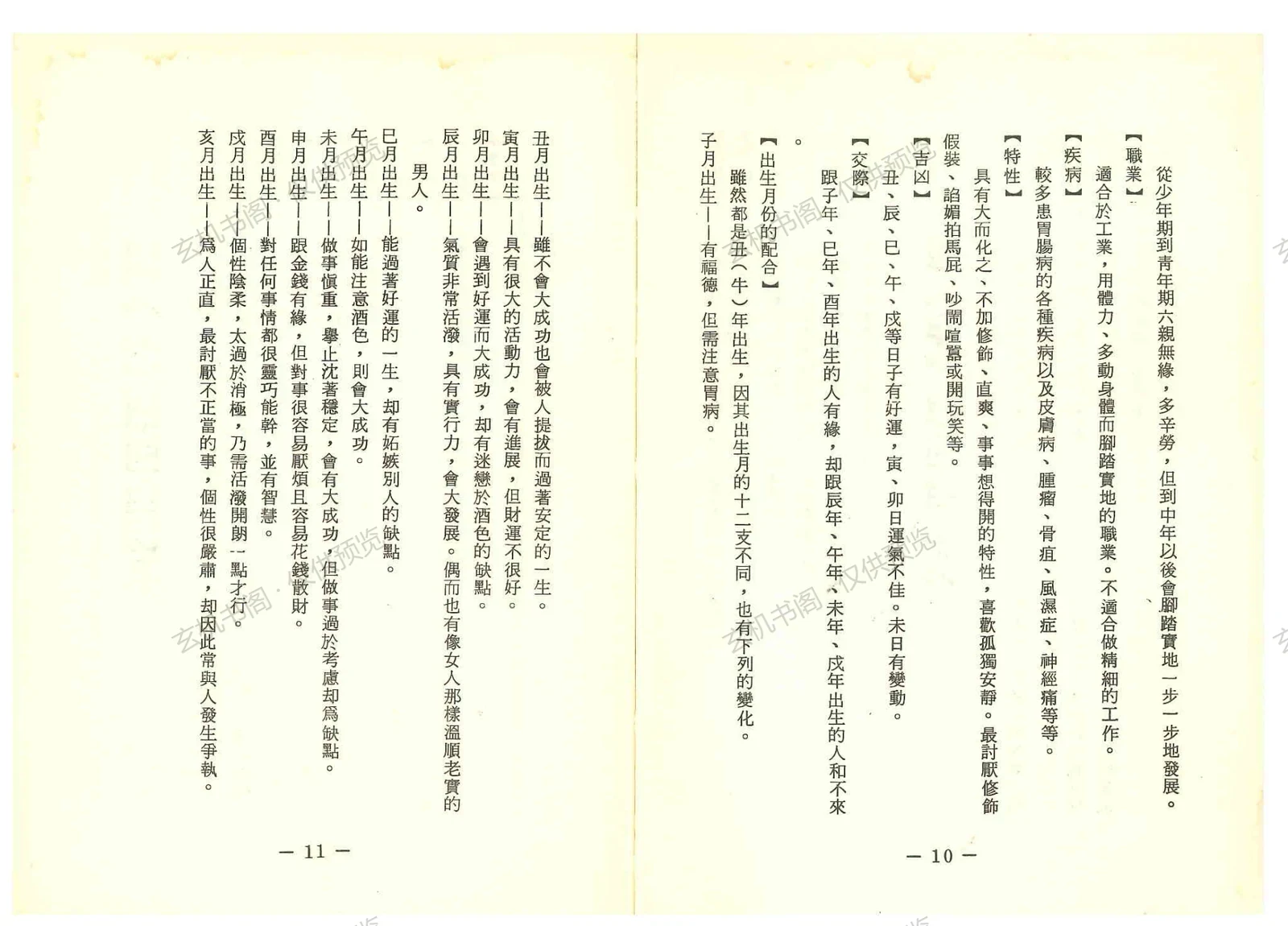
This is the fourth volume of the Complete Compendium of World Physiognomy and Fate, compiled by Gao Shanqing and identified on the cover as affiliated with the Department of Philosophy at National Taiwan University. The cover subtitle names three themes: the twelve Earthly Branches, name numerology, and astrology. The table of contents opens with a preface on the twelve branches, then treats each zodiac animal in turn—rat, ox, tiger, rabbit, dragon, snake, horse, goat, monkey, rooster, dog, and pig. A section on name numerology follows, covering methods for counting name strokes, the five fortunes of a name, and their auspicious or inauspicious readings. The astrology section begins with the nine stars of the birth year and their calculation, then describes people born under each of the nine stars from one white through nine purple. The visible body text, using the rat and ox years as examples, explains how zodiac years are reckoned, then assesses character, fortune, social relations, compatibility by birth month, occupation, illness, and luck. The prose is plain and reflects the style of twentieth-century Taiwanese popular almanacs, making the book useful for readers who want to compare zodiac lore, name-stroke numerology, and Western zodiac signs side by side.
Contents
Preface on the twelve branches and zodiac reckoning
Chapter-by-chapter readings for each of the twelve animals
Name numerology: counting name strokes
The five fortunes of a name and their portents
Preface to astrology and the nine stars of the birth year
People born under each of the nine stars
The zodiac constellations and their links to the twelve branches
Key Points
Organized around the twelve Earthly Branches, one chapter per zodiac animal
Each entry covers character, fortune, social life, occupation, illness, and luck
A name-numerology section explains stroke counting and the five fortunes of a name
The astrology section includes the nine stars of the birth year and the zodiac constellations
Written in plain popular style rather than academic analysis