Reading guide
Content guideOverview
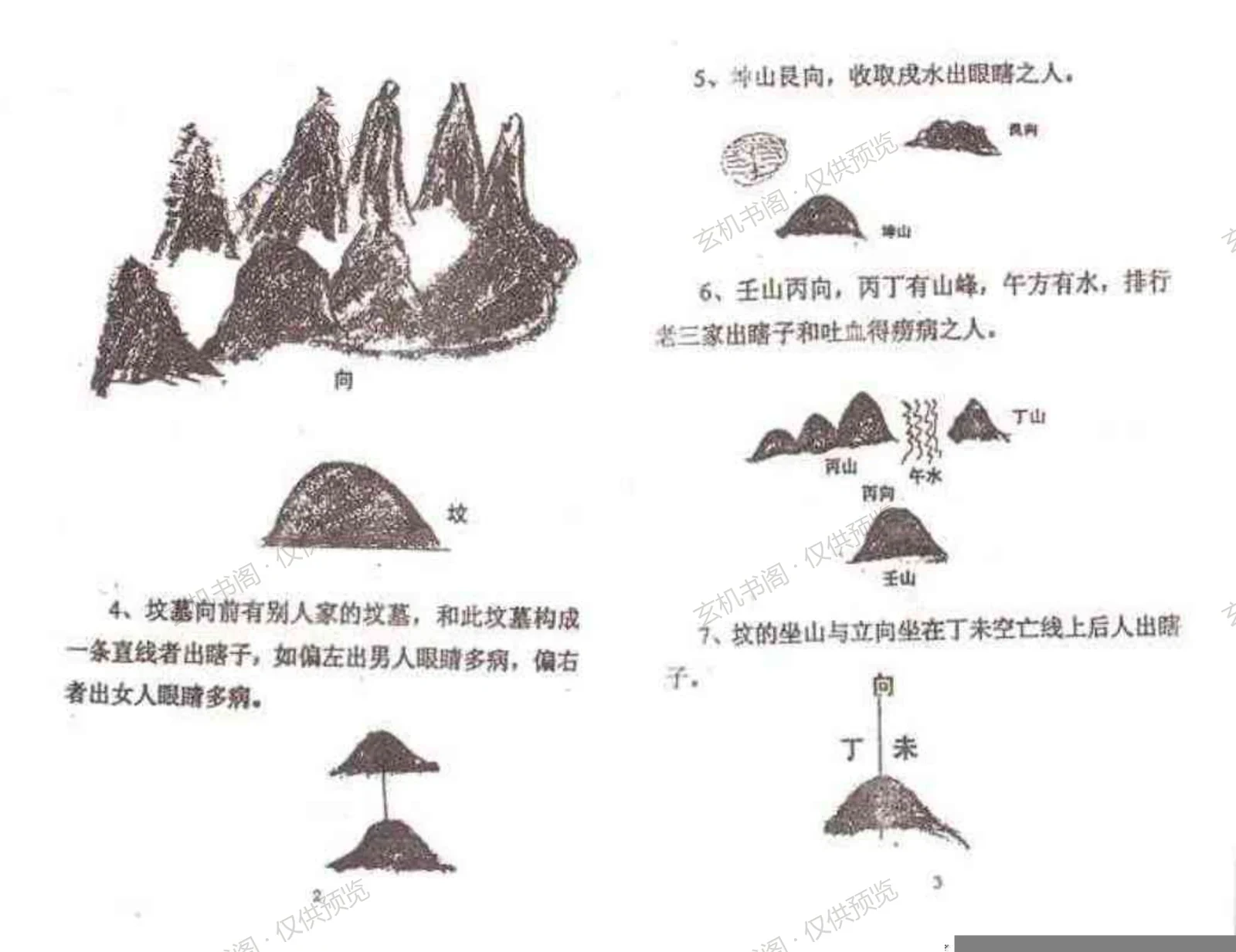
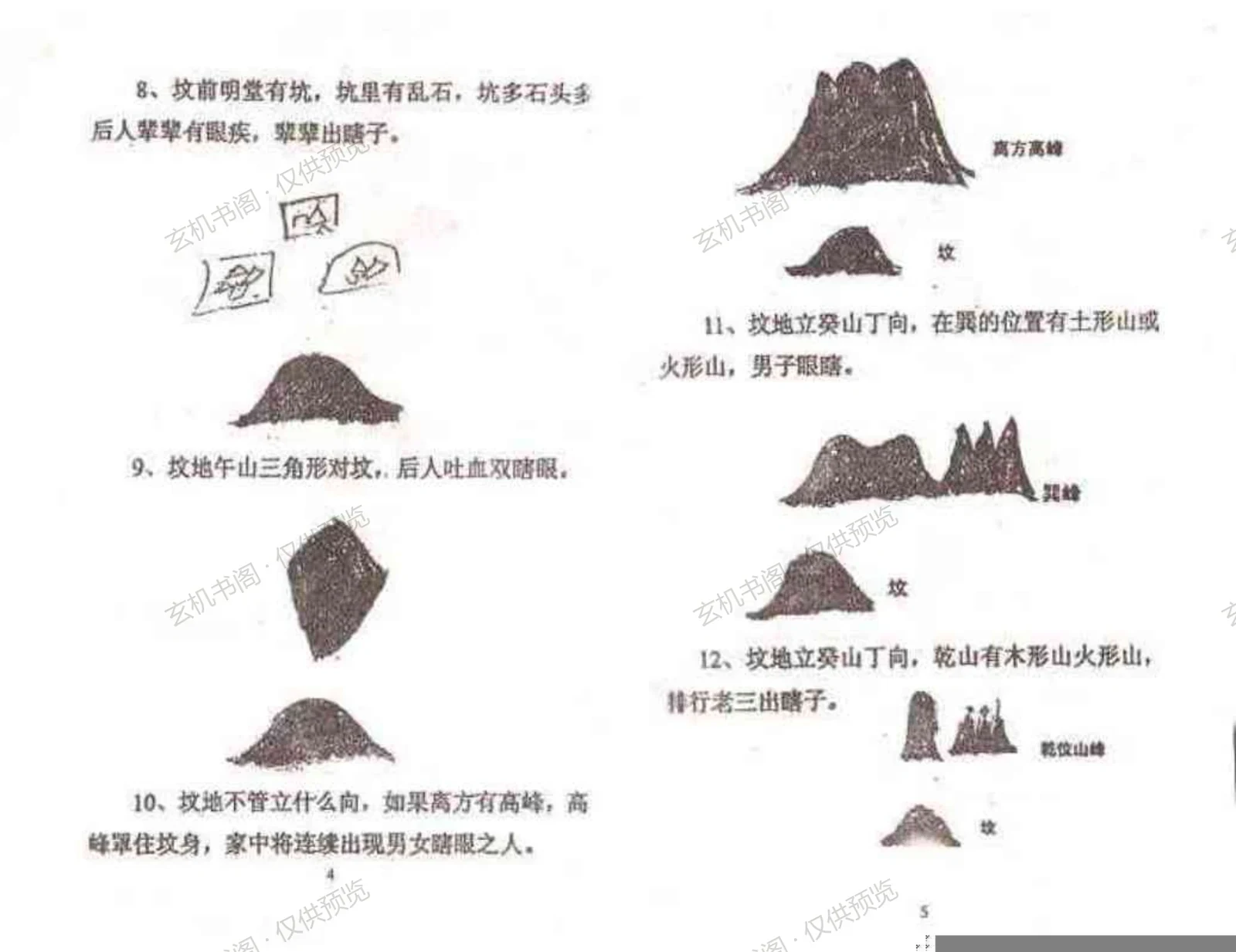
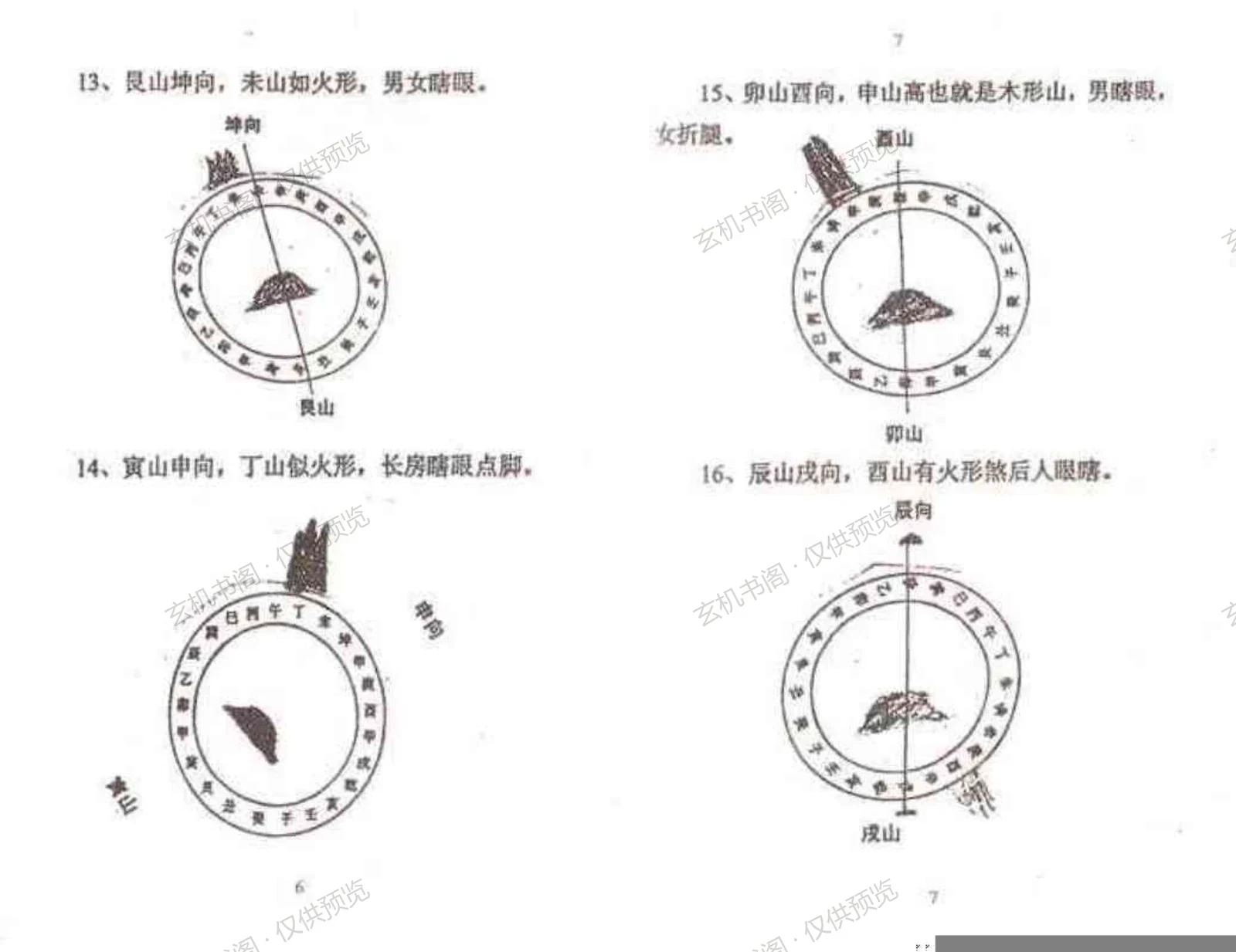
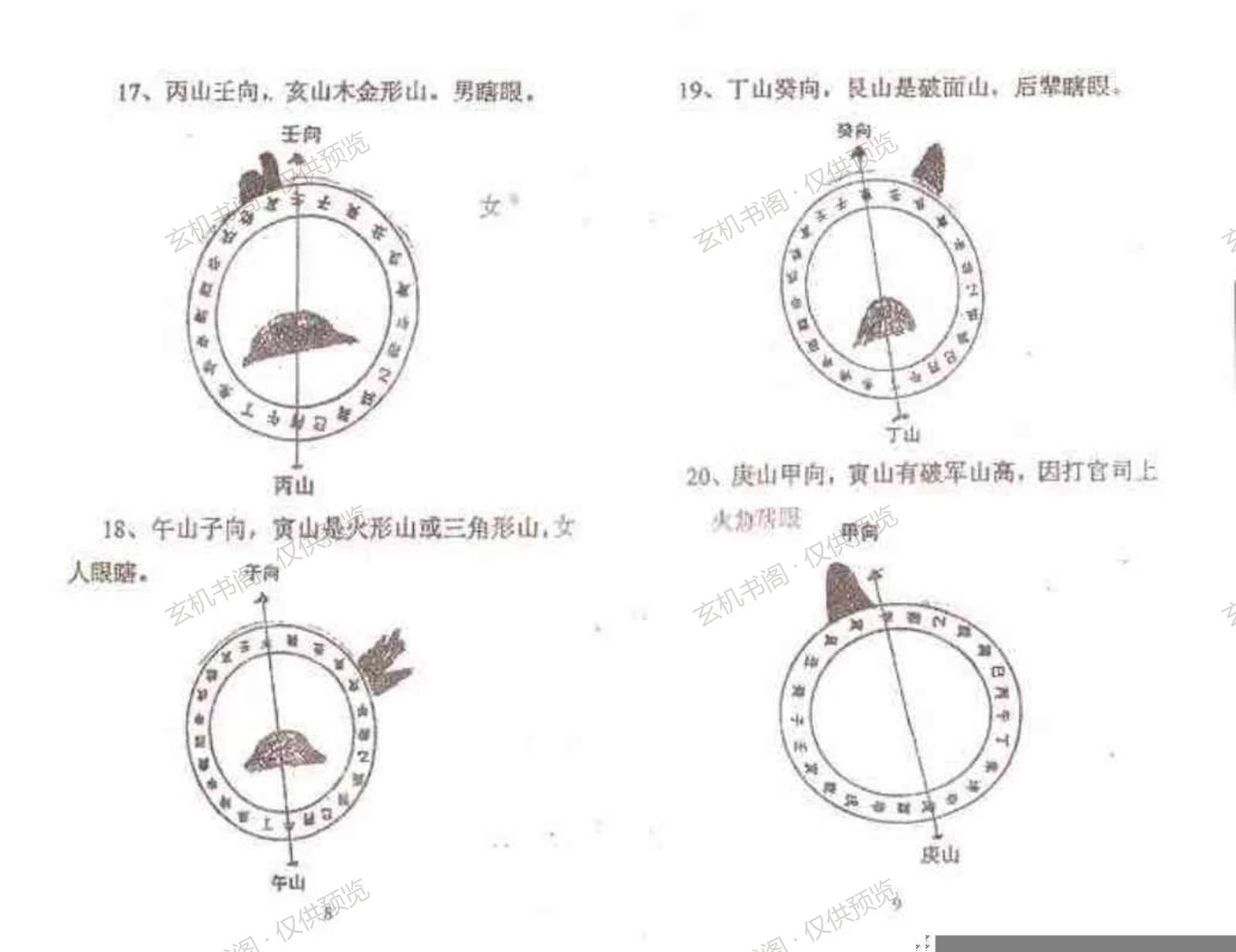
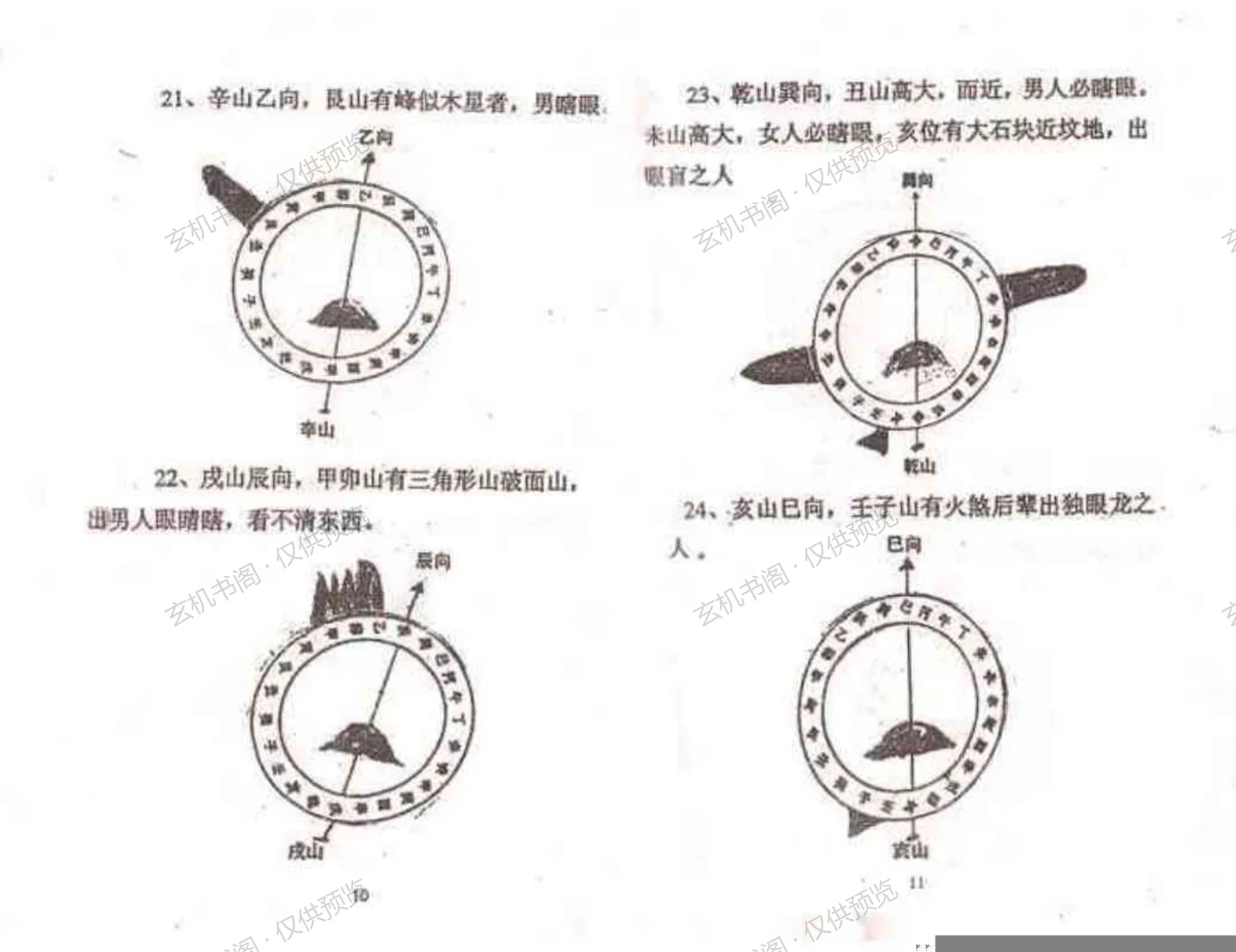
This is an illustrated compilation of form-school (xingluan) verdicts for yinzhai, or grave, fengshui. The cover identifies it as the first volume of an illustrated work on definitive yinzhai judgments. The text opens with a section on sites that produce blind descendants, then lists correspondences between grave surroundings and misfortunes: ominous water shapes at the mao position causing neck, liver and eye illness; thorny trees covering a grave bringing eye disease; pits with scattered stones in the mingtang causing generations of eye trouble; and high peaks in the li direction overshadowing the grave producing blindness in men and women. Each entry gives a verdict followed by a sketch of mountain and water forms or a twenty-four mountain compass diagram marking sitting, facing and the position of sand and water. The book relies on direct form-based judgment combined with the twenty-four mountain directional system, making it a reference for comparing real grave sites and for understanding traditional yinzhai terminology and directional correspondences.
Contents
Sites producing blind descendants: general entries and diagrams
Form afflictions: thorn trees on graves, pits and stones in the mingtang
Sand-form misfortunes: high peaks in the li direction, triangular mounds facing graves
Twenty-four mountain directional diagrams with sand and water (entries 13–24)
Verdicts by household branch, gender and generation
Key Points
Judges fortune by form-based sand and water plus twenty-four mountain directions
Pairs textual verdicts with sketches for on-site comparison
Verdicts often concern eye disease and blindness
Distinguishes outcomes by household branch, gender and age