Reading guide
Content guideOverview
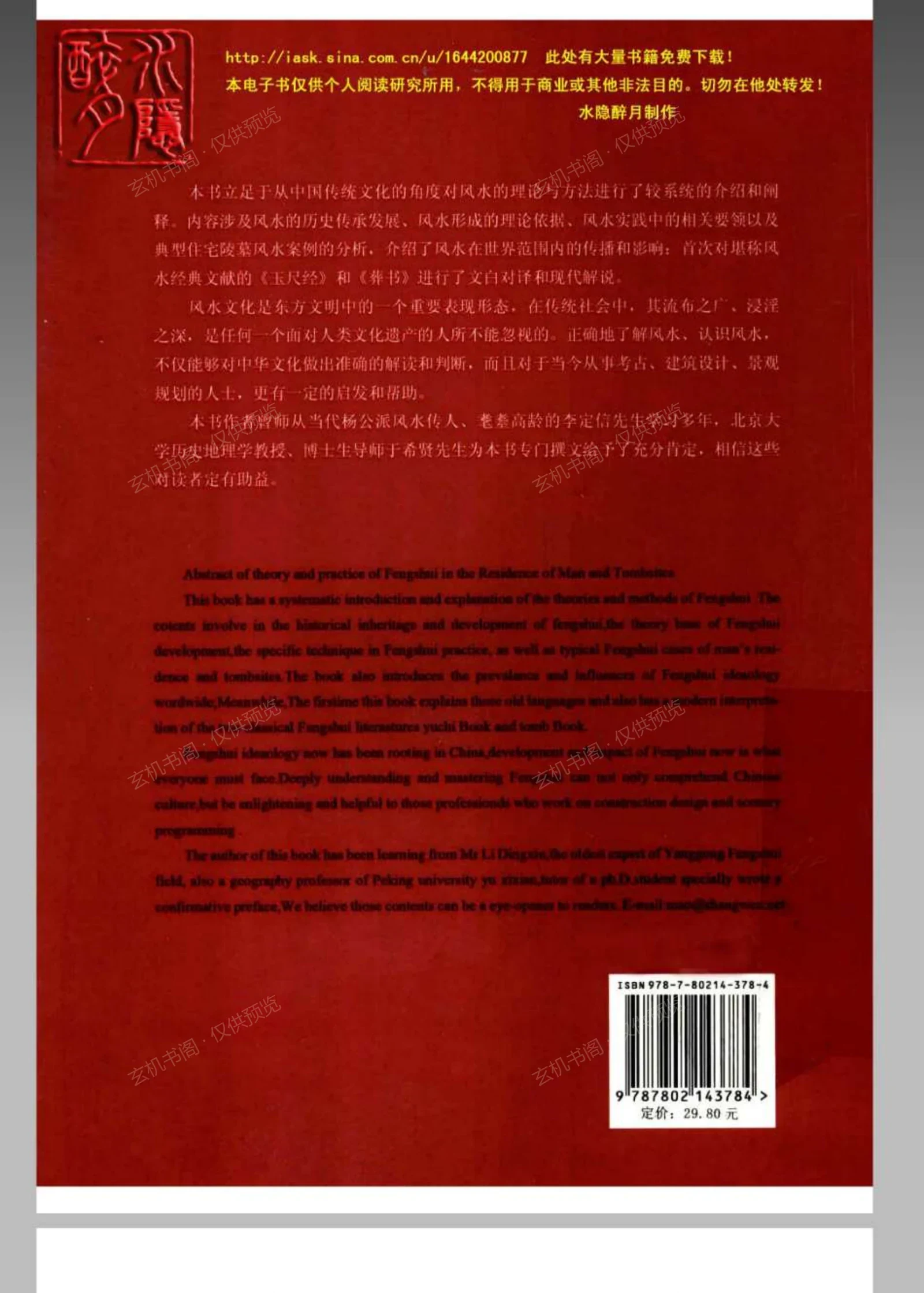
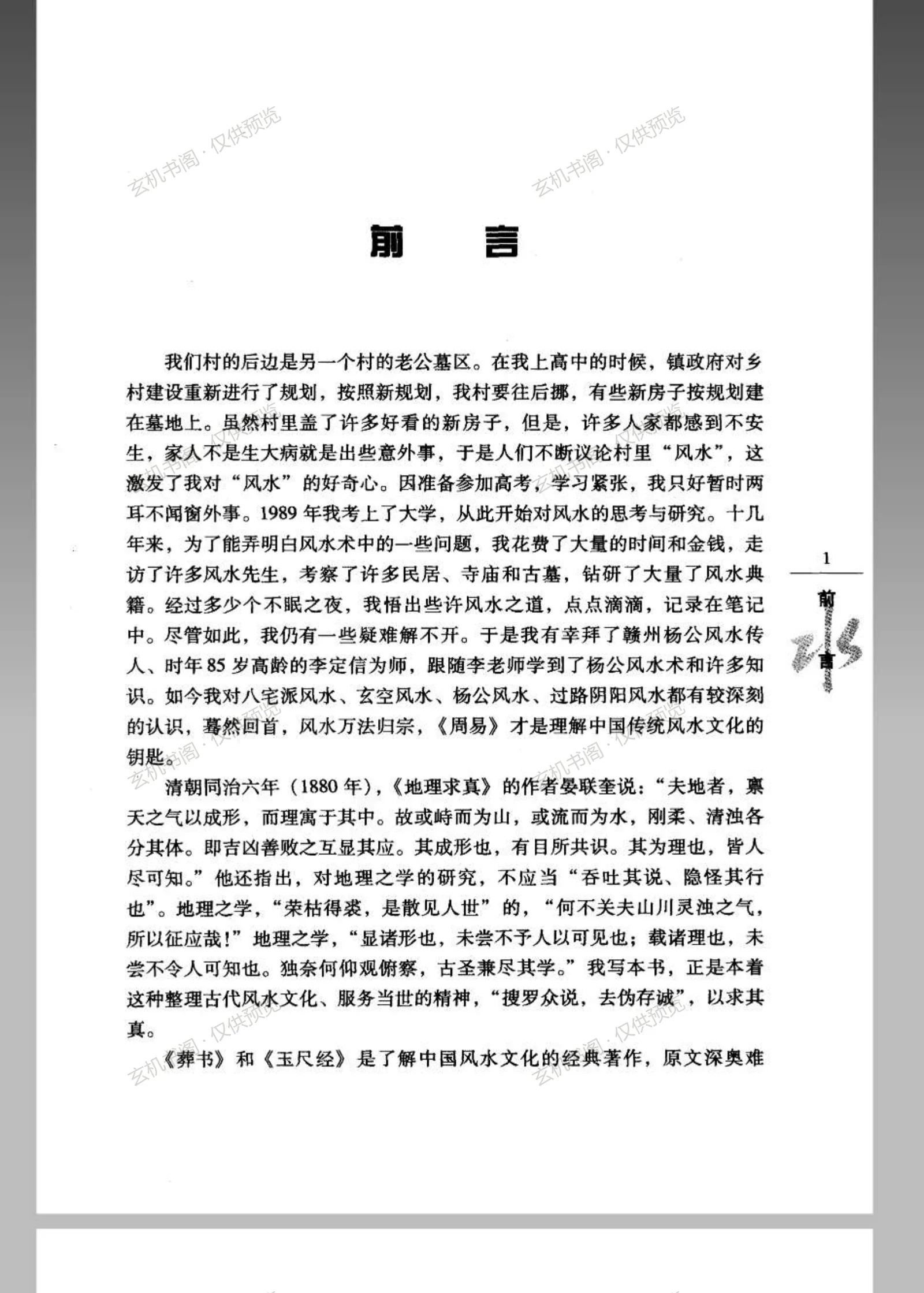
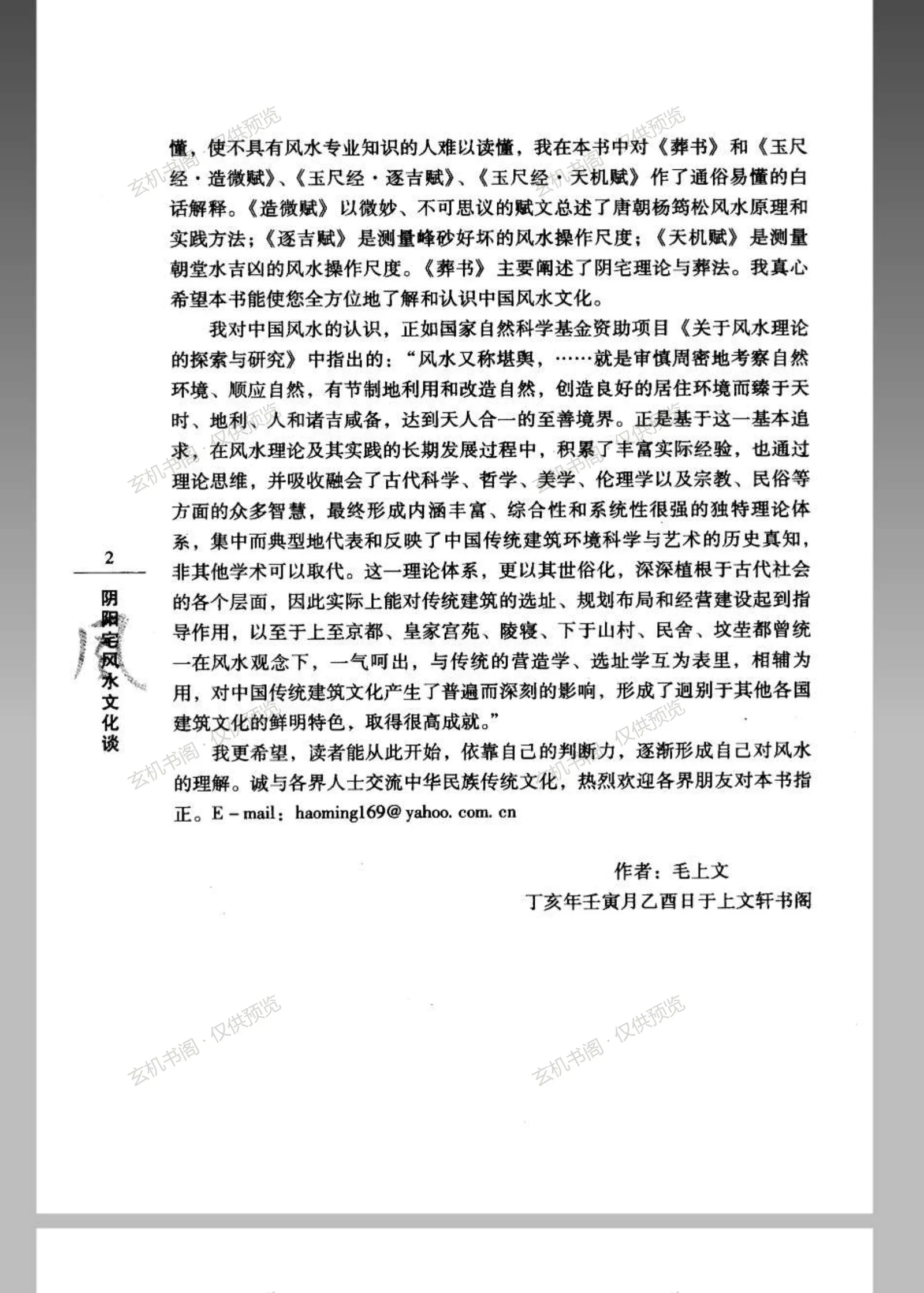
This book offers a systematic introduction to the theory and methods of fengshui from the standpoint of traditional Chinese culture. It covers the historical development of fengshui, its theoretical foundations, key practical techniques, and case analyses of typical residences and tombs, as well as the spread and influence of fengshui worldwide. The author provides modern Chinese explanations of the classical texts Yuchi Jing and Zangshu, including the Zaowei Fu, Zhuji Fu and Tianji Fu, which discuss Yang Junsong's fengshui principles and the operational standards for judging sand formations and water courses. In the preface the author notes having studied with Li Dingxin, a transmitter of Yanggong fengshui, and having knowledge of the Bazhai, Xuankong, Yanggong and Guolu Yinyang schools. The book combines historical context with practical guidance and serves as an accessible introduction to traditional fengshui culture, useful also for those in architecture, landscape planning and cultural history.
Contents
Preface: the author's path to fengshui
Historical transmission and development of fengshui
Theoretical foundations of fengshui
Key techniques in fengshui practice
Case studies of residences and tombs
Worldwide spread and influence of fengshui
Plain-language readings of the Yuchi Jing: Zaowei, Zhuji and Tianji Fu
Zangshu: yin-dwelling theory and burial methods
Key Points
Systematically traces fengshui history, theory and practice
Explains form and compass schools through residential and tomb cases
Provides plain-language explanations of the three fu in the Yuchi Jing
Covers yin-dwelling theory and burial methods from the Zangshu
Discusses the global spread and influence of fengshui