Reading guide
Content guideOverview
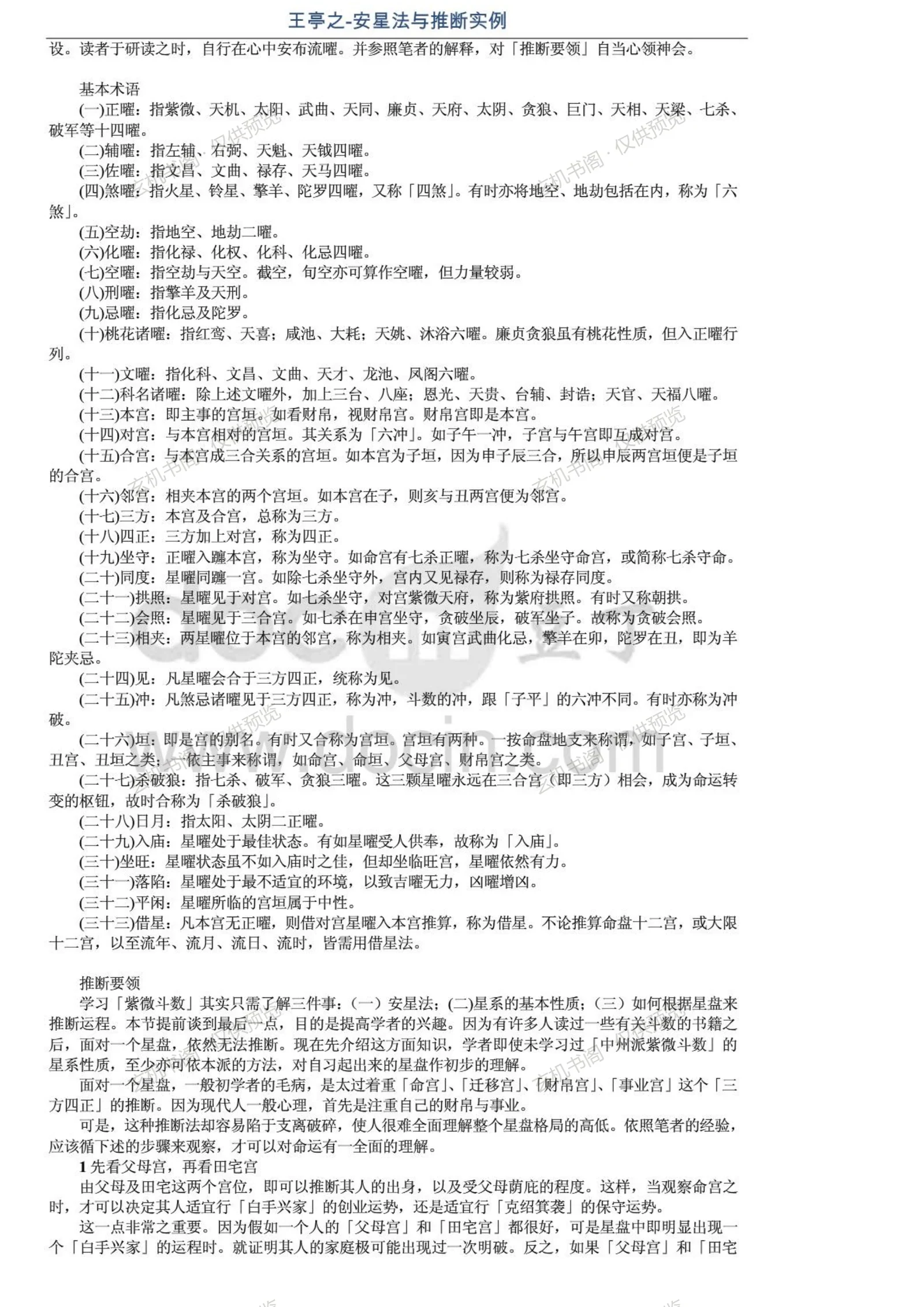
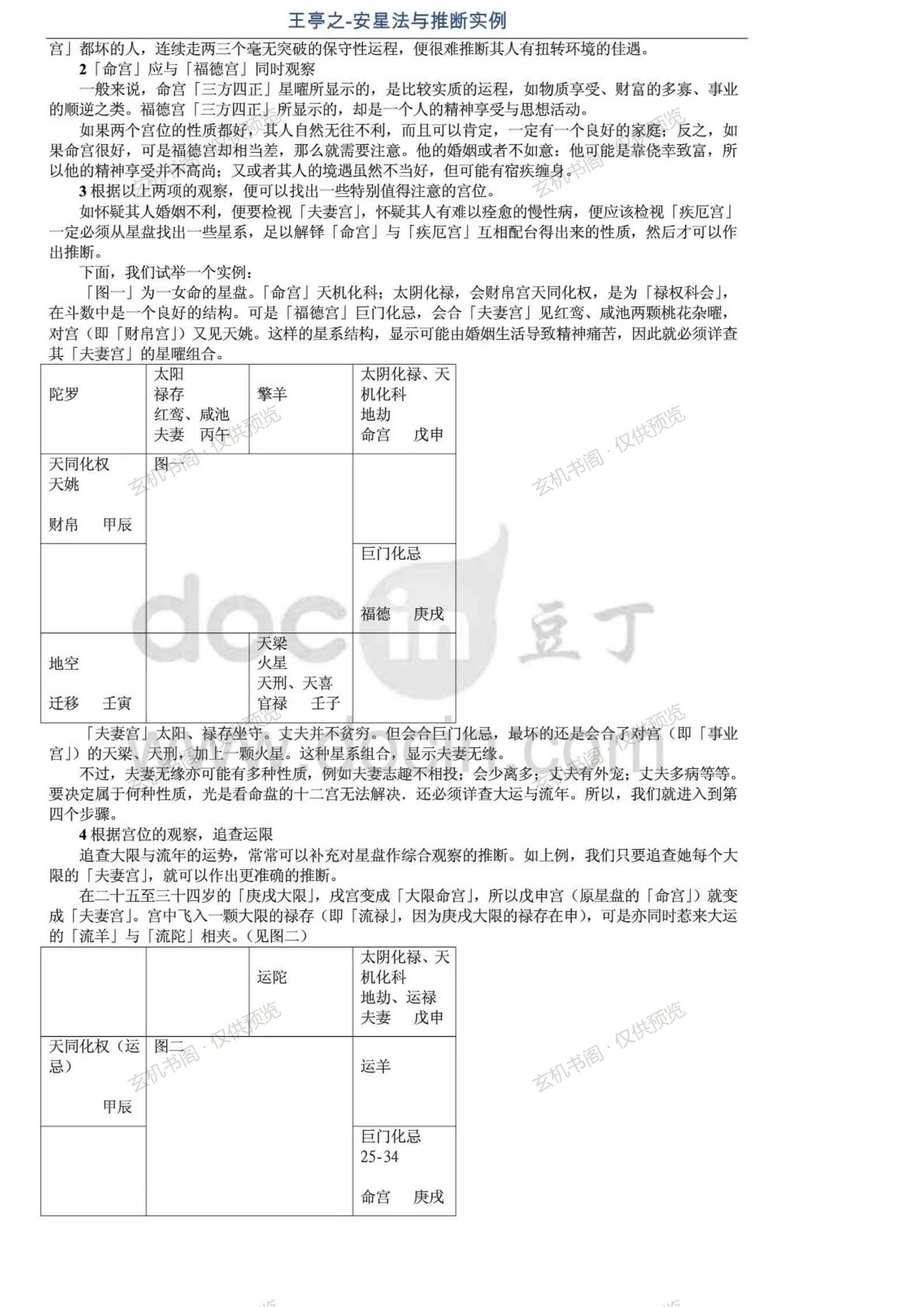
This book explains the Zhongzhou school approach to Zi Wei Dou Shu. It begins with basic terminology, classifying the fourteen major stars, auxiliary stars, assisting stars, malefic stars, the void and void-robbery stars, and the four transformations, then explains palace relationships such as the home palace, opposite palace, trine palace, three directions and four positions, sitting, co-location, reflecting, meeting, flanking, seeing, clashing, and borrowing stars to place in a palace. The core section on judgment principles advises reading the parents and property palaces first, then considering the life palace together with the fortune palace, and finally tracing major and annual periods to supplement the chart. The author criticizes complicated patchwork methods and advocates a plain Zhongzhou framework. The second half presents twenty-four examples grouped in pairs across the twelve palaces, with historical figures and anonymized cases, and highlights three techniques: borrowing stars, star interaction, and seeking pairs of stars. Star chart diagrams illustrate the examples.
Contents
Contents: star placement, judgment methods, twenty-four examples
Basic terms: major, auxiliary, assisting, malefic stars and four transformations
Judgment principles: parents and property first, then life and fortune palaces
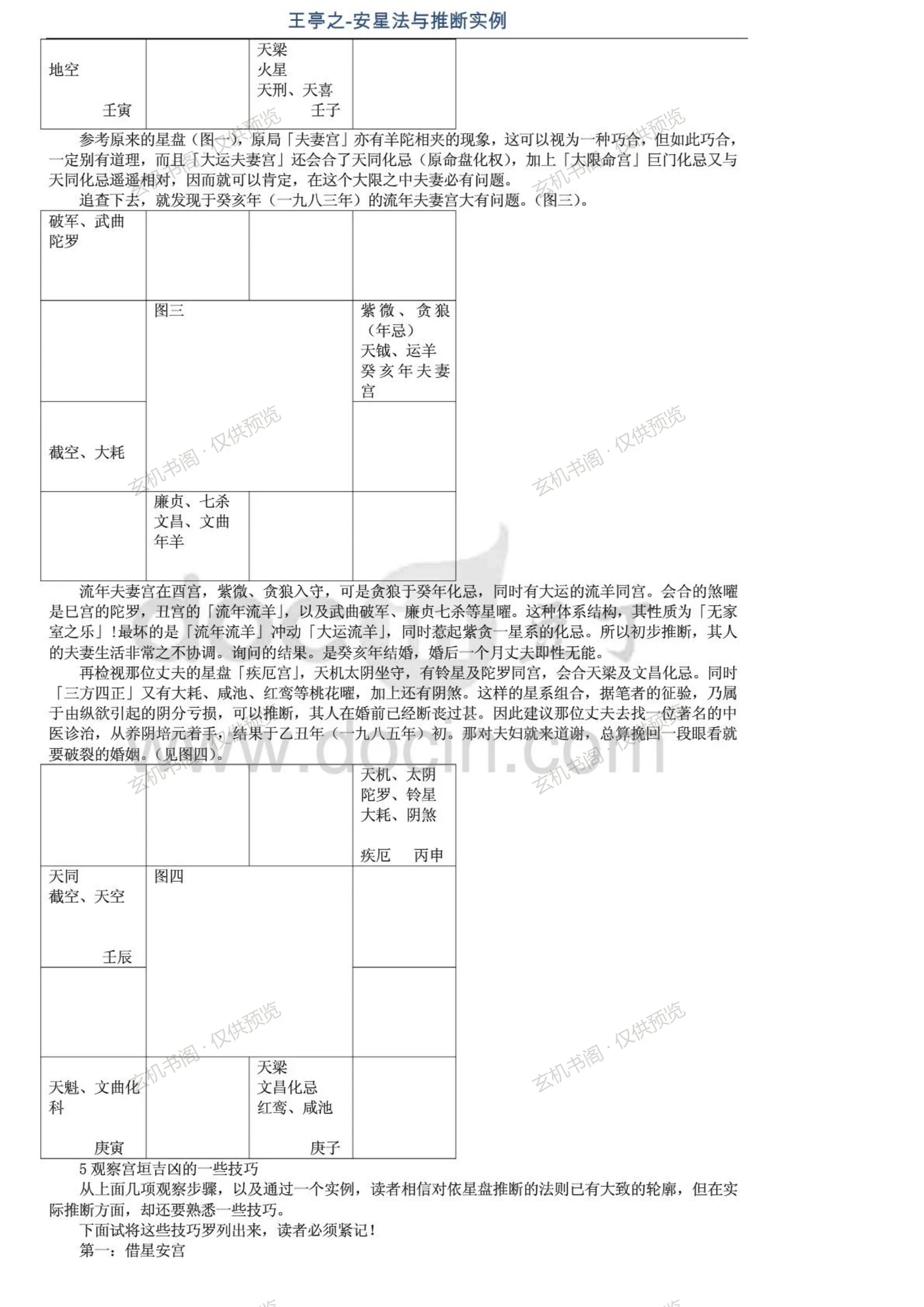
Tracing major and annual periods to supplement the chart
Twenty-four examples, two per palace across the twelve palaces
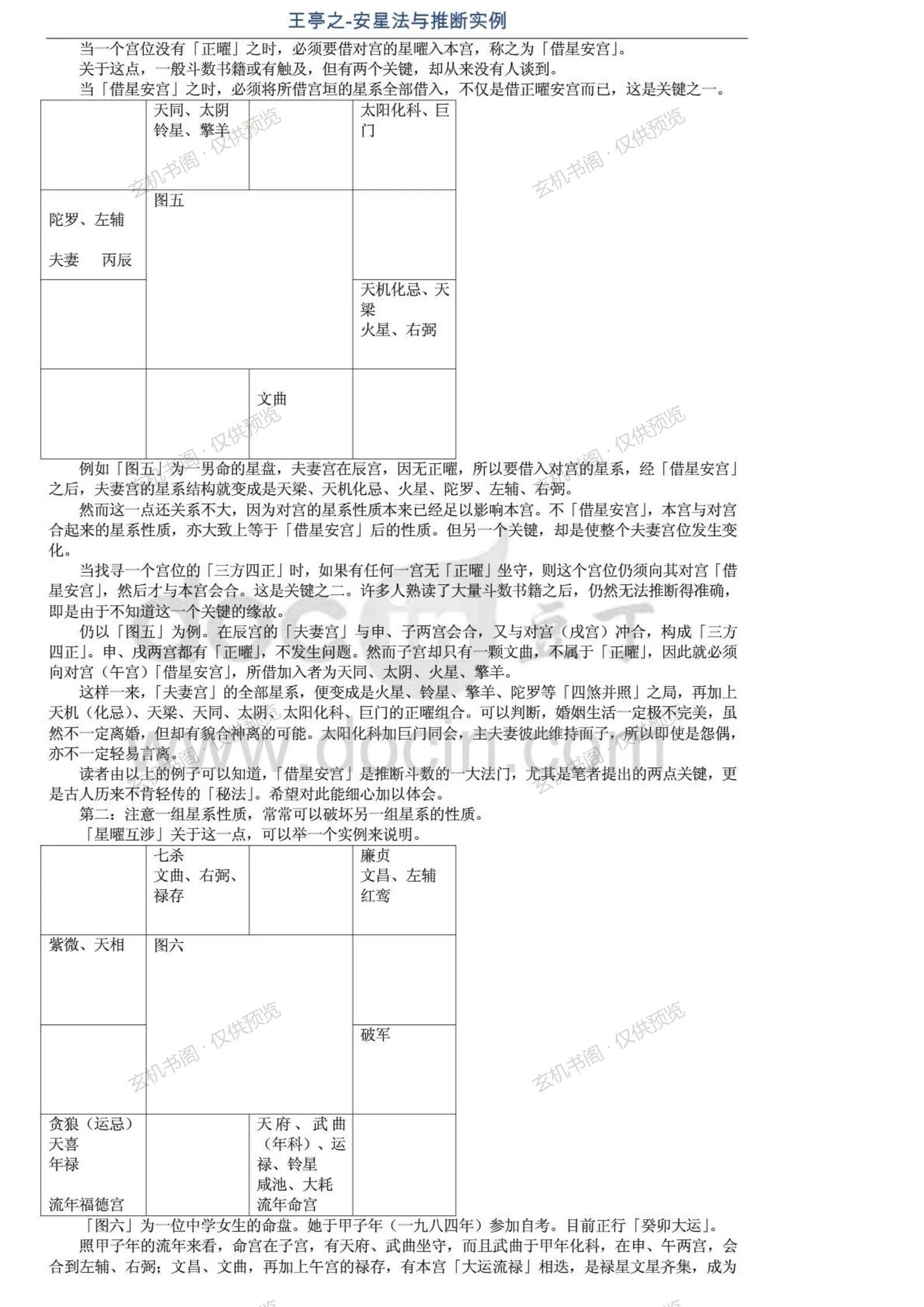
Three techniques: borrowing stars, star interaction, seeking star pairs
Charts for life, spouse, and illness palace examples
Key Points
Zhongzhou-school Zi Wei Dou Shu with a plain judgment framework
Basic terms and palace relations are the foundation for judgment
Read parents and property palaces first, then life and fortune palaces
Twenty-four examples arranged across the twelve palaces
Borrowing stars requires taking the whole star set, not only major stars
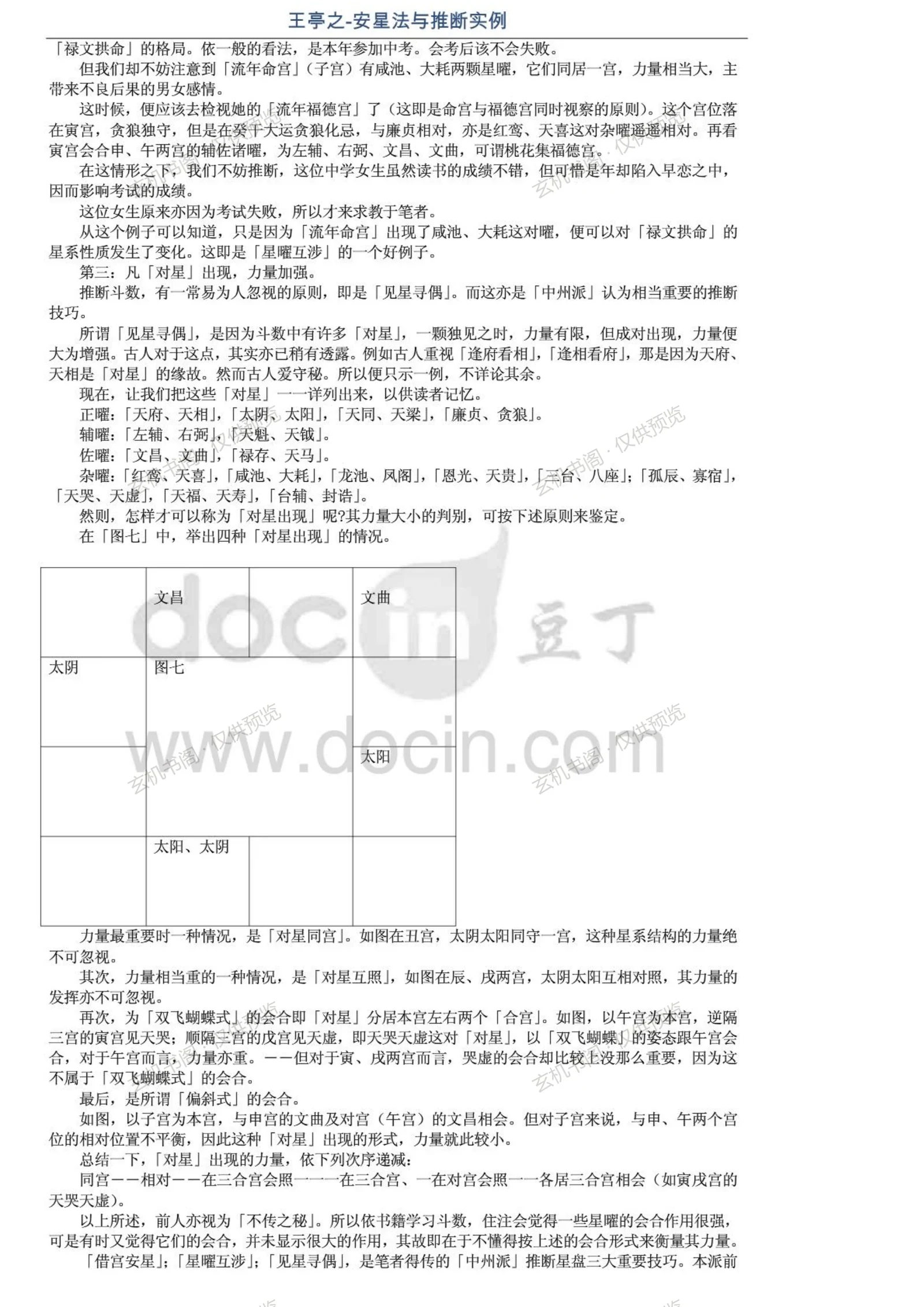
Star interaction and star pairs affect the strength of stars