Reading guide
Content guideOverview
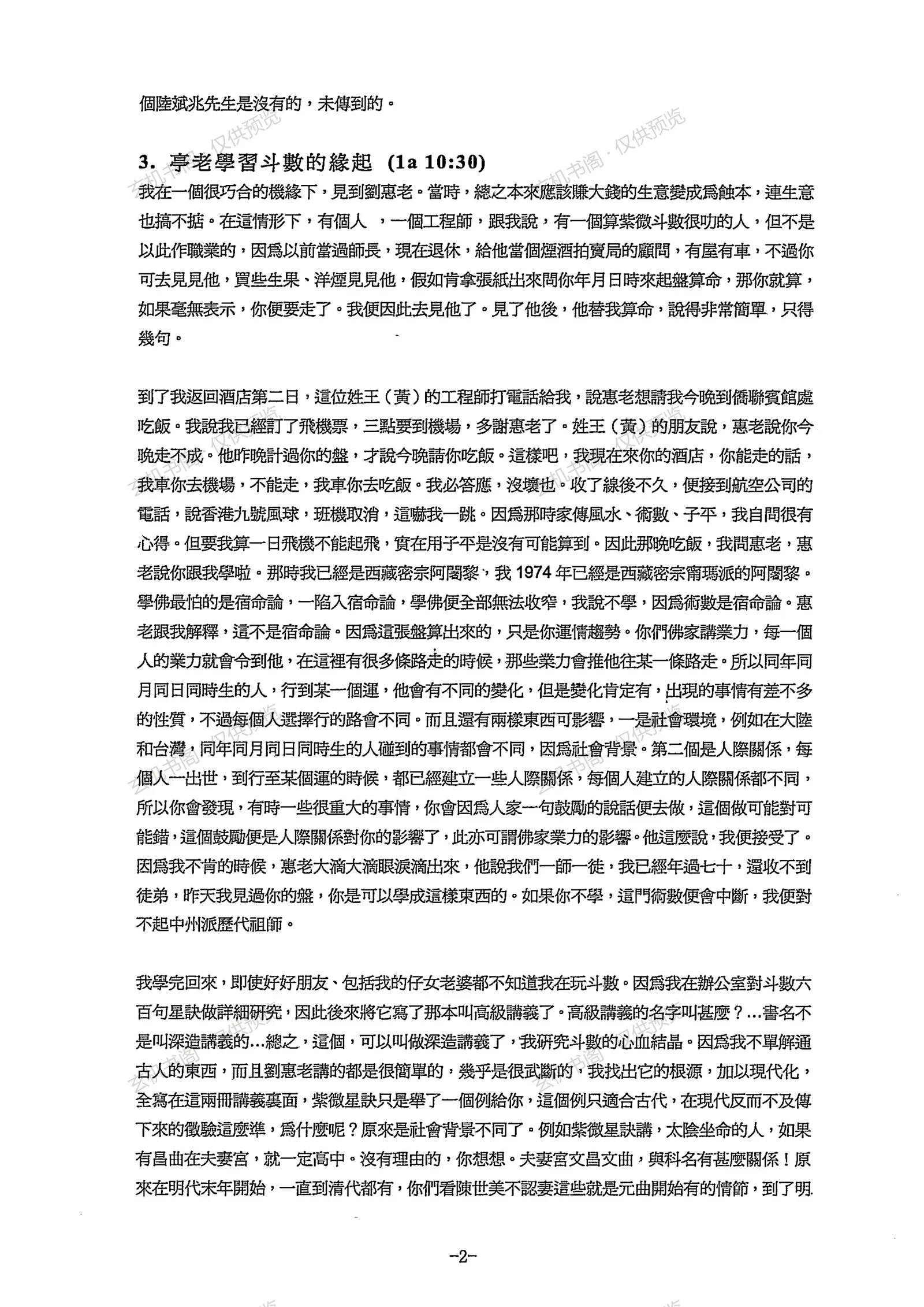
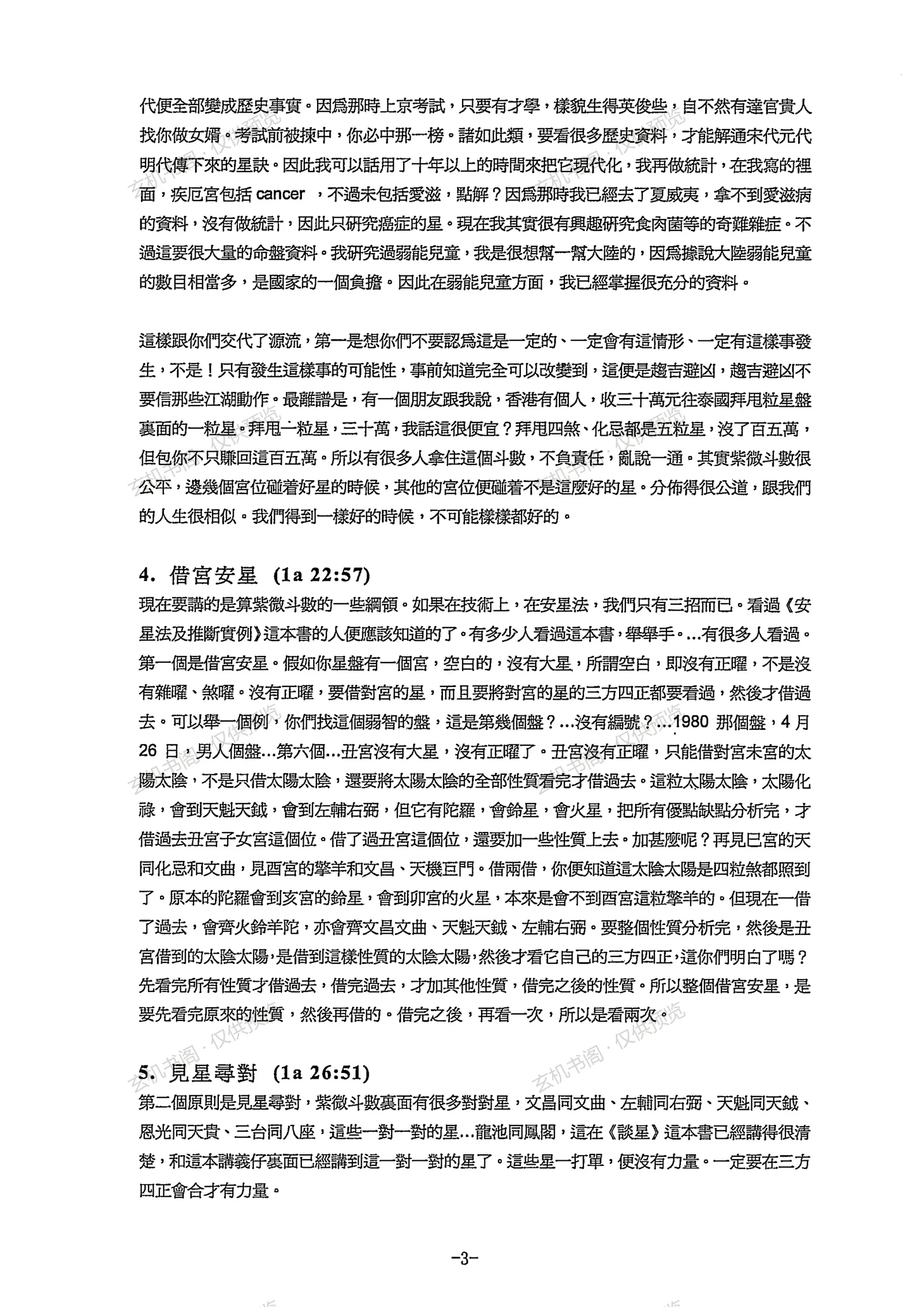
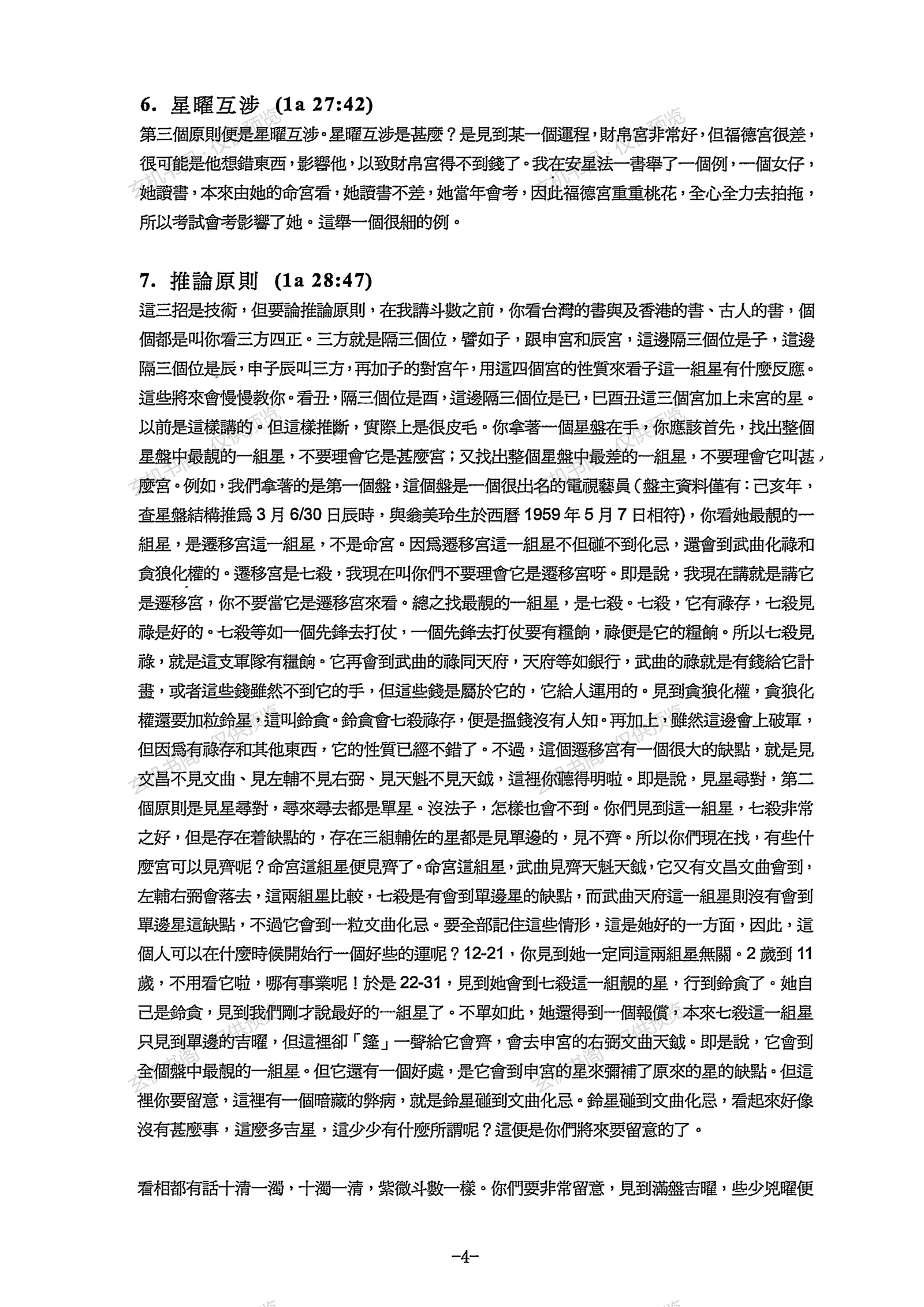
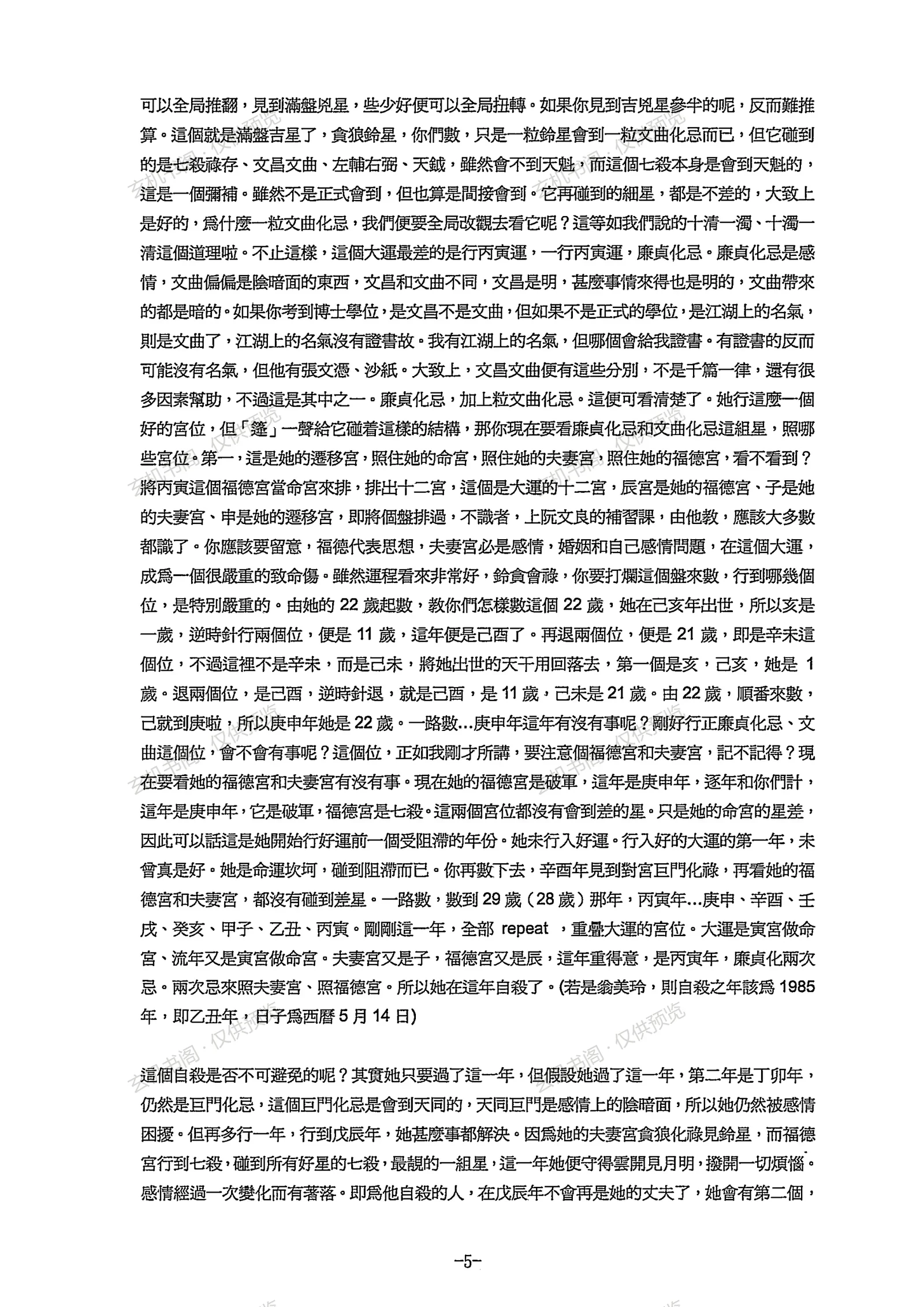
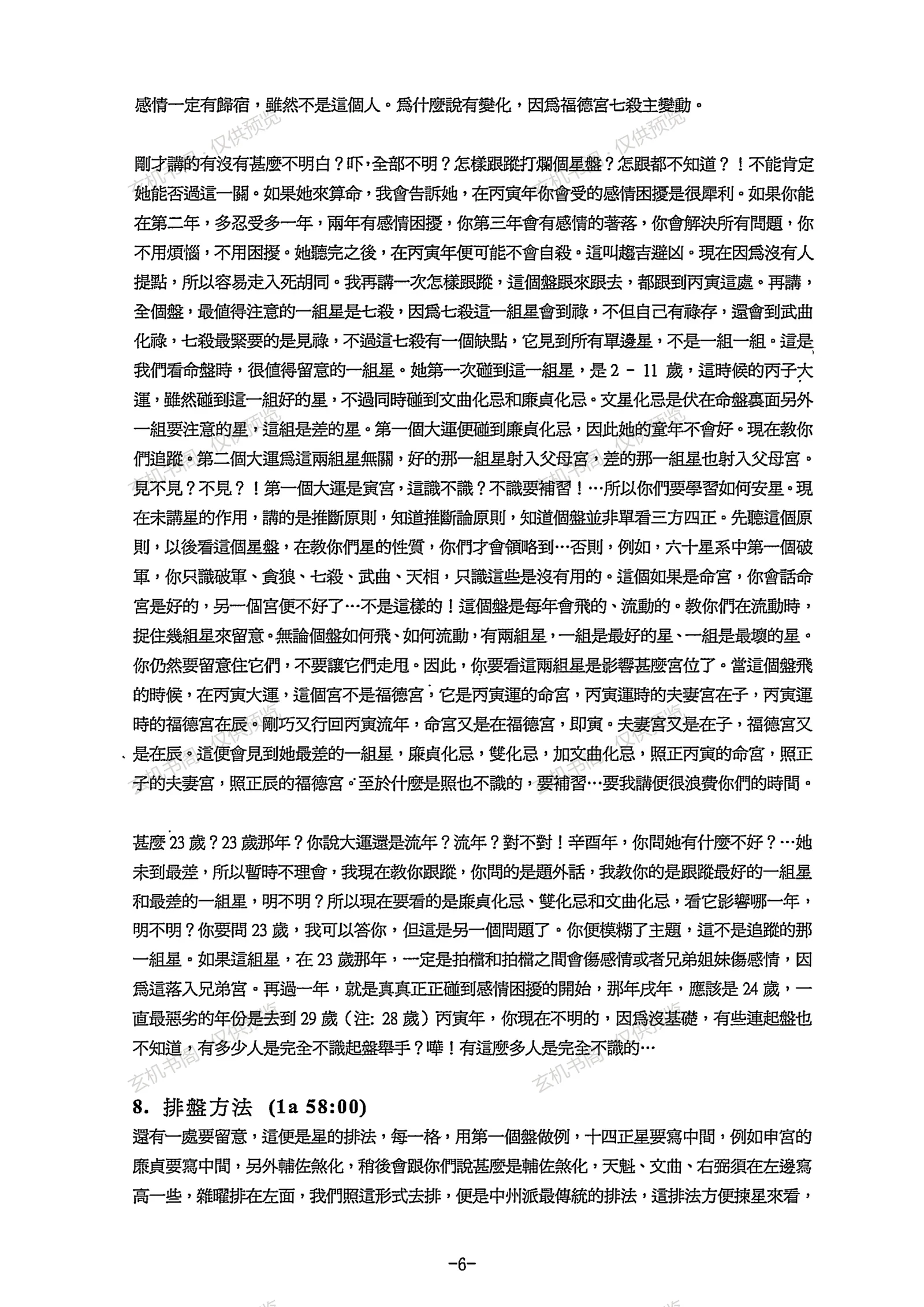
This is a typed transcript of Wang Tingzhi's 1999 Hong Kong disciple class on Zhongzhou sect Zi Wei Dou Shu; the first six pages contain Lecture One. It opens with the lecture's background and explains that star-placement basics are skipped because they appear in his earlier book and software. It then traces the Zhongzhou lineage from Tang-era feng shui traditions and Ming court astrology to modern masters Yu and Liu Huicang, and recounts how Wang himself learned the art. The main body sets out three technical principles: borrowing stars from the opposite palace, pairing stars, and star interaction, stressing that one should not rely only on the three directions and four positions but first identify the strongest and weakest star groups and trace their influence across major periods and years. The翁美玲 chart is used to demonstrate tracking emotional trouble and its timing, and the lecture ends with the sect's traditional chart-writing layout.
Contents
Lecture background and course arrangement
Zhongzhou lineage and transmission
How Wang Tingzhi learned the art
Borrowing stars from the opposite palace
Pairing stars principle
Star interaction and interpretation principles
Chart layout and traditional writing format
Key Points
Zhongzhou lineage runs from Tang feng shui traditions through the Ming court to modern master Liu Huicang.
Students are assumed to know star placement; the class focuses on borrowing, pairing and interaction.
Identify the strongest and weakest star groups first, then trace their palaces.
The three directions and four positions are only superficial; read the chart dynamically across periods.
The翁美玲 chart shows how to track emotional trouble and its timing.