Reading guide
Content guideOverview
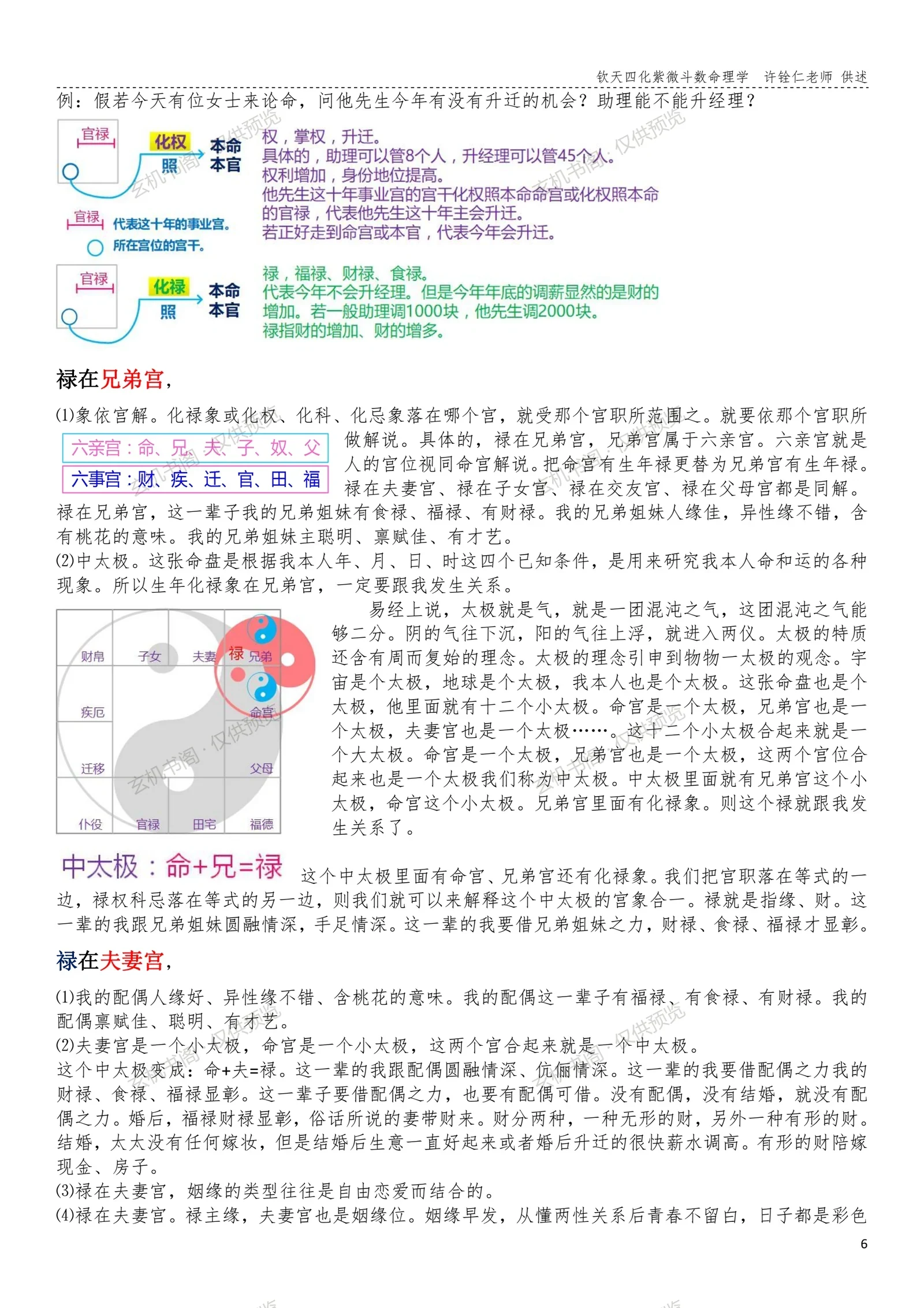
This lecture series by Xu Quanren introduces the foundation of Qintian Four Transformations Zi Wei Dou Shu. Part one explains the twelve palaces—from Life Palace to Parents Palace—covering their basic meanings, hidden meanings, and applications with Hetu-Luoshu numerology, with each palace read on the levels of people, events, and objects. Part two presents the Four Transformations: the union of palace, image, and star is the core of this school; images arise from the qi transformation of heavenly stems, and a table of the ten stems' four transformations is given. It distinguishes birth-year transformations as essence from flying-palace and self-transformations as application, noting that self-transformation marks acquired change and timing. Part three focuses on Hua Lu, covering wealth, food, fortune, interpersonal charm, romance, talent, and its power to resolve adversity, with examples of Hua Lu in the Siblings and Spouse palaces demonstrating the "central Taiji" method. The structure is clear and example-driven, suited to readers with basic Zi Wei Dou Shu terminology.
Contents
A01 Palaces, images, and stars: basic meanings of the twelve palaces
Hidden meanings of the palaces and Hetu-Luoshu applications
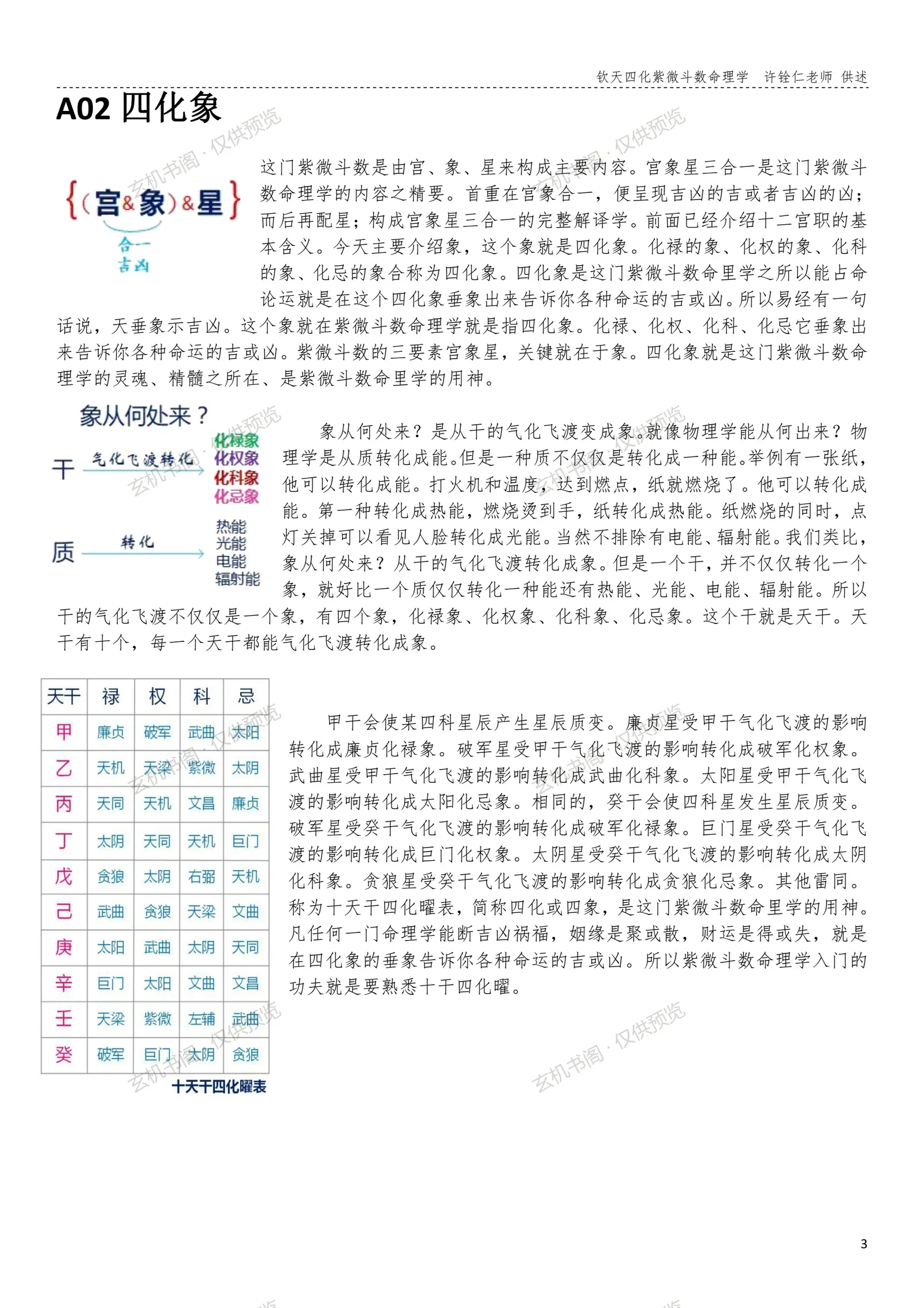
A02 Four Transformations: where images come from and the ten-stem table
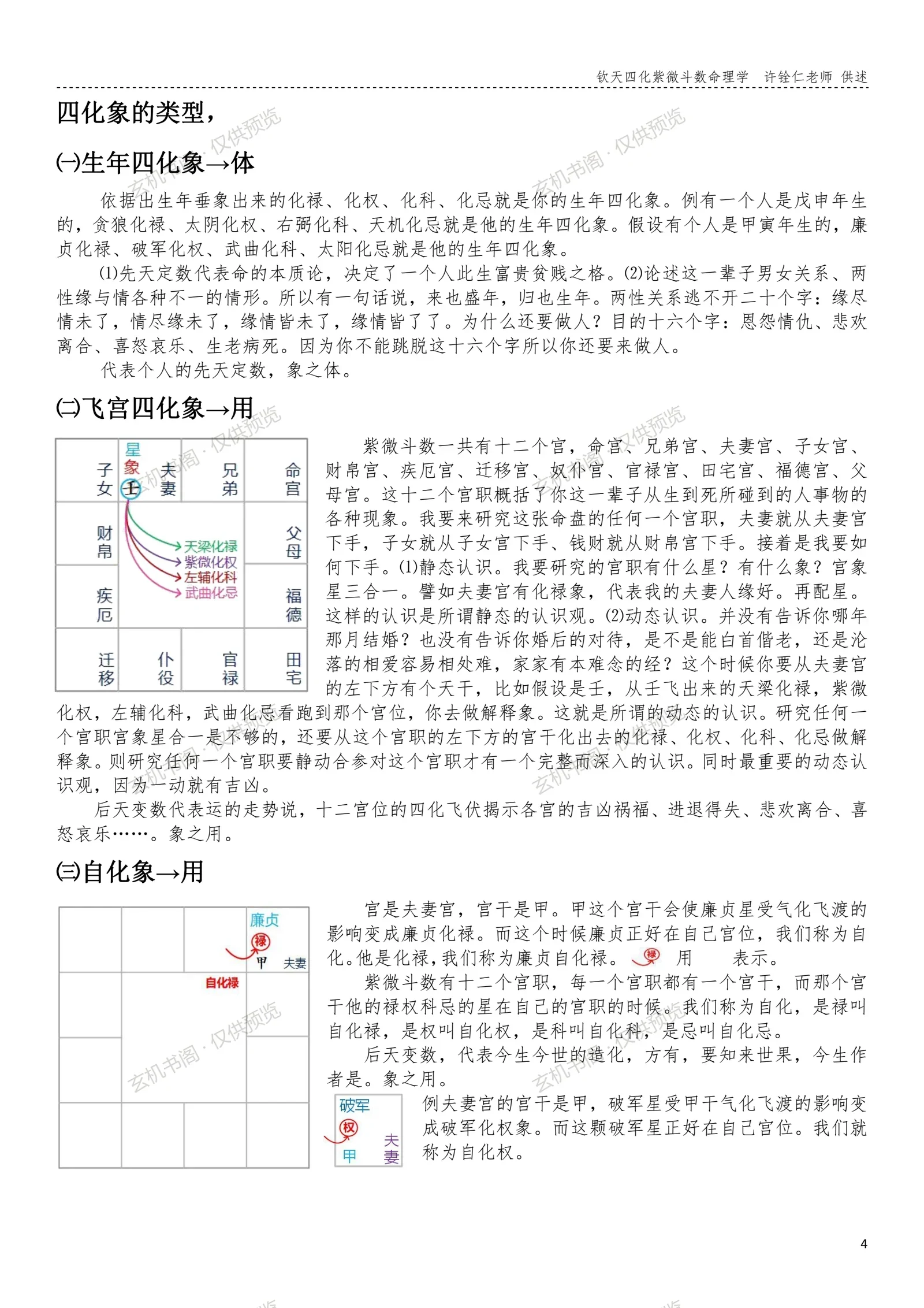
Types of four transformations: birth-year, flying, self, and viewed-as-self
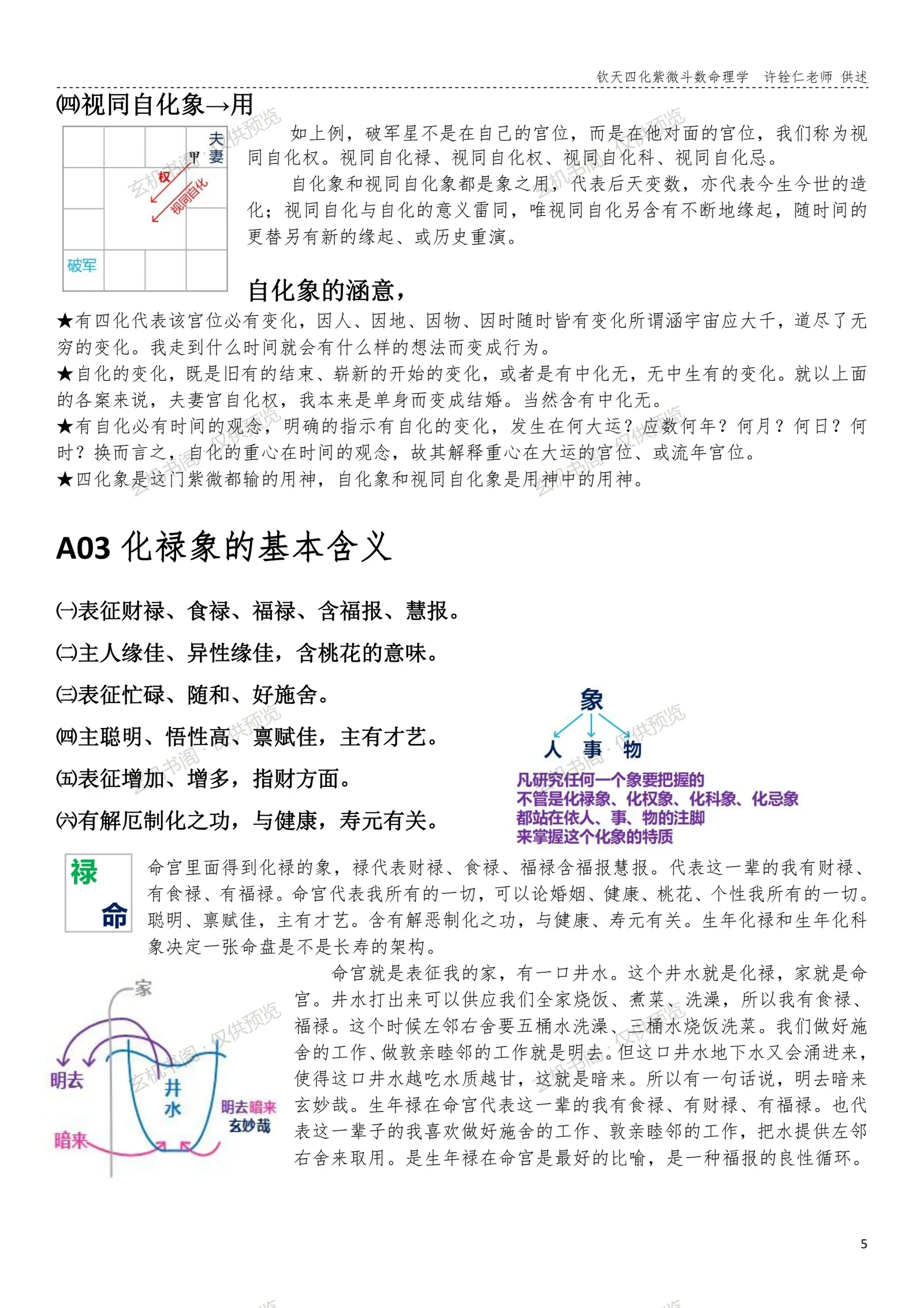
A03 Basic meanings of Hua Lu
Examples of Hua Lu in the Siblings and Spouse palaces
Key Points
The union of palace, image, and star is the core structure of this school.
Images arise from the qi transformation of heavenly stems; each of the ten stems has four transformations.
Birth-year transformations are essence; flying-palace and self-transformations are application.
Self-transformation indicates acquired change and timing, read with luck periods and years.
Each palace is read on the levels of people, events, and objects, combined through the central Taiji.