Reading guide
Content guideOverview
This introductory feng shui book by Bai Heming focuses on yang-dwellings. It first distinguishes yang from yin dwellings: yang dwellings value broad incoming qi and the 'three flows' of water, traffic and people, while yin dwellings rely on coordinating dragon, acupoint, sand, water and facing to locate concentrated earth qi. The text then turns to practical cases, walking through common sha (noxious forms) one by one: mirror sha from a mirror facing the bed, sky-cleaver sha from a narrow gap between two buildings, flying-blade sha from a projecting wall corner, piercing-heart sha from posts or signboards in view, pointed-sha from sharp corners, and door-clash sha when a door faces a room door or another unit's door. Each is tied to effects on health or wealth and paired with cures such as moving the mirror, rounding corners, adding a threshold or hanging a bead curtain. It also discusses noise as sound-sha and the use of a pond as a 'gathering-water' formation, which must sit in a prosperous palace or it turns into a wealth-draining layout. The style is plain, with photos and simple diagrams for beginners.
Contents
Yang dwellings versus yin dwellings
The three flows of a yang dwelling
Mirror sha and its remedy
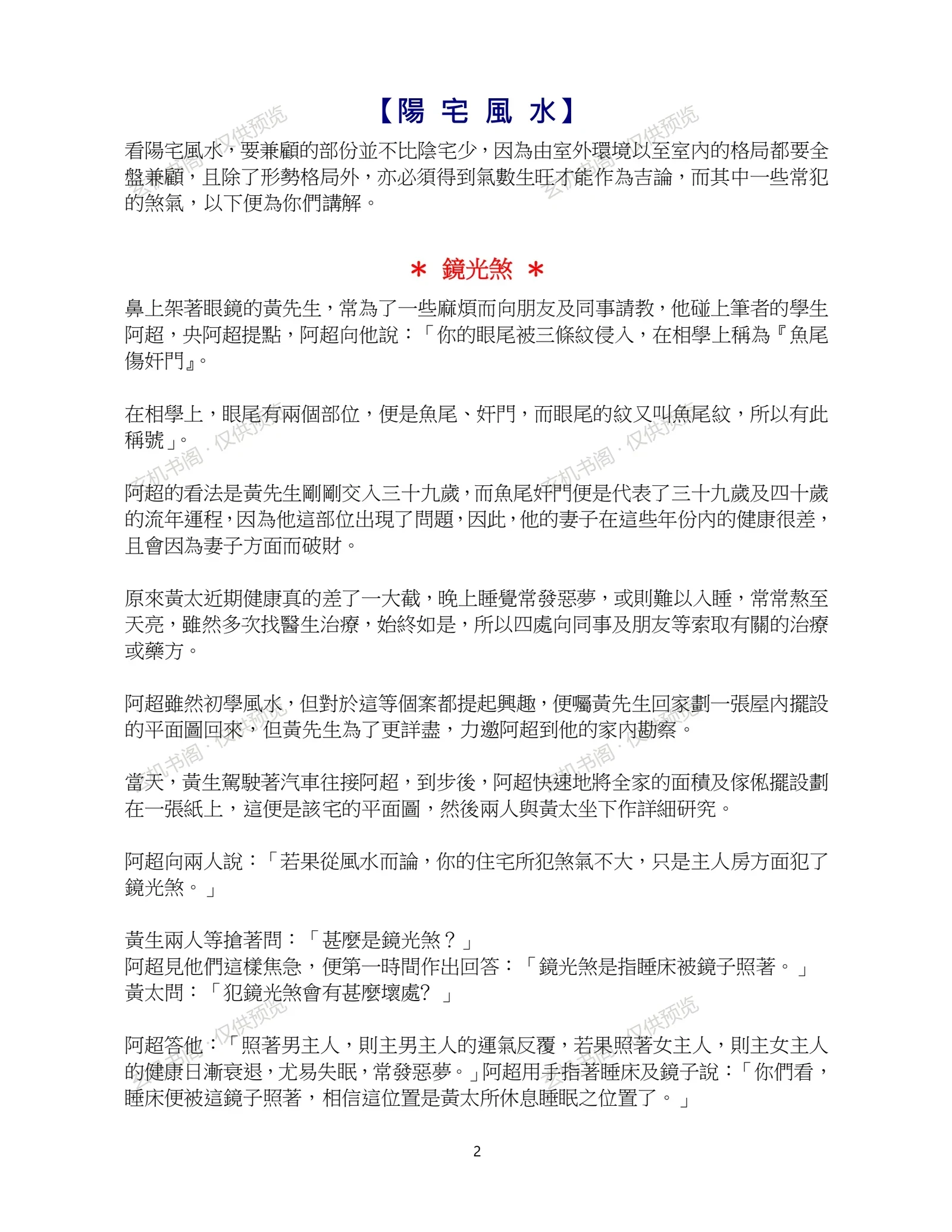
Sky-cleaver sha between buildings
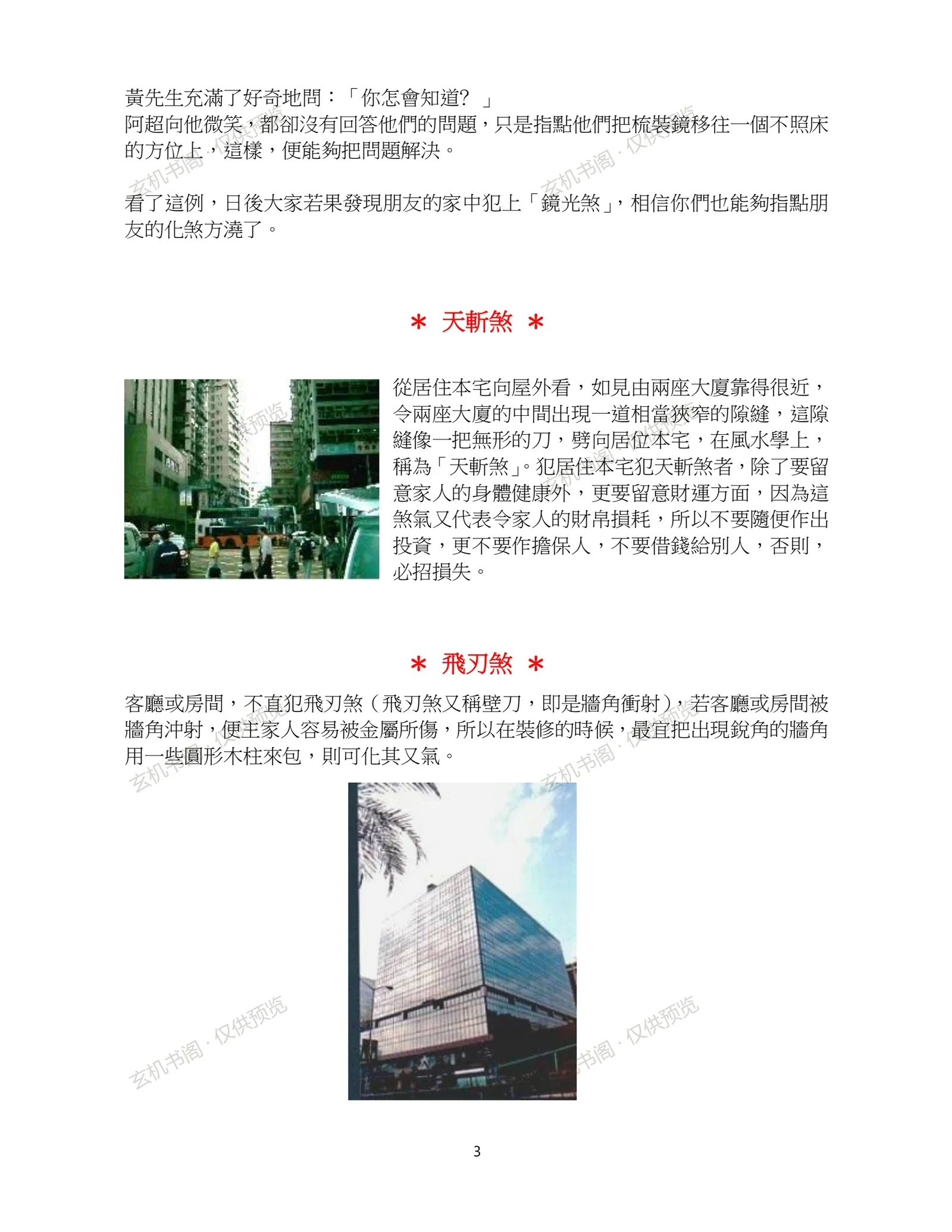
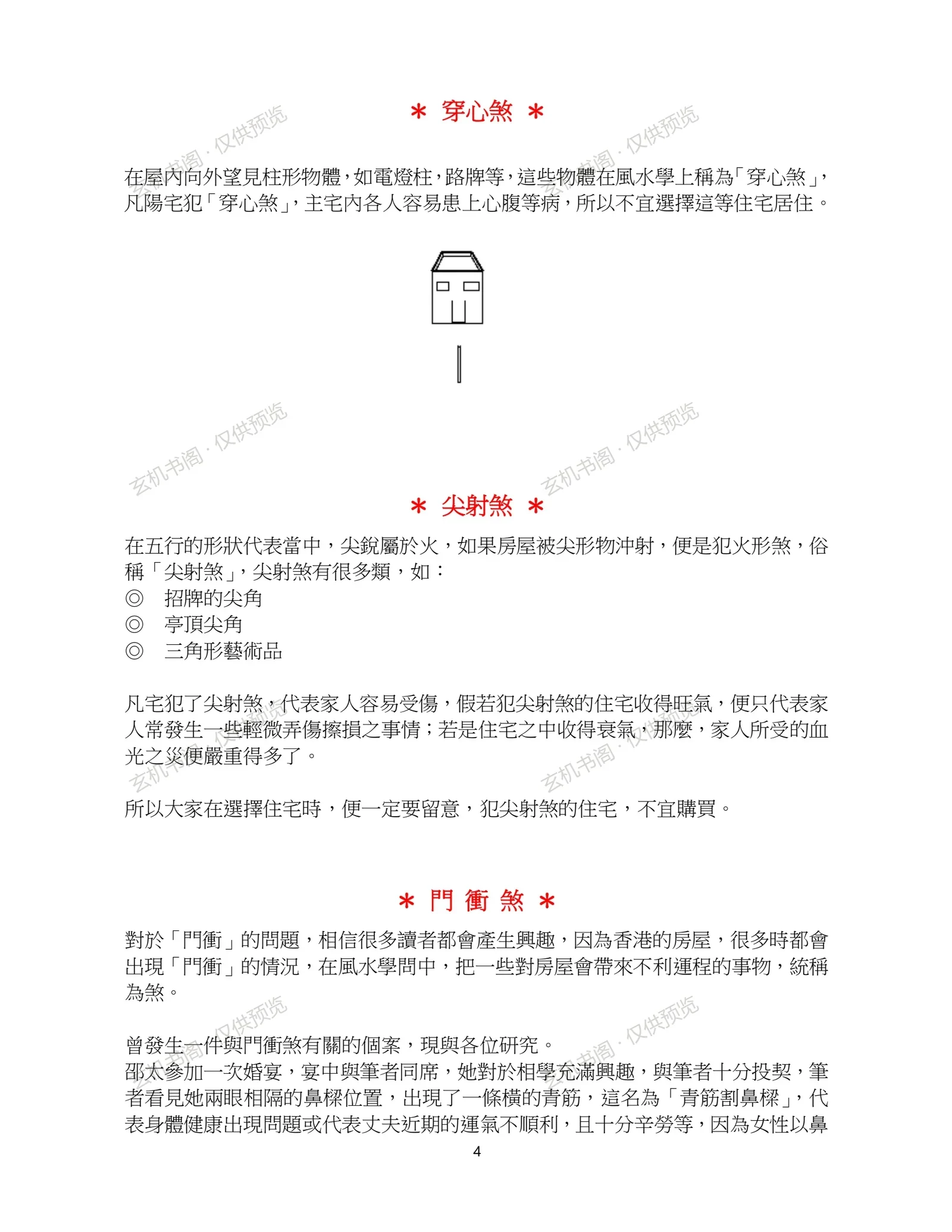
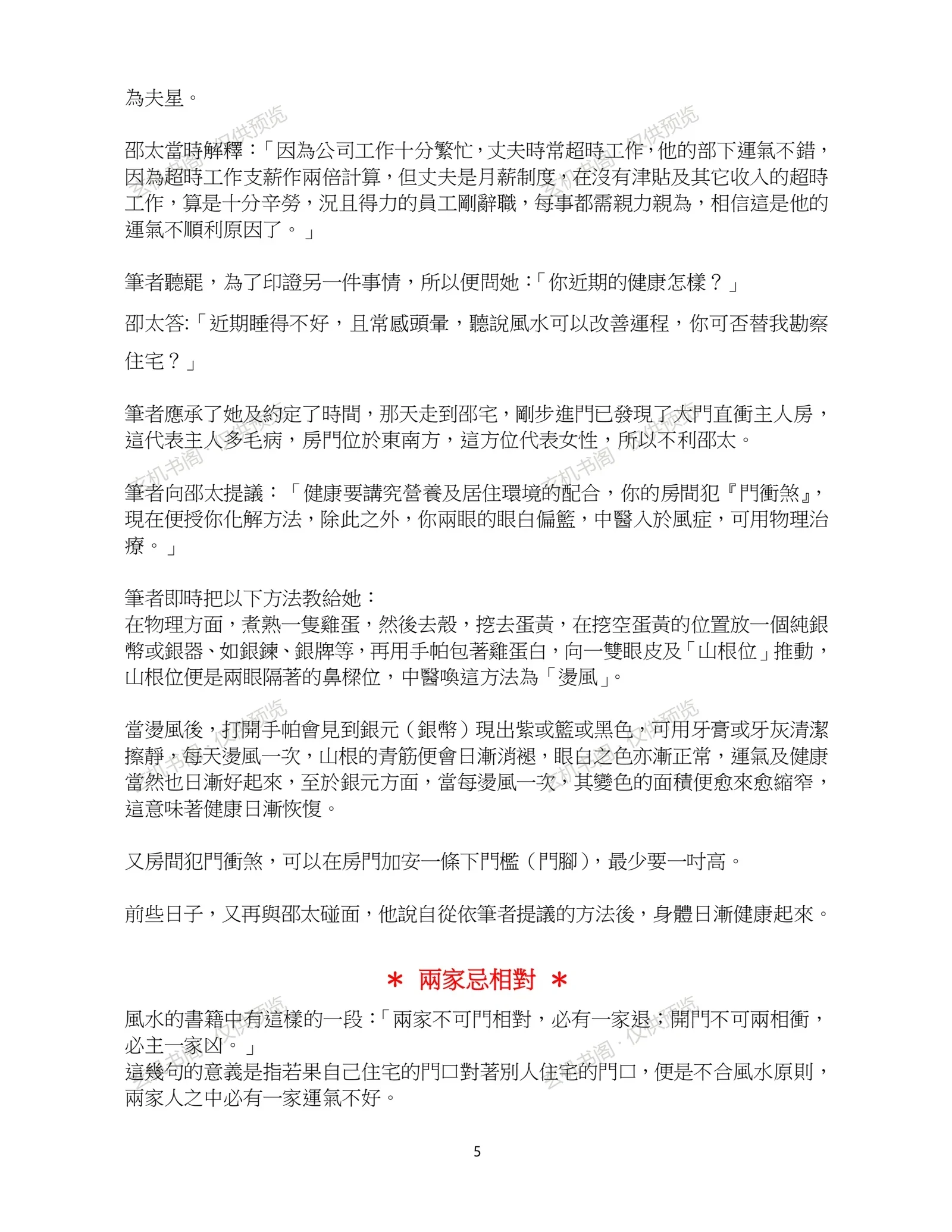
Flying-blade, piercing-heart and pointed sha
Door-clash sha and facing doors
Sound sha and estate water-gathering ponds
Key Points
Yang dwellings value broad qi and the flows of water, traffic and people.
Yin dwellings coordinate dragon, acupoint, sand, water and facing.
Sha forms are read from outdoor setting and indoor layout, with cases.
A mirror facing the bed is said to affect luck, sleep and dreams.
Sky-cleaver and pointed sha are linked to illness and loss of wealth.
Indoor ponds must sit in a prosperous palace or they drain wealth.